
Latest Version
October 07, 2026
Radiant Cat Studio
Puzzle
iOS
0
Report a Problem
More About :game
It is designed for both short sessions and longer play, making it easy to pick up when you want a quick mental challenge. The main difficulty comes from planning several moves ahead while keeping enough open space for the blocks that may appear next.
What Is Block Life?
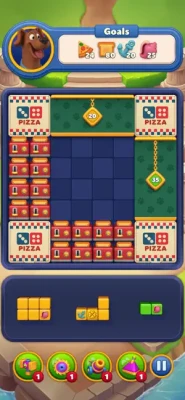
Block Life is a puzzle game from Radiant Cat Studio that puts a colorful spin on the familiar block-placement formula. Instead of controlling falling pieces in real time, you choose where available blocks should be placed on the board.
The objective is straightforward: position blocks so that complete rows or columns are formed. Once a line is completed, it disappears and creates valuable space for future pieces.
The simplicity of the controls hides a deeper strategic challenge. A placement that looks useful immediately can become a problem several moves later if it leaves awkward gaps or prevents larger pieces from fitting.
The App Store describes Block Life as a relaxing brain-training puzzle game with classic block mechanics, colorful visuals, line-clearing effects, combo opportunities, and offline play.
Block Life Gameplay
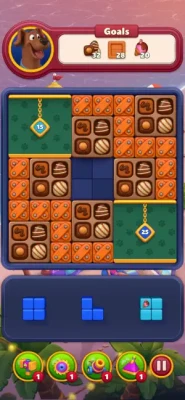
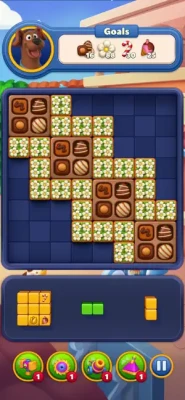
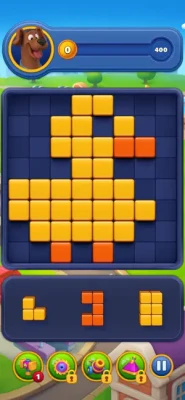
The basic gameplay loop is easy to understand:
Look at the blocks available to you.
Examine the empty spaces on the grid.
Drag a block into a suitable position.
Complete a horizontal row or vertical column.
Clear completed lines.
Use the newly created space to continue playing.
Build combos and improve your score.
Continue making careful placements as the board becomes harder to manage.
The important part is not simply clearing lines. The real challenge is controlling the shape and distribution of the empty spaces that remain afterward.
How to Play Block Life
1. Study Every Available Block
Before placing anything, look at all of the blocks currently available.
Do not automatically place the easiest-looking piece. A large or unusual block may be much harder to fit later, while a small square or straight piece may be useful for repairing an awkward section of the board.
Think about the entire group of available pieces rather than treating every move as an isolated decision.
2. Keep the Board Open
Your most valuable resource is empty space.
Avoid filling the center of the board with random blocks simply because an area is available. Try to maintain several flexible spaces where different shapes can fit.
A crowded board dramatically reduces your options.
3. Clear Lines Efficiently
Completing a single row is useful, but creating situations where several lines can be cleared through carefully connected placements is even better.
Look for opportunities to complete:
Horizontal lines
Vertical lines
Multiple lines with one placement
Consecutive clears
Combo-producing arrangements
4. Think About the Next Move
Strong Block Life players do not only ask:
"Where can this block fit?"
They also ask:
"Where will I be able to put the next block?"
This small change in thinking can prevent many unnecessary mistakes.
Block Life Strategy Guide
Build Around Flexibility
Try to maintain a board that offers several possible placements.
A board filled with isolated holes and narrow spaces is dangerous because many future blocks will not fit efficiently.
Whenever possible, create larger open areas instead of leaving scattered one-cell gaps.
Do Not Chase Every Immediate Clear
Clearing a line feels satisfying, but an immediate clear is not always the best move.
Sometimes keeping a partially completed row or column allows you to create a much stronger setup with the next block.
Before clearing, consider what the board will look like afterward.
Protect Large Open Areas
Large blocks require enough continuous space to fit.
If you fill the board with small pieces without a plan, you may eventually have no location for a large block.
Reserve at least one flexible area whenever possible.
Use Corners Carefully
Corners can be useful because they allow certain shapes to sit naturally against the edges of the board.
However, repeatedly pushing blocks into corners can also create dead spaces.
Use corners strategically rather than treating them as automatic storage areas.
Avoid Unnecessary Holes
One of the biggest mistakes in block puzzle games is creating empty spaces that cannot easily be filled.
A single awkward hole may not matter. Several disconnected holes can quickly become a serious problem.
When choosing between two placements, favor the option that leaves cleaner and more usable empty space.
How to Build Better Combos
Combos are one of the most satisfying parts of Block Life because they reward planning rather than random placement.
A good combo usually begins with setting up several nearly completed lines.
Instead of completing every line immediately, look for positions where one block can finish multiple objectives.
Combo Strategy
Keep partially completed lines available.
Look for blocks that can interact with several nearly finished areas.
Avoid destroying a good setup too early.
Try to clear multiple lines with a single placement.
Use the space created by a clear to prepare the next sequence.
Think about the board several moves ahead.
The strongest combo opportunities often appear when the board is organized rather than when it is almost full.
How to Deal With the Timer
The timer can change the way you approach Block Life.
The basic puzzle mechanics encourage careful planning, but a time limit can make hesitation costly. Some App Store reviewers specifically mention the timer as a source of difficulty, particularly as levels become harder.
The best response is not to rush every move.
Instead, develop a quick scanning routine:
Check the available pieces → identify the most difficult piece → find its safest location → place it → reassess the board.
With practice, this becomes much faster.
Avoid Panic Moves
When the timer is running down, placing a block randomly can create an even bigger problem.
If you have several possible moves, prioritize the placement that preserves the most future options.
Beginner Tips
Tip 1: Do Not Fill the Board Randomly
Every block should have a reason for being placed where it is.
Tip 2: Leave Room for Large Pieces
Large shapes can become difficult to place if the board is fragmented.
Tip 3: Look for Two-Line Clears
Whenever possible, position a block so it contributes to more than one completed line.
Tip 4: Keep Your Board Balanced
Avoid allowing one side of the board to become completely packed while another side remains empty.
Tip 5: Plan Before Dragging
A few seconds of thought can prevent several bad moves.
Tip 6: Learn From Failed Boards
When a run ends, think about what caused the board to become unusable. Was it too many small gaps? Poor corner placement? Filling the center too early?
Recognizing the cause helps you improve.
Advanced Block Life Strategies
Control the Shape of Empty Space
Advanced play is less about the blocks themselves and more about controlling the empty areas between them.
Try to create open regions that can accommodate different block shapes.
Create Multiple Future Options
A strong placement may not immediately clear anything, but it can create several possible future clears.
This is often better than making a spectacular-looking move that leaves the rest of the board difficult to manage.
Think in Patterns
As you play more levels, you will begin to recognize common board situations.
For example:
Nearly complete horizontal lines
Vertical gaps
Corner spaces
Large empty rectangles
Small isolated holes
Multiple lines waiting for one connecting piece
Recognizing these patterns allows you to make decisions faster.
Use the Edges Without Losing the Center
The edges of the board can help stabilize certain blocks, but completely filling the edges can restrict future placements.
Keep enough central flexibility to handle unusual shapes.
Common Mistakes in Block Life
Filling the Board Too Quickly
Fast placement is not the same as good placement.
Ignoring Future Pieces
A move that works now may make the next piece impossible to place.
Creating Single-Cell Gaps
Tiny holes can become surprisingly difficult to eliminate.
Chasing High Scores Too Early
If you are still learning the game, concentrate on board control first. Better scores will naturally follow as your decisions improve.
Rushing Because of the Timer
The timer should encourage efficient thinking, not completely replace strategy.
Block Life Difficulty
Block Life starts with a very accessible concept, but maintaining a healthy board becomes increasingly challenging as you progress.
The game's difficulty comes primarily from decision-making rather than complicated controls. You must continuously balance immediate line clears against long-term board management.
The App Store currently shows user feedback that includes players enjoying the game at high levels while others find the timer increasingly demanding.
Graphics and Atmosphere
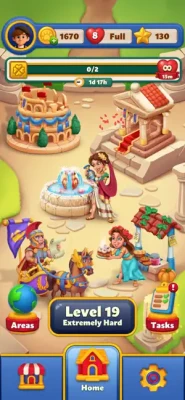
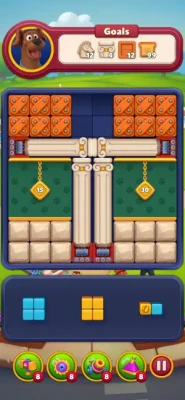
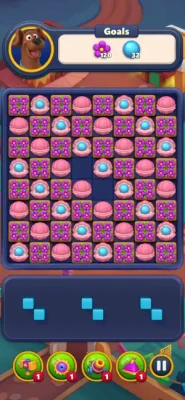
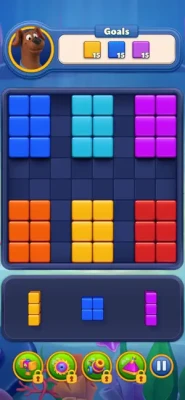
Block Life uses a bright, colorful visual style designed to make traditional block-puzzle gameplay feel more lively.
The colorful blocks and line-clearing effects give each successful placement a satisfying sense of progress. The overall presentation is light rather than story-driven, keeping the focus on the puzzle board.
The result is a casual experience that can work well for short breaks or longer puzzle sessions.
Controls
Block Life uses straightforward touch controls.
The primary action is dragging and dropping blocks onto the puzzle grid. This makes the game easy to understand for new players and well suited to touchscreen devices.
There is no complicated control system to learn. The challenge comes from deciding where each piece belongs.
Offline Play
One useful feature listed by the developer is the ability to play without Wi-Fi or an internet connection. This makes Block Life suitable for travel, waiting rooms, commutes, or other situations where a connection may not be available.
Block Life Features
Classic block puzzle gameplay
Drag-and-drop controls
Horizontal and vertical line clearing
Colorful visual effects
Combo opportunities
Score-focused gameplay
Timed challenge elements
Relaxing casual presentation
Brain-training style puzzles
Offline play
iPhone and iPad support
Free-to-play structure with optional purchases
The current App Store listing identifies Block Life as a Puzzle game from Radiant Cat Studio. It requires iOS 15 or later and is also available for iPadOS 15 or later.
Block Life In-App Purchases
Block Life is free to play but includes optional in-app purchases.
The current listing includes coin packages, starter and premium bundles, and a Remove Ads Pack. Listed purchase options range from a $0.99 Starter Backpack to larger bundles priced up to $39.99, with individual coin packages also available.
You do not need to purchase every available item to understand or enjoy the core block puzzle mechanics.
Block Life Ratings and Player Feedback
The US App Store listing currently displays a 5.0 out of 5 rating from 218 ratings. Player opinions are generally positive, although reviews also reveal an important difference in expectations: some players enjoy the challenge and progression, while others find the timer too stressful for a game marketed as relaxing.
One player reported reaching level 338 and enjoying the game despite some repeated level patterns, while another praised the game but criticized the timer.
This makes the timer an important part of the experience to understand before playing.
Pros and Cons
Pros
Simple and responsive controls
Easy to learn
Colorful presentation
Satisfying line-clearing effects
Encourages strategic thinking
Good for short gaming sessions
Offline gameplay
Strong appeal for block puzzle fans
Combo opportunities add depth
Cons
Timer can make some sessions feel stressful
Difficulty can increase quickly
Repeated patterns may become noticeable
Players looking for completely relaxed, untimed puzzles may prefer another block game
Who Should Play Block Life?
Block Life is a good choice for players who enjoy:
Block puzzle games
Logic puzzles
Brain-training games
Casual strategy
Colorful mobile games
Score-based challenges
Short gaming sessions
Offline puzzle games
Games that reward planning
It is especially suitable for players who like simple rules but want increasingly difficult decisions.
Who May Not Enjoy It?
Players who prefer completely slow-paced puzzle games without timers may find Block Life less relaxing than expected.
Likewise, players who dislike repeating puzzle patterns or score-focused gameplay may want a more varied puzzle experience.
Block Life vs Traditional Block Puzzles
Block Life uses the familiar foundation of placing blocks and clearing completed lines, but adds a more colorful presentation and stronger emphasis on satisfying effects and timed challenge.
The important strategic principle remains the same: do not think only about clearing the current line; think about preserving the board for the next several moves.
That principle is what separates a lucky run from a consistently strong one.
Best Strategy for High Scores
If your goal is to improve your score, focus on consistency rather than taking unnecessary risks.
A strong high-score routine looks like this:
Examine every available block.
Identify the most difficult shape to place.
Preserve at least one large open area.
Avoid creating isolated holes.
Build toward multiple line clears.
Keep the board balanced.
Use combos when they naturally appear.
Do not sacrifice board health simply for a quick clear.
Make decisions quickly when the timer becomes important.
Repeat the process instead of relying on lucky placements.
The biggest improvement usually comes from learning how to keep the board playable for longer.
Frequently Asked Questions
Is Block Life free?
Yes. Block Life is listed as a free game with optional in-app purchases.
Does Block Life require Wi-Fi?
No. The App Store description specifically says the game can be played without Wi-Fi or an internet connection.
What is the main objective in Block Life?
The goal is to place blocks on the grid, complete rows or columns, clear them, build combos, and achieve higher scores.
Does Block Life have a timer?
Yes. Timer-based gameplay is part of the experience, and some player reviews specifically discuss the timer's impact on difficulty.
Can I play Block Life on iPad?
Yes. The game supports iPad and requires iPadOS 15.0 or later.
What devices support Block Life?
The current listing supports iPhone and iPad, with compatibility also listed for Macs with an Apple M1 chip or later and Apple Vision devices under the stated platform requirements.
Does Block Life have in-app purchases?
Yes. The game includes optional coin purchases, bundles, and a Remove Ads Pack.
Is Block Life good for beginners?
Yes. Its basic controls are extremely easy to understand. The challenge comes from learning how to plan placements and maintain enough open space for future blocks.
What is the best Block Life strategy?
The strongest general strategy is to preserve flexible empty space, avoid isolated holes, plan several moves ahead, and look for opportunities to clear multiple lines with carefully placed blocks.
Final Verdict
Block Life takes a familiar block-puzzle formula and gives it a bright, accessible presentation with satisfying color effects and a stronger emphasis on timed challenge.
Its controls are simple enough for almost anyone to understand, but achieving consistently good results requires careful planning. The most important lesson is to stop thinking of each block as an individual move and start treating the entire board as a long-term puzzle.
If you enjoy colorful block games, logic challenges, score chasing, and strategic placement, Block Life offers an easy-to-learn experience with plenty of room to improve.
Rate the Game
User Reviews









Popular Games

















 Android
 iOS
iOS Windows
 Xbox
Xbox