

Latest Version
October 07, 2026
Radiant Cat Studio
Puzzle
iOS
0
Report a Problem
More About :game
Every completed puzzle contributes to a larger journey, making the game feel like a combination of an art gallery, visual puzzle book, and mystery adventure.
What Is Art Story Puzzle: Color Merge?
Art Story Puzzle: Color Merge is a puzzle game developed by Radiant Cat Studio. It combines artwork with brain-teasing challenges and storytelling, asking players to uncover secrets hidden inside illustrated scenes.
The puzzles can take different forms, including riddles, interactive jigsaw-style challenges, hidden pieces, and displacement mechanics. As you complete puzzles, you gradually progress through the mysterious story and investigate the identity of the storyteller behind the artwork.
The game is designed around observation and problem-solving rather than speed. This makes it particularly appealing to players who enjoy taking their time to examine an image and figure out how its pieces fit together.
The Main Idea Behind the Game
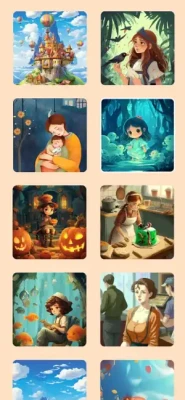
At first glance, an Art Story Puzzle scene may simply look like a beautiful illustration.
The real challenge is discovering what is hidden inside it.
Pieces can be difficult to recognize because they may visually blend into the artwork. You need to examine shapes, colors, outlines, objects, and patterns to determine what belongs where.
Once you begin identifying the correct pieces, the artwork gradually becomes clearer.
This creates a satisfying loop:
Observe → Investigate → Find hidden pieces → Move elements → Reconstruct the artwork → Discover clues → Continue the story
How to Play Art Story Puzzle: Color Merge
The fundamental gameplay is straightforward, but careful observation is important.
Step 1: Examine the Entire Artwork
Before touching anything, take a moment to look at the complete scene.
Notice:
Major objects
Unusual shapes
Color patterns
Empty-looking areas
Repeated details
Edges and outlines
Objects that appear slightly out of place
The more familiar you become with the artwork, the easier it becomes to recognize pieces that belong to it.
Step 2: Search for Hidden Pieces
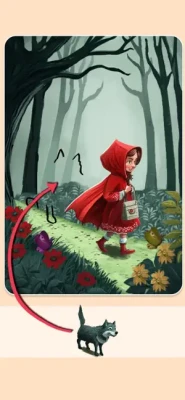
The game hides jigsaw fragments within its artwork.
Some pieces can be relatively easy to recognize, while others blend into the surrounding illustration.
Do not focus exclusively on obvious shapes.
A fragment may be recognizable because of:
A unique color
A curved line
A character's feature
Part of an object
A distinctive background pattern
A small section of a larger illustration
Step 3: Understand the Displace Mechanic
One of the game's defining mechanics is the ability to displace elements.
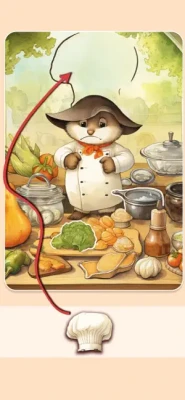
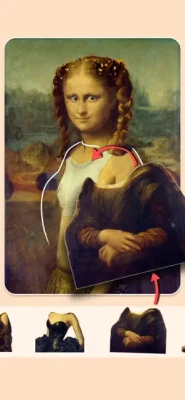
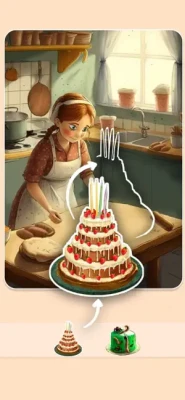
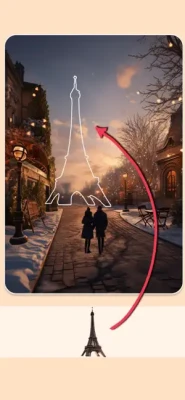
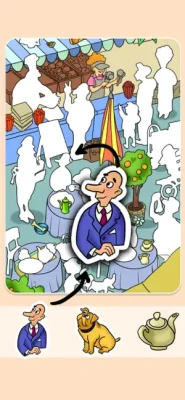
Instead of simply solving a conventional jigsaw, you may need to move elements around to reveal hidden information or discover where pieces belong.
This makes the puzzles more interactive than a standard picture puzzle.
When you find something that looks suspicious, experiment with moving it rather than assuming it is decorative.
Step 4: Reconstruct the Artwork
Once the necessary fragments have been discovered, begin putting the artwork together.
Pay attention to visual continuity.
A piece should not only look correct by itself; it should connect naturally with the surrounding image.
Step 5: Follow the Story
Completed puzzles are more than isolated challenges.
They contribute to the game's larger mystery and gradually reveal information about the mysterious storyteller.
This story element gives you another reason to continue solving puzzles beyond simply completing the artwork.
Art Story Puzzle Strategy Guide
Look at the Picture Before Searching
The biggest mistake beginners make is immediately tapping around without first understanding the scene.
Spend a few seconds studying the composition.
If you know what the image contains, unusual fragments become much easier to identify.
Search From Large Shapes to Small Details
Start with large recognizable objects.
For example, if an illustration contains a house, tree, person, animal, or large decorative object, identify its major shapes first.
Then move toward smaller details.
This reduces visual confusion.
Pay Attention to Edges
Jigsaw fragments often become easier to identify when you study their edges.
Look for:
Straight boundaries
Curved outlines
Repeated borders
Color transitions
Object contours
A piece that looks meaningless by itself may become obvious when you identify its edge pattern.
Use Color as a Secondary Clue
Color is useful, but it should not be your only method.
Several parts of an artwork can share the same color.
Instead, combine color with shape.
Ask:
Does this color appear in the right shape and location?
If the answer is yes, you may have found an important fragment.
Compare Nearby Details
When two possible pieces look similar, examine the details immediately surrounding them.
Look for continuity in:
Lines
Shadows
Textures
Patterns
Character features
Object boundaries
The correct piece should make the overall illustration feel visually continuous.
How to Solve Difficult Art Story Puzzles
Some puzzles are challenging because the missing pieces are not immediately obvious.
When you become stuck, avoid randomly tapping everything.
Instead, use a systematic search.
The Four-Zone Search Method
Divide the artwork mentally into four sections:
Upper section
Lower section
Left section
Right section
Search one section completely before moving to the next.
This prevents you from repeatedly examining the same locations.
Search Unusual Areas
If you cannot find a missing piece, check areas that seem visually insignificant.
Pay particular attention to:
Backgrounds
Decorative patterns
Shadows
Small objects
Corners
Repeated textures
Areas with similar colors
A hidden piece may be much harder to spot because it does not form an obvious standalone object.
The Most Important Skill: Visual Recognition
Art Story Puzzle rewards players who become good at recognizing fragments.
Instead of asking:
"What is this piece?"
Try asking:
"Where could this shape naturally continue?"
This changes the way you examine the puzzle.
For example, a small curved fragment might not look meaningful by itself. But if you recognize that the curve continues the outline of an object, its location becomes much easier to determine.
Riddle Strategy
The game also incorporates riddles and mystery elements.
When you encounter a riddle, do not assume that the answer must be a literal object shown in the artwork.
Consider:
The theme of the scene
Objects appearing in the artwork
Repeated visual clues
The wording of the riddle
Possible references to stories or characters
The relationship between the current puzzle and previous puzzles
The game's mystery is intended to make the puzzles feel connected rather than completely independent.
How to Use the Hint System
The current App Store listing includes an in-app purchase for a 50 Hints Offer, indicating that hints are part of the game's progression system.
However, try to solve difficult puzzles yourself before using a hint.
A good approach is:
Search carefully → reassess the artwork → try the displacement mechanic → use a hint only when genuinely stuck.
This keeps the puzzle-solving experience satisfying while still giving you an escape route when a particular piece becomes frustrating.
Daily Puzzle Strategy
Player reviews mention enjoying daily puzzles alongside the rest of the game's puzzle collection.
Daily puzzles can be approached as visual training.
Use them to practice:
Faster object recognition
Shape recognition
Finding subtle differences
Identifying hidden pieces
Understanding artwork composition
The more puzzles you complete, the faster you should become at recognizing recurring visual patterns.
Secret Puzzle and Puzzle Pieces
Player feedback also refers to collecting enough pieces to access a "secret puzzle."
This creates an additional reason to keep completing individual puzzles.
Rather than viewing each artwork as an isolated level, think of the pieces as part of a larger collection.
If you are trying to progress efficiently, prioritize completing puzzles consistently instead of spending too much time trying to perfect one particularly difficult scene.
No Timer: Take Your Time
One of the most appealing aspects of Art Story Puzzle is that the game does not force you to race against a conventional countdown.
A player review specifically praises being able to stay engaged without timers or clocks to beat.
That changes the optimal strategy.
You do not need to make rushed decisions.
If a piece is difficult to identify, pause and study the artwork again.
This is an observation puzzle, not a reflex test.
Advanced Strategy: Build a Visual Map
Experienced players can mentally divide an artwork into layers.
Background
Look for:
Sky
Walls
Ground
Patterns
Large color areas
Middle Ground
Look for:
Furniture
Plants
Objects
Decorative elements
Foreground
Look for:
Characters
Animals
Important objects
Distinctive shapes
This layered approach makes complicated scenes easier to analyze.
Advanced Strategy: Identify Unique Shapes
A color may appear dozens of times, but a unique shape may appear only once.
When searching for a piece, prioritize distinctive characteristics.
Examples include:
A single curved line
A character's eye
A special ornament
A unique object edge
An unusual pattern
A distinctive silhouette
Unique visual information is usually more useful than general color information.
Advanced Strategy: Use Symmetry
Some artworks contain symmetrical or repeated elements.
If one side of an illustration contains a recognizable pattern, check whether a similar structure exists elsewhere.
This can help identify missing fragments and understand where a displaced element belongs.
Common Mistakes
Mistake 1: Tapping Randomly
Random searching wastes time and makes the artwork harder to understand.
Mistake 2: Looking Only for Bright Colors
A hidden piece may have a muted color that blends into its surroundings.
Mistake 3: Ignoring the Background
Players naturally focus on characters and major objects, but hidden clues can appear in the background.
Mistake 4: Treating Every Piece as a Traditional Jigsaw
The displacement mechanic means that some puzzles require you to manipulate the artwork rather than simply place obvious pieces.
Mistake 5: Using Hints Too Quickly
Hints are useful, but solving a puzzle yourself provides more information about how the game hides its pieces.
Mistake 6: Forgetting the Story
The artwork is connected to a broader mystery. Pay attention to recurring themes and clues instead of treating every puzzle as an unrelated challenge.
Art Story Puzzle Difficulty
The game is easy to understand but can become surprisingly challenging because the artwork itself becomes the puzzle.
The controls are simple.
The difficulty comes from perception.
You may know exactly what you are supposed to do but still struggle to identify the correct piece because it blends into the illustration.
This makes the game accessible to casual players while still giving experienced puzzle fans something to think about.
Story and Mystery
The story revolves around a mysterious storyteller whose identity gradually becomes part of the puzzle-solving journey.
Each completed challenge provides another step toward understanding the larger mystery.
Rather than presenting the narrative separately from the gameplay, Art Story Puzzle connects the story to the artwork and puzzles.
That structure gives the game a stronger sense of progression than a collection of unrelated jigsaw levels.
Art Style and Atmosphere
Art is the central feature of the experience.
The game uses illustrated scenes as both its visual presentation and its puzzle environment.
This creates an atmosphere that is more peaceful and artistic than traditional action-oriented puzzle games.
Player reviews frequently describe the experience as relaxing, beautiful, and engaging, while the App Store description emphasizes the combination of art, mystery, and problem-solving.
Controls
The controls are primarily touch-based.
Players interact directly with artwork elements, search for hidden pieces, manipulate objects, and solve puzzles through taps and other touchscreen interactions.
Because the game relies more on observation than complicated controls, it is easy to start playing.
Features
Hidden artwork puzzles
Interactive jigsaw fragments
Displacement mechanics
Visual riddles
Story-driven progression
Mystery surrounding the storyteller
Daily puzzles
Secret puzzle elements
Beautiful illustrated scenes
Brain-teasing challenges
Logic and observation gameplay
Relaxing puzzle experience
iPhone and iPad support
The current App Store listing identifies the game as a Puzzle title from Radiant Cat Studio, with English as the listed language and a 4+ age rating.
Game Information
Game: Art Story Puzzle: Color Merge
Developer: Radiant Cat Studio
Genre: Puzzle
Age Rating: 4+
Language: English
Platforms: iPhone and iPad
Size: Approximately 576.8 MB
Minimum iPhone Requirement: iOS 15.0 or later
Minimum iPad Requirement: iPadOS 15.0 or later
The listing also identifies compatibility with Apple Vision and Macs meeting the stated requirements, although the App Store currently notes that the game is not verified for macOS.
Ratings and Player Reception
The US App Store listing currently shows a 4.6 out of 5 rating from approximately 7.7K ratings.
Player feedback highlights several recurring strengths:
Beautiful artwork
Relaxing gameplay
Interesting puzzle design
Strong visual recognition challenge
Ability to play without racing a timer
Enjoyment across different age groups
Some feedback has also mentioned occasional difficulty with missing or hard-to-identify pieces, demonstrating that the visual-search element can become genuinely challenging.
In-App Purchases
Art Story Puzzle: Color Merge is free to download and contains advertising and optional in-app purchases.
The current listing includes options such as:
No Ads
50 Hints
Coin packages
Artist Bundle
Beginners Bundle
Super Bundle
Super No Ads
The listed purchase prices range from $1.99 for a 100-coin package to $99.99 for a 12,000-coin package.
Pros and Cons
Pros
Beautiful artwork
Relaxing pace
Creative puzzle concept
Strong visual observation challenge
Story gives the puzzles additional context
Hidden-piece mechanics are more interesting than ordinary jigsaws
Displacement mechanic adds variety
No conventional timer pressure
Daily puzzle content
Suitable for casual and dedicated puzzle players
Cons
Some pieces can be extremely difficult to identify
Certain puzzles may feel confusing without hints
Players looking for action or fast gameplay may find it too slow
The mystery elements may be less clear than the artwork itself
Large app size
Who Should Play Art Story Puzzle?
This game is particularly suitable for players who enjoy:
Jigsaw puzzles
Hidden-object games
Visual puzzles
Riddles
Mystery adventures
Art-based games
Brain-training games
Relaxing mobile games
Story-driven puzzles
Casual games without strict time limits
It is also a good choice for players who enjoy studying an image and discovering small details that are easy to overlook.
Who May Not Enjoy It?
Players looking for combat, fast reflexes, competitive multiplayer, or action-heavy gameplay will probably find Art Story Puzzle too slow.
Likewise, if you prefer puzzles with explicit instructions and immediately obvious objectives, the hidden-piece approach can sometimes feel confusing.
Art Story Puzzle vs Traditional Jigsaw Games
Traditional jigsaw games usually ask you to arrange pieces into a picture.
Art Story Puzzle goes further by making the artwork itself part of the investigation.
You are not simply asking:
"Where does this piece go?"
You are also asking:
"What is hidden here?"
"What should I move?"
"Why does this element matter?"
"What does this artwork tell me about the story?"
That combination of jigsaw mechanics, visual discovery, and mystery is what gives the game its identity.
Best Overall Strategy
For the most consistent results, use this approach:
Study the complete artwork.
Identify the largest recognizable objects.
Divide the scene into sections.
Search systematically rather than randomly.
Prioritize unique shapes over common colors.
Examine edges and object outlines.
Experiment with the displacement mechanic.
Connect pieces by visual continuity.
Think about the riddle and story context.
Save hints for genuinely difficult situations.
Complete daily puzzles to improve visual recognition.
Keep track of recurring visual clues and themes.
The most important principle is simple:
Look carefully before you act.
Art Story Puzzle rewards observation much more than speed.
Frequently Asked Questions
Is Art Story Puzzle: Color Merge free?
Yes. The game is free to download and includes optional in-app purchases and advertising.
What type of game is Art Story Puzzle?
It is a puzzle adventure that combines artwork, hidden jigsaw pieces, riddles, visual challenges, and storytelling.
Does Art Story Puzzle have a story?
Yes. Solving puzzles gradually reveals more of a mystery involving the storyteller behind the artworks.
Does Art Story Puzzle have jigsaw puzzles?
Yes. Hidden jigsaw fragments are an important part of the gameplay.
What is the displace feature?
The displace mechanic allows players to move elements of the artwork to uncover hidden hints and puzzle information.
Is there a timer?
The player feedback on the App Store specifically notes that the game can be played without timers or clocks to beat, making it suitable for a slower puzzle-solving style.
Does the game have daily puzzles?
Yes. Player feedback on the App Store refers to playing daily puzzles as part of the game's content.
Is Art Story Puzzle good for relaxing?
Yes. Several player reviews describe it as relaxing and enjoyable, while the game's no-timer approach allows players to solve puzzles at their own pace.
Can I play Art Story Puzzle on iPhone?
Yes. The current listing supports iPhone with iOS 15.0 or later.
Can I play Art Story Puzzle on iPad?
Yes. The game supports iPad and requires iPadOS 15.0 or later.
Does Art Story Puzzle have hints?
Yes. The current App Store listing includes a 50 Hints purchase option.
Is Art Story Puzzle suitable for children?
The App Store currently gives the game a 4+ age rating.
Final Verdict
Art Story Puzzle: Color Merge is a refreshing alternative to conventional mobile puzzle games. Instead of relying on endless matching, falling blocks, or fast reactions, it asks players to slow down and examine beautiful artwork for hidden information.
The combination of jigsaw fragments, displacement mechanics, riddles, and storytelling gives each puzzle a sense of discovery.
Its greatest strength is also its biggest challenge: the answer can be right in front of you, but recognizing it requires patience and careful observation.
For players who enjoy art, mystery, hidden details, jigsaw puzzles, and relaxing brain teasers, Art Story Puzzle: Color Merge is an excellent choice.
Rate the Game
User Reviews



Popular Games











 Android
 iOS
iOS Windows
 Xbox
Xbox