

Latest Version
October 06, 2026
Gamehouse LLC
Puzzle
iOS
0
Report a Problem
More About :game
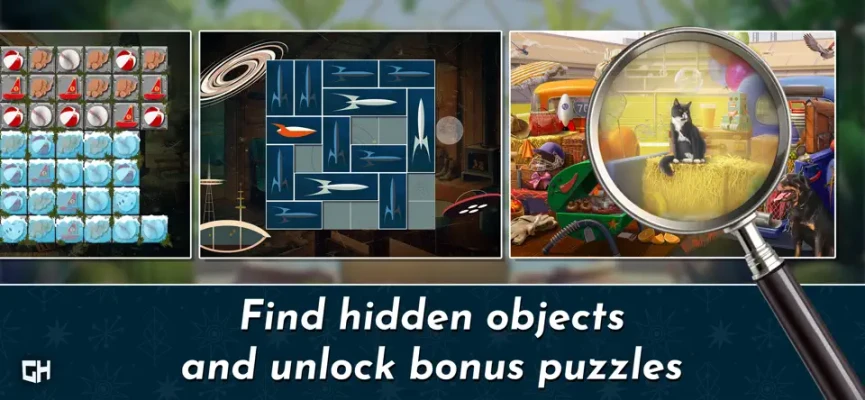
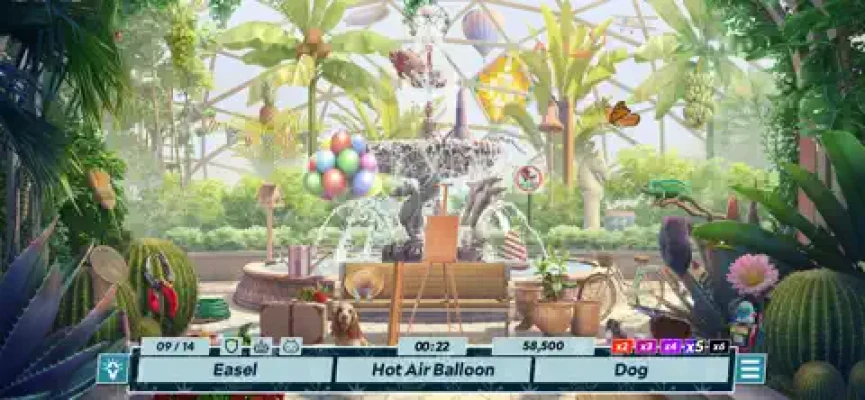
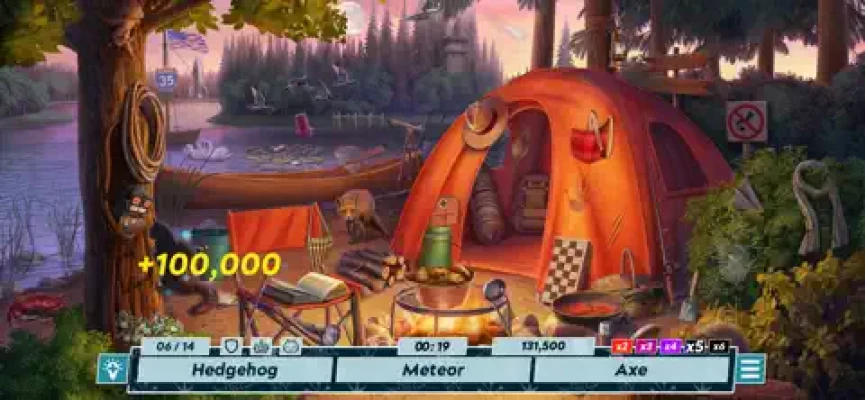
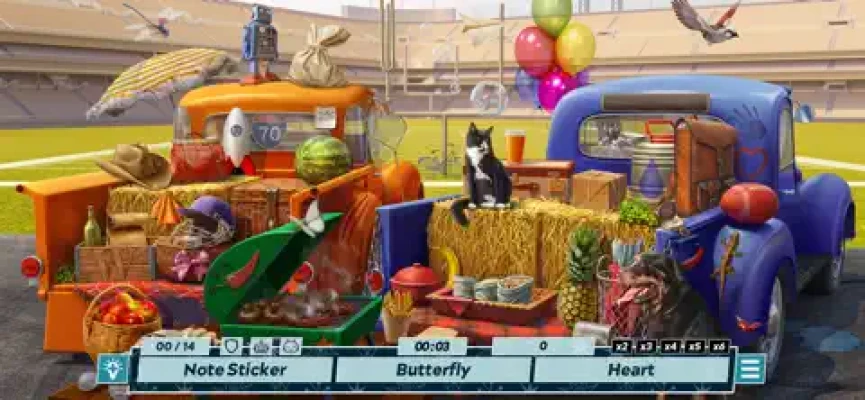
Across 20 locations, players search for cleverly concealed objects while switching between different search formats. The game also includes Match 3, Mahjong, block sliding, spot-the-difference, tile swapping, jigsaw puzzles, Solitaire, Word Search, Memory Match, Match One, and a final U.S. trivia challenge.
The result is a casual puzzle game that rewards careful observation, vocabulary, memory, pattern recognition, and patience.
Road Trip USA 3 - Central Game Information
Game: Road Trip USA 3 - Central
Developer: GameHouse LLC
Genre: Puzzle / Hidden Object
Platforms: iPhone and iPad
Minimum OS: iOS 13.0 or later; iPadOS 13.0 or later
Languages: English, Dutch, French, German, Italian, Portuguese, and Spanish
Game Size: Approximately 422.8 MB on the App Store
Game Modes: Hidden-object puzzles and multiple mini-games
Locations: 20 Central U.S. locations
Hidden-Object Modes: 7
Mini-Game Types: 10
Features: Bonus puzzles, hidden objects, U.S. trivia finale, Game Center support
Business Model: Free play with advertising, with optional paid access and GameHouse+ subscriptions
The App Store currently lists the game as a Puzzle title developed by GameHouse LLC.
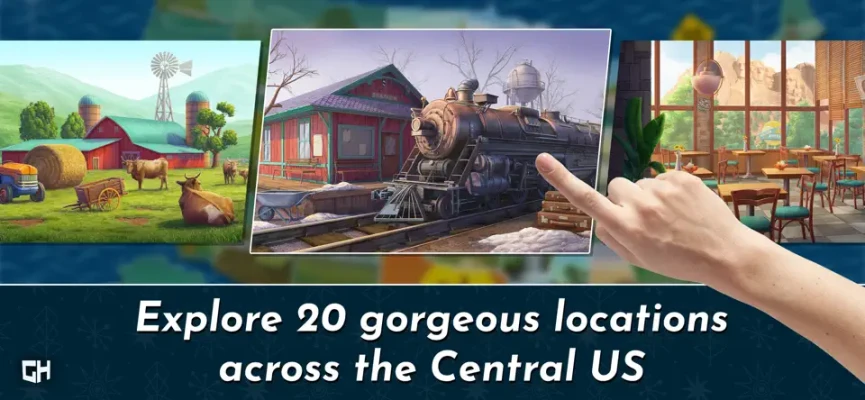
Explore 20 Central U.S. Locations
One of the game's main attractions is its travel theme. Instead of repeatedly solving puzzles against an unrelated background, Road Trip USA 3 - Central presents a journey through different parts of the Central United States.
Every location provides a new visual scene to investigate. Small towns, landmarks, city environments, and other American settings give the hidden-object sections a sense of progression.
When entering a new location, take a moment to study the entire scene before immediately searching for the first item. Familiarizing yourself with the layout can make the rest of the puzzle considerably easier.
Hidden-Object Modes
Road Trip USA 3 - Central does more than simply ask you to locate pictures from a list. It uses several different search formats that test different skills.
Word Mode
Word Mode gives you object names and asks you to locate the corresponding items in the scene.
Read the complete list before starting whenever possible. You may recognize some objects immediately, while others can be hidden in cluttered areas.
Riddle Mode
Riddle puzzles require you to interpret a clue before finding the correct object.
Don't search for an object based only on one word from the clue. Think about the complete meaning of the riddle and consider synonyms or alternative interpretations.
Scramble Mode
Scrambled letters make the object names less obvious.
Try identifying common letter combinations and mentally rearranging the letters into recognizable words. If one word seems difficult, move to another clue and return to it later.
Missing Vowels
This mode removes vowels from words, requiring you to reconstruct the object name.
Look for familiar consonant patterns first. Once you identify the likely word, finding the corresponding object becomes much easier.
Silhouette Mode
Silhouette puzzles remove the visual details of an object.
Focus on the outline, size, shape, and distinctive features rather than color. Objects with unusual silhouettes are often easier to recognize than visually complicated ones.
Sequence Mode
Sequence challenges require you to understand an ordering relationship.
Look for numerical, alphabetical, visual, or logical patterns before selecting an answer. Avoid making a random choice simply because one option looks familiar.
Alpha Sort
Alpha Sort challenges your ability to recognize and organize objects alphabetically.
Pay attention to the first letter first, then use the following letters when multiple possibilities appear similar.
Mini-Games Guide
Road Trip USA 3 - Central includes 10 different mini-game styles. These provide a useful change of pace between hidden-object scenes.
Match 3
Look for combinations that create matches while keeping an eye on the overall board.
Don't automatically make the first available match. Check whether another move can create a larger combination or open more useful spaces.
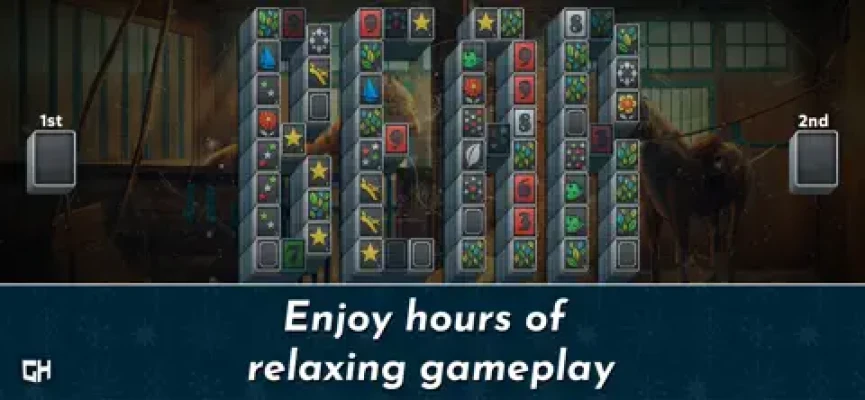
Mahjong
Match identical tiles while considering which pieces are currently accessible.
Avoid removing a pair simply because it is available. A better move may expose several new tiles and give you more options.
Block Slide
Think about the destination of each block before moving it.
The most efficient approach is usually to create open space first rather than repeatedly moving the same pieces without a plan.
Spot the Differences
Compare the two images systematically.
Instead of scanning randomly, divide the scene into sections and inspect each section from left to right. This reduces the chance of overlooking a small visual difference.
Tile Swap
Study the complete image before making unnecessary moves.
Try to identify where each major part belongs and work toward a recognizable section of the final arrangement.
Jigsaw
Start with corners and edges whenever they are identifiable.
Once the outside frame is established, work toward distinctive objects, colors, and patterns in the center.
Solitaire
Think about future moves rather than focusing only on the current card.
Whenever multiple moves are possible, consider which one is most likely to reveal a hidden card or preserve useful options.
Match One
Look carefully at the available pieces and identify the relationship required by the puzzle.
Speed is less important than recognizing the correct pattern and avoiding moves that leave the board unnecessarily restricted.
Word Search
Scan systematically instead of moving your eyes randomly across the grid.
Search horizontally, vertically, and diagonally, and remember that a word may appear in either direction depending on the puzzle.
Memory Match
Concentrate on remembering positions rather than simply reacting to individual cards.
When you reveal a card, mentally associate its location with its image. Building a consistent mental map makes later matches much faster.
Complete Strategy Guide
1. Study the Scene Before Searching
The biggest mistake in hidden-object games is clicking immediately without understanding the environment.
Spend a few seconds looking at the entire screen. Notice unusual shapes, bright colors, objects that seem out of place, and areas containing dense visual clutter.
This initial scan gives you a mental map of the scene.
2. Search by Zones
Divide every scene into sections.
For example:
Upper-left
Upper-center
Upper-right
Middle-left
Center
Middle-right
Lower-left
Lower-center
Lower-right
Search one area completely before moving to the next. This approach is much more reliable than jumping randomly around the screen.
3. Look for Objects That Do Not Belong
Hidden objects are often placed naturally within the environment, but some stand out because they don't fit the surrounding scene.
If you are searching a garage, for example, don't only look for objects sitting on shelves. Check walls, vehicles, floors, windows, signs, containers, and unusual decorations.
4. Search Edges and Corners Carefully
Corners are easy to ignore because players naturally concentrate on the center of the screen.
Check:
Behind larger objects
Along walls
Near the bottom edge
Around windows
Inside vehicles
On signs
Near furniture
Around decorative elements
Small portions of an object can sometimes blend into the background.
5. Use Shape Before Color
If you know what you are searching for, identify its general shape first.
Color can be misleading because lighting, scenery, and surrounding objects can make an item difficult to distinguish. Shape and outline are often more dependable.
6. Read Riddles Carefully
For riddle-based searches, don't assume the clue refers to the most obvious interpretation.
Think about:
Synonyms
Object functions
Alternative meanings
Physical characteristics
Common expressions
The answer may be represented visually rather than literally.
7. Reconstruct Scrambled Words
For scrambled-object puzzles, identify recognizable letter groups.
Look for common endings and beginnings, then mentally rearrange the remaining letters. If the word still doesn't make sense, move on and return after solving easier entries.
8. Master Missing-Vowel Puzzles
Consonant patterns can reveal a surprising amount of information.
For example, when several consonants appear in a familiar order, mentally insert common vowels until a recognizable English word appears.
9. Use Silhouette Recognition
For silhouette puzzles, imagine the object as a simple outline.
Ask yourself:
Is it round or rectangular?
Does it have handles?
Is it long or short?
Does it have legs?
Does it have a distinctive top or bottom?
This is usually faster than trying to identify a silhouette by imagined color.
10. Don't Rush the Mini-Games
Road Trip USA 3 - Central is designed around observation and puzzle solving rather than pure speed.
If a Match 3, Mahjong, or tile puzzle becomes difficult, pause and examine the entire board. A few seconds of planning can prevent several unnecessary moves.
11. Use a Consistent Mahjong Strategy
Before removing a pair, check which tiles will become available afterward.
Prioritize moves that:
Open blocked tiles.
Increase your available choices.
Reduce crowded sections.
Avoid leaving difficult isolated tiles for the end.
12. Solve Spot-the-Difference Puzzles Systematically
Use a fixed scanning pattern.
Start at the top-left and move across the scene. Then continue downward row by row.
When you find one difference, don't stop scanning that area. There may be multiple differences close together.
13. Build Jigsaw Puzzles From the Outside
Corners are usually the easiest pieces to identify.
After placing corners, connect edge pieces and gradually fill the interior using recognizable objects, lines, textures, and color transitions.
14. Think Ahead in Solitaire
A playable card is not automatically the best card to move.
Consider whether the move:
Reveals a hidden card.
Opens a useful column.
Creates another possible sequence.
Preserves flexibility for later turns.
15. Remember Locations in Memory Match
Don't try to memorize everything at once.
Instead, remember cards in small groups. If you discover two cards that match, immediately connect their locations in your mental map.
16. Treat Bonus Puzzles as Practice
Bonus puzzles are useful for improving your observation skills.
The skills transfer directly between modes. Spot-the-difference puzzles improve visual scanning, Memory Match improves location recall, and word puzzles improve recognition speed.
How to Find Hidden Objects Faster
A good hidden-object routine is:
Scan → Divide → Identify → Confirm → Move on
First scan the entire scene. Divide it into zones. Identify likely objects. Confirm that the item actually matches the target. Then move to the next area.
Avoid repeatedly searching the same location unless you have a specific reason to return.
Best Approach for Difficult Scenes
When an object seems impossible to find, stop searching randomly.
Try this sequence:
Re-read the target.
Consider synonyms or alternate meanings.
Identify the object's basic shape.
Search the scene edges.
Check objects that partially overlap.
Inspect unusually colored areas.
Look at signs, walls, windows, vehicles, and decorations.
Return to the central area after checking the perimeter.
This method is particularly effective when an object blends into the environment.
Tips for a Relaxing Playthrough
Road Trip USA 3 - Central works best when approached as an observation game rather than a race.
Take time to appreciate each location, study the artwork, and solve puzzles methodically. If you become stuck, changing your search method is often more effective than simply searching faster.
The variety of puzzle types also makes it worthwhile to treat each section as a different challenge. A player who is excellent at hidden-object scenes may need a different approach for Mahjong, Solitaire, or Memory Match.
Difficulty and Challenge
The game's difficulty comes mainly from visual clutter, changing puzzle rules, word recognition, and the need to adapt between different mini-games.
There is no single skill that solves every challenge. Strong performance comes from combining:
Observation
Vocabulary
Memory
Pattern recognition
Spatial reasoning
Logical thinking
Patience
The later experience can feel more demanding because the player must continually switch between these skills.
Atmosphere and Presentation
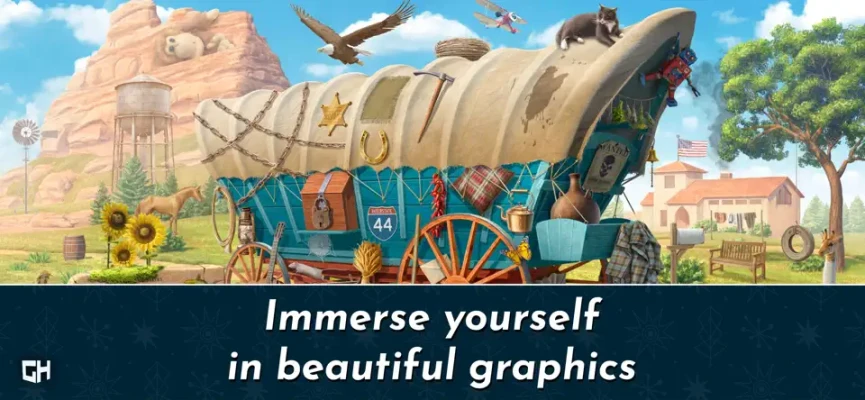
The Central U.S. road-trip theme gives the game a relaxed travel atmosphere. Rather than focusing on combat or competition, it encourages players to explore illustrated environments and discover objects hidden within them.
The scenery, landmarks, small-town settings, and varied locations are an important part of the experience because they provide the visual environments in which the puzzles take place.
Pros and Cons
Pros
20 Central U.S. locations
Seven different hidden-object modes
Ten types of mini-games
Relaxing casual gameplay
Variety between puzzle sections
Bonus puzzles
U.S. trivia finale
Supports iPhone and iPad
Suitable for players who enjoy observation and logic puzzles
Cons
Repeated puzzle formats can eventually feel familiar
Some hidden objects can be difficult to distinguish from the scenery
Advertising is part of the free-play model
Optional subscriptions and paid access are available
Players looking for action or fast-paced gameplay may find it too relaxed
The App Store currently shows a 4.6/5 rating from 135 ratings, while the listing also contains some feedback about repetition and access issues.
Is Road Trip USA 3 - Central Worth Playing?
Road Trip USA 3 - Central is a good choice for players who enjoy hidden-object games, casual puzzles, visual searches, word challenges, and relaxing travel-themed adventures.
Its strongest feature is variety. Instead of relying on one hidden-object format throughout the entire game, it introduces different search rules and several mini-games.
If you enjoy games where careful observation matters more than reflexes, this is a particularly good fit.
Frequently Asked Questions
What type of game is Road Trip USA 3 - Central?
It is a puzzle and hidden-object adventure game centered around a road trip through the Central United States.
How many locations are in Road Trip USA 3 - Central?
The game features 20 locations across the Central U.S.
How many hidden-object modes are available?
There are seven hidden-object modes: Word, Riddle, Scramble, Missing Vowels, Silhouette, Sequence, and Alpha Sort.
What mini-games are included?
The game includes Match 3, Mahjong, Block Slide, Spot the Differences, Tile Swap, Jigsaw, Solitaire, Match One, Word Search, and Memory Match.
Does the game have bonus puzzles?
Yes. Finding hidden objects can unlock bonus puzzles.
Is there a trivia challenge?
Yes. The game includes a finale that tests your knowledge of U.S. trivia.
Can I play Road Trip USA 3 - Central on iPhone?
Yes. The App Store lists compatibility with iPhone and requires iOS 13.0 or later.
Can I play it on iPad?
Yes. It is designed for iPad and requires iPadOS 13.0 or later.
Does Road Trip USA 3 - Central contain ads?
Yes. The game can be played for free with advertising, while paid options are available for players who want additional access or an ad-free experience.
Does the game support offline play?
The GameHouse+ VIP offering advertises offline access for its games. Availability of offline access can depend on the specific subscription arrangement.
Final Verdict
Road Trip USA 3 - Central is a laid-back puzzle adventure built around exploration, hidden objects, and varied brain-teasing activities. Its combination of seven search modes, ten mini-game styles, 20 Central U.S. locations, bonus puzzles, and a trivia finale gives the journey more variety than a basic hidden-object game.
The best strategy is simple: slow down, scan carefully, work systematically, and adapt your approach to each puzzle type. Players who enjoy hidden-object games and relaxed logic challenges will find plenty to explore.
Rate the Game
User Reviews






Popular Games













 Android
 iOS
iOS Windows
 Xbox
Xbox