
Latest Version
October 05, 2026
Gamehouse LLC
Puzzle
iOS
0
Report a Problem
More About :game
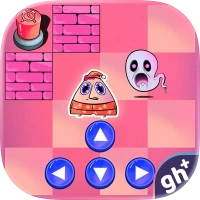
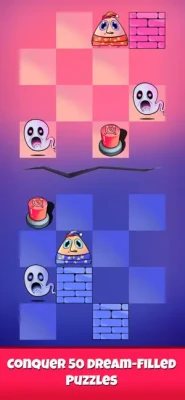
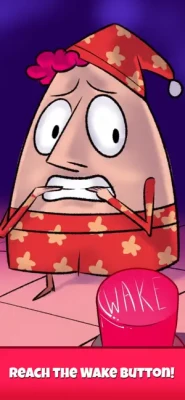
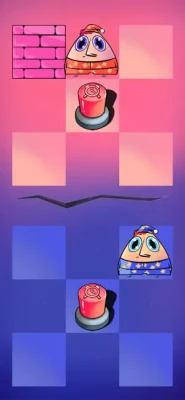
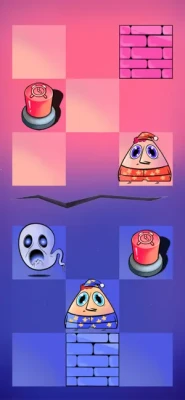
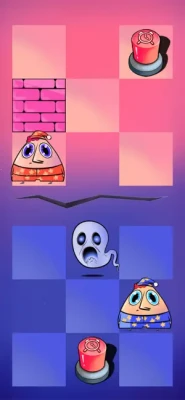
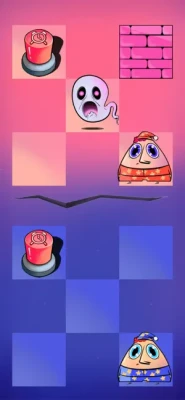
The game's central mechanic is unusual: one swipe affects both twins. Every movement therefore needs to be planned carefully because moving one twin also changes the position of the other. The goal is to navigate the two characters through each maze and reach the Wake Button before the nightmare catches them. The App Store lists 50 dream-filled puzzles with increasingly tricky layouts and mechanics.
What Is Twins & Dreams?
Twins & Dreams is a brain-training puzzle game from Gamehouse LLC that combines spatial reasoning with timing and strategic movement.
At first, the concept seems simple: swipe to move.
The challenge comes from the fact that the twins are linked. A movement that helps one character can place the other in danger.
That means every swipe has two consequences.
You need to consider:
Where Twin A will move
Where Twin B will move
What obstacles are nearby
Whether a monster can reach either twin
Whether a portal changes the route
Whether a spirit can protect or assist you
Whether the next move will leave both characters safe
The App Store describes the game as a puzzle adventure built around spatial thinking, quick reactions, and careful decision-making.
The Story Behind Twins & Dreams
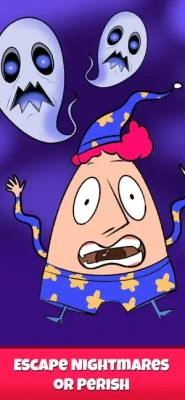
The adventure begins with a child trapped inside a nightmare.
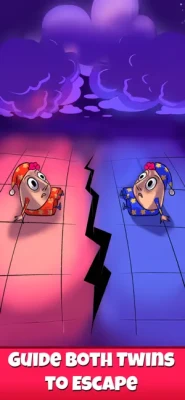
The child becomes split into two halves, creating the game's defining puzzle mechanic.
The two halves must work together to escape the dream world.
Unfortunately, the maze isn't empty.
Ghostly nightmare creatures patrol the environment, traps block routes, and the player must use portals and helpful spirits to create a safe path.
The ultimate objective is simple:
Guide both twins to the Wake Button and escape the nightmare.
How the Linked Movement System Works
This is the most important mechanic to understand.
A normal puzzle game allows you to move one character independently.
Twins & Dreams changes that rule.
When you swipe, both twins respond to the movement.
For example, imagine the twins are positioned like this:
Twin A: near the top-left
Twin B: near the bottom-right
A swipe to the right doesn't simply mean:
"Move the character I care about to the right."
Instead, you need to think:
"What happens to BOTH characters if I move right?"
That small difference completely changes how you solve puzzles.
Think Two Moves Ahead
Beginners often look at the current position and ask:
"Where should I move now?"
A better question is:
"Where will both twins be after this move, and what will my next move be?"
This prevents many unnecessary mistakes.
Before swiping, mentally simulate the movement.
Step 1
Identify the intended destination.
Step 2
Check what happens to the other twin.
Step 3
Look at the next available movement.
Step 4
Check for enemies or traps.
Step 5
Make the move.
This takes only a moment once you get used to the mechanic.
Never Plan for Only One Twin
This is the most common strategic mistake.
You may see an obvious route for one character and immediately swipe toward it.
But if the second twin hits a wall, enters a dangerous area, or moves into the path of a nightmare creature, the move may be useless.
Always treat the twins as a single puzzle system.
A successful move should ideally improve the position of both characters.
The Best Way to Read a Puzzle
Before making your first move, pause.
Look at the complete maze.
Identify:
Starting positions
Walls
Open corridors
Traps
Monsters
Portals
Spirit helpers
Wake Button location
Potential dead ends
The game rewards observation.
You don't have to move immediately.
A few seconds of planning can save a long sequence of failed movements.
Build a Safe Route Before Chasing the Goal
The Wake Button is your final destination, but don't automatically move toward it as quickly as possible.
First establish a safe route for both twins.
Think of the puzzle in sections:
Starting area → safe corridor → obstacle → portal/helper → final route → Wake Button
This makes complex levels much easier to understand.
How to Use Portals
Portals can dramatically change how you approach a puzzle.
Instead of treating a portal as simply a shortcut, think of it as a position-changing tool.
A portal may allow one or both twins to reach an area that would otherwise be difficult or impossible to access.
Before entering one, consider:
Where will the twin emerge?
Where is the other twin?
Is the exit safe?
Does the portal help create separation?
Can the portal help avoid a monster?
Does using it create a new route toward the Wake Button?
Don't enter a portal simply because it is available.
Use it because it improves your overall position.
Portal Strategy for Difficult Puzzles
When a portal appears to be the only route forward, don't immediately use it.
First examine the area around its exit.
If the exit places a twin close to danger, the portal may require another move immediately afterward.
Try to understand the sequence:
Enter portal → emerge → reposition → avoid danger → continue toward Wake
This prevents you from solving one part of the puzzle only to create another problem.
Dealing With Nightmare Monsters
Nightmare creatures are one of the biggest sources of pressure in Twins & Dreams.
The App Store specifically highlights the need to outsmart monsters through precise timing and smart decisions.
Don't think of enemies simply as obstacles.
They are part of the puzzle.
Your objective is often not to eliminate them, but to manipulate your movement so that both twins remain safe.
Don't Rush When a Monster Appears
When a monster is nearby, panic is usually the worst response.
Instead:
Stop.
Observe the creature's position.
Determine which routes are safe.
Check whether a portal can help.
Look for a spirit ability.
Plan the next two movements.
Move only when you know where both twins will end up.
The game is built around strategic movement, so careful timing is more valuable than random speed.
Use Spirits as Puzzle Tools
Helpful spirits can be used to block danger and clear a path.
Don't think of them as optional decoration.
When a spirit becomes available, ask:
What problem can this spirit solve?
It might help you:
Block a dangerous route
Create a safer passage
Prevent an enemy from reaching a twin
Open a path through a difficult section
Give you time to reposition
The best use of a spirit is often not the first moment it becomes available.
Sometimes saving the ability for the most dangerous section produces a much better result.
Traps Require Patience
Traps add another layer to the movement puzzle.
A route that appears open may become dangerous if you move without considering the trap's position.
Before entering a suspicious section, determine whether:
Both twins can cross safely
One twin will be forced into danger
The trap blocks your intended return route
You need to use another mechanic first
Remember that because movement is linked, a safe path for one twin isn't necessarily safe for both.
How to Solve Difficult Levels
When you're stuck, don't keep making random moves.
Use a structured approach.
Step 1: Forget Your Previous Attempts
Temporarily ignore the route you've been trying.
Step 2: Study the Entire Board
Find every important object.
Step 3: Locate the Goal
Determine where the Wake Button is.
Step 4: Work Backward
Ask:
What positions must both twins occupy immediately before reaching the Wake Button?
Step 5: Identify the Last Safe Move
Once you know the final position, determine how to reach it.
Step 6: Work Backward Again
Continue until you reach the starting position.
This reverse-planning method can be much easier than blindly searching forward.
Work Backward From the Wake Button
The Wake Button should not always be treated as something you simply walk toward.
Instead, consider it the end point of a sequence.
Ask:
Where must the twins stand to activate it?
Then:
What movement places them there?
Then:
What movement allows that previous movement?
Continue backward until the route becomes clear.
This is especially useful when the maze contains multiple branches.
Avoid Dead Ends
A dead end is particularly dangerous in a linked-movement puzzle because recovering from it may require several additional moves.
Before entering a narrow corridor, check:
Can both twins eventually leave?
Does the corridor lead somewhere useful?
Is the second twin positioned correctly?
Could a monster trap you?
Will the next swipe force an unwanted movement?
If you aren't sure, consider another route.
Think in States, Not Individual Moves
Advanced players can think of each puzzle as a sequence of states.
A state includes:
Twin A's position
Twin B's position
Enemy positions
Portal locations
Available spirit assistance
Remaining safe routes
Your goal is to move from:
Starting State → Safe State → Better State → Goal State
This way of thinking prevents you from becoming obsessed with individual swipes.
One move is only valuable if it improves the overall state of the puzzle.
The Two-Twin Rule
A simple rule can help throughout the game:
Never make a move unless you understand its effect on both twins.
You don't always need to predict the entire puzzle.
But you should understand the immediate consequences of your next movement.
This single habit makes the linked-control system much easier to master.
How to Handle a Puzzle That Looks Impossible
If a puzzle seems impossible, there is usually a mechanic you haven't fully considered.
Check:
Portals
Could the portal reposition one of the twins?
Spirits
Can a helpful spirit block danger?
Enemy movement
Can you use the monster's position to create an opening?
Traps
Can you approach the trap from another direction?
Twin positioning
Does one twin need to move away from the goal before both can eventually reach it?
Sometimes the correct solution initially looks like you're moving away from the Wake Button.
That can be completely intentional.
Why Moving Away Can Be the Correct Move
This is one of the most important puzzle concepts.
Suppose Twin A is close to the goal but Twin B is trapped behind an obstacle.
Moving Twin A toward the goal may make the situation worse.
Instead, you might need to move both twins away from the goal to reposition them.
The correct sequence could be:
Move away → reposition → use portal → avoid monster → approach goal
Don't judge a move by whether it immediately gets you closer to the Wake Button.
Judge it by whether it improves the overall puzzle state.
Timing Strategy
Twins & Dreams isn't purely a turn-based logic exercise.
The App Store emphasizes both spatial thinking and quick reactions, particularly when dealing with nightmare creatures.
That means you need two different skills:
Planning for maze navigation.
Timing for dangerous encounters.
Learn to switch between them.
When nothing is threatening you, take your time.
When an enemy creates a narrow opportunity, act decisively.
50 Dream-Filled Puzzles
The game includes 50 puzzles featuring dreamlike mazes, tricky layouts, and changing challenges.
Rather than treating the 50 puzzles as one long sequence, think of them as a gradual training process.
Early puzzles teach the basic linked movement concept.
Later puzzles can demand more careful combinations of:
Movement
Timing
Enemy avoidance
Portals
Traps
Spirit assistance
Spatial planning
The most useful thing you can carry from one puzzle to another is not a memorized solution.
It's an understanding of how the game's movement system works.
Beginner Tips for Twins & Dreams
1. Study the board first
Don't rush your first move.
2. Track both twins
Never focus exclusively on one.
3. Plan two moves ahead
The immediate move isn't always the important one.
4. Watch monsters carefully
Timing can be more important than speed.
5. Use portals deliberately
A portal is a strategic tool, not merely a shortcut.
6. Save helpful spirits
Use them when they solve a real problem.
7. Avoid random swipes
Every move should have a purpose.
8. Work backward
Start from the Wake Button when you're stuck.
9. Expect temporary setbacks
The correct solution may initially move you farther from the goal.
10. Reset mentally when stuck
Instead of repeating the same sequence, look at the puzzle from a different angle.
Advanced Puzzle Techniques
Technique 1: Position Correction
Sometimes one twin is perfectly positioned while the other is not.
Your goal becomes finding movements that improve the weaker position without destroying the stronger one.
Think of this as position correction.
Technique 2: Controlled Separation
The twins are linked, but their positions don't necessarily need to remain equally useful throughout the entire puzzle.
A good sequence may temporarily place one twin in a less convenient location so that the other can access an important route.
Technique 3: Enemy Manipulation
If an enemy blocks the obvious path, consider whether its position can actually help you.
Instead of trying to move away immediately, determine whether your movement can cause the creature to occupy a different part of the maze.
Technique 4: Portal Preparation
Don't think only about entering the portal.
Plan for the moment after you exit.
A successful portal move should ideally leave you with a useful next action.
Technique 5: Safe-State Recognition
Learn to recognize safe positions.
If both twins are away from danger and have multiple possible routes, you've created a good state.
From there, continue solving rather than taking unnecessary risks.
Common Mistakes
Moving Toward the Goal Too Early
The Wake Button is the objective, but rushing toward it can leave the other twin in a terrible position.
Ignoring the Second Twin
This is the easiest way to turn a promising move into a failed attempt.
Using a Portal Without Checking the Exit
A portal can solve one problem and create another.
Wasting Spirit Assistance
Helpful spirits are most valuable when they solve a specific danger.
Repeating the Same Failed Sequence
If the same sequence keeps failing, change your approach rather than simply repeating it faster.
Panicking Around Monsters
Observe first. Move second.
Puzzle Difficulty
Twins & Dreams is accessible at the basic control level because movement is based on simple swipes.
The strategic difficulty is much higher.
The challenge comes from combining a simple control scheme with linked movement.
That makes the game particularly suitable for players who enjoy:
Brain-training puzzles
Spatial reasoning
Maze games
Logic challenges
Casual puzzle adventures
Escape-style games
Dreamlike fantasy settings
Visual Style and Atmosphere
The dream setting gives Twins & Dreams a mysterious atmosphere.
Instead of presenting ordinary puzzle rooms, the game places its mechanics inside surreal dream mazes filled with ghostly monsters, traps, portals, and magical spirits.
The nightmare premise also gives the objective more urgency: you're not simply solving a maze for a score; you're trying to escape before the nightmare catches you.
Game Features
50 dream-filled puzzles
Linked movement controlling both twins
Dreamlike maze environments
Nightmare monsters
Dangerous traps
Portals
Helpful spirits
Strategic movement
Spatial-thinking challenges
Timing-based encounters
Wake Button escape objective
Puzzle adventure progression
GameHouse+ support
GameHouse+ and Free Play
The App Store lists Twins & Dreams as a free game with in-app purchases and advertising.
The GameHouse+ system offers a free membership option with ads, while GH+ VIP provides benefits including ad-free play, offline access, and additional in-game perks. The U.S. App Store listing currently shows monthly and yearly subscription options of $9.99 and $89.99, respectively.
Technical Information
Game: Twins & Dreams
Developer: Gamehouse LLC
Genre: Puzzle / Brain-Training
Main Content: 50 dream puzzles
Platform: iPhone and iPad
Mac: Compatible with Macs using Apple M1 or later, according to the App Store listing
Apple Vision: Compatible according to the listing
Minimum iOS: iOS 14.0 or later
Size: Approximately 296.7 MB
Languages: English plus 18 additional languages
Age Rating: 18+ on the U.S. App Store
Monetization: Free with advertising and in-app purchases
Pros and Cons
Pros
Original linked-movement mechanic
50 dedicated puzzles
Strong spatial reasoning challenge
Dreamlike atmosphere
Monsters add timing pressure
Portals create interesting puzzle possibilities
Helpful spirits add another strategic layer
Simple swipe controls
Suitable for short puzzle sessions
Cons
Linked movement can be frustrating at first
Some puzzles require significant trial and error
Monster sections add pressure that may not appeal to every puzzle player
The current App Store listing has only four ratings, so there is limited review data for judging broad player sentiment.
Is Twins & Dreams Worth Playing?
Twins & Dreams is worth trying if you enjoy unusual puzzle mechanics.
Its strongest feature is the decision to make both characters respond to the same movement. That turns a familiar maze concept into a much more interesting spatial challenge.
The game also avoids relying on a single puzzle mechanic. Portals, traps, nightmare creatures, and helpful spirits give you different problems to consider throughout the 50-puzzle campaign.
The main learning curve comes from changing your mindset.
You aren't controlling two independent characters.
You're solving a single puzzle involving two connected positions.
Once that idea clicks, the game becomes much more satisfying.
Frequently Asked Questions
How many puzzles are in Twins & Dreams?
Twins & Dreams includes 50 dream-filled puzzles.
How do you control the twins?
You use swipe controls, but each movement affects both halves of the character simultaneously.
What is the objective?
The objective is to guide both twins through the nightmare maze and reach the Wake Button to escape.
Are there enemies?
Yes. Ghostly nightmare creatures create additional danger and require careful timing and movement.
Are there traps?
Yes. Traps are part of the dream-maze challenges.
What are the portals used for?
Portals provide alternative movement routes and can reposition characters within the puzzle.
What are the spirits?
Helpful spirits can assist with blocking danger and clearing paths.
Is Twins & Dreams a difficult puzzle game?
The controls are simple, but the linked movement creates a more demanding strategic challenge. Later puzzles require careful spatial planning and timing.
Can you play Twins & Dreams on iPad?
Yes. The App Store lists the game as designed for iPad and compatible with iPadOS 14.0 or later.
Does Twins & Dreams have a story?
Yes. The game is built around a child trapped in a nightmare after being split in two, with the goal of escaping the dream world.
Final Verdict
Twins & Dreams takes a simple idea—swiping through a maze—and turns it into a clever two-character puzzle system.
The key is that every movement affects both twins. That forces you to think spatially, anticipate consequences, and sometimes make a move that appears wrong because it is necessary for the larger solution.
With 50 dream puzzles, nightmare monsters, traps, portals, helpful spirits, and the final objective of reaching the Wake Button, the game offers a focused puzzle adventure with a distinctive identity.
The best strategy is simple:
Observe the entire maze → track both twins → plan ahead → use portals and spirits intelligently → avoid unnecessary movement → reach the Wake Button.
For players who enjoy brain-training games, maze puzzles, spatial challenges, and unusual movement mechanics, Twins & Dreams is an intriguing addition to the genre.
Rate the Game
User Reviews










Popular Games
















 Android
 iOS
iOS Windows
 Xbox
Xbox