
Latest Version
September 28, 2026
UNICO STUDIO
Puzzle
iOS
0
Report a Problem
More About :game
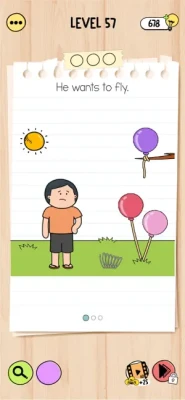
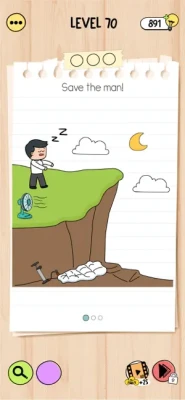
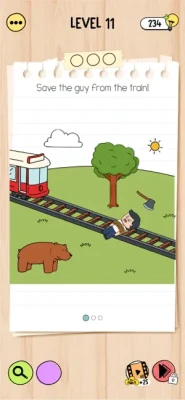
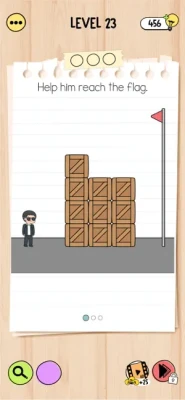
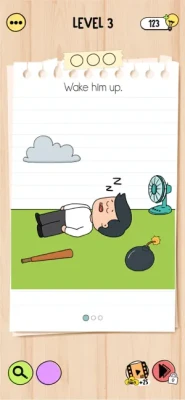
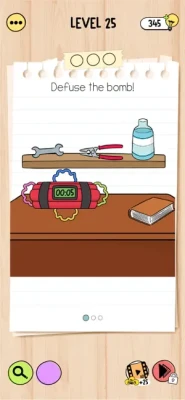
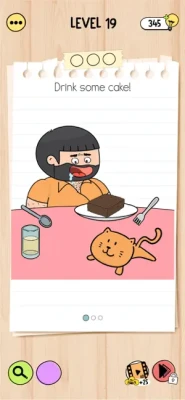
The fifth entry in the Brain Test series brings the familiar humorous style of the franchise into a larger puzzle adventure. The current version features 135 levels, while previous updates have added new puzzles, achievements, and the Brain Quest competitive event. The game can also be played offline, making it a convenient choice for quick puzzle sessions without an internet connection.
Game Information
- Game: Brain Test 5: Tricky Challenge
- Developer: UNICO STUDIO
- Genre: Puzzle / Brain Teaser / Trivia
- Players: Single-player
- Age Rating: 4+
- Platforms: iPhone and iPad, with Android and Windows availability also listed for the game
- Play Style: Offline-friendly puzzle gameplay
- Levels: 135 levels currently advertised
- Languages: English plus 18 additional languages on the App Store
- Release: 2025
- Latest App Store Version: 1.2.7
- App Store Rating: 4.8/5 from more than 2,000 ratings at the time of checking
- Developer: UNICO STUDIO
What Is Brain Test 5?
Brain Test 5 is not a traditional trivia quiz where every question has an obvious answer. Its puzzles are designed around misdirection and experimentation.
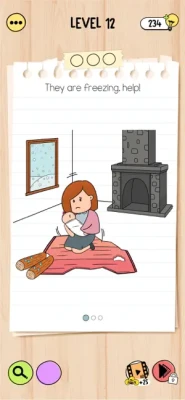
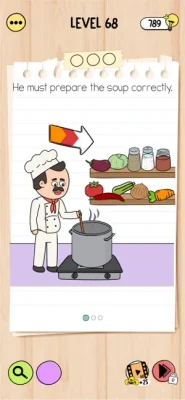
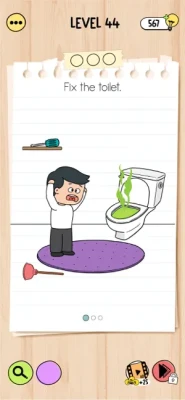
A level may look simple at first, but the intended solution can involve touching, dragging, combining, moving, or examining objects on the screen. Some challenges use multiple scenes or steps, so solving the first part of a puzzle may only reveal what you need to do next.
This makes Brain Test 5 particularly interesting for players who enjoy tricky puzzles, logic games, brain teasers, riddles, IQ challenges, and problem-solving games.
Main Features
1. Tricky Brain Puzzles
The central attraction is the collection of puzzles that deliberately challenge your assumptions. The answer is not always where you expect it to be.
2. Multi-Stage Challenges
Some puzzles contain several stages rather than one simple interaction. Completing one task can change the scene or reveal the next objective.
3. Unexpected Solutions
Brain Test 5 frequently rewards players who experiment instead of following the most obvious interpretation of the question.
4. 135 Levels
The current game promotion advertises 135 levels filled with different challenges, surprises, and puzzle objectives.
5. Offline Gameplay
The game is designed to provide offline puzzle entertainment, making it suitable for playing during travel, waiting periods, or anywhere without a reliable connection.
6. Brain Quest
The game has also introduced Brain Quest, a competitive event where players can progress through challenges and work toward rewards.
7. iOS Achievements
Recent updates added iOS achievements, giving players another reason to continue completing challenges.
8. Funny Characters and Situations
The puzzles are presented with the playful humor associated with the Brain Test series. Characters, objects, and unusual situations can all become part of the solution.
Brain Test 5 Gameplay Guide
Brain Test 5 is best approached as an interactive puzzle playground rather than a conventional quiz.
When you start a level, first read the question carefully. Then inspect everything visible on the screen. Do not immediately assume that only the obvious buttons or objects are interactive.
Try tapping suspicious objects, dragging items, moving characters, changing positions, and testing unusual interactions.
The important idea is simple:
If the obvious solution does not work, question the puzzle itself.
Full Brain Test 5 Strategy Guide
1. Read the Question Twice
Some Brain Test puzzles hide important information inside the wording.
Before touching anything, read the entire question carefully. Look for:
- Unusual wording
- Specific numbers
- Directions
- Objects mentioned in the question
- Words that may have more than one meaning
- Instructions that seem unnecessarily specific
A small detail can completely change the intended solution.
2. Examine the Entire Screen
Do not focus only on the main character.
Check:
- Corners of the screen
- Background objects
- Buttons
- Decorations
- Items behind characters
- Objects that look insignificant
- Areas around the puzzle
Brain Test-style puzzles often encourage players to interact with things that appear unrelated to the question.
3. Tap Before You Guess
If something looks suspicious, tap it.
Try:
- Characters
- Objects
- Background elements
- Text
- Numbers
- Icons
- Containers
- Doors
- Signs
Experimentation is often more productive than repeatedly guessing the answer.
4. Drag Objects Around
Dragging is particularly important in this type of puzzle.
Try moving objects:
- Across the screen
- Onto another object
- Away from a character
- Into empty areas
- Behind another object
- Toward a button or target
An item that appears decorative may become useful when moved.
5. Try Combining Actions
Some challenges require more than one interaction.
For example, you may need to:
- Move an object.
- Tap another object.
- Return to the first object.
- Trigger a new event.
If one action appears to do nothing, it may be preparing the puzzle for the next step.
6. Think Outside the Question
The wording may tell you what needs to happen, but not necessarily how to make it happen.
If the question asks you to solve a problem, consider whether the solution could involve the environment rather than the obvious answer.
Ask yourself:
"What assumption is this puzzle trying to make me believe?"
Then test the opposite.
7. Look for Hidden Interactions
When you are stuck, systematically test the screen.
Start at the top-left corner and work across the screen. Then move downward and test objects one by one.
This prevents you from repeatedly trying the same obvious action.
8. Do Not Rush Multi-Stage Levels
Some levels can feel confusing because the first successful action is not necessarily the final solution.
If the scene changes after an interaction, stop and inspect the new situation carefully.
Treat every new scene as a fresh puzzle.
9. Use Logic Before Random Tapping
Random tapping can occasionally work, but it is inefficient.
Instead, ask:
- What is the goal?
- What prevents me from reaching it?
- Which object could remove that obstacle?
- Is the obvious interpretation misleading?
- What has not been interacted with yet?
This approach becomes increasingly useful as the puzzles become harder.
10. Experiment With Scale and Position
When a puzzle contains several objects, try changing their position or relationship to each other.
Sometimes the important action is not simply tapping an object but placing it somewhere unexpected.
11. Pay Attention to Changes
After every successful action, look at the whole screen again.
A character may move. An object may disappear. A new item may appear. The goal may change.
Do not continue using the previous strategy after the puzzle has changed.
12. Save Your Patience for Difficult Puzzles
Brain Test 5 is deliberately designed to produce moments where the solution feels unexpected.
If you have tried several reasonable ideas without success, stop for a moment and restart your thinking.
A short break can help you notice an interaction you previously ignored.
Advanced Brain Test 5 Tips
Think Like the Puzzle Designer
Ask yourself why each object was included.
If an object seems strangely specific, it may have a purpose.
Challenge Your First Answer
Your first idea is often the answer the puzzle wants you to consider—but not necessarily the correct solution.
Try the opposite interpretation.
Test Movement
If an object can be dragged, assume its position may matter.
Watch for Sequences
A puzzle may require actions in a particular order. If one action does not work, try reversing the sequence.
Search for the Unusual
In ordinary games, visual simplicity often means there is nothing important to find. In Brain Test 5, simplicity can be a trap.
Use Every Clue
Characters, objects, text, numbers, and environmental details can all contribute to a solution.
How to Solve Hard Brain Test 5 Levels
When a level seems impossible, use this five-step method:
Step 1: Read the question carefully.
Step 2: Identify the obvious answer.
Step 3: Assume the obvious answer is a trap.
Step 4: Test every interactive object.
Step 5: Try combining two or more actions.
If that still fails, restart the level mentally rather than repeating the same sequence.
The goal is not simply to guess the answer. The goal is to discover what the puzzle is trying to make you overlook.
Brain Test 5 Level Strategy
Because the game contains many different puzzle situations, there is no single trick that solves every level. The most reliable approach is to recognize the type of challenge in front of you.
Logic Puzzle
Break the problem into smaller pieces and determine what the question is actually asking.
Observation Puzzle
Look carefully for a hidden or unusual object.
Interaction Puzzle
Tap, drag, move, or combine objects.
Multi-Stage Puzzle
Complete the first objective and immediately reassess the new scene.
Trick Question
Question the wording instead of accepting it literally.
Pattern Puzzle
Look for relationships between objects, positions, shapes, or numbers.
Brain Test 5 Difficulty
Brain Test 5 can be considerably more demanding than a straightforward casual quiz because several puzzles use multi-stage scenes and less obvious solutions.
Player feedback on the App Store reflects this difference. Some players praise the game's creativity and mental challenge, while others have found certain levels considerably harder than previous Brain Test games. The developer has acknowledged this feedback and pointed players toward hints and YouTube solutions when they become stuck.
That makes the game particularly suited to players who enjoy experimenting and solving puzzles without immediately being given the answer.
Brain Test 5 Updates
The game has continued receiving new content.
Recent update information includes:
- New puzzle levels
- 25 additional levels in one update
- Ten additional levels and iOS achievements
- Brain Quest competitive event
- Bug fixes and performance improvements
- A current promotion featuring 135 levels
The continuing updates mean the available puzzle content can change over time.
Brain Test 5 Tips for Beginners
If this is your first Brain Test game, remember these simple rules:
- Read everything.
- Tap everything suspicious.
- Drag objects whenever possible.
- Do not assume the question is literal.
- Check the corners of the screen.
- Try actions in different orders.
- Watch carefully after every successful action.
- Do not be afraid to experiment.
- If the obvious answer fails, rethink the question.
- Take a break when a puzzle stops making sense.
Brain Test 5 Pros and Cons
Pros
- Large collection of brain-teasing puzzles
- Creative and unexpected solutions
- Multi-stage challenges
- Funny situations and characters
- Offline-friendly gameplay
- Regular content updates
- Suitable for short or extended puzzle sessions
- Brain Quest event and achievements add additional objectives
Cons
- Some puzzles can be significantly harder than expected
- Certain solutions may feel unintuitive until you discover the intended interaction
- Players who prefer straightforward quizzes may need time to adjust to the game's trick-based design
- Advertising and optional in-app purchases are present on the App Store listing
Who Should Play Brain Test 5?
Brain Test 5 is a good fit for players searching for:
- Brain teaser games
- Tricky puzzle games
- Logic puzzles
- IQ games
- Riddle games
- Offline puzzle games
- Casual brain games
- Problem-solving games
- Funny puzzle challenges
- Interactive trivia games
- Family-friendly puzzle games
It is especially appealing if you enjoy games where the solution requires observation and creative thinking rather than fast reflexes.
Brain Test 5 vs Traditional Puzzle Games
Traditional puzzle games usually teach you a specific mechanic and gradually increase its difficulty.
Brain Test 5 takes a different approach.
Each challenge can introduce a new way of thinking. One level may require careful observation, while the next may depend on dragging an object or interpreting a question differently.
That variety keeps the experience unpredictable and is one of the defining characteristics of the Brain Test series.
Brain Test 5 FAQ
Is Brain Test 5 free to play?
Yes. The App Store lists Brain Test 5 as free with optional in-app purchases. Advertising is also listed.
How many levels are in Brain Test 5?
The current App Store promotion advertises 135 levels.
Can Brain Test 5 be played offline?
Yes. Offline play is one of the features highlighted in the game's store description.
Is Brain Test 5 suitable for kids?
The App Store currently gives the game an 4+ age rating.
Is Brain Test 5 harder than the earlier games?
Difficulty can vary from level to level. Some App Store players specifically describe Brain Test 5 as more challenging than earlier entries, while other players enjoy the increased difficulty and creativity.
Does Brain Test 5 have achievements?
Yes. Recent updates added iOS achievements.
What is Brain Quest?
Brain Quest is a competitive event introduced in Brain Test 5 that gives players additional objectives and progression beyond the standard puzzle levels.
What should I do when I get stuck?
First, reread the question, inspect the entire screen, and experiment with tapping and dragging objects. If the solution remains unclear, using a hint or checking a gameplay solution can help.
Final Thoughts
Brain Test 5: Tricky Challenge builds on the series' familiar formula of funny situations, deceptive questions, and unconventional puzzle solutions. Its larger collection of levels, multi-stage challenges, offline play, achievements, and Brain Quest event give players plenty to work through.
The key to progressing is not memorizing one universal trick. Instead, learn to question assumptions, inspect the entire screen, experiment with objects, and think about what the puzzle designer expects you to overlook.
If you enjoy brain teasers, tricky riddles, logic puzzles, IQ challenges, offline games, and creative problem-solving, Brain Test 5 offers a puzzle experience built around exactly those ideas.
Rate the Game
User Reviews






Popular Games



















 Android
 iOS
iOS Windows
 Xbox
Xbox