


Latest Version
September 13, 2024
etermax
Word
Android
0
com.etermax.apalabrados.lite
Report a Problem
More About :game
The current Android listing identifies the package as com.etermax.apalabrados.lite and lists the game as Word Crack: Board Fun Game. The current version information shows continued updates in 2026.
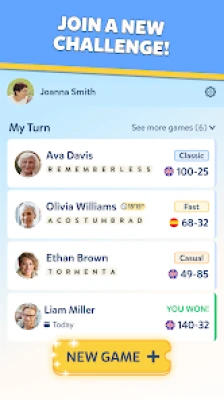
The game supports competitive matches against random opponents and includes a Classic Mode for players who want the traditional Word Crack experience.
What Is Word Crack?
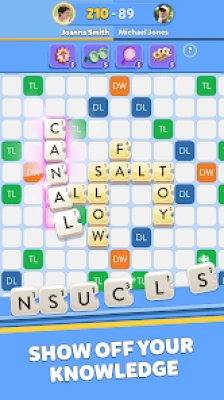
Word Crack is a multiplayer word-board game in which players combine letters to create words and place them strategically on the board.
The basic objective sounds simple:
Make words and score points.
However, successful play requires considerably more planning.
You need to consider:
- Letter values
- Word length
- Bonus squares
- Board positioning
- Available letter combinations
- Future moves
- Your opponent's potential plays
- Whether to use valuable letters now or save them
The current game description specifically highlights letter placement, special multiplier cells, vocabulary, multiplayer competition, and strategic play.
How to Play Word Crack
A typical turn follows a straightforward process:
- Look at the letters available on your rack.
- Search for possible words.
- Examine the existing board.
- Find a legal position where your word can connect.
- Check whether the move activates bonus squares.
- Consider what your opponent could do afterward.
- Place the word.
- Receive your score and new letters.
The important difference between a beginner and an experienced player is what happens between steps 2 and 7.
A beginner asks:
"What word can I make?"
An experienced player asks:
"What is the highest-value move that also gives me the best board position?"
That distinction is central to Word Crack strategy.
Word Crack Full Strategy Guide
1. Do Not Always Play Your Longest Word
A long word looks impressive, but length alone does not determine whether it is a good move.
Sometimes a short word can score more because it uses a double-letter, triple-letter, double-word, or triple-word multiplier.
The current game description specifically highlights special cells that multiply the value of letters or words.
Before submitting a long word, compare it with your other available moves.
Ask:
- Does another move use a bonus square?
- Can I create two words simultaneously?
- Does this move expose a valuable bonus square?
- Will my opponent gain an easy scoring opportunity afterward?
2. Learn the Bonus Squares
Bonus squares can dramatically change the value of a move.
There are two basic types to watch closely:
Letter Multipliers
These increase the value of the letter placed on that square.
They are especially valuable when used with higher-value letters.
Word Multipliers
These increase the value of the entire word.
A good word placed over a strong word multiplier can produce a much larger score than the same word placed on an ordinary square.
The Key Rule
Do not simply look at the highest-value letter.
Look at the entire scoring combination.
A modest word on an excellent multiplier can beat a longer word played somewhere else.
3. Save High-Value Letters for the Right Opportunity
Not every valuable letter needs to be played immediately.
If your rack contains a high-scoring letter, examine the board carefully before using it.
Ask:
Can this letter reach a premium square?
If the answer is yes, it may be worth waiting for a better opportunity.
However, do not become so focused on saving one letter that your rack becomes difficult to use.
Good play is a balance between scoring and rack management.
4. Think About Your Opponent's Next Move
One of the most important advanced techniques is looking at the board from your opponent's perspective.
After choosing a move, ask:
What valuable square am I giving them?
For example, placing a word next to a powerful bonus square may allow your opponent to create a high-scoring word on their next turn.
Sometimes the highest immediate score is not the best overall move.
A slightly lower-scoring play that closes an important scoring route can be more useful.
5. Use Existing Words to Build New Ones
The board itself is a resource.
You do not always need to create an entirely independent word.
Look for opportunities to:
- Add letters to existing words
- Extend a word
- Create parallel words
- Connect multiple words
- Use one new letter to form more than one word
A well-positioned letter can sometimes contribute to multiple words during the same move.
This is one of the most effective ways to turn an ordinary rack into a strong scoring opportunity.
6. Look for Two-Word Plays
When placing a word, examine the surrounding rows and columns.
A new word can sometimes create additional valid words where letters intersect.
This is particularly useful when:
- Several existing words are close together
- The board has open spaces
- You have flexible vowels
- You have common consonants
- A multiplier can affect more than one scoring combination
Do not stop analyzing once you find one legal word.
Check whether the same placement creates additional words.
7. Manage Your Rack
Good Word Crack strategy is partly a vocabulary challenge and partly a letter-management game.
A rack containing awkward combinations can make your next move difficult.
Try to maintain a balanced selection of:
- Vowels
- Common consonants
- Flexible letters
- Useful word endings
Do not automatically use every easy word.
Think about what letters you will have left afterward.
8. Learn When to Exchange or Reposition Your Thinking
Sometimes your rack is simply poor.
You may have too many difficult consonants, too many vowels, or combinations that do not work well together.
Instead of forcing an ugly move, consider whether another available action can improve your future position, depending on the current game rules.
The goal is not to maximize every single turn.
The goal is to maximize the overall game.
9. Use All Seven Letters When Possible
One of the long-standing Word Crack scoring mechanics is rewarding players for using their entire letter rack in a single move.
Historical Word Crack descriptions document a 40-point bonus for using all seven letters in one play.
That makes a full-rack play potentially very valuable.
However, do not force a seven-letter move when a much stronger scoring opportunity is available.
Think of the rack bonus as an opportunity rather than an obligation.
10. Build Your Vocabulary Strategically
You do not need to memorize an entire dictionary.
Instead, concentrate on words that are particularly useful in board games.
Learn:
- Short words
- Common two-letter combinations
- Plural forms
- Verb endings
- Words with unusual letters
- Common prefixes
- Common suffixes
- Words containing difficult consonants
Short words are particularly useful because they can fit into small gaps and help connect existing parts of the board.
Word Crack Scoring Strategy
Scoring is about more than word length.
A useful way to think about a move is:
Letter value + multipliers + additional words + board position
For example, imagine two possible moves:
Move A: Long word, ordinary squares
Move B: Shorter word using a triple-letter and creating an additional word
Move B may produce a significantly higher score.
Therefore, never judge a move simply by counting letters.
How to Use Bonus Squares Effectively
Double Letter
Best used with a valuable letter.
Triple Letter
Particularly useful when a high-value tile can be placed on it.
Double Word
Useful for increasing the overall value of a well-constructed word.
Triple Word
Usually deserves serious attention because it can produce a substantial score increase.
Important Defensive Rule
Bonus squares are useful to you, but they can also be useful to your opponent.
Before opening access to a premium square, think about whether your opponent can immediately exploit it.
Beginner Strategy
If you are new to Word Crack, use this simple system.
Step 1: Find a Valid Word
Do not worry about huge scores initially.
Step 2: Look for Bonus Squares
Check whether your word can use a multiplier.
Step 3: Check the Opponent's Options
Make sure your move does not create an obvious scoring opportunity.
Step 4: Examine Your Remaining Letters
Think about your next turn.
Step 5: Improve Gradually
As your vocabulary grows, begin focusing more heavily on board control and scoring combinations.
Advanced Word Crack Strategy
Once you understand the basic rules, start thinking about board control.
Control the Premium Squares
You do not necessarily need to use every premium square yourself.
Sometimes denying your opponent access to a valuable square is the better decision.
Keep Flexible Letters
Letters that can participate in many common words are useful because they give you more options on future turns.
Vowels are particularly important for maintaining flexibility.
Avoid Creating Easy Openings
A move that looks attractive can accidentally create a large scoring lane for your opponent.
Before playing, inspect the surrounding area.
Think One Turn Ahead
The strongest players often think beyond the immediate move.
Ask:
What will my rack look like afterward?
Then:
What is the most likely response?
Then:
What opportunities will remain for me?
This three-step approach can improve decision-making considerably.
How to Play Against Strong Opponents
Strong opponents will usually take advantage of obvious bonus opportunities.
To compete with them:
- Protect premium squares.
- Keep your rack balanced.
- Avoid giving away easy scoring lanes.
- Search for multiple-word combinations.
- Use high-value letters intelligently.
- Look for opportunities to score with existing words.
- Think about the opponent's next turn.
You do not need to find the biggest move every turn.
You need to avoid giving away unnecessary points.
Common Word Crack Mistakes
Playing Only for Word Length
A long word is not automatically a high-scoring move.
Ignoring Multipliers
Bonus squares can completely change the value of a move.
Forgetting the Opponent
A move can score well but still be strategically poor if it gives the opponent an even better opportunity.
Using Valuable Letters Too Quickly
Save useful letters when a better scoring position may become available.
Ignoring the Rack
A high score now can leave you with an extremely difficult rack afterward.
Failing to Look for Multiple Words
Always check whether one placement can create additional words.
Chasing the Seven-Letter Bonus at All Costs
The full-rack bonus is valuable, but forcing it can sometimes produce a weaker overall position.
Word Crack Multiplayer Strategy
Word Crack is designed around competitive play, including matches against random opponents.
Multiplayer strategy changes the way you should approach the board.
You are not playing against the dictionary.
You are playing against another person who can exploit your mistakes.
Multiplayer Tips
Play defensively when necessary.
If the board is dangerous, controlling your opponent's options can be more important than maximizing your immediate score.
Watch their habits.
Some players consistently prioritize large words, while others focus heavily on multiplier squares.
Do not reveal easy scoring opportunities.
Every open premium square should be considered carefully.
Classic Mode Strategy
The current game information specifically identifies Classic Mode as part of the Word Crack experience.
Classic Mode is an excellent place to develop the fundamentals:
- Vocabulary
- Word placement
- Bonus-square awareness
- Rack management
- Defensive positioning
- Long-term planning
Do not focus exclusively on winning.
Use each match to learn which types of board positions create the best opportunities.
Vocabulary Training Plan
You can improve at Word Crack without spending hours memorizing dictionaries.
Day 1 – Short Words
Practice short words and common combinations.
Day 2 – Prefixes
Learn common beginnings such as:
- RE
- UN
- DIS
- PRE
- OVER
Day 3 – Suffixes
Practice endings such as:
- ED
- ER
- EST
- ING
- LY
- S
Day 4 – Difficult Letters
Practice words containing:
- Q
- X
- Z
- J
- K
Day 5 – Plurals
Learn useful plural forms and common word extensions.
Day 6 – Board Practice
Concentrate on placing words around existing tiles.
Day 7 – Review
Review words and patterns that caused problems during your matches.
Best Letter Combinations to Watch
Recognizing common combinations can make word discovery faster.
Look for patterns such as:
- TH
- SH
- CH
- ST
- TR
- BR
- CR
- PL
- PR
- GR
- CL
Also watch for vowel combinations and common endings.
The goal is to train your eyes to recognize potential words before you consciously spell them.
How to Improve Your Word Crack Speed
Speed improves through recognition rather than simply trying to move faster.
Instead of staring at the board and searching randomly:
- Identify vowels.
- Identify unusual letters.
- Look for common consonant pairs.
- Search for familiar endings.
- Check premium squares.
- Examine possible extensions.
- Compare your best scoring options.
With practice, this process becomes much more automatic.
Word Crack Features
The current game information describes Word Crack as a multiplayer word and board game featuring:
- Multiplayer matches
- Random opponents
- Classic Mode
- Letter racks
- Crossword-style board play
- Special multiplier squares
- Vocabulary challenges
- Strategic word placement
- Brain-puzzle elements
- Competitive gameplay
- Scoring based on letter placement
- Seven-letter bonus mechanics
The current Android listing data shows 10M+ installs for the package and continued 2026 updates.
Word Crack on Android
The exact Google Play package supplied for this page is:
com.etermax.apalabrados.lite
Current app records identify it as Word Crack: Board Fun Game, developed by Etermax. The current version information available in September 2026 shows version 5.64.1 and an update in September 2026.
The game is categorized as a Word game and is available across many international markets.
Is Word Crack a Good Word Puzzle Game?
Word Crack is designed for players who enjoy vocabulary challenges but also want a competitive board-game element.
Its appeal comes from the combination of:
Vocabulary + strategy + scoring + board positioning + multiplayer competition
Knowing more words helps, but simply knowing words is not enough.
You also need to understand where and when to play them.
That strategic layer is what separates Word Crack from a basic word-finding puzzle.
Word Crack FAQ
What is Word Crack: Board Fun Game?
Word Crack is a multiplayer word-board game from Etermax where players form words from their available letters and place them strategically on a crossword-style board.
What is the package ID?
The Android package for the game is com.etermax.apalabrados.lite.
Can I play Word Crack against other players?
Yes. The game supports multiplayer competition, including matches against random opponents.
Does Word Crack have a Classic Mode?
Yes. Classic Mode is specifically mentioned in the current game information.
How do you score more points in Word Crack?
Look beyond word length. Use multiplier squares, create multiple words when possible, manage high-value letters carefully, and consider the board position after your move.
What are bonus squares?
Bonus squares increase the value of letters or words placed on them. Using these squares effectively can dramatically increase your score.
Is using all seven letters useful?
Yes. Historical Word Crack descriptions document a 40-point bonus for using all seven letters in one move.
What is the best Word Crack strategy?
The strongest general approach is to combine vocabulary knowledge with smart board positioning, multiplier management, rack balance, and defensive awareness.
How can I improve my vocabulary for Word Crack?
Focus on short words, common prefixes and suffixes, difficult-letter words, plural forms, and frequently useful word patterns.
Is Word Crack free?
The current Android ecosystem listing identifies Word Crack as a free game, with monetization features that can vary by current store configuration and region.
Final Word Crack Tips
The secret to becoming better at Word Crack is to stop thinking only about making words and start thinking about making useful moves.
A strong move should ideally do several things at once:
- Score useful points.
- Take advantage of a multiplier.
- Use your rack efficiently.
- Create additional word opportunities.
- Avoid giving your opponent an easy bonus.
- Leave you with playable letters.
Keep expanding your vocabulary, but also study the board.
The player who sees the best combination of letters, position, score, and future opportunity will usually have a much stronger game than someone who simply searches for the longest word.
Find the word. Control the board. Maximize the score.
Rate the Game
User Reviews


Popular Games



















 Android
 iOS
 Windows
 Xbox