

Latest Version
August 23, 2026
Plug In Digital
Card
iOS
0
Report a Problem
More About :game
Tacape is a roguelite card battler built around tactical decision-making.
At first glance, its mechanics may look familiar to fans of deck-building games, but Tacape adds an important twist: enemies can change positions during combat.
This means that simply choosing the strongest card isn't always enough. You must consider where enemies are positioned, what they are about to do, and how your next move will affect the battlefield.
The result is a card game where deck building and positioning work together.
The Story of Tacape
The adventure follows Lorena, whose little brother has been taken by a mysterious creature.
Determined to find him, Lorena enters a dangerous forest inhabited by strange folkloric figures.
The story also includes a second perspective through Lucas, the missing brother, who is trying to escape the forest and find his way back to Lorena.
At the center of the adventure is a simple question: how far are you willing to go to confront your fears?
Brazilian Folklore and Fantasy
One of Tacape's biggest strengths is its setting.
Rather than relying on the usual European fantasy creatures, the game draws inspiration from Brazilian folklore and places its characters against supernatural figures from a distinctly Brazilian cultural setting.
This gives the card battles a unique identity and helps Tacape stand apart from the many fantasy deck-building games available on mobile.
Tactical Card Combat
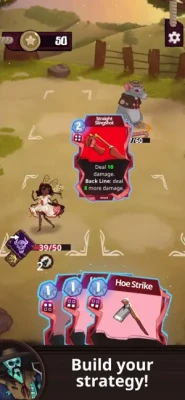
Combat is turn-based and heavily focused on strategy.
You build a deck of cards and use those cards to attack, defend, manipulate the battlefield, and activate different abilities.
However, enemies are not static targets.
Their ability to move between positions means that the battlefield itself becomes part of the puzzle. You need to consider both which card to play and where the enemy is located.
This additional layer makes encounters more tactical than a straightforward card-damage system.
Deck Building
Building the right deck is essential to surviving increasingly difficult encounters.
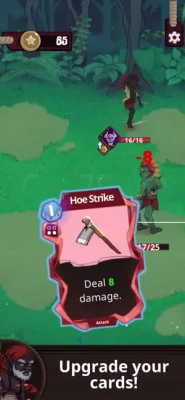
Tacape offers more than 100 cards, giving you plenty of opportunities to develop different strategies. Cards can be purchased and upgraded as you progress.
A good deck should complement your character's abilities while giving you enough flexibility to handle different enemy types.
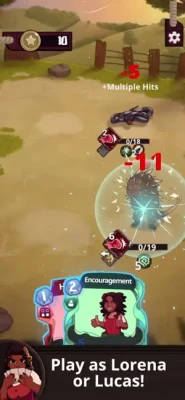
Two Playable Characters
Tacape features two playable characters, each with unique abilities and gameplay characteristics:
- Lorena
- Lucas
The two campaigns offer different approaches to combat, giving the game additional replay value.
Player feedback also highlights that the characters feel substantially different from one another, encouraging experimentation with different playstyles.
Lorena's Adventure
Lorena's campaign focuses on her journey through the forest to rescue her brother.
Her adventure places you against supernatural creatures while you build a deck capable of handling increasingly difficult encounters.
The emotional motivation behind her journey also gives the campaign a stronger narrative purpose than simply defeating one enemy after another.
Lucas's Adventure
Lucas has his own journey through the mysterious forest.
His mechanics introduce additional strategic considerations, including a fear-based system that can influence how cards and actions work.
This makes Lucas more than simply a second skin for the same campaign; his adventure introduces another way to approach the game's combat mechanics.
More Than 100 Cards
With more than 100 cards available, Tacape gives players considerable room to experiment with different decks.
Cards can be upgraded and combined with character abilities to create different tactical approaches.
You might focus on:
- Offensive damage
- Defensive cards
- Ability combinations
- Position manipulation
- Character-specific effects
- Resource management
- Long-term card synergies
The best strategy depends on the character you're playing and the enemies you're facing.
More Than 25 Enemies
Tacape includes more than 25 enemies, each contributing to the game's tactical variety.
Because enemies can change positions and behave differently during combat, learning their patterns is an important part of mastering the game.
Instead of treating every opponent as a simple health bar, you need to understand what each enemy is trying to accomplish.
Battlefield Positioning
Positioning is one of Tacape's defining mechanics.
Enemies can switch places during encounters, which can disrupt your plans and change the effectiveness of your cards.
This means you should constantly consider:
Where is the enemy?
Where will it move?
Which card is most effective from this position?
What will the battlefield look like after my turn?
This makes Tacape particularly appealing to players who enjoy tactical strategy games.
Artifacts and Special Abilities
Artifacts provide another layer of progression.
During your journey, you can obtain artifacts that grant new abilities and influence the way your character and deck perform.
These bonuses can help shape a particular build and encourage experimentation between runs.
Shops
The game includes shops where you can buy and upgrade cards.
Knowing when to spend your resources is an important part of the strategy.
Buying every card you see isn't necessarily the best approach. A smaller deck containing cards that work well together can sometimes be more effective than a large collection of unrelated abilities.
Campfires
Campfires provide an opportunity to heal your character during the adventure.
Choosing when to recover health versus continuing forward is another decision that contributes to the roguelite structure.
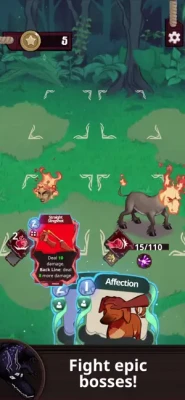
Boss Battles
Boss encounters provide major tests of your deck and tactical planning.
These battles require you to understand enemy behavior, manage your resources, and make careful decisions about when to attack and when to defend.
A deck that works well against ordinary enemies may need to be adjusted when facing a powerful boss.
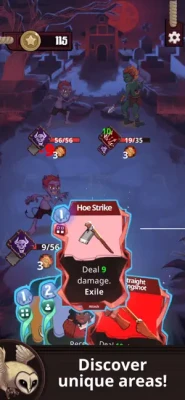
Four Playable Areas
Tacape features four playable areas, giving the adventure a defined progression through its mysterious Brazilian folklore setting.
Each area introduces new encounters and challenges as you move deeper into the story.
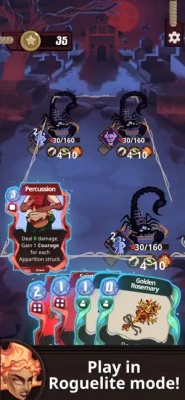
Roguelite Progression
Tacape uses roguelite mechanics, meaning individual combat encounters can have significant consequences for your run.
The combination of cards, upgrades, artifacts, shops, campfires, enemies, and positioning creates a progression system where every decision matters.
This structure encourages repeated attempts and experimentation.
Beginner's Guide
1. Don't Build Your Deck Too Quickly
Adding every available card can make your deck less consistent.
Prioritize cards that work well with your character and existing strategy.
2. Watch Enemy Positions
Never focus exclusively on card effects.
Always check where enemies are positioned before making your move.
3. Learn Enemy Behavior
Understanding how an enemy moves can be just as important as knowing how much damage it can deal.
4. Upgrade Useful Cards
Invest resources into cards that regularly contribute to your strategy rather than upgrading everything.
5. Use Campfires Wisely
Healing can save a run, but timing your recovery is important.
6. Experiment With Both Characters
Lorena and Lucas offer different experiences, so learning both campaigns can significantly expand your understanding of the game.
7. Plan Ahead
Think about what your next turn might look like before spending all your available options.
Advanced Strategy Tips
For experienced players, Tacape becomes a game of probability, positioning, and resource management.
- Build decks around a clear strategy.
- Avoid unnecessary cards when they dilute your strongest combinations.
- Study enemy movement patterns.
- Consider future enemy positions before attacking.
- Keep defensive options available.
- Upgrade cards that support your main strategy.
- Use artifacts to reinforce your preferred build.
- Don't spend resources simply because they are available.
- Learn how each character's unique mechanics interact with cards.
- Adapt your strategy for boss encounters.
The strongest players don't simply react to the current turn—they prepare for what the battlefield is likely to look like several actions later.
Difficulty
Tacape is designed to provide a genuine tactical challenge.
Several App Store players have described the game as difficult, particularly when defensive cards or specific combinations fail to appear at the right time. Other players appreciate that challenge as an important part of the roguelite experience.
This makes Tacape better suited to players who enjoy learning from failed runs rather than expecting every attempt to succeed.
Art Style
Tacape uses a distinctive illustrated style that complements its Brazilian folklore setting.
The characters and creatures help create an atmosphere that feels mysterious without relying on conventional dark fantasy aesthetics.
The visual identity is particularly effective because it reinforces the game's cultural inspiration.
Music and Atmosphere
The forest setting, supernatural creatures, and folklore-inspired art combine to create a mysterious atmosphere.
Rather than being purely mechanical, the game uses its setting to give the deck-building experience a sense of place.
This helps make each combat feel like part of a larger journey.
Controls and Interface
Tacape is designed for touch-based mobile play.
The main interactions involve:
- Selecting cards.
- Choosing targets.
- Reading enemy intentions.
- Managing your hand.
- Inspecting card effects.
- Making tactical battlefield decisions.
- Navigating shops and campfires.
Some App Store players have noted that selecting cards during combat can occasionally be awkward on touchscreens, while others have found the interface manageable after becoming familiar with the mechanics.
Game Modes
Tacape is primarily a single-player roguelite card adventure.
The game is built around its two character campaigns rather than competitive multiplayer. The PC version likewise lists single-player as its primary game mode.
Features
Tactical Deck Building
Build and upgrade a deck designed around your preferred strategy.
Roguelite Gameplay
Every run presents new tactical challenges and opportunities.
Two Characters
Play as Lorena or Lucas, each with unique abilities.
100+ Cards
Experiment with more than 100 cards and different combinations.
25+ Enemies
Face a wide range of supernatural opponents.
Dynamic Positioning
Enemies can change positions during combat.
Brazilian Folklore
Explore a fantasy world inspired by Brazilian folk traditions.
Artifacts
Discover special abilities that can change your strategy.
Shops
Buy and upgrade cards during your journey.
Campfires
Recover health and prepare for the challenges ahead.
Boss Battles
Face powerful enemies at key stages of the adventure.
Four Areas
Progress through four playable regions.
Technical Details
| Detail | Information |
|---|---|
| Game | Tacape |
| Genre | Card / Roguelite / Strategy |
| Developer | Really Long Birds / Aiyra |
| Publisher | Plug In Digital |
| Platforms | iPhone, iPad |
| Game Type | Single-player |
| Age Rating | 9+ |
| App Size | 315 MB |
| Category | Card |
| Languages | English + 8 additional languages |
| iOS Requirement | iOS 12.0 or later |
| iPadOS Requirement | iPadOS 12.0 or later |
| In-App Purchases | Yes |
| Characters | 2 |
| Cards | 100+ |
| Enemies | 25+ |
| Playable Areas | 4 |
The current U.S. App Store listing confirms the device requirements, size, age rating, category, languages, and purchase structure.
Price and In-App Purchases
Tacape is free to try, but an in-app purchase is required to unlock the full experience. The U.S. App Store currently lists the combined Lorena & Lucas offer at $3.99, alongside separate campaign purchases.
This is a relatively straightforward premium-unlock model rather than a game built around constant microtransactions.
Player Reception
The U.S. App Store currently shows 3.6 out of 5 stars from 20 ratings.
Player opinions are mixed but provide useful insight into the experience.
Positive feedback frequently highlights the interesting tactical mechanics, distinct characters, and challenging roguelite structure. Some players have criticized unclear card descriptions or certain interface and difficulty issues.
On Steam, Tacape currently has a stronger reception, with 90% of 22 user reviews marked positive.
Pros and Cons
Pros
- Interesting tactical card combat.
- Unique Brazilian folklore setting.
- More than 100 cards.
- Two substantially different characters.
- 25+ enemies.
- Dynamic enemy positioning.
- Roguelite replayability.
- Artifacts and upgrades.
- Shops and campfires.
- Boss encounters.
- Strong strategic depth.
- Affordable full-game unlock.
Cons
- Can be quite difficult.
- Some card descriptions may be unclear.
- Enemy behavior can take time to understand.
- Touch card selection isn't perfect for every player.
- Small number of App Store ratings.
- Players who dislike repeated roguelite runs may find progression frustrating.
Who Should Play Tacape?
Tacape is particularly well suited to players who enjoy:
- Deck-building games.
- Roguelite card games.
- Turn-based strategy.
- Tactical card battlers.
- Brazilian folklore.
- Fantasy games.
- Single-player strategy games.
- Challenging mobile games.
- Games similar to Slay the Spire.
- Games with character-specific decks.
If you enjoy planning several moves ahead and don't mind losing a run while learning new strategies, Tacape has plenty to offer.
Tacape vs. Slay the Spire
Both games combine deck building and roguelite progression, but their combat systems are quite different.
Slay the Spire focuses heavily on enemy intent and turn-based card combinations, while Tacape adds a battlefield-positioning mechanic where enemies can move between positions.
Tacape also stands out through its Brazilian folklore setting and two-character narrative.
Tacape vs. Other Roguelite Card Games
Many deck-builders rely primarily on card synergies and resource management.
Tacape adds another strategic layer by requiring players to think about enemy location and movement.
This gives positioning a meaningful role in deciding which card should be played and when.
Expert Rating
Gameplay: 8.7/10
Deck Building: 8.8/10
Strategy: 9/10
Story: 8.5/10
Art Style: 8.5/10
Replay Value: 8.8/10
Originality: 9/10
Overall: 8.7/10
Final Verdict
Tacape is a smart and distinctive roguelite card game that deserves attention for doing more than simply copying the standard deck-building formula.
Its biggest innovation is the way enemy positioning becomes part of card strategy. You aren't only deciding what card to play—you must also consider where your opponents are and how their movement could affect the next turn.
Combined with 100+ cards, two unique characters, 25+ enemies, artifacts, shops, campfires, boss battles, four areas, and Brazilian folklore, Tacape offers a surprisingly rich tactical experience.
If you're looking for a challenging card game for iPhone or iPad, especially one with roguelite mechanics and a distinctive folklore-inspired setting, Tacape is well worth trying.
Frequently Asked Questions
What is Tacape?
Tacape is a roguelite deck-building card game featuring tactical turn-based battles, dynamic enemy positioning, character abilities, and Brazilian folklore.
Is Tacape a roguelike?
Tacape is officially described as a deck-builder card game with roguelite elements.
Is Tacape free on iPhone?
Yes. Tacape is free to try, but an in-app purchase is required to unlock the complete game.
How many characters are in Tacape?
There are two playable characters: Lorena and Lucas, with unique abilities and different gameplay experiences.
How many cards does Tacape have?
Tacape features more than 100 cards that can be collected and upgraded.
How many enemies are in Tacape?
The game features more than 25 enemies.
What makes Tacape different from other card games?
Its dynamic battlefield is one of its defining mechanics. Enemies can switch positions during combat, forcing you to think about positioning as well as card selection.
Is Tacape similar to Slay the Spire?
Both are roguelite deck-building games, but Tacape adds dynamic enemy positioning and a Brazilian folklore setting that give it a different tactical identity.
Does Tacape have boss fights?
Yes. Boss battles are part of the game's progression.
What is the story of Tacape?
The story follows Lorena as she enters a mysterious forest to rescue her kidnapped brother Lucas. Players can also experience Lucas's own journey as he attempts to escape the forest.
What devices support Tacape?
The current Apple listing supports iPhone and iPad, requiring iOS 12.0 or later and iPadOS 12.0 or later.
What is the age rating for Tacape?
The U.S. App Store gives Tacape a 9+ age rating.
Rate the Game
User Reviews





Popular Games
















 Android
 iOS
iOS Windows
 Xbox
Xbox