


Latest Version
October 09, 2026
FunCraft, Inc
Card
iOS
0
Report a Problem
More About :game
What Is Cribbage Classic - Card Game?
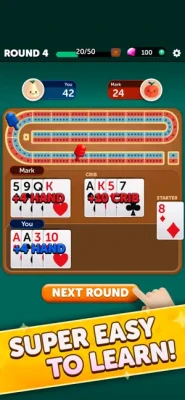
Cribbage Classic is a digital version of the traditional card game Cribbage, combining arithmetic, card combinations, tactical decisions, and a little luck. Developed by FunCraft, Inc., the game brings classic Cribbage rules together with modern multiplayer and progression features.
The main challenge is to score points through card combinations and pegging while working toward the winning score. Players must decide which cards to keep, which to discard, when to play particular cards, and how to prevent their opponent from scoring easily.
Unlike games based entirely on collecting matching cards, Cribbage rewards players who understand how card values work together. A hand that looks ordinary can produce valuable combinations, while an apparently strong hand may become less useful if the wrong cards are discarded.
Cribbage Classic also includes turn-based player-versus-player matches, challenges against increasingly difficult opponents, boss encounters, competitive leagues, leaderboards, collectible card designs, achievements, and lifetime statistics.
It is suitable for beginners who want to learn the rules and experienced players who enjoy improving their pegging and hand-counting skills.
Cribbage Classic Game Information
Game title: Cribbage Classic - Card Game
Developer: FunCraft, Inc.
Genre: Card game, board game, strategy
Platforms: iPhone and iPad
Price: Free to download, with in-app purchases
Minimum operating system: iOS 15.0 or later
Age rating: 13+ on the US App Store
Core gameplay: Traditional Cribbage scoring and pegging
Multiplayer: Turn-based PvP battles
Solo progression: Duel Journey with boss opponents
Competitive features: Leagues, trophies, and rankings
Customization: Collectible card designs and decks
Additional features: Achievements and lifetime statistics
Skills involved: Arithmetic, probability, memory, planning, and risk management
The available features, requirements, and purchase options may change with future updates.
How to Play Cribbage Classic
Cribbage can look complicated at first, but the basic structure becomes easier once you understand the deal, discard, pegging, and scoring stages.
1. Understand the Objective
Traditional two-player Cribbage is normally played to 121 points. Players move their pegs along a scoring board as they earn points from card combinations and pegging.
The first player to reach the target wins, provided the game is using the standard 121-point rules.
Every hand gives you opportunities to score, but the decisions you make during the deal and pegging stages can affect both your own points and your opponent's.
2. Choose Which Cards to Keep
In standard two-player Cribbage, each player receives six cards. Each player selects two cards to discard into the crib, leaving four cards in their hand.
The dealer owns the crib, which is counted as an additional scoring hand later in the round. This means discarding is not simply about improving your own hand: you must also consider which cards you might be giving the dealer.
If you are not the dealer, be particularly careful about discarding combinations that could produce an easy score for your opponent.
3. Reveal the Starter Card
After the discards, a starter card is turned face up. It can contribute to the scoring of both players' hands and the dealer's crib.
A card that initially looked unhelpful may become valuable when combined with the starter. Conversely, the starter may create useful combinations for your opponent.
Learn to evaluate your four-card hand with the starter rather than judging the original six cards alone.
4. Play the Pegging Round
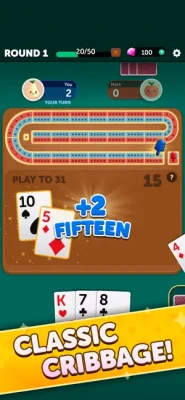
Players take turns laying down cards and announcing the running total. In standard Cribbage, the running total cannot exceed 31.
You can earn points during pegging for combinations such as reaching 15 or 31, playing a card that matches the previous card or cards, and creating runs of consecutive ranks.
The order in which you play your cards matters. A good pegging decision can score points immediately or make it harder for your opponent to create a valuable combination.
5. Count Your Hand
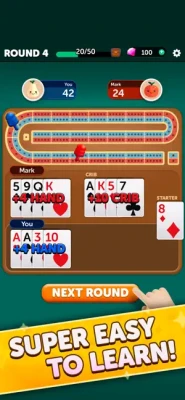
After pegging, players count their hands using the starter card. Points come from combinations including fifteens, pairs, runs, and certain flushes and jacks.
The dealer also counts the crib. This is why discarding decisions at the beginning of the round are so important: the cards you throw away may contribute to another scoring hand.
6. Continue Until Someone Wins
Players continue dealing and scoring hands until one reaches the target score under the game's rules.
To improve your chances, combine careful discarding with effective pegging and accurate hand counting. Winning consistently is not just about receiving good cards; it is about making the best decisions with the cards available.
Cribbage Scoring Rules Explained
Understanding scoring is the foundation of a strong Cribbage strategy. These are the core scoring principles used in standard two-player Cribbage.
Fifteens: 2 Points
Any combination of cards totaling 15 earns two points.
For example, a 10 and a 5 make 15. A combination of 7, 5, and 3 also totals 15.
Face cards and tens count as 10, while aces count as 1. Remember that different combinations within the same hand can each score points.
Pairs: 2 Points
Two cards of the same rank earn two points.
For example, two queens form a pair. Three cards of the same rank contain three distinct pairs, earning six points in total. Four cards of the same rank contain six distinct pairs, earning twelve points.
Recognizing these combinations quickly can help you count hands more accurately.
Runs: 1 Point Per Card
A run consists of three or more cards in consecutive rank order, regardless of suit.
For example, a 4, 5, and 6 form a three-card run worth three points. A four-card run is worth four points, and a five-card run is worth five points.
Runs can become more complicated when a hand contains repeated ranks, so check the complete combination instead of assuming there is only one possible run.
Flushes
In a standard Cribbage hand, four cards of the same suit earn four points. If the starter card is also the same suit, the five-card flush earns five points.
The crib has a stricter flush rule in traditional Cribbage: all five cards, including the starter, must be the same suit for the flush to count.
His Nobs: 1 Point
If your hand contains a jack that matches the suit of the starter card, you score one point for nobs.
This point is separate from other combinations in the hand, so remember to check the jack's suit when counting.
Pegging Points
During the play phase, points can be earned for several events:
Fifteen: The running total reaches 15, earning two points.
Thirty-one: The running total reaches exactly 31, earning two points.
Pair: A card matches the rank of the previous card, earning two points.
Three of a kind: Three consecutive cards of the same rank earn six points.
Four of a kind: Four consecutive cards of the same rank earn twelve points.
Run: A sequence of three or more consecutive ranks earns points based on its length.
Last card: The player who plays the final card in a sequence without reaching 31 generally earns one point.
These rules make pegging a tactical contest rather than simply playing your lowest or highest card.
Complete Cribbage Classic Strategy Guide
1. Discard With the Dealer Position in Mind
One of the biggest beginner mistakes is choosing discards only by looking at the four cards you want to keep.
In Cribbage, the crib matters. If you are the dealer, the discarded cards go into your own crib. If your opponent is the dealer, those cards go into theirs.
For example, a 5 can be valuable to a crib because it combines with many ten-valued cards to make 15. Discarding a 5 to the opponent may therefore create a scoring opportunity for them.
There is no universal discard choice that works in every hand. Evaluate your remaining cards, possible combinations, the starter card's potential, and who owns the crib.
Strategy tip: When you are not the dealer, avoid giving your opponent easy scoring combinations unless the benefit to your own hand justifies the risk.
2. Keep Cards That Work Together
When choosing four cards to keep, look for combinations that can score in several ways.
Pairs can help create multiple scoring opportunities. Consecutive ranks can support runs, while cards that total 15 together may earn points once the starter is revealed.
A hand with several connected possibilities may be more promising than one containing four cards that have little relationship to each other.
However, do not focus only on the strongest-looking combination. The starter card can change the value of a hand, and your discard choice can affect the crib as well.
3. Treat the Starter Card as Part of Your Plan
The starter card is not merely an extra card to count at the end. It influences which combinations are possible in both hands and the dealer's crib.
Before the starter is revealed, try to understand the different ways your retained cards could score. Once it appears, re-evaluate your hand carefully.
For example, a starter that completes a run or creates a 15 can increase the value of a hand considerably. A jack may also provide a nobs point if it matches the starter's suit.
The ability to reassess a hand after the cut is an important skill for experienced Cribbage players.
4. Learn to Count Fifteens Efficiently
Fifteens are a major source of points in Cribbage. Because multiple combinations can total 15, it is important to count them systematically.
Start by checking pairs and combinations that involve a ten-valued card. Then examine combinations of three or more cards that total 15.
Do not count only one obvious combination and stop. A hand may contain several distinct ways to make 15, and each valid combination scores separately.
With practice, you will recognize common patterns quickly and avoid overlooking points.
5. Use Pegging to Control the Running Total
Pegging requires you to think about both the current total and the card your opponent may play next.
Playing a card that brings the count to 15 earns two points. Reaching 31 also earns two points, so keeping track of the running total is essential.
Try to avoid giving your opponent easy opportunities to score. For instance, playing a 5 can allow an opponent to reach 15 with a ten-valued card if the running total and their available cards make that possible.
Sometimes it is better to play a card that preserves flexibility instead of immediately choosing the card that seems most useful for your own hand.
6. Do Not Give Away Easy Pairs
Playing a card that matches the rank of the previous card can let your opponent score two points for a pair. If they can extend the sequence to three or four of a kind, the reward becomes even larger.
Before playing a card, consider whether it creates an obvious pairing opportunity. You cannot always avoid giving the opponent points, but recognizing the risk can help you choose a safer alternative.
Be especially careful when the opponent's last card is a rank that matches one of the cards in your hand.
7. Look for Runs During Pegging
A run can occur during pegging when the most recently played cards form consecutive ranks, even if they were played in a different order.
For example, a sequence of 4, 6, and 5 forms a run of three because the three ranks are consecutive.
Before each play, check whether the card extends or completes a potential run. Also consider whether your opponent could create a run with the card you are about to play.
This adds another layer of planning to the pegging stage.
8. Keep Track of Cards Already Played
Memory can be an advantage in Cribbage. Paying attention to cards that have already been played helps you make more informed decisions about what might remain in your opponent's hand.
You do not need to memorize every card perfectly to benefit from this habit. Start by noticing the ranks that have appeared during pegging and the cards that could create dangerous combinations.
As you improve, you may find it easier to estimate which scoring opportunities are still plausible.
9. Adjust Your Strategy to the Score
Your position on the scoring board should influence your decisions.
If you are ahead, you may prefer reliable scoring and careful defense rather than taking unnecessary risks. If you are behind, you may need to pursue stronger scoring opportunities to catch up.
The best decision depends on how close each player is to winning and how many scoring opportunities remain. Avoid using the same approach regardless of the score.
10. Learn When to Play a Low Card
Low cards can be useful during pegging because they leave more room before the count reaches 31. They can also help you avoid certain dangerous totals.
However, low cards are not always safe. A low card may give your opponent an opportunity to form a pair or a run, depending on the sequence already played.
Think about the running total, the last card played, and the opponent's likely options before deciding which low card to use.
11. Avoid Rushing the Hand Count
After pegging, take time to count every scoring combination in your hand. Missing a pair, an extra fifteen, or a run can cost you valuable points.
A useful counting routine is to check:
All combinations totaling 15.
Pairs and multiple matching ranks.
Runs of three or more cards.
Flush points.
Nobs, when applicable.
Remember that different scoring combinations can overlap. A card may contribute to more than one valid combination, so do not assume that scoring one group prevents it from contributing to another.
12. Review Lost Matches
Every defeat can teach you something about discarding, pegging, or counting.
Ask yourself whether you gave too many useful cards to the dealer's crib, missed an opportunity to score during pegging, or overlooked points while counting your hand.
Do not assume every loss means you made a mistake. The cards are partly random, but reviewing your decisions can help you identify habits that are within your control.
Beginner Tips for Cribbage Classic
Learn the scoring rules first. Understand fifteens, pairs, runs, flushes, and nobs.
Think about the crib. Your discards can help you or your opponent, depending on who deals.
Count the running total carefully. Never lose track of the 31 limit during pegging.
Watch for easy pairs. Avoid giving away unnecessary points when another play is available.
Look for several scoring combinations. A hand can score in more than one way.
Check the starter card. It may change your hand's value considerably.
Remember the final pegging card. The last card can score a point when the count does not reach 31.
Adapt to the score. Your priorities should change when you are ahead or behind.
Practice counting hands. Accuracy is just as important as choosing the right cards.
Stay patient. Good decisions improve your chances, but the deal still involves luck.
Advanced Pegging Tactics
Use the Running Total to Your Advantage
The running total affects which cards are safe to play and which can create immediate scoring opportunities.
Try to understand the possible responses to each card. If playing a particular rank gives your opponent an easy 15 or pair, consider whether another card could produce a safer position.
At the same time, do not become so cautious that you miss valuable scoring opportunities. The objective is to make an informed choice, not to avoid every possible risk.
Create Opportunities for Your Own Next Play
When you play a card, think about what you might be able to play afterward. A move can be useful because it sets up a later score, even if it does not earn many points immediately.
For example, a card that keeps the running total within a favorable range may give you room to reach 15 or 31 later. The best choice depends on the cards you hold and the opponent's possible responses.
Recognize When a Pair Is Dangerous
A pair can be a valuable scoring opportunity, but it can also tempt an opponent into extending it to three or four of a kind.
If the opponent plays a card that matches one you hold, consider whether matching it is worth the risk of allowing a larger combination. Sometimes taking two points is reasonable; in other situations, protecting yourself from a larger score may be wiser.
Balance Hand Strength With Pegging Strength
A strong hand for the counting phase is not always the best hand for pegging. The cards you retain can score after the starter is revealed, but their values and ranks also affect the play phase.
Consider both stages when choosing your discards. The best overall hand is one that balances potential counting points with useful pegging options, while also limiting the benefit you give the dealer's crib.
Turn-Based PvP Battles
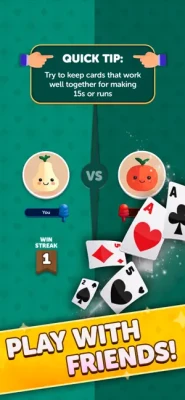
Cribbage Classic includes turn-based player-versus-player matches, letting you challenge friends or compete against players from around the world.
PvP adds pressure to familiar Cribbage decisions. You need to evaluate your hand while anticipating how another player might respond during pegging.
For stronger results, focus on three habits:
Accurate counting: Make sure you recognize every valid scoring combination.
Careful discarding: Consider the effect of your discards on the crib.
Smart pegging: Look for points without creating unnecessary opportunities for your opponent.
As you gain experience, review your decisions rather than judging your skill only by whether you win a particular match.
Duel Journey and Boss Battles
Duel Journey offers a solo progression mode in which you face increasingly challenging opponents and unique bosses.
This is useful for players who want a challenge beyond ordinary multiplayer matches. The mode provides goals to work toward and rewards for defeating opponents.
Before each encounter, focus on the fundamentals: choose sensible discards, track the pegging total, and count your hand carefully. Strong basics are more dependable than trying to force an unusual strategy in every match.
Check the current in-game mode for its rules, available challenges, and reward conditions.
Leagues, Trophies, and Rankings
Cribbage Classic includes competitive leagues where players can earn trophies and climb through ranking tiers.
If your goal is to improve your ranking, concentrate on making fewer avoidable mistakes. Accurate hand counting, smart discard choices, and disciplined pegging can make a difference across many matches.
Do not expect every game to go your way. Cribbage includes randomness, so progress is better measured by the consistency of your decisions over time rather than a short run of results.
Card Collections and Customization
The game features collectible card designs and decks that let you personalize the appearance of your cards.
Collecting new designs adds a progression goal for players who enjoy unlocking visual rewards. These items change the presentation of the game rather than replacing the need for strong card strategy.
Enjoy the collection system alongside the main challenge: understanding the rules and making better decisions at the table.
Achievements and Statistics
Cribbage Classic tracks lifetime statistics and includes achievements for notable milestones. Its advertised achievements include goals such as Double Skunks and the rare 29 Hand.
These milestones can give experienced players something extra to pursue after learning the standard rules.
A 29-point hand is the highest possible scoring hand in standard Cribbage. Achieving one is exceptionally rare, so it is best treated as a special milestone rather than an expectation for ordinary play.
Statistics can also help you review your progress and recognize areas where you want to improve.
Is Cribbage Classic Good for Beginners?
Yes. Cribbage Classic can be a useful way to learn the traditional game while practicing against other players and progression challenges.
Beginners should start with the basic scoring rules and focus on identifying fifteens, pairs, and runs. Once those become familiar, they can work on more advanced skills such as discarding to the crib, tracking pegging totals, and anticipating an opponent's possible plays.
The game also provides additional goals through Duel Journey, leagues, achievements, and card collections, giving players reasons to continue after learning the basics.
Pros and Cons
Pros
Classic Cribbage gameplay on mobile
Combines arithmetic, memory, and strategy
Turn-based PvP against other players
Solo Duel Journey with boss encounters
Competitive leagues, trophies, and rankings
Collectible card designs and decks
Achievements and lifetime statistics
Suitable for beginners and experienced Cribbage players
Cons
The traditional rules may take time to learn
Card randomness can influence the outcome
Strong pegging decisions require practice
The crib makes discarding more complicated than it first appears
Advertising and optional in-app purchases are included
Players who prefer fast action games may find the pace slower
Is Cribbage Classic Free to Play?
Cribbage Classic is listed as free to download, with advertising and optional in-app purchases. The store lists purchases such as card-related bundles, gems, and options to remove ads.
Check the current in-game shop for available prices and offers. You can begin by learning the rules and practicing your strategy before deciding whether to make an optional purchase.
Frequently Asked Questions
What is Cribbage Classic - Card Game?
Cribbage Classic is a mobile version of the traditional Cribbage card game, developed by FunCraft. It combines classic scoring and pegging with PvP battles, solo boss challenges, leagues, card collections, and achievements.
How do you win at Cribbage?
In standard two-player Cribbage, the first player to reach 121 points wins. Points are earned through card combinations during hand counting and scoring opportunities during pegging.
How does Cribbage scoring work?
Players score points for combinations such as cards totaling 15, pairs, runs, flushes, and nobs. During pegging, points can also be earned for reaching 15 or 31, pairs, runs, and playing the final card in a sequence.
What is the crib in Cribbage?
The crib is an extra hand made from the cards discarded by both players. The dealer owns and counts the crib, so discarding requires you to consider both your own hand and the cards you might give the dealer.
What is pegging in Cribbage?
Pegging is the phase where players take turns playing cards and announcing the running total, which cannot exceed 31. Players earn points for specific totals and combinations formed during the sequence.
What is the best strategy for discarding?
Keep cards that offer good scoring combinations while considering the value of the crib. If your opponent is the dealer, avoid giving them easy combinations when possible. The best discard depends on your full hand and the cards you retain.
What is a 29 Hand?
A 29 Hand is the highest possible scoring hand in standard Cribbage. It involves a specific combination of cards and the starter card, making it extremely rare.
Can I play Cribbage Classic against other people?
Yes. The game advertises turn-based PvP matches against friends and players from around the world.
Does Cribbage Classic have a solo mode?
Yes. Its Duel Journey features increasingly difficult challengers and unique boss encounters, with rewards for successful progression.
Can I collect different card designs?
Yes. The game includes collectible card designs and decks that let you personalize the look of your cards.
Is Cribbage Classic free?
The game is free to download and includes advertising and optional in-app purchases. Available bundles and prices may change over time.
What devices support Cribbage Classic?
The US App Store lists iPhone and iPad compatibility with iOS 15.0 or later and iPadOS 15.0 or later, respectively. Check the current store listing for updated requirements.
Final Verdict
Cribbage Classic - Card Game combines a traditional card game with modern competitive features. Its central challenge is learning to make the most of each hand: choose useful discards, protect your pegging opportunities, count every combination correctly, and adapt your decisions to the score.
The PvP battles, Duel Journey, leagues, card collections, and achievements provide additional goals beyond ordinary Cribbage play. Whether you are learning the rules or trying to improve your competitive results, the game offers plenty of opportunities to sharpen your skills.
If you enjoy card games that reward arithmetic, memory, and careful planning, Cribbage Classic is worth exploring.
Count carefully, peg wisely, and play every hand with a plan.
Rate the Game
User Reviews








Popular Games



















 Android
 iOS
iOS Windows
 Xbox
Xbox