




Latest Version
October 07, 2026
Gamehouse LLC
Card
iOS
0
Report a Problem
More About :game
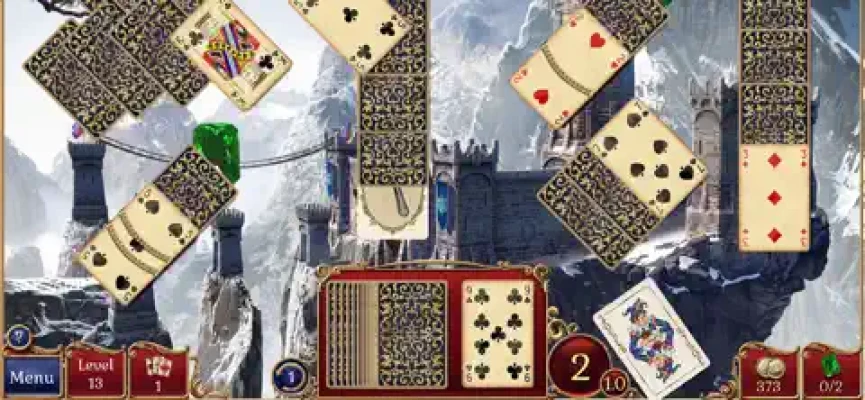
The game features 320 Solitaire levels, 8 castles, and 24 different Solitaire variants, including familiar formats such as Klondike, Pyramid, FreeCell, Yukon, and Baker's Dozen. Three difficulty settings give players room to adjust the challenge as their skills improve.
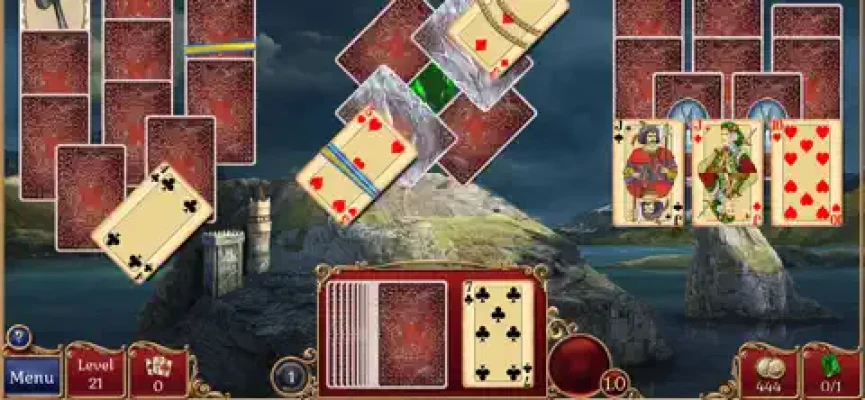
Hidden gems and coins provide an additional reason to explore each level carefully. Collecting these resources helps unlock upgrades and contributes to the larger castle-restoration progression.
What Makes Jewel Match Royale Solitaire Different?
Traditional Solitaire focuses primarily on clearing cards and completing foundations. Jewel Match Royale Solitaire adds a broader adventure structure around that familiar card-game foundation.
You are not simply playing one Solitaire format repeatedly. The game introduces different rules and variations while giving you a visual goal: restoring a collection of royal castles.
This combination makes the game suitable for players who enjoy:
Classic Solitaire and patience card games
Relaxing puzzle gameplay
Fantasy and royal themes
Collecting hidden treasures
Castle-building progression
Achievement hunting
Different Solitaire rules and variations
Casual strategy games
Main Features
320 Solitaire Levels
The campaign contains 320 challenging levels, providing a substantial amount of card-game content. Levels gradually test your ability to recognize useful moves, manage the available cards, and adapt to different Solitaire rules.
8 Castles to Restore
Castle restoration gives the adventure a sense of long-term progression. Completing levels and collecting resources helps transform damaged royal locations into impressive castles.
24 Solitaire Variations
One of the strongest features is the variety of Solitaire rules. The game includes well-known formats such as:
Klondike
Yukon
FreeCell
Baker's Dozen
Pyramid
The different variations require different approaches, so a strategy that works in one mode may not work in another.
Three Difficulty Modes
Players can choose between three difficulty levels. Beginners can learn the fundamentals at a comfortable pace, while experienced Solitaire players can increase the challenge.
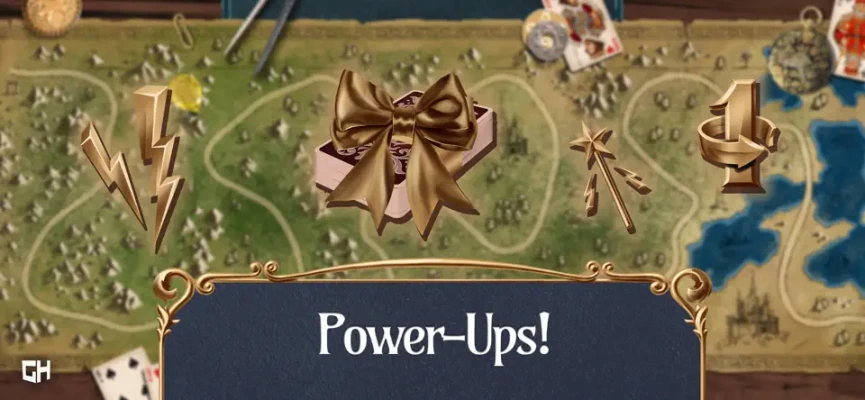
Power-Ups
Power-ups add another strategic layer to the card puzzles. Rather than using them immediately, it is often better to save a useful power-up for a difficult position where it can prevent a failed attempt.
Trophies and Achievements
The game includes dozens of trophies that reward different accomplishments. Trophy hunting gives experienced players additional goals after they become comfortable with the basic Solitaire mechanics.
Card Deck Customization
Multiple card-deck options allow players to personalize the visual presentation of their Solitaire games.
Relaxing Atmosphere
The fantasy environments, castle-restoration theme, and serene soundtrack give the game a slower, more relaxing atmosphere than many competitive card games.
How to Play Jewel Match Royale Solitaire
The basic objective depends on the Solitaire variation currently being played, but the central idea is to make legal card moves while exposing useful cards and working toward the required objectives.
Before moving a card, look beyond the immediate move. Ask yourself:
What card will this move reveal?
Will the move create another useful sequence?
Am I blocking an important card?
Should I save this move for later?
Can I create an empty space?
Is there a better move available elsewhere?
This simple habit can dramatically improve your results.
Full Jewel Match Royale Solitaire Strategy Guide
1. Think Several Moves Ahead
One of the biggest mistakes in Solitaire is making the first legal move you see.
A legal move is not necessarily a good move.
Before committing to a move, examine the cards that could become available afterward. A move that exposes a hidden card or opens a useful sequence can be considerably more valuable than a move that merely clears one card.
Try to think at least two or three moves ahead whenever the board allows it.
2. Reveal Hidden Cards as Early as Possible
In many Solitaire layouts, hidden cards are among the most valuable pieces of information on the board.
When choosing between several legal moves, prioritize the move that exposes a concealed card if it does not create a serious disadvantage elsewhere.
More visible cards mean more possible combinations and a clearer picture of the puzzle.
3. Do Not Empty a Column Without a Reason
Creating an empty space can be powerful in Solitaire, but it should not automatically be treated as a victory.
An empty position may be useful for moving a sequence or reorganizing the board. However, creating one too early can sometimes leave you with fewer useful moves.
Before clearing a column, consider what you intend to place there afterward.
4. Protect Flexible Cards
Some cards can be used in several different ways. Avoid committing these flexible cards too quickly when another move is available.
For example, a card that can help uncover a hidden card may be more valuable than one that simply completes a short sequence.
Think of flexible cards as future options.
5. Study the Board Before Using Power-Ups
Power-ups can be extremely useful when a level becomes difficult, but using them immediately can waste their potential.
First examine the entire board.
If there is a normal move that solves the problem, take it. Save the power-up for situations where the remaining cards leave you with very few options.
6. Learn Each Solitaire Variant
Do not assume that one strategy works across all 24 variations.
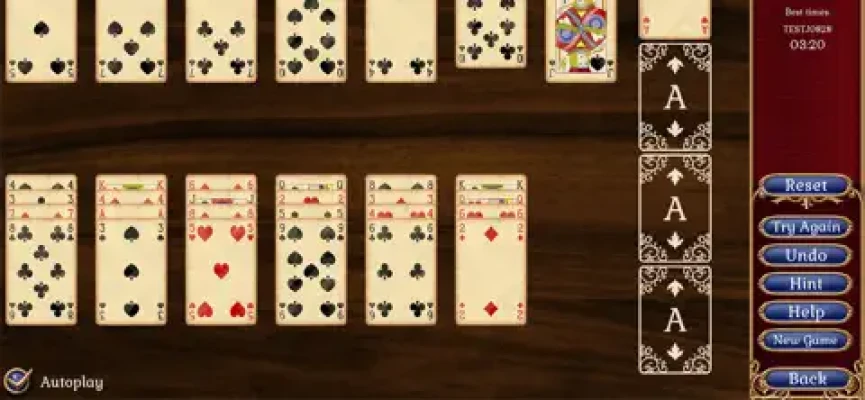
Klondike rewards familiarity with traditional tableau and foundation management. FreeCell places greater emphasis on planning and temporary card storage. Pyramid requires careful attention to card pairs and the order in which cards are removed.
When a new variation appears, spend a few rounds learning its rules rather than immediately trying to maximize your score.
7. Use the Easier Difficulty to Learn New Rules
If you are unfamiliar with a particular Solitaire variant, start with a lower difficulty.
Use those early games to learn:
Which cards are most important
How sequences are formed
What causes dead ends
When to use special abilities
Which moves create better future options
Once the rules become familiar, increase the difficulty.
8. Collect Gems and Coins Carefully
Hidden gems and coins are important parts of the game's progression because they can be used toward upgrades and castle restoration.
Do not rush through a level simply to finish it.
Take a moment to check the scene and board for collectible resources before completing the objective.
9. Prioritize Progress Over Speed
Solitaire is generally more about decision quality than raw speed.
Moving quickly can cause you to overlook:
Better card combinations
Hidden cards
Collectibles
Safer moves
Opportunities to reorganize the tableau
A slower player who makes consistently strong decisions will usually perform better than someone who moves rapidly without planning.
10. Learn From Failed Levels
A failed level is useful information.
Instead of immediately repeating the exact same sequence, identify what caused the failure.
Was a hidden card left inaccessible?
Did you use an important card too early?
Did you create an empty space at the wrong time?
Did you spend a power-up unnecessarily?
Once you identify the mistake, change your opening strategy on the next attempt.
Advanced Solitaire Tips
Plan Around Your Most Restricted Cards
Cards with fewer possible destinations should receive special attention. If one card can only be used in a limited number of ways, consider how moving it will affect the rest of the board.
Do not focus only on the cards that are easiest to move.
Sometimes the most important card is the one that appears to be doing nothing.
Create Multiple Options
Strong Solitaire play is often about maintaining choices.
When two moves appear equally useful, favor the one that leaves more possible moves afterward.
This is especially valuable in harder levels where one poor decision can create a chain of blocked cards.
Avoid Automatic Foundation Moves
Moving a card toward a foundation can feel like obvious progress, but there are situations where keeping a card available on the tableau is more useful.
Before committing a card, consider whether it may be needed to build or rearrange another sequence.
Use Trial and Observation
Some difficult levels require experimentation.
If a particular opening repeatedly leads to failure, try changing the order of your first few moves. You may discover that the same cards become much easier to manage when approached differently.
Castle Restoration Progression
Castle restoration provides a visual sense of achievement beyond individual card games.
As you advance, your Solitaire victories contribute to rebuilding the game's royal environments. The eight-castle progression gives the campaign a clear long-term objective and makes individual levels feel like part of a larger adventure.
For players who enjoy progression systems, this is one of the game's biggest attractions.
Best Tips for Beginners
If you are starting Jewel Match Royale Solitaire for the first time, keep these rules in mind:
Learn the rules of each new Solitaire variant.
Look for moves that reveal hidden cards.
Do not make the first legal move automatically.
Keep flexible cards available when possible.
Save power-ups for difficult situations.
Search carefully for gems and coins.
Do not rush through levels.
Use easier difficulty settings to learn unfamiliar variants.
Study why a failed level went wrong.
Think about your next few moves before committing.
How to Improve at Difficult Levels
When a level becomes noticeably harder, change your approach.
Start by studying the entire layout. Identify the cards that are currently blocking progress and determine which moves could expose them.
Next, consider the consequences of every major move. If a move creates a new sequence but blocks another important card, it may not actually improve the position.
Finally, use special tools only when ordinary card management cannot solve the problem.
The goal is not simply to make more moves. The goal is to make moves that improve the position.
Difficulty and Challenge
Jewel Match Royale Solitaire has three difficulty modes, making it accessible to both casual players and experienced Solitaire fans.
The challenge also comes from switching between different Solitaire rules. A player who is highly skilled at Klondike may still need time to adapt to Pyramid, Yukon, FreeCell, or another unfamiliar format.
That variety keeps the later campaign from feeling like the same puzzle repeated hundreds of times.
Is Jewel Match Royale Solitaire Worth Playing?
Jewel Match Royale Solitaire is a strong choice for players who want more than a basic Solitaire app.
Its biggest strength is the combination of classic card-game mechanics with a fantasy adventure structure. The 320 levels, 24 Solitaire variants, eight castles, collectibles, power-ups, trophies, and difficulty options provide plenty of variety.
It is particularly appealing if you enjoy relaxing puzzle games but still want meaningful progression.
Pros
320 Solitaire levels
24 different Solitaire variations
Eight castles to restore
Three difficulty modes
Hidden gems and coins
Power-ups
Trophy progression
Multiple card-deck options
Relaxing fantasy atmosphere
Helpful strategy-focused gameplay
Cons
Players looking for only traditional Klondike may find the many variations unnecessary.
Some players may prefer a faster-paced card game.
The free version includes advertising.
Progression is designed around a broader adventure rather than pure competitive Solitaire.
Jewel Match Royale Solitaire Game Information
Game Title: Jewel Match Royale Solitaire
Developer: GameHouse LLC
Genre: Card / Solitaire / Puzzle
Main Theme: Fantasy and castle restoration
Levels: 320
Castles: 8
Solitaire Variations: 24
Difficulty Modes: 3
Features: Power-ups, trophies, collectibles, upgrades, card-deck customization
Platforms: iPhone, iPad, Android, Windows
Age Rating: Store ratings vary by platform and region
Business Model: Free play with advertising and optional in-app purchases/subscription options
The current store listings confirm availability across iPhone/iPad and Android, while the Google Play listing also identifies Windows availability.
Frequently Asked Questions
How many levels are in Jewel Match Royale Solitaire?
The game features 320 Solitaire levels.
How many castles can you restore?
There are eight majestic castles to restore during the adventure.
How many Solitaire variations are included?
Jewel Match Royale Solitaire includes 24 Solitaire variations, including Klondike, Yukon, FreeCell, Baker's Dozen, and Pyramid.
Does the game have different difficulty levels?
Yes. There are three difficulty modes, allowing players to choose a challenge appropriate to their experience.
Are there power-ups?
Yes. Power-ups are included and can help players deal with difficult card situations.
Can I earn trophies?
Yes. The game includes dozens of trophies for different achievements.
Can I customize the cards?
Yes. Multiple card-deck options are available for customizing the Solitaire experience.
Is Jewel Match Royale Solitaire suitable for beginners?
Yes. The different difficulty settings make it possible to begin at a comfortable level before tackling more demanding Solitaire challenges.
Does the game have a story?
Rather than relying on a traditional character-driven storyline, the game uses castle restoration and progression as its central adventure framework. You travel through enchanted settings while rebuilding royal castles.
Final Verdict
Jewel Match Royale Solitaire successfully blends familiar Solitaire rules with fantasy exploration and castle restoration. The large selection of card variations is its standout feature, while the collectible gems, coins, upgrades, trophies, and castle progression give players additional reasons to keep playing.
For casual players, it works well as a relaxing card game. For experienced Solitaire fans, the variety of rules and increasing difficulty provide plenty of opportunities to improve.
If you enjoy Solitaire games, card puzzles, fantasy adventures, castle restoration, relaxing puzzle games, and strategic card challenges, Jewel Match Royale Solitaire is worth adding to your collection.
Rate the Game
User Reviews









Popular Games



















 Android
 iOS
iOS Windows
 Xbox
Xbox