


Latest Version
Visit PageMore About :game
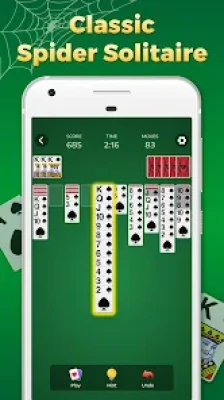
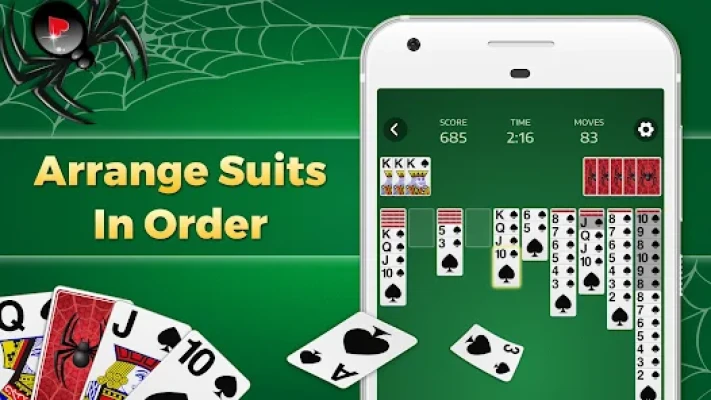
Spider Solitaire is easy to understand but becomes increasingly strategic as more suits are introduced. The main objective is to arrange cards in descending order and create complete same-suit sequences from King through Ace.
The challenge is not simply finding a legal move. Good play depends on deciding which cards to expose, when to create an empty column, which sequences to combine, and when to avoid a move that looks useful but creates problems later.
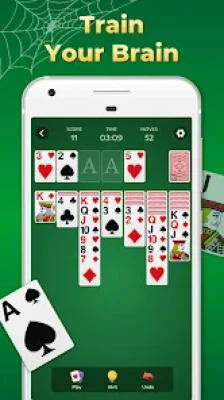
Spider Solitaire Classic Games adds convenient features such as hints, undo, auto-complete, different themes, statistics, daily challenges, and multiple difficulty options.
Game Information
Game: Spider Solitaire Classic Games
Developer: Guru Puzzle Game
Genre: Card / Solitaire
Modes: Spider Solitaire and Classic Solitaire
Players: Single-player
Play Style: Casual, strategic, relaxing
Difficulty: Multiple difficulty levels
Controls: Tap or drag cards
Offline Play: Supported
Platform: Android and Windows
Content Rating: Everyone
The current Google Play listing shows more than 5 million downloads and a 4.9-star rating, although these figures can change over time.
What Is Spider Solitaire Classic Games?
Spider Solitaire Classic Games combines traditional Spider Solitaire gameplay with a modern mobile interface.
The basic objective is straightforward:
Arrange cards in descending order.
Build complete sequences from King down to Ace.
Keep sequences together whenever possible.
Remove completed same-suit sequences.
Clear every card from the tableau.
The deeper strategy comes from managing hidden cards and empty spaces. Every move can change which cards become available, so planning several moves ahead is often more important than making the first legal move you see.
Main Features
Spider Solitaire Gameplay
The central mode uses the familiar Spider Solitaire rules, where cards are arranged into descending sequences and complete same-suit sequences are removed.
Classic Solitaire
The game also provides a Classic Solitaire mode, allowing players to switch between two well-known solitaire formats.
Multiple Difficulty Levels
Different difficulty settings change how challenging the card arrangements become. Beginners can start with easier games before moving toward more complicated layouts.
Daily Challenges and Events
Daily challenges and seasonal events provide additional reasons to return to the game and practice different situations.
Hints and Undo
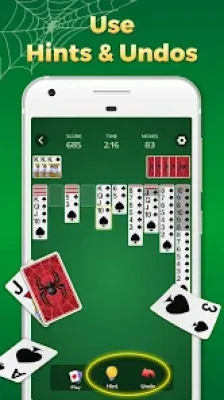
Hints can help when you cannot see the next useful move, while Undo lets you reconsider a previous decision.
Auto-Complete
When the remaining cards can be resolved automatically, the auto-complete feature can save time.
Custom Themes
Players can personalize card faces, card backs, and backgrounds with different visual themes.
Statistics
Detailed statistics allow you to follow your progress and see how your results change as you become more experienced.
How to Play Spider Solitaire
Spider Solitaire is played using a tableau of cards.
Cards can generally be moved by tapping or dragging. A card or valid sequence can be placed onto a card that is one rank higher.
For example:
8 → 7 → 6 → 5
A descending sequence can continue as long as the required ranks are available.
The important distinction is between a descending sequence and a same-suit sequence.
You can often place cards of different suits in descending order, but mixed-suit groups cannot always be moved as a complete unit in the same way as a properly matched same-suit sequence.
The ultimate goal is to create:
King → Queen → Jack → 10 → 9 → 8 → 7 → 6 → 5 → 4 → 3 → 2 → Ace
When the entire sequence belongs to the same suit, it can be removed from the tableau.
Complete Spider Solitaire Strategy Guide
1. Do Not Make Every Legal Move
One of the biggest beginner mistakes is assuming that a legal move is automatically a good move.
It is not.
A move should be judged by what it creates afterward.
Before moving a card, ask:
Does this expose a hidden card?
Does it create a useful sequence?
Does it block another column?
Does it help create an empty column?
Does it separate cards that you may need together later?
The strongest move is usually the one that improves your future options.
2. Expose Hidden Cards Early
Hidden cards are often more valuable than cards already visible on the tableau.
Whenever you have a choice between two moves, favor the move that exposes a face-down card without seriously damaging your position.
More exposed cards mean more information, and more information makes it easier to identify useful sequences.
3. Build Same-Suit Sequences
Same-suit sequences are extremely valuable.
Suppose you have:
9♠ 8♠ 7♠
Keeping these cards together gives you a flexible block that can eventually become part of a complete sequence.
If you unnecessarily bury them beneath cards of another suit, you may have to break the sequence later.
Try to convert mixed descending stacks into same-suit runs whenever possible.
4. Create Empty Columns Carefully
An empty column is one of the strongest strategic resources in Spider Solitaire.
A vacant column gives you somewhere to temporarily place a card or move an entire valid sequence.
But do not rush to create an empty column if doing so destroys a valuable sequence.
Before clearing a column, consider what you will put into it afterward.
A useful empty column can help you:
Move a large sequence.
Separate troublesome cards.
Expose hidden cards.
Reorganize multiple columns.
Combine matching suits.
5. Use Empty Columns as Temporary Storage
Think of an empty column as workspace.
For example, if a useful card is trapped beneath a poorly arranged sequence, an empty column can allow you to move that sequence temporarily and reach the card underneath.
The key is to avoid filling the empty column with an unhelpful card immediately.
Try to use the space to make several improvements before occupying it again.
How to Solve Difficult Spider Solitaire Positions
When the board looks stuck, stop making random moves.
Instead, analyze the tableau in this order:
Step 1: Find Every Possible Same-Suit Connection
Look for cards that can be joined into longer same-suit sequences.
Step 2: Identify the Most Valuable Face-Down Cards
Determine which columns can reveal hidden cards with the fewest moves.
Step 3: Search for an Empty Column
If no column is empty, look for a realistic sequence of moves that can create one.
Step 4: Check Your Lowest Cards
Aces, twos, and other low cards are important because they are needed to complete descending runs.
Do not bury them unnecessarily.
Step 5: Protect Completed or Nearly Completed Runs
If you have a long same-suit sequence, avoid breaking it unless doing so creates a much stronger position.
Empty-Column Strategy
Empty columns deserve special attention because they dramatically increase your mobility.
A strong general pattern is:
Free column → expose cards → reorganize sequences → build same-suit run → clear another column
Do not think of an empty column as the final objective. Think of it as a tool that lets you perform several useful moves.
The Two-Column Principle
When possible, having more than one open column is much stronger than having only one.
One empty column can be used as temporary storage while the other gives you additional flexibility.
However, creating multiple empty columns by destroying useful sequences can be counterproductive.
The objective is controlled freedom, not simply having empty spaces.
How to Handle Mixed-Suit Sequences
Mixed-suit sequences can be useful temporarily.
For example:
10♣ 9♥ 8♠ 7♦
may help you move cards around, but it is not as valuable as a same-suit sequence.
Do not automatically break every mixed sequence.
Sometimes it is better to leave a mixed stack intact until you have a specific reason to separate it.
Break it when doing so:
Exposes a hidden card.
Creates an empty column.
Completes a same-suit sequence.
Releases an important low card.
Gives you access to a strategically useful card.
The Importance of Kings
Kings are special because they are at the top of the descending sequence.
A King can often occupy an empty column, but placing a King into an empty column can effectively lock that space until the King can be moved.
Therefore, do not automatically move a King into an empty column.
Ask yourself whether the King will help organize the tableau or simply consume valuable workspace.
Managing Aces and Low Cards
Low cards are essential for completing sequences, but they can also become buried.
Watch carefully for:
Aces trapped under several cards.
Twos that cannot connect to an Ace.
Low cards separated from their matching suits.
Important cards hidden in columns that are difficult to access.
A good Spider Solitaire player is constantly thinking about what cards will be needed several moves later.
When to Use Undo
Undo is more useful as a learning tool than as a panic button.
If you make a move and discover that it creates a bad position, go back and examine why.
Ask:
What did the previous move prevent me from doing?
This helps identify mistakes in sequencing and column management.
Undo can also be useful when comparing two possible strategies. Try one line of play, evaluate the resulting position, and reconsider if it reduces your future options.
When to Use Hints
Hints are useful when the board becomes difficult to read.
However, do not blindly follow every suggested move.
Before accepting a hint, consider whether it:
Exposes a hidden card.
Improves a sequence.
Creates or preserves an empty column.
Moves you closer to completing a suit.
If the suggested move is legal but does not improve your position, consider what alternatives are available.
Advanced Spider Solitaire Techniques
Technique 1: Preserve Mobility
A position with many possible moves is usually healthier than one with only one obvious move.
Avoid unnecessary stacking that blocks several columns.
Technique 2: Build From the Bottom Up
When completing a suit, think about the lower cards first.
If you already have:
6♠ 5♠ 4♠ 3♠
look for the 7♠ that can extend the sequence rather than focusing only on the top of the tableau.
Technique 3: Delay Irreversible Decisions
Some moves dramatically change the board.
Before committing to one, look for alternative ways to reach the same objective.
This is especially important when deciding whether to break a long sequence.
Technique 4: Count Future Moves
Do not evaluate a move only by its immediate result.
Imagine the next two or three moves.
A move that appears weaker immediately may open a much better chain of actions.
Technique 5: Protect Useful Sequences
Long same-suit runs are valuable because they can often be moved as a unit.
Treat them as strategic assets rather than ordinary stacks.
Strategy for Easier Games
If you are new to Spider Solitaire:
Learn how descending sequences work.
Focus on exposing hidden cards.
Avoid unnecessary mixed-suit stacking.
Look for opportunities to create empty columns.
Build same-suit sequences whenever practical.
Use Undo when a move clearly reduces your options.
Do not rush.
The easiest games are excellent for learning how cards interact without having to solve highly restricted positions.
Strategy for Harder Games
Harder layouts require more planning.
Instead of asking:
“What can I move?”
ask:
“What do I need to move next?”
Then work backward.
For example, if you need a particular card to complete a sequence, determine which column contains it and what cards must be moved before you can access it.
This turns the game from trial-and-error into a planning puzzle.
Daily Challenge Strategy
Daily challenges are a good opportunity to practice consistency.
Before making your first move:
Scan all visible cards.
Identify long existing sequences.
Locate difficult face-down columns.
Check where the low cards are.
Look for an early empty-column opportunity.
Do not immediately start moving cards just because several legal moves are available.
A short planning phase can prevent a much longer recovery later.
Common Spider Solitaire Mistakes
Moving Cards Just Because You Can
Legal does not mean useful.
Breaking a Good Same-Suit Sequence
A long matching-suit sequence can be difficult to rebuild.
Filling Empty Columns Too Quickly
An empty column is valuable. Use it strategically.
Ignoring Face-Down Cards
Exposing hidden cards is one of the most reliable ways to improve your position.
Moving Kings Without a Plan
A King can occupy important workspace, so consider the consequences first.
Building Too Many Mixed-Suit Stacks
Mixed sequences may become difficult to separate later.
Forgetting About Low Cards
Aces and twos are critical to completing sequences.
Playing Too Quickly
Spider Solitaire rewards planning more than speed.
Beginner Tips
Look at the entire tableau before your first move.
Prioritize moves that expose hidden cards.
Build same-suit sequences whenever possible.
Keep at least one potential empty-column plan in mind.
Do not immediately fill an empty column.
Avoid breaking long matching-suit runs without a reason.
Use Undo to learn from mistakes.
Use hints when you genuinely cannot identify a useful move.
Think several moves ahead.
Practice easier difficulty levels before moving higher.
Advanced Tips at a Glance
Best priority: Expose hidden cards.
Best long-term resource: Empty columns.
Best sequence: Long same-suit runs.
Biggest mistake: Making legal moves without considering the next position.
Important cards: Aces, twos, and cards needed to extend existing runs.
King rule: Do not occupy an empty column with a King unless you have a clear plan.
Undo rule: Use it to test decisions and recover from strategically poor moves.
Hard-game rule: Work backward from the card or sequence you need.
Pros and Cons
Pros
Classic Spider Solitaire gameplay
Includes a Classic Solitaire mode
Multiple difficulty levels
Simple tap and drag controls
Hints and Undo options
Auto-complete feature
Daily challenges and events
Customizable visual themes
Detailed statistics
Offline single-player play
Cons
More difficult layouts can require significant planning
Random deals can produce very different experiences
New players may need time to understand advanced sequence management
The free version contains advertising
Is Spider Solitaire Classic Games Worth Playing?
Yes, especially if you enjoy traditional card puzzles and want a mobile Spider Solitaire game with additional convenience features.
The strongest part of the experience is the combination of familiar rules and modern quality-of-life options. Beginners can rely on hints and Undo while experienced players can focus on efficient sequencing, empty-column management, and difficult deals.
It works particularly well as a short-session card game because a single deal can be played at your own pace.
Who Should Play Spider Solitaire Classic Games?
This game is a good fit for:
Spider Solitaire fans
Classic card-game players
Solitaire enthusiasts
Players who enjoy strategic puzzles
People looking for offline casual games
Players who prefer single-player experiences
Anyone who enjoys short, relaxing game sessions
Frequently Asked Questions
What is Spider Solitaire Classic Games?
Spider Solitaire Classic Games is a mobile card puzzle game featuring Spider Solitaire and Classic Solitaire modes, with different difficulty levels, challenges, hints, Undo, themes, statistics, and offline play.
How do you win Spider Solitaire?
Build complete same-suit sequences from King down to Ace. Once a complete sequence is formed, it can be removed. Clear all cards from the tableau to win.
What is the best strategy for Spider Solitaire?
Focus on exposing hidden cards, creating useful empty columns, building same-suit sequences, and preserving mobility. Avoid making moves simply because they are legal.
Are empty columns important?
Yes. Empty columns provide valuable space for temporarily moving cards and reorganizing the tableau. They should be created and used carefully.
Should you always move a King into an empty column?
No. A King can occupy an empty column for a long time, so move it there only when doing so supports your overall plan.
Should you use Undo?
Yes. Undo is particularly useful for recovering from poor moves and learning which decisions create stronger positions.
Does the game have hints?
Yes. The current listing includes hint functionality to help players find possible moves.
Can Spider Solitaire Classic Games be played offline?
The current Google Play listing identifies the game as supporting offline play.
Does the game include Classic Solitaire?
Yes. The listing includes both Spider Solitaire and Classic Solitaire modes.
Final Verdict
Spider Solitaire Classic Games takes the familiar Spider Solitaire formula and adds modern mobile features that make repeated play convenient. The real challenge remains the card management: exposing hidden cards, protecting useful sequences, creating empty columns, and planning several moves ahead.
For beginners, the best approach is to play slowly and learn how each move changes the tableau. For experienced players, the focus should shift toward efficient sequence construction and preserving maximum mobility.
If you enjoy classic solitaire card games with strategic depth, daily challenges, customizable themes, and a relaxed single-player format, Spider Solitaire Classic Games is a solid choice.
Rate the Game
User Reviews









Popular Games



















 Android
 iOS
 Windows
 Xbox