



Latest Version
Visit PageMore About :game
FreeCell Solitaire King brings a familiar solitaire challenge to mobile devices while adding a stage-based progression system. Instead of relying heavily on luck, the game rewards players who think ahead, manage their available spaces, and understand how individual card movements affect the entire layout.
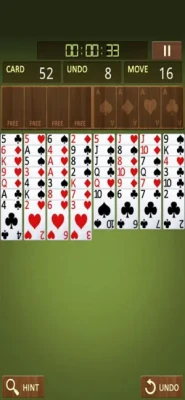
Every card begins face up, so you can study the arrangement before making your first move. The challenge is to uncover useful cards, organize sequences, and move all four suits to their foundation piles in the correct order.
The game offers two main ways to play. Stage Mode provides more than 450 levels to work through, while Classic Mode focuses on the traditional FreeCell experience. This variety makes it suitable for players who enjoy structured goals as well as those who prefer a familiar card game they can play at their own pace.
Whether you are new to FreeCell or already comfortable with solitaire, learning how to manage free cells and empty columns will make a major difference to your results.
What Is FreeCell Solitaire King?
FreeCell Solitaire King is a single-player card game based on the traditional rules of FreeCell. It uses a standard 52-card deck divided among eight tableau columns, with all cards dealt face up.
Your main objective is to move every card to one of four foundation piles. Each foundation is built by suit, beginning with an Ace and continuing in ascending order through the King.
Unlike some other solitaire variations, FreeCell gives you access to temporary storage spaces called free cells. These spaces can hold individual cards while you rearrange the tableau. Because every card is visible from the beginning, the game is primarily a test of planning, sequencing, and careful decision-making.
The mobile version adds stage progression and competitive tracking features, giving players additional reasons to keep improving their skills.
Main Features of FreeCell Solitaire King
1. More Than 450 Stages
Stage Mode offers over 450 levels, giving players a substantial collection of card puzzles to solve. Progressing through the stages provides clear goals and encourages you to improve your understanding of the game's mechanics.
2. Classic FreeCell Mode
Classic Mode offers the traditional FreeCell experience. It is a good choice for players who want to focus on card organization and strategic planning without concentrating solely on stage progression.
3. Familiar FreeCell Rules
The game follows the standard FreeCell structure. Build descending sequences with alternating colors in the tableau, use free cells for temporary storage, and move cards to the foundations in ascending suit order.
4. Simple Mobile Controls
The game is designed for touch-based play, making it easy to select and move cards on compatible devices. Simple controls allow you to concentrate on the puzzle rather than complicated commands.
5. Leaderboards and Achievements
Supported ranking and achievement features provide extra goals beyond completing a deal. They can encourage you to play more efficiently and track your progress over time.
6. Offline Gameplay
FreeCell Solitaire King supports offline play, making it suitable for travel, breaks, and other situations where an internet connection is unavailable. Online-related features may require connectivity.
7. Phone and Tablet Support
The game supports compatible iPhone and iPad devices. A larger screen can make it easier to inspect the tableau, compare card sequences, and plan several moves ahead.
8. Lightweight Design
The app is designed to work on compatible devices without requiring demanding hardware. Its straightforward presentation makes it suitable for quick sessions as well as longer puzzle-solving breaks.
How to Play FreeCell Solitaire King
Understanding the rules is the foundation of a successful FreeCell strategy.
Step 1: Examine the Eight Tableau Columns
At the start of a standard game, the 52 cards are dealt face up across eight columns. Seven cards are placed in each of the first four columns, while six cards are placed in each of the remaining four.
Take a moment to inspect the arrangement. Look for available Aces, low cards that could begin useful sequences, and cards that are blocking important parts of the tableau.
Step 2: Understand the Four Foundation Piles
The foundations are where you build completed suit sequences. Each foundation starts with an Ace, followed by the 2, 3, 4, and subsequent cards of the same suit until the King is placed.
For example, the hearts foundation must follow this order:
Ace of Hearts, 2 of Hearts, 3 of Hearts, and so on through the King of Hearts.
You cannot place a card on a foundation unless it is the next required card of that suit.
Step 3: Build Descending Tableau Sequences
In the tableau, cards can be placed on cards of the opposite color that are one rank higher.
For example, a black 7 can be placed on a red 8, while a red Queen can be placed on a black King.
These alternating-color sequences help organize the cards and uncover those hidden beneath other cards.
Step 4: Use the Free Cells
Free cells are temporary storage spaces, with each cell holding one card. You can move an available card into an empty free cell to make room for other moves.
However, free cells are limited resources. Once all of them are occupied, you have fewer options for rearranging the tableau.
Keep as many free cells empty as possible until you genuinely need them.
Step 5: Create Empty Tableau Columns
An empty tableau column is especially valuable because it can provide room for reorganizing cards. In standard FreeCell rules, an empty column can hold a sequence of cards rather than just one card, subject to the game's sequence-moving limitations.
Use empty columns to move cards out of the way, uncover buried cards, and create new descending sequences.
Step 6: Move Cards to the Foundations
Whenever a card can legally move to a foundation, consider whether moving it will help your progress.
Aces and 2s are usually useful early foundation moves because they establish the beginning of a suit sequence. For higher cards, check whether keeping them in the tableau could help you build alternating-color sequences or uncover blocked cards.
Step 7: Continue Until All Four Suits Are Complete
Keep rearranging the tableau, freeing blocked cards, and building the foundations until all 52 cards have been placed in their correct suit sequences.
The key is to avoid moves that appear helpful immediately but leave you without the free cells or empty columns needed later.
Complete FreeCell Solitaire King Strategy Guide
FreeCell rewards thoughtful planning. Since the cards are visible, most of the challenge comes from deciding which move will create the most useful opportunities.
Strategy 1: Study the Entire Deal Before Moving
Do not begin by moving the first card that appears useful. Review all eight columns and identify cards that may be difficult to uncover.
Pay particular attention to Aces and 2s buried beneath other cards. These cards are important because they begin the foundation sequences, but you may need to rearrange several cards before reaching them.
Also look for long sequences that could be preserved or extended through careful moves.
Strategy 2: Keep Free Cells Available
The four free cells provide flexibility, but each occupied cell reduces your options.
Before placing a card in a free cell, ask whether the move helps uncover a blocked card, complete a useful sequence, or create an empty column.
Avoid using free cells merely because a card is inconvenient. If you can place it legally elsewhere, you may be better off keeping the cell open.
A strong general rule is to use temporary storage for a clear purpose rather than treating it as a permanent parking space.
Strategy 3: Prioritize Empty Columns
An empty tableau column is often more powerful than an additional free cell because it can accommodate a movable sequence of cards.
To create an empty column, move all the cards from one tableau pile into legal destinations. You may need to use free cells and other columns to achieve this.
Once a column is empty, use it to reorganize a sequence, uncover a valuable card, or help move cards that would otherwise remain trapped.
Do not fill an empty column immediately without considering whether it could be more useful for a different purpose.
Strategy 4: Uncover Aces and Low Cards
Aces and 2s are natural priorities because they begin the foundation piles. If one is buried, look for a sequence of moves that exposes it.
Moving an Ace to its foundation is generally beneficial because it no longer needs to occupy the tableau. A 2 can often follow once its foundation is available.
However, always check the resulting layout. Even a legal foundation move should be considered in the context of your remaining options.
Strategy 5: Build Alternating-Color Sequences
Alternating-color sequences are essential for organizing the tableau.
Suppose you have a black 9 and a red 10. Placing the 9 on the 10 creates part of a descending sequence. You can then use the sequence to move cards together when the available spaces permit.
Try to create sequences that uncover cards you need rather than building long runs without a clear purpose.
Strategy 6: Think Several Moves Ahead
Before moving a card, consider what becomes available afterward.
A move might expose a useful card but also occupy the only free cell you need for a later rearrangement. Another move might create an empty column that allows several cards to shift at once.
Try to identify a short sequence of related moves instead of evaluating each move in isolation.
You do not need to predict the entire game. Even planning two or three moves ahead can prevent many avoidable dead ends.
Strategy 7: Avoid Blocking Useful Cards
Some cards are more important to your current plan than others. A buried Ace, a needed 2, or a card that completes a useful alternating-color sequence may deserve priority.
Before placing a card on a tableau pile, check what is underneath it. Consider whether the placement makes a critical card harder to reach.
A move that improves one sequence but blocks several useful cards may not be worthwhile.
Strategy 8: Move Cards to Foundations Thoughtfully
Moving cards to the foundations is the ultimate goal, but the timing of some moves matters.
A low card such as an Ace or 2 is generally safe to move upward when its foundation is available. Higher cards may still be useful in the tableau because they can support descending sequences.
Before moving a higher card to a foundation, consider whether it is currently helping you organize other cards. If keeping it in the tableau enables an important move, delaying the foundation move may be more efficient.
Strategy 9: Recover from a Difficult Position
If you become stuck, stop making random moves and review the board.
Check whether all free cells are occupied, whether an empty column can be created, and whether a useful card is buried beneath a sequence that can be rearranged.
Look for a move that restores flexibility rather than simply moving another card. Sometimes reversing an unhelpful arrangement is the first step toward finding a solution.
If the game provides an undo function in your current version, it may help you review an earlier decision. Otherwise, use the visible layout to plan a more deliberate approach.
Strategy 10: Recognize When a Move Has Limited Value
Not every legal move advances the game. Moving a card between two tableau columns may leave the same important cards blocked and consume a free cell or empty column.
Prefer moves that accomplish at least one meaningful task:
Reveal a buried card.
Free an Ace or low card.
Create an empty tableau column.
Extend a useful alternating-color sequence.
Free a valuable storage space.
Advance a foundation without harming the tableau.
This simple checklist can help you avoid unnecessary rearrangements.
Best Tips for Beginners
If you are new to FreeCell Solitaire King, these habits will help you learn the game more quickly.
Start by studying the layout. All cards are visible, so use that information before making your first move.
Move accessible Aces to the foundations. This establishes the beginning of each suit sequence.
Keep free cells open. Empty cells provide valuable flexibility.
Create empty columns when possible. They make it easier to rearrange multiple cards.
Build alternating colors. Remember that tableau sequences descend in rank and alternate between red and black.
Avoid random moves. Give every move a clear purpose.
Check what lies beneath a card. Uncovering a useful card may be more valuable than extending a sequence.
Practice in Classic Mode. Traditional deals are a good way to become comfortable with the rules before progressing through stages.
Advanced Strategies for Difficult Deals
As you gain experience, you can improve your results by thinking about the board as a connected system rather than a collection of separate columns.
Strategy 1: Build a Plan Around Key Cards
Identify cards that are necessary for unlocking other parts of the deal. A buried Ace or a card that completes an important sequence may determine which moves are most useful.
Work backward from the card you need. Decide which cards must move first, where they can go, and whether you need a free cell or empty column to make the arrangement possible.
Strategy 2: Use Empty Columns as Temporary Workspaces
When you clear a tableau column, treat it as a resource that can help reorganize the deal.
Move a suitable sequence into the empty space, uncover blocked cards, or shift a stack that is preventing access to an important card.
Before filling the column, consider whether keeping it empty would allow you to perform a more useful rearrangement.
Strategy 3: Preserve Long Sequences
A well-organized descending sequence can help you move several cards together when the available free cells and empty columns permit it.
Avoid breaking apart a useful sequence unless doing so exposes a valuable card or creates a more important opportunity.
Strategy 4: Balance Foundation Progress with Tableau Flexibility
Moving cards to foundations reduces the number of cards in the tableau, which is generally helpful. However, cards in the tableau can also support other cards and make sequences possible.
The strongest approach is to keep the foundations moving forward while preserving enough flexibility to uncover the remaining cards.
Strategy 5: Avoid Filling Every Available Space
If all free cells are occupied and every tableau column contains cards, your options can become severely limited.
Before making a move that fills the last open space, consider how you will free a cell or column again. Keeping at least one useful space available can make the difference between a manageable deal and a difficult position.
Strategy 6: Reevaluate After Major Moves
When you uncover an Ace, empty a column, or complete a long sequence, the best available options may change.
Pause and review the entire tableau after significant progress. A move that was previously impossible may now be available, and a card that once seemed unimportant may become essential.
Stage Mode Tips: How to Progress Through 450+ Levels
Stage Mode gives FreeCell Solitaire King a structured progression system. To work through its many levels efficiently, focus on improving your general solving method rather than relying on a single trick.
Learn the Rules Before Increasing Your Pace
Understanding free cells, foundations, and alternating-color sequences is more important than moving quickly. Once the basic rules become automatic, you can spend more time planning the difficult parts of a deal.
Examine Each New Arrangement
The game uses different card arrangements, so avoid assuming that a strategy from a previous stage will work unchanged.
Study the new layout and identify the most important cards before making moves.
Use the Same Planning Routine
A consistent approach makes unfamiliar deals easier to understand:
Find accessible Aces and 2s.
Identify buried cards that may be important.
Look for opportunities to empty a tableau column.
Preserve free cells for difficult rearrangements.
Build useful alternating-color sequences.
Move cards to foundations when doing so supports the overall plan.
Learn from Unsuccessful Attempts
If a stage becomes difficult, review the decisions that reduced your options. You may have filled a free cell too early, blocked an important card, or used an empty column without considering its later value.
Adjusting one or two decisions can reveal a better route through the same arrangement.
Classic Mode Tips for Better Play
Classic Mode is ideal for players who enjoy the traditional FreeCell experience.
Focus on Consistent Decision-Making
Rather than rushing to make every legal move, choose actions that reveal cards and increase flexibility.
Preserve Your Options
Keep free cells and empty columns available whenever possible. These spaces are the tools that allow you to rearrange the tableau.
Prioritize Useful Foundations
Move Aces and low cards upward when appropriate, but consider whether higher cards are still helping you build important sequences.
Play Carefully on Small Screens
On a phone, cards can appear close together. Take care when selecting a card or choosing a destination, especially when several sequences overlap visually.
Practice for Better Recognition
The more deals you solve, the easier it becomes to recognize useful patterns. Over time, you will become better at spotting cards that should be uncovered and moves that preserve flexibility.
Common Mistakes to Avoid
Using Every Free Cell Too Early
Free cells are valuable because they allow temporary storage. Filling them with cards that could have been moved elsewhere can make later rearrangements much harder.
Ignoring Empty Columns
Empty tableau columns offer important opportunities to move sequences and expose buried cards. Avoid filling them without a reason.
Moving Every Available Card to a Foundation Immediately
Foundation progress is important, but some cards may still be useful in the tableau. Consider how a move affects the remaining sequences before committing to it.
Making Moves Without Checking the Hidden Stack
Although all cards are visible in FreeCell, it is easy to overlook what a move will expose or block. Check the full column before rearranging it.
Building Sequences Without a Goal
Long sequences are useful only when they help organize cards or uncover important parts of the deal. Do not create them at the expense of essential moves.
Forgetting the Alternating-Color Rule
Tableau sequences must descend in rank and alternate colors. A card that has the correct rank but the wrong color cannot be placed legally.
Moving Too Quickly
Fast play can lead to unnecessary moves and occupied storage spaces. A few seconds of planning can save several moves later.
Is FreeCell Solitaire King Good for Beginners?
Yes. The game uses familiar card rules and simple touch controls, making it accessible to new players. Since the cards are visible from the start, beginners can learn to plan their moves instead of relying on hidden information.
Classic Mode is a good place to practice the fundamentals, while Stage Mode offers a long series of additional challenges. New players should focus first on understanding alternating-color sequences and the role of free cells before attempting more complex arrangements.
Can You Play FreeCell Solitaire King Offline?
Yes. FreeCell Solitaire King supports offline play, so you can enjoy card puzzles without a constant internet connection. Features that depend on online services, such as certain ranking functions, may require connectivity.
Is FreeCell Solitaire King Free to Play?
The game is free to download and includes advertising. Players can access its main FreeCell experience without purchasing the app, although the presence and availability of optional purchases may vary by version and region.
What Is the Difference Between Stage Mode and Classic Mode?
Stage Mode offers more than 450 levels and gives players structured progression goals. Classic Mode focuses on traditional FreeCell gameplay, making it suitable for those who want to play familiar deals and refine their card-moving strategies.
Frequently Asked Questions
What is the objective of FreeCell Solitaire King?
The objective is to move all 52 cards to four foundation piles, arranging each suit from Ace through King in ascending order.
How many free cells are available?
Standard FreeCell provides four free cells. Each can hold one card temporarily, allowing you to rearrange the tableau and uncover cards.
How do you move cards in FreeCell?
You can move an exposed tableau card or a card from a free cell to a tableau card of the opposite color that is one rank higher. Cards can also move to the foundations when they match the next required rank and suit.
What is the best first move in FreeCell?
There is no single best opening move for every deal. Look for accessible Aces and 2s, useful cards to uncover, and opportunities to preserve free cells or create an empty tableau column.
Why are empty columns important?
Empty columns allow you to reorganize sequences and uncover cards that are blocked. They provide more flexibility than a single free cell when moving suitable groups of cards.
Should you move every card to the foundation as soon as possible?
Not necessarily. Aces and low cards are usually good foundation candidates, but higher cards can remain useful in tableau sequences. Consider whether moving a card upward will limit your ability to rearrange the remaining cards.
How many stages does FreeCell Solitaire King have?
The game features more than 450 stages in Stage Mode, providing a substantial collection of puzzles to complete.
Does FreeCell Solitaire King support tablets?
Yes. The game supports compatible iPhone and iPad devices, including tablet layouts.
Can beginners win at FreeCell?
Yes. Beginners can improve their chances by planning ahead, preserving free cells, uncovering Aces and low cards, and creating empty tableau columns. Since every card is visible, careful reasoning plays a major role in successful games.
What is the best strategy for difficult FreeCell deals?
Identify important buried cards, keep storage spaces available, build alternating-color sequences, and use empty columns to reorganize the tableau. Avoid moves that reduce your options without making meaningful progress.
Final Thoughts
FreeCell Solitaire King combines the strategic depth of classic FreeCell with a stage mode featuring more than 450 levels. Its simple controls make it easy to begin, while the need to manage free cells, empty columns, and alternating-color sequences provides plenty of opportunities to improve.
The most important habit is to think about how each move affects the rest of the board. Study the deal before starting, uncover useful cards, protect your free cells, and create empty columns whenever they offer a clear advantage.
With patience and a consistent strategy, you can solve more deals, progress through the stages, and enjoy a rewarding solitaire experience wherever you play.
Rate the Game
User Reviews











Popular Games



















 Android
 iOS
 Windows
 Xbox