
Latest Version
Visit PageMore About :game
The basic objective is simple: clear cards from the board by selecting cards that are one number higher or lower than the current card. The challenge comes from choosing the right sequence, uncovering hidden cards efficiently, and deciding when to extend a streak rather than immediately taking the easiest available move.
Solitaire Story Overview
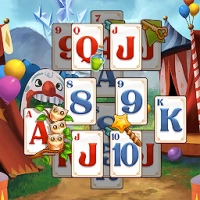
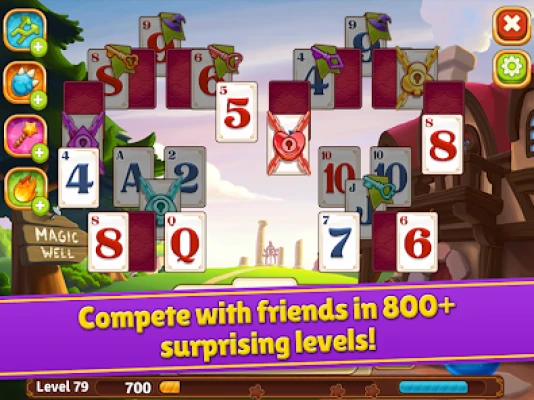
Solitaire Story is built around the TriPeaks style of solitaire. Instead of playing a traditional Klondike layout, you are presented with groups of cards arranged into peaks. Your task is to remove the exposed cards while gradually revealing cards underneath them.
The game adds a fantasy adventure atmosphere to the familiar card format. As you progress, different environments and themed card layouts help make the journey feel like more than a collection of isolated solitaire rounds.
According to the current Google Play listing, the game offers more than 860 levels, with additional content described as being on the way. It also includes boosters, charms, surprise eggs, bonus rewards, and leaderboard competition.
Story and Atmosphere
The presentation gives Solitaire Story a light fantasy-adventure identity.
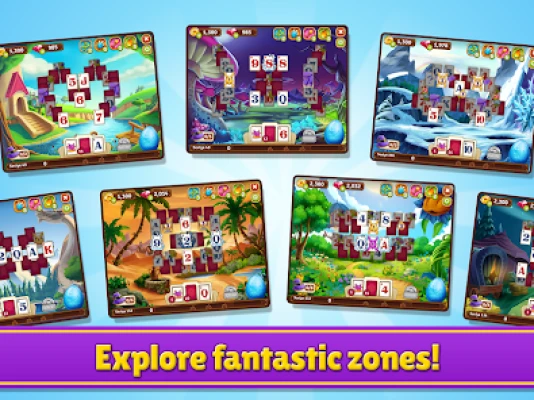
Your journey takes you through unusual locations including:
Enchanted Woods
Dragon Falls
Mystery Castle
Tiki-themed solitaire areas
Other exotic fantasy locations
The atmosphere is colorful and relaxed, but the card puzzles gradually become more demanding. This combination makes the game suitable for players who enjoy casual puzzle sessions but still want a reason to keep progressing.
The fantasy theme also gives the game a sense of progression that traditional solitaire games sometimes lack.
Core Gameplay
The most important mechanic is the TriPeaks card sequence.
You normally select an exposed card and then look for another exposed card that is one value higher or one value lower than your current card.
For example:
A 7 can normally be followed by a 6 or 8.
An 8 can be followed by a 7 or 9.
A Queen can be followed by a Jack or King.
An Ace may become especially important depending on the cards available in the current layout.
Every successful move can expose additional cards. This means the best move is not always the card that is immediately available. Sometimes you should choose a sequence that opens more of the board and creates better opportunities later.
How to Play TriPeaks Effectively
A good TriPeaks player thinks several moves ahead.
Instead of asking only:
“Which card can I remove now?”
ask:
“Which card should I remove now so that I have more useful choices afterward?”
This small change in thinking makes a major difference on difficult levels.
When several cards are available, compare what each choice will reveal. Removing one card may expose another card that continues your sequence, while another choice may leave you with no useful follow-up.
The Most Important Strategy: Protect Your Options
Do not automatically take the first playable card.
Suppose your current card allows you to remove either a 5 or a 7. If removing the 5 reveals a card underneath it while removing the 7 does not help uncover anything important, the 5 may be the better move.
The goal is to keep as many future options open as possible.
A strong sequence often looks like:
Current card → playable card → newly exposed card → another playable card → newly exposed card
The longer you can maintain this chain, the more cards you can potentially clear without relying heavily on the remaining deck.
Build Long Card Streaks
One of the most useful mechanics is creating consecutive moves.
Long sequences can allow you to clear several cards without interrupting your run.
Look for opportunities where one move exposes another card that can immediately continue the sequence.
For example:
8 → 7 → 6 → 7 → 8 → 9
A sequence like this is much more valuable than making several unrelated moves because it can clear a significant part of the board while preserving your available cards.
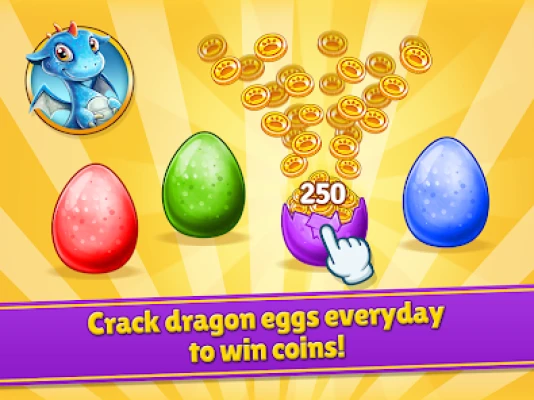
The game also specifically rewards streak-based play, including a five-move sequence that can help break a Dragon Egg and produce bonus rewards.
Think About the Peaks
TriPeaks layouts are not just random collections of cards. The arrangement determines which cards you can reach.
When several peaks are present, pay attention to the cards that are blocking access to deeper sections.
A useful rule is:
Prioritize moves that help open blocked areas.
Removing a card that exposes two or more additional cards can be more valuable than removing a card that simply disappears without improving your position.
Do Not Waste a Wild or Joker Opportunity
Extra or special cards can be extremely valuable when you reach a difficult section.
Do not use a powerful card simply because it makes the current move convenient.
Save valuable assistance for situations where:
No useful sequence is available.
A peak is almost cleared.
One important card is preventing further progress.
You can turn a short sequence into a much longer one.
You are close to completing the level.
The closer you are to clearing a difficult board, the more valuable a saved resource can become.
How to Handle Difficult Levels
When a level becomes difficult, slow down rather than making random moves.
Before selecting a card, scan the exposed cards and identify:
Which cards can be removed immediately.
Which move reveals additional cards.
Which move creates the longest possible sequence.
Which cards may become useful after the next move.
Whether a booster is genuinely necessary.
This simple checklist can prevent many avoidable failures.
Use Boosters at the Right Time
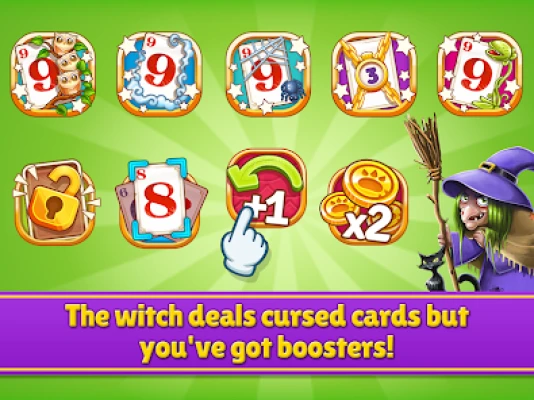
Solitaire Story includes boosters designed to help with challenging card situations.
Boosters are most useful when they solve a genuine problem rather than merely making an easy level faster.
Consider using one when:
You have exhausted your normal options.
One blocked card is preventing progress.
You have a strong opportunity to clear a large section.
You are near the end of a difficult level.
Losing the level would cost more valuable resources than using the booster.
Using boosters too early can leave you without assistance when the layout becomes substantially harder.
Understanding Charms
Charms provide another way to improve your progress and rewards.
The game features effects such as Double Coins and Maximum Life, among other bonuses.
The smartest approach is to match the charm to your current objective.
If your goal is earning more currency, a reward-oriented bonus can be more useful. If you are trying to make steady progress through difficult stages, an effect that helps sustain your attempts can have greater value.
Do not treat every charm as equally valuable in every situation.
Daily Surprise Rewards
The game includes surprise eggs that can provide rewards.
Make these daily opportunities part of your normal routine rather than something you remember only when you need resources.
A consistent reward routine can help build up useful items over time without requiring you to depend entirely on successful level completion.
How to Improve Your Score
A strong score is usually the result of efficient play rather than simply finishing the level.
To improve your performance:
Build longer card sequences.
Avoid unnecessary interruptions.
Reveal hidden cards quickly.
Plan around the remaining available cards.
Use boosters strategically.
Avoid wasting valuable special resources.
Look for opportunities to create five-move streaks.
Replay challenging stages if you want to improve your approach.
Efficiency matters because every unnecessary move can reduce your future options.
Common Mistakes to Avoid
1. Taking the First Available Card
The first legal move is not always the best move.
Look at the alternatives before committing.
2. Ignoring Newly Exposed Cards
Whenever you remove a card, immediately check what has been revealed.
A newly exposed card can completely change your available sequence.
3. Breaking a Long Streak Too Early
If you have multiple possible moves, consider which one keeps the sequence alive.
4. Spending Boosters on Easy Boards
Save powerful assistance for difficult layouts.
5. Forgetting the Remaining Deck
Your visible cards are only part of the puzzle. Think about what cards you may still need and avoid putting yourself into a position where your next move depends on a very specific card.
6. Playing Too Quickly
TriPeaks solitaire rewards observation. Fast tapping can cause you to miss the better sequence.
Advanced TriPeaks Strategy
Clear Blocking Cards First
If a card is preventing access to several hidden cards, it deserves special attention.
Opening a blocked section can create several new possibilities at once.
Compare Two-Move and Three-Move Opportunities
When you have two choices, do not judge them only by the first card.
Imagine the next two or three moves.
A move that appears ordinary may become much stronger if it creates a long continuation.
Preserve Flexible Cards
Cards that can connect with several possible values are strategically useful.
Try not to use a flexible opportunity too early if it can help you escape a difficult situation later.
Watch the End of the Sequence
Many failed attempts happen because players concentrate on the beginning of a streak but forget where it leads.
Before starting a long sequence, look at the cards that are likely to become available afterward.
Use Risk Strategically
Sometimes the safest move is not the best move.
If one choice opens a large section of the board while another simply removes one card, the higher-risk option may provide much greater potential.
The key is to understand what you are risking and what you could gain.
Progression and Level Strategy
Solitaire Story is designed around continued progression through many levels and locations.
Rather than treating every stage independently, develop a consistent playing routine:
Observe → plan → build a sequence → reveal cards → preserve options → finish efficiently.
As layouts become harder, this approach becomes more important than simply memorizing individual card combinations.
Playing With Friends
The game also includes social features centered around friends and leaderboards.
Players can connect with friends, compete on leaderboards, and exchange helpful resources such as extra lives and moves.
For competitive players, leaderboard performance gives another reason to replay levels and improve efficiency rather than simply completing each stage once.
Difficulty
Solitaire Story starts with an approachable TriPeaks concept, but difficulty depends heavily on the card arrangement.
The challenge generally comes from:
Limited useful card sequences
Poorly positioned cards
Difficult peak layouts
Unfavorable card availability
Maintaining long streaks
Deciding when to use assistance
The controls are simple, but mastering the game requires considerably more planning than the basic rules suggest.
Tips for New Players
If you are just starting Solitaire Story, follow these rules:
Learn the TriPeaks sequence before worrying about high scores.
Look at the entire exposed board before making a move.
Prefer moves that reveal hidden cards.
Try to create long consecutive sequences.
Save powerful boosters for genuinely difficult situations.
Pay attention to daily rewards.
Do not rush your card selections.
Use social features if you enjoy leaderboard competition.
When stuck, reconsider your previous move instead of immediately spending a resource.
Practice recognizing which cards are likely to create future chains.
Tips for Experienced Players
Once the basic rules become familiar, focus on efficiency.
Try to predict several moves ahead and evaluate each card based on what it unlocks.
A useful mental habit is to assign value to each available move:
Immediate removal + cards revealed + potential continuation = stronger move
This is not a strict mathematical formula, but it is a useful way to think about complicated boards.
Pros and Cons
Pros
Classic TriPeaks solitaire gameplay
Large number of levels
Colorful fantasy environments
Multiple locations and themed card layouts
Boosters and charms
Daily surprise rewards
Long-streak mechanics
Leaderboards
Social interaction with friends
Easy-to-learn controls
Suitable for short or longer puzzle sessions
Available on Android and Windows
Cons
Later levels can become significantly more challenging
Progress can depend heavily on the cards available
Ads are part of the free experience
Some players may prefer a completely traditional solitaire presentation
Social features may not appeal to players who prefer a purely solo card game
Is Solitaire Story Worth Playing?
Yes, especially if you enjoy TriPeaks solitaire but want something more substantial than a traditional standalone card game.
The combination of fantasy locations, hundreds of levels, card streaks, boosters, rewards, and leaderboards gives the familiar solitaire formula a longer progression loop.
The strongest part of the game is its simplicity: the rules are easy to understand, but good decisions become increasingly important as the layouts become more demanding.
Final Verdict
Solitaire Story - Puzzle Games is a colorful TriPeaks adventure that gives classic solitaire a more structured sense of progression.
Its strongest appeal comes from the combination of simple card rules and increasingly strategic decisions. Clearing cards is easy to understand, but choosing the right sequence, exposing hidden cards, maintaining streaks, and saving boosters for the right moment can make a major difference.
For casual card-game fans, TriPeaks players, and anyone who enjoys puzzle games with a fantasy setting, Solitaire Story is a solid choice for relaxed but surprisingly strategic gameplay.
Frequently Asked Questions
What type of game is Solitaire Story?
Solitaire Story is a TriPeaks-style solitaire puzzle game with fantasy-themed locations, progression, rewards, boosters, and social leaderboard features.
How do you play Solitaire Story?
Remove exposed cards by selecting cards that are one number higher or lower than the current card. Continue building sequences to clear the board and reveal hidden cards.
How many levels does Solitaire Story have?
The current Google Play description advertises more than 860 levels, with additional content planned.
Does Solitaire Story have boosters?
Yes. The game includes a variety of boosters and charms designed to help with difficult stages and improve progression.
Does Solitaire Story have daily rewards?
Yes. The game features free surprise eggs that can provide rewards.
Can you compete with friends?
Yes. Solitaire Story includes leaderboards and social features that allow players to compete with friends and exchange certain helpful resources.
Is Solitaire Story suitable for beginners?
Yes. The basic TriPeaks rules are easy to learn, while the more difficult layouts provide additional challenge for experienced solitaire players.
Is Solitaire Story available offline?
The Google Play listing categorizes the game as supporting offline play, although some social and connected features naturally require an internet connection.
Is Solitaire Story free?
The game is free to play and contains advertisements and optional in-app purchases.
What is the best strategy for difficult levels?
Look beyond the first available move. Prioritize cards that reveal hidden cards, maintain long sequences, preserve useful options, and use boosters only when they can make a meaningful difference.
Rate the Game
User Reviews







Popular Games



















 Android
 iOS
iOS Windows
 Xbox
Xbox