




Latest Version
August 16, 2026
Mattel163 Limited
Card
iOS
0
Report a Problem
More About :game
Skip-Bo is a strategic card game built around one simple objective: clear your stock cards before your opponent does. The mobile version takes the familiar rules and adapts them for touchscreens while adding an adventure-style progression system.
The official mobile game features hundreds of levels, illustrated maps, two-player matches, online competition, and regularly added challenges. It is available for iPhone and iPad and is rated 4+ on the U.S. App Store.
The game is published by Mattel163 Limited, the studio behind mobile versions of well-known card brands including UNO and Phase 10.
Game Story and Theme
Unlike a traditional story-driven adventure, Skip-Bo focuses on card strategy and progression. Its adventure mode gives the classic card mechanics a colorful journey structure, allowing players to move through maps and complete levels while collecting rewards.
The presentation is designed to keep the experience light, accessible, and suitable for casual sessions while still giving experienced card players plenty of opportunities to plan their moves.
Gameplay Overview
At the heart of Skip-Bo is a race to empty your stock pile.
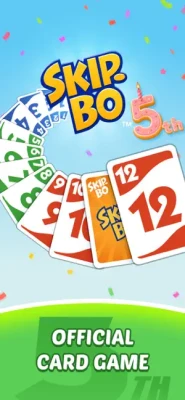
Players draw cards and strategically place them into building piles. Cards are played in numerical sequence, while Skip-Bo cards can act as wild cards. Successful planning allows players to chain multiple plays together and remove more cards from their stock pile.
The traditional rules use four central building piles. Each pile begins with 1 and progresses upward toward 12. Once a pile reaches 12, it is completed and removed before a new building pile can be started.
This creates an interesting balance between using a card immediately and saving it for a more useful move later.
Key Features
Classic Skip-Bo Card Gameplay
The mobile game preserves the recognizable Skip-Bo formula while adapting the experience for phones and tablets.
Solitaire-Inspired Challenges
Players can take on individual levels that combine familiar Skip-Bo mechanics with progression-based challenges.
Hundreds of Levels
The adventure mode offers hundreds of levels to complete, with players progressing across illustrated maps as they improve their card-playing skills.
Online Competition
Players can challenge real opponents through online gameplay, adding a competitive element to the traditional card experience.
Two-Player Matches
The game supports competitive two-player experiences for players who prefer direct head-to-head card battles.
Adventure Map
The adventure system gives players a longer-term progression path instead of limiting the experience to individual matches.
Rewards and Progression
Completing levels can provide coins and other progression rewards, giving players additional reasons to continue exploring the game.
Regular New Content
The developer states that new levels are added regularly, helping keep the adventure experience fresh for returning players.
How to Play Skip-Bo
The basic objective is straightforward: be the first player to get rid of every card in your stock pile.
During a traditional turn, players draw until they have five cards in their hand. They can then play appropriate cards from their hand, stock pile, or discard piles onto the central building piles.
Building piles must normally follow numerical order from 1 through 12. A Skip-Bo card can be used as a wild card to represent another number.
When you can no longer continue—or decide that ending the turn is strategically better—you place a card into one of your discard piles.
Skip-Bo Cards and Building Piles
Understanding the building system is essential.
A new building pile begins with a 1 or a Skip-Bo wild card. The following cards must then continue upward in numerical order.
For example:
1 → 2 → 3 → 4 → 5 → 6 → 7 → 8 → 9 → 10 → 11 → 12
After reaching 12, the completed pile is cleared and becomes part of the recycled card supply when needed.
The Skip-Bo card is particularly valuable because it can fill the missing number required to continue a sequence.
Stock Pile Strategy
Your stock pile should always be your primary focus.
A common mistake is concentrating only on creating long sequences in the middle. The real objective is to expose and remove the top card of your stock pile whenever possible.
Before making a move, consider:
- Can you play your stock card?
- Can a Skip-Bo card unlock the stock pile?
- Should you save a useful number for your next turn?
- Can you finish a building pile without wasting an important card?
- Will your move give your opponent an easier opportunity?
Good Skip-Bo play is often about thinking one or two moves ahead.
Discard Pile Strategy
Discard piles are more than places to store unwanted cards.
Because the top card of a discard pile can become useful later, organizing your discards carefully can create future combinations. Avoid filling every pile randomly when you have a choice.
A useful approach is to create discard piles that preserve useful sequences or keep important numbers accessible.
Beginner's Guide
If you're new to Skip-Bo, start with these principles:
- Prioritize your stock pile.
Removing stock cards moves you directly toward victory. - Use wild cards carefully.
Skip-Bo cards can solve difficult situations, but wasting one too early can hurt later. - Watch the top card of every discard pile.
Your future turns may depend on having the correct number available. - Think beyond your current move.
Ask what your move will allow you to play next. - Complete building piles strategically.
Finishing a sequence can be useful, but sometimes keeping a card available is more valuable.
Advanced Strategy Tips
Experienced players should pay close attention to card efficiency.
Protect Useful Wild Cards
A Skip-Bo card can transform an otherwise impossible sequence into a playable one. Save it when there is a strong reason to do so.
Track Your Opponent
Online matches become much more strategic when you watch the opponent's stock pile and discard choices.
Think About Card Exposure
A move that exposes a new stock card can be much more valuable than a move that simply adds another card to a central sequence.
Avoid Automatic Plays
The first available move is not necessarily the best move. Consider whether playing a card now prevents a stronger combination later.
Use Discards Intentionally
Your discard piles should support future turns rather than simply hold cards you don't want.
Game Modes and Progression
Skip-Bo's mobile experience combines several styles of play.
Adventure Mode:
Progress through a large collection of levels and illustrated maps while earning rewards.
Two-Player Matches:
Enjoy direct competitive card battles.
Online Play:
Challenge real opponents and put your strategy against another player.
Solo Challenges:
Play through individual levels at your own pace.
This combination makes the game suitable for both short casual sessions and longer progression-focused play.
Controls and Interface
Skip-Bo uses a touch-friendly interface designed around simple card selection and placement.
Typical actions involve:
- Selecting a playable card
- Choosing a building pile
- Managing discard piles
- Viewing your stock pile
- Drawing cards
- Ending your turn
- Following available moves through the interface
The digital format removes much of the setup required by a physical card game and makes it easy to start a match on an iPhone or iPad.
Difficulty
The basic rules are easy to understand, but mastering Skip-Bo requires considerably more planning.
Beginner: Easy to learn the basic card sequences and objective.
Intermediate: Requires better discard management and stock-pile planning.
Advanced: Requires anticipating future moves, managing wild cards, and reacting to an opponent's strategy.
The adventure levels gradually provide additional challenges, while online matches can introduce unpredictable human opponents.
Graphics and Presentation
Skip-Bo uses a colorful, illustrated presentation rather than attempting to recreate a plain physical card table.
The adventure maps provide visual progression, while card-focused interfaces keep the most important gameplay information easy to follow. The result is a casual presentation that fits the game's family-friendly card identity.
Sound and Atmosphere
The overall presentation is designed around relaxed card-game sessions rather than intense action. This makes Skip-Bo suitable for short breaks, casual play, and longer sessions where the focus remains on strategic decision-making.
Player Experience
Skip-Bo benefits from a very recognizable gameplay concept. Players who already know the physical card game can quickly understand the mobile version, while newcomers can learn the rules through repeated play.
The App Store currently lists the game with a 4.9/5 rating from more than 213,000 ratings in the U.S. listing.
Player feedback also highlights the nostalgia associated with the original card game, while some reviews raise concerns about the game's energy and coin systems.
Pros and Cons
Pros
- Classic Skip-Bo gameplay
- Solitaire-inspired mobile experience
- Hundreds of adventure levels
- Online multiplayer
- Two-player matches
- Colorful progression maps
- Easy-to-learn card mechanics
- Strategic gameplay with significant replay value
- Suitable for casual and experienced card players
Cons
- Progression can feel restricted by energy and currency systems for some players
- Online play may appeal more to competitive players than casual solo players
- The app requires a substantial amount of storage space on iOS
The U.S. App Store currently lists the app at roughly 546 MB, with free installation and optional in-app purchases.
Technical Details
Game: Skip-Bo™: Solitaire Card Game
Developer: Mattel163 Limited
Genre: Card / Solitaire / Casual
Platforms: iPhone, iPad
Age Rating: 4+
Price: Free with in-app purchases
Languages: English plus additional supported languages
App Size: Approximately 546 MB on the current U.S. App Store listing
The game is also available on Android, where Google Play lists it as a card and casual game with single-player and competitive elements.
Who Should Play Skip-Bo?
Skip-Bo is a strong choice for players who enjoy:
- Solitaire card games
- Classic card games
- Strategic puzzle games
- Casual multiplayer
- Online card battles
- Family-friendly games
- Number-based card sequences
- Relaxing but competitive gameplay
- Short mobile gaming sessions
It is particularly appealing to people who already enjoy the physical Skip-Bo card game and want a convenient digital version.
Skip-Bo vs. Traditional Card Games
Skip-Bo sits comfortably between solitaire and competitive card games. Like solitaire, it rewards careful sequencing and planning. Like multiplayer card games, it requires you to react to another player's progress.
Its biggest distinction is the stock-pile objective. Rather than simply completing a predefined solitaire layout, you are actively trying to eliminate your own stock cards before your opponent can eliminate theirs.
Skip-Bo vs. Other Solitaire Games
Traditional solitaire usually focuses on completing card foundations or arranging cards according to fixed patterns.
Skip-Bo introduces more interaction and tactical decision-making. Building piles are shared, wild cards can change the direction of a sequence, and multiplayer matches add another layer of pressure.
That makes it a good option for players who enjoy solitaire mechanics but want something more competitive.
Tips for Winning More Matches
Focus on the stock pile first.
Every stock card removed represents direct progress toward victory.
Don't waste your Skip-Bo cards.
Wild cards are powerful tools for breaking blocked sequences.
Study the discard piles.
A well-managed discard pile can give you exactly the card you need later.
Look for multi-card turns.
Playing several cards in succession can dramatically accelerate your progress.
Think defensively online.
If your opponent is close to clearing their stock pile, your priorities may change.
Plan before committing.
A few seconds of planning can prevent a move that blocks your next turn.
Frequently Asked Questions
What is Skip-Bo Solitaire Card Game?
Skip-Bo™: Solitaire Card Game is the official mobile adaptation of the classic Skip-Bo card game, combining strategic card gameplay with solitaire-style levels, adventure progression, and online competition.
Is Skip-Bo Solitaire Card Game free?
Yes. The iOS version is listed as free to download with optional in-app purchases.
Can I play Skip-Bo on iPhone?
Yes. The official App Store listing supports iPhone and iPad.
Does Skip-Bo have online multiplayer?
Yes. The mobile game includes online play where players can compete against real opponents.
How do you win Skip-Bo?
The fundamental objective is to be the first player to remove every card from your stock pile.
What does a Skip-Bo card do?
A Skip-Bo card is a wild card that can represent another number when building a sequence.
How many building piles are used?
The traditional Skip-Bo rules use four central building piles. Each one progresses from 1 through 12.
Is Skip-Bo suitable for beginners?
Yes. The basic rules are relatively simple to learn, while advanced play offers enough strategic depth to keep experienced card players interested.
Skip-Bo™: Solitaire Card Game successfully takes a familiar card-game formula and expands it into a modern mobile experience. The combination of classic Skip-Bo rules, solitaire-style challenges, hundreds of levels, adventure maps, and online competition gives the game considerably more variety than a simple digital card table.
Its strongest feature is the balance between accessibility and strategy. New players can understand the basic goal quickly, while experienced players can spend considerable time refining their stock-pile management, discard strategy, and use of wild cards.
For fans of Skip-Bo, solitaire card games, casual strategy games, and online card battles, this is a convenient way to enjoy the classic experience on a mobile device.
Rate the Game
User Reviews









Popular Games



















 Android
 iOS
iOS Windows
 Xbox
Xbox