
Latest Version
October 05, 2026
Gamehouse LLC
Puzzle
iOS
0
Report a Problem
More About :game
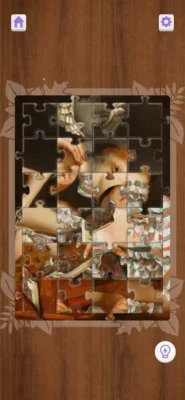
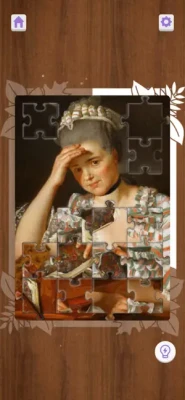
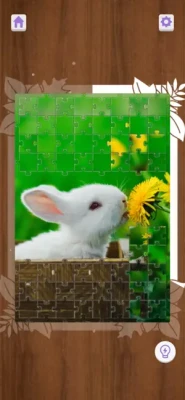
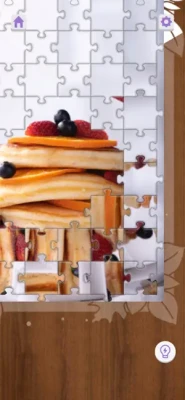
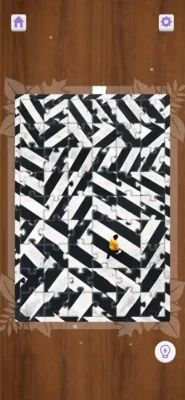
Instead of traditional jigsaw pieces that you drag into position, Tile Twist asks you to tap and rotate tiles until they snap into the correct places, gradually revealing a complete picture.
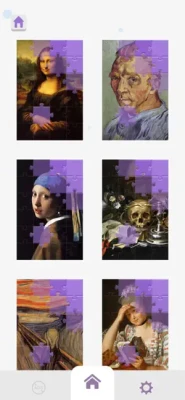
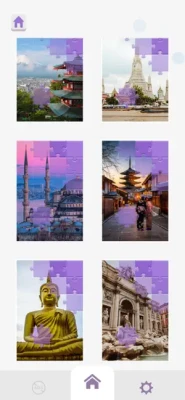
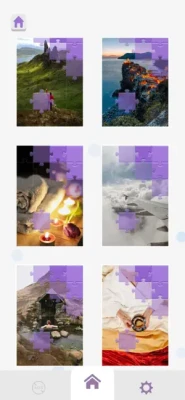
The game combines classic jigsaw principles with a more accessible tile-twisting system. Its large puzzle collection includes 400+ puzzles across more than 20 themed packs, covering subjects such as nature, pets, sports and cozy indoor scenes.
There are also daily puzzles, adjustable difficulty, different puzzle shapes and styles, customizable backgrounds, hints, trophies and the ability to create puzzles from your own photographs.
What Makes Tile Twist Different?
The main attraction is the combination of relaxation and visual problem solving.
You are not simply matching identical tiles. You must understand how individual pieces fit together and determine the correct orientation.
Each successful placement provides a satisfying sense of progress as the image gradually becomes recognizable.
The game is particularly suitable for short sessions because you can complete a few pieces at a time or spend longer working through a more challenging puzzle.
How to Play Tile Twist
The basic gameplay loop is easy to understand:
Choose a puzzle.
Select your preferred difficulty.
Examine the available tiles.
Tap or rotate pieces.
Match the correct edges and image details.
Lock pieces into their correct positions.
Continue until the complete image is revealed.
Move on to additional puzzles and themed collections.
Difficulty can be adjusted up to 100 pieces per puzzle, giving experienced players considerably more complexity than the easiest layouts.
Full Tile Twist Strategy Guide
1. Start With the Easiest Visual Pieces
Don't immediately try to solve the entire board.
Look for pieces containing obvious features such as:
Bright colors
Strong lines
Large objects
Text
Clear borders
Distinctive patterns
Recognizable faces
Strong changes in color
These pieces give you a visual anchor and make the surrounding tiles easier to understand.
2. Use Image Recognition Before Rotation
Before repeatedly rotating a tile, inspect what is actually printed on it.
Ask:
Where could this image detail logically belong?
For example, a tile containing part of a blue sky is more likely to belong near other sky pieces than a tile containing a dark object.
Likewise:
Green textures often indicate plants or grass.
Blue areas can indicate sky or water.
Straight architectural lines can identify buildings.
Fur patterns can identify animal areas.
Repeated textures can reveal backgrounds.
Use the image itself as a guide rather than relying only on tile shape.
3. Build Around Strong Features
A distinctive feature can act as your starting point.
Look for:
Animal eyes
Faces
Wheels
Windows
Flowers
Sports equipment
Furniture
Buildings
Mountains
Bright objects
Once one feature is correctly assembled, neighboring pieces become much easier to identify.
4. Work From Obvious Areas Toward Similar Colors
Large areas of identical color can be surprisingly difficult.
A puzzle with a large blue sky, for example, may contain many pieces that look almost identical.
Don't begin with those sections.
Instead, solve distinctive parts first and use the completed image to determine where the similar-looking pieces belong.
5. Learn the Difference Between Shape and Image Clues
Tile Twist gives you two major sources of information:
Shape clues tell you where a piece physically fits.
Image clues tell you where the picture continues.
The strongest solutions use both.
If two pieces appear visually similar, compare their edges and orientation.
If several pieces have similar shapes, inspect the artwork printed on each one.
6. Don't Rotate Randomly
Random rotation wastes time.
Instead, rotate a piece while watching one specific feature.
For example:
Find a diagonal line.
Find the edge of an object.
Identify a color transition.
Follow a person's outline.
Track a building edge.
Then rotate the tile until that feature aligns with its surrounding image.
This makes the correct orientation much easier to recognize.
Strategy for Larger 50–100 Piece Puzzles
Higher-piece puzzles require a different approach.
Trying to solve individual pieces one at a time becomes inefficient when the board becomes crowded.
Step 1: Identify Major Image Zones
Break the picture into broad areas:
Sky
Ground
Water
Buildings
People
Animals
Objects
Background
Step 2: Solve Distinctive Sections
Start with areas that have recognizable visual details.
Step 3: Expand Outward
Once you have a correctly assembled section, use it as an anchor for neighboring pieces.
Step 4: Leave Generic Backgrounds Until Later
Large sections of grass, sky, walls or similar textures are usually easier once the surrounding image has been established.
Step 5: Finish With the Most Similar Pieces
The final few pieces often require careful comparison because their colors and patterns may be nearly identical.
How to Solve Difficult Tile Twist Puzzles
When you become stuck, don't keep rotating the same tile endlessly.
Use this recovery method:
Pause
Take your eyes away from the puzzle for a moment.
Identify the Missing Section
Ask which area of the picture is incomplete.
Search for Matching Colors
Find tiles that contain colors associated with that section.
Compare Image Lines
Look for lines that continue naturally from one tile to another.
Check Orientation
A piece may be in the correct location but rotated incorrectly.
Use a Hint
If you have exhausted the obvious possibilities, Tile Twist provides optional hints to help you continue.
How to Use Hints Effectively
Hints are best treated as a last resort rather than your primary strategy.
A good order is:
Visual inspection → shape comparison → rotation → neighboring tiles → hint
Using hints too early reduces the satisfaction of solving the puzzle yourself.
Save them for situations where several tiles have extremely similar patterns or when you have reached a genuine dead end.
Daily Puzzle Strategy
Tile Twist includes a daily puzzle, giving players a reason to return regularly.
For daily challenges, avoid rushing.
A useful routine is:
Identify the major image.
Find the most distinctive section.
Solve obvious tiles.
Expand from completed areas.
Leave repetitive backgrounds for later.
Use a hint only when necessary.
Daily puzzles are also a good opportunity to practice before tackling larger puzzle collections.
Difficulty Strategy
Tile Twist supports puzzles of different sizes, reaching up to 100 pieces.
Beginner Difficulty
Focus on:
Recognizing colors
Understanding tile rotation
Identifying obvious image features
Building small sections
Intermediate Difficulty
Start combining:
Shape recognition
Image continuity
Section building
Color grouping
Advanced Difficulty
For large puzzles:
Divide the image into zones.
Build recognizable objects first.
Keep similar background pieces separate.
Use completed sections as anchors.
Avoid guessing based on color alone.
The jump from a small puzzle to a 100-piece puzzle isn't simply about having more pieces. It also increases the number of visually similar possibilities.
Themed Puzzle Packs
The game features 20+ themed puzzle packs and more than 400 puzzles. Themes include areas such as:
Nature
Animals and pets
Sports
Indoor scenes
Scenic landscapes
Completing themed collections can also unlock additional content, including exclusive VIP puzzle packs.
A useful strategy is to alternate between themes rather than playing one collection continuously.
This keeps the visual experience fresh and gives you different types of images to solve.
Custom Photo Puzzles
One of Tile Twist's more personal features is the ability to turn your own photographs into puzzles.
This can make the game more interesting because you already know what the completed image should look like.
For easier custom puzzles, choose photographs with:
Strong colors
Clear objects
Distinctive subjects
Good lighting
Obvious visual separation
Avoid extremely blurry photographs or images containing huge areas of identical color if you want a smoother puzzle.
For a harder challenge, choose a detailed photograph with many similar textures.
Monthly Trophies and Badges
Tile Twist also includes a monthly trophy and badge system connected to completing difficulty levels.
If you want to make trophy progression more efficient, don't only play the easiest puzzles.
Work through different difficulty levels so your progress contributes toward the broader monthly objectives.
A balanced routine is:
Easy puzzles → medium puzzles → harder puzzles → daily challenge
This also gradually improves your ability to recognize patterns.
Puzzle Shape and Style Tips
The game offers changing piece shapes and puzzle styles, which prevents every puzzle from feeling exactly the same.
When the visual structure changes, don't rely entirely on habits from previous puzzles.
Instead, return to the fundamentals:
Examine the image.
Find distinctive areas.
Identify matching edges.
Determine orientation.
Build connected sections.
Finish generic areas last.
This approach works even when the puzzle presentation changes.
How to Relax While Playing
Tile Twist is deliberately designed as an antistress puzzle experience.
The game uses relaxing sound design and intuitive controls rather than emphasizing fast reactions.
For a more relaxing session:
Turn down notifications.
Choose a comfortable puzzle size.
Avoid rushing.
Use the game's sound design.
Take breaks between difficult puzzles.
Switch themes if you become frustrated.
Save harder puzzles for when you want more mental stimulation.
The goal isn't simply to finish as quickly as possible.
The gradual process of rebuilding the image is a major part of the experience.
Common Beginner Mistakes
Rotating Without Looking
Don't spin pieces repeatedly without identifying a visual clue.
Starting With the Most Difficult Area
Large areas of similar colors are usually better left until later.
Ignoring Completed Sections
Once you establish a correct section, use it as a reference for neighboring tiles.
Using Hints Immediately
Try several logical approaches before spending assistance.
Playing Only One Difficulty
Different puzzle sizes develop different skills.
Rushing
Tile Twist is designed around relaxation. Speed isn't necessary for enjoying the game.
Advanced Puzzle-Solving Techniques
The Anchor Technique
Find one unmistakable object and build around it.
The Color Boundary Technique
Look for transitions between two colors, such as:
Sky and building
Water and land
Grass and pavement
Clothing and background
Boundaries are often easier to match than large uniform areas.
The Line-Continuation Technique
Follow:
Roads
Buildings
Branches
Furniture edges
Sports equipment
Clothing outlines
A continuous line across two pieces is a strong indication that they belong together.
The Texture Technique
Use repeating textures such as:
Fur
Leaves
Brick
Wood
Fabric
Water
Once you identify the direction of a texture, surrounding tiles become easier to place.
Features at a Glance
400+ jigsaw puzzles
20+ themed puzzle packs
Up to 100 pieces per puzzle
Daily puzzle
Adjustable difficulty
Multiple puzzle shapes and styles
Custom photo puzzles
Relaxing sound design
Customizable backgrounds
Optional hints
Monthly trophies and badges
VIP puzzle packs
GameHouse+ integration
Free play with advertising
Pros and Cons
Pros
Relaxing puzzle concept
Large collection of 400+ puzzles
More than 20 themed packs
Difficulty can reach 100 pieces
Daily puzzle provides recurring content
Custom-photo puzzle feature
Multiple puzzle styles
Helpful optional hints
Monthly trophies and badges
Peaceful sound design
Suitable for short or extended sessions
Cons
Advertising is present in the free experience
Some features are tied to GameHouse+ or VIP content
Large puzzles can become visually repetitive
Similar background colors can make certain puzzles challenging
The current App Store rating is based on only a small number of ratings
GameHouse+ and Pricing
Tile Twist: Antistress Jigsaw is free to play with advertising and is also part of the GameHouse+ ecosystem.
The U.S. App Store currently lists GameHouse+ VIP at $9.99 per month or $89.99 per year. VIP provides ad-free access, offline play and additional in-game perks across the GameHouse+ collection.
The free GameHouse+ option provides access to games with advertisements, while VIP is intended for players who want the broader premium experience.
Platforms and Requirements
The current U.S. App Store listing supports:
iPhone
iPad
iPod touch
Mac with Apple silicon
Apple Vision
The listing currently specifies iOS 13.0 or later for iPhone and iPadOS 13.0 or later for iPad. It lists the game at approximately 185 MB and supports 19 languages.
The game is also available on Android through Google Play. The Android listing currently shows 1K+ downloads, contains advertising and offers in-app purchases.
Ratings and Player Feedback
The current U.S. App Store listing shows a 5.0/5 rating from 2 ratings, so the rating should be treated cautiously because the sample size is very small.
One recent App Store review praised the game but reported difficulty accessing a particular daily challenge. This suggests that the core puzzle experience can be enjoyable while occasional technical or navigation issues may affect individual players.
The Android listing provides a larger public sample, although ratings can differ between platforms and regions.
Is Tile Twist: Antistress Jigsaw Worth Playing?
Tile Twist: Antistress Jigsaw is a good choice if you want a puzzle game that combines visual concentration with a relaxed atmosphere.
Its biggest strengths are its large puzzle library, flexible difficulty and variety of themes. The ability to transform personal photographs into puzzles also gives the game an element of customization that many traditional jigsaw apps don't provide.
For beginners, start with smaller puzzles and recognizable images. As your pattern-recognition skills improve, move toward larger 50–100-piece challenges.
If you enjoy casual jigsaw games, daily challenges and relaxing brain-training activities, Tile Twist is worth trying.
Frequently Asked Questions
What is Tile Twist: Antistress Jigsaw?
Tile Twist is a relaxing jigsaw puzzle game where players tap and rotate tiles to reconstruct images.
How many puzzles are in Tile Twist?
The game advertises 400+ puzzles across 20+ themed packs.
How difficult can the puzzles become?
Players can select puzzles with up to 100 pieces, providing a substantially more challenging experience for experienced puzzle fans.
Does Tile Twist have a daily puzzle?
Yes. The game includes a fresh daily puzzle.
Can I use my own photos?
Yes. Tile Twist allows players to turn their own images into custom jigsaw puzzles.
Does Tile Twist have hints?
Yes. Optional hints are available when you become stuck.
Does Tile Twist have different puzzle styles?
Yes. The game includes changing piece shapes and puzzle styles to add variety.
Is Tile Twist free?
The game is free to play with advertising, while GameHouse+ offers additional access and VIP features.
Is Tile Twist good for relaxing?
Yes. Relaxing soundscapes, intuitive controls and the absence of a need for fast reactions make it well suited to casual, stress-free puzzle sessions.
What is the best strategy for difficult puzzles?
Start with distinctive objects and strong color boundaries, build recognizable sections, and leave large areas of similar texture until the surrounding image gives you more clues.
Final Verdict
Tile Twist: Antistress Jigsaw takes the familiar jigsaw concept and gives it a simple tile-rotation system that makes the experience easy to pick up while still offering meaningful challenges at higher piece counts.
With 400+ puzzles, 20+ themes, daily challenges, custom-photo puzzles, multiple styles, hints and monthly trophies, there is plenty of variety for casual puzzle fans.
The best way to play is not to rush. Start with recognizable image features, build strong sections, leave repetitive backgrounds until later and use hints only when you've genuinely exhausted your options.
For players searching for a relaxing jigsaw puzzle game, brain-training activity or antistress puzzle experience, Tile Twist offers a straightforward and visually satisfying option.
Rate the Game
User Reviews











Popular Games



















 Android
 iOS
iOS Windows
 Xbox
Xbox