


Latest Version
October 05, 2026
Gamehouse LLC
Puzzle
iOS
0
Report a Problem
More About :game
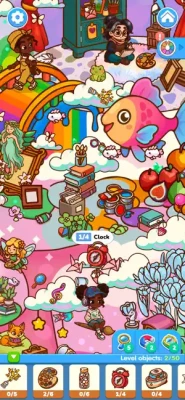
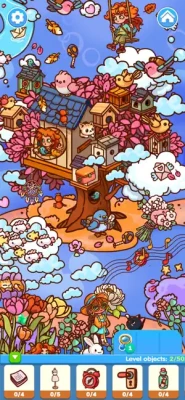
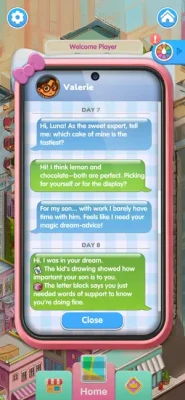
You play as Luna, a girl with the unusual ability to enter the dreams of her friends. Each dream becomes a handcrafted hidden-object scene containing objects, symbols, and clues connected to the character's emotional situation.
Instead of relying on fast reactions or stressful timers, the game encourages careful observation. You search each scene, discover hidden objects, collect crystals and find sleepy sheep that can unlock additional Hidden Pass stages.
The result is a slower-paced hidden-object experience designed around exploration, atmosphere and steady progression.
Story and Atmosphere
Luna's ability to enter dreams gives the game a distinctive setting. Rather than simply moving from one unrelated hidden-object picture to another, each dream has a purpose: Luna is trying to help a friend work through an inner conflict.
The dream worlds are presented with atmospheric artwork, soothing music and symbolic objects. This gives the game a calm, reflective personality that separates it from more frantic hidden-object games.
The atmosphere is especially suited to players who enjoy relaxing puzzle sessions rather than competitive gameplay.
How the Gameplay Works
The core gameplay is straightforward:
Enter a dream scene.
Study the environment carefully.
Find the requested hidden objects.
Look for additional collectible items.
Collect crystals during your progress.
Search for sleepy sheep.
Use collected resources to improve your progression.
Unlock Hidden Pass stages.
Continue helping Luna's friends through their dream stories.
The game currently advertises 15+ levels, with each level built around hidden-object searching and a particular dream environment.
Full Strategy Guide
1. Don't Search Randomly
The biggest mistake in hidden-object games is moving your eyes around the screen without a method.
Instead, divide the scene into sections.
For example:
Top-left
Top-center
Top-right
Middle-left
Center
Middle-right
Bottom-left
Bottom-center
Bottom-right
Search one section completely before moving to the next.
This creates a consistent scanning pattern and makes it much less likely that you repeatedly inspect the same area.
2. Read the Object Name Carefully
A requested object may not look exactly like the mental image you have in your head.
If the game asks for an item such as a key, book, flower or tool, don't immediately search for the most obvious version of that object.
Look for:
Unusual shapes
Small versions of the object
Objects partially hidden behind scenery
Items blended into decorations
Objects whose colors match the surrounding environment
Hidden-object puzzles often challenge recognition as much as eyesight.
3. Look for Objects That Don't Belong
One of the most effective techniques is to identify visual inconsistencies.
Ask yourself:
"What looks slightly out of place here?"
A hidden object may have a different:
Color
Texture
Shape
Lighting
Orientation
Pattern
An item that doesn't naturally belong to the environment can stand out once you stop looking only for the literal object name.
4. Search the Edges First
Important objects are easy to overlook around the borders of a scene.
When starting a level, check:
Corners
Along the top edge
Along the bottom edge
Behind large foreground objects
Around furniture
Near plants and decorative elements
After that, work toward the center.
5. Use a Consistent Scanning Pattern
Don't constantly jump from one side of the screen to another.
A better method is:
Left → Right → Down → Left → Right
Continue in rows until the entire scene has been examined.
This is particularly useful when several objects have similar colors.
6. Zoom Your Attention, Not Just the Screen
Even if the game doesn't require extensive zooming, train yourself to inspect small visual details.
Pay special attention to:
Shelves
Tables
Corners
Decorative objects
Wall patterns
Containers
Furniture
Background decorations
Some objects are deliberately integrated into the artwork rather than placed in obvious open spaces.
How to Find Difficult Hidden Objects
When you are down to one or two missing objects, stop using your normal search pattern.
Switch to a detail search.
Look for:
Tiny Objects
Check objects that occupy only a small portion of the screen.
Partially Covered Objects
An item may be hidden behind another visual element.
Objects Matching the Background
Low-contrast objects are particularly easy to miss.
Unusual Orientation
A familiar object might be turned sideways, upside down or positioned at an unexpected angle.
Symbolic Objects
Because the game connects dream scenes with emotions and personal stories, some objects may be integrated into the scene in unusual or metaphorical ways.
Crystal Strategy
Crystals are an important collectible because they can be used to purchase useful boosters.
Don't treat crystals as something to ignore while rushing through the object list.
Whenever you naturally spot a crystal during a level, collect it.
A good approach is:
Complete the required objects → collect visible crystals → finish the scene.
If you consistently collect crystals rather than ignoring them, you'll have more resources available when a difficult search requires assistance.
Sheep and Hidden Pass Strategy
Sleepy sheep are another important collectible.
Finding sheep helps unlock Hidden Pass stages, which provide additional content and deeper layers of the dream stories.
Because sheep can be easy to overlook, don't limit your search to the objects listed in the main objective.
Before leaving a scene, make a quick second scan specifically for:
Sheep
Crystals
Small objects
Items positioned away from the main search area
This extra few seconds can improve your overall progression.
Booster Strategy
The Google Play listing confirms that crystals can be used to purchase helpful boosters.
The best strategy is not to spend assistance resources every time you become stuck.
Instead:
Easy level: Search manually.
Moderately difficult level: Search carefully a second time.
Extremely difficult final object: Consider using a booster.
This preserves your resources and makes them more valuable when you genuinely need them.
How to Handle a Nearly Completed Scene
This is where many players waste time.
Suppose you've found almost everything but one item remains.
Don't restart your entire search.
Instead:
Identify which areas you've already checked.
Focus on places containing similar objects.
Examine corners and edges.
Look behind foreground elements.
Search for color blending.
Check for an object with an unusual orientation.
Only then consider assistance.
The last object is often difficult because your brain has already adapted to the visual pattern of the scene.
Beginner Mistakes to Avoid
Searching Without a Pattern
Random searching makes you repeatedly inspect the same locations.
Ignoring Collectibles
The objective isn't only to find the requested objects. Crystals and sheep contribute to progression.
Using Boosters Too Early
Save them for genuinely difficult situations.
Looking Only at the Foreground
Background areas can contain important objects.
Assuming Objects Must Look Normal
Hidden objects can be disguised through placement, scale, color and surrounding artwork.
Rushing Through a Level
This game is designed around calm searching. Taking a few extra seconds can actually be faster than repeatedly missing the same object.
Advanced Hidden-Object Techniques
The Shape Technique
Instead of thinking about an item's name, think about its silhouette.
For example, if you're looking for a particular tool, first identify its general shape and then scan the scene for that outline.
The Color Technique
If the object description gives you a strong color association, search by color first.
Then verify the shape.
The Texture Technique
Some objects blend into the background because their colors are similar. Texture can reveal them.
Look for:
Straight edges
Circular shapes
Repeated patterns
Shiny surfaces
Unnatural lines
The Negative-Space Technique
Instead of looking directly for an object, inspect the empty spaces between larger objects.
An item may become much easier to recognize because its outline breaks an otherwise consistent background.
The Memory Technique
Remember where you already searched.
If you know a particular section is clear, stop returning to it unless you have a specific reason.
This turns the scene into a gradually shrinking search area.
Progression and Difficulty
Midnight Dreams Hidden Objects is designed to remain approachable rather than aggressively difficult.
Its challenge comes primarily from:
Object placement
Visual blending
Small details
Similar colors
Distracting scenery
Unusual object positions
The game therefore rewards observation and patience more than speed.
There are currently 15+ advertised levels, although some player reviews specifically describe the available campaign as relatively short and ask for additional levels.
Atmosphere and Visual Design
One of the game's strongest characteristics is its presentation.
The dream setting allows the developers to create environments that feel softer and more imaginative than traditional scavenger-hunt scenes.
The combination of:
Dream-inspired environments
Gentle music
Atmospheric visuals
Symbolic objects
Relaxed searching
creates a peaceful experience.
It's a good choice for players who want a hidden-object game they can play without feeling pressured to react quickly.
Game Modes and Features
Current advertised features include:
Hidden-object dream scenes
Luna's dream exploration
15+ relaxing levels
Handcrafted scenes
Emotional storytelling
Crystal collectibles
Sleepy sheep collectibles
Hidden Pass stages
Boosters
Unique music and atmospheres
Game Center support and leaderboards
GameHouse+ integration
Pros and Cons
Pros
Relaxing hidden-object gameplay
Charming dream-based concept
Atmospheric presentation
Simple controls
No emphasis on fast reactions
Collectibles add extra objectives
Hidden Pass stages provide additional progression
Suitable for casual puzzle sessions
Available on iPhone and iPad
Cons
The current campaign is relatively short
Some scenes can feel visually similar
Finding the final object can become repetitive
The free experience includes advertising
Players looking for a large hidden-object campaign may want more content
Player feedback reflects this mixed experience: some reviewers praise the cute visuals and relaxing gameplay, while others specifically criticize the amount of advertising or request additional levels.
Ads, GameHouse+ and Pricing
The App Store lists Midnight Dreams Hidden Objects as free with in-app purchases.
The game can also be played through GameHouse+, with the free tier supported by advertising. The U.S. App Store currently lists GameHouse+ VIP at $9.99 per month or $89.99 per year.
The Google Play listing similarly describes an ad-supported free option and GameHouse+ VIP access.
For players who dislike interruptions, the subscription option is worth considering, while occasional players may prefer the free version.
Platforms and Requirements
The current U.S. App Store listing supports:
iPhone
iPad
Mac with Apple silicon
Apple Vision
The iPhone/iPad version requires iOS/iPadOS 15.0 or later. The listing also reports a size of approximately 219.4 MB.
The game is also available on Android through Google Play.
Ratings and Player Feedback
The U.S. App Store currently shows a 4.7/5 rating from 107 ratings.
The Google Play listing currently shows 4.6 stars from 390 reviews and 10K+ downloads.
The feedback highlights two sides of the experience.
Players who enjoy the game tend to praise:
The cute aesthetic
Relaxing gameplay
Hidden-object variety
Visual presentation
The main criticisms concern:
Advertising frequency
Limited number of levels
Repetition between some environments
That makes the game particularly attractive to players who prioritize atmosphere and casual puzzle solving over a long campaign.
Is Midnight Dreams Hidden Objects Worth Playing?
Yes, especially if you enjoy relaxing hidden-object games, dreamlike environments and casual puzzle solving.
Its biggest strength isn't complexity. It's the combination of a gentle story, atmospheric scenes and straightforward searching.
However, players looking for dozens or hundreds of levels may find the current selection too short.
The best way to approach it is as a relaxing puzzle experience rather than a massive long-term adventure.
Frequently Asked Questions
What is Midnight Dreams Hidden Objects?
It is a relaxing hidden-object puzzle game where you play as Luna and enter the dreams of her friends to help them resolve emotional conflicts.
How many levels does Midnight Dreams Hidden Objects have?
The current listing advertises 15+ levels.
What are crystals used for?
Crystals can be collected during gameplay and used to purchase helpful boosters.
What are the sheep for?
Finding sleepy sheep contributes toward unlocking Hidden Pass stages and additional dream-story content.
Is Midnight Dreams Hidden Objects free?
Yes. The game is available for free with advertising and in-app purchases. GameHouse+ provides additional subscription options.
Can I play Midnight Dreams Hidden Objects offline?
GameHouse+ VIP advertises offline access to its games. Availability of offline functionality can depend on how the game is accessed through the service.
Is the game difficult?
The game is generally designed around calm observation rather than fast reactions. The difficulty comes from finding small or well-hidden objects.
Who is Midnight Dreams Hidden Objects best for?
It is particularly suited to players who enjoy hidden-object puzzles, relaxing casual games, dreamlike artwork and short gameplay sessions.
Final Verdict
Midnight Dreams Hidden Objects offers a peaceful twist on the traditional hidden-object formula.
Luna's ability to enter dreams gives the game a meaningful framework, while crystals, sheep and Hidden Pass stages add reasons to search beyond the basic object list.
The strongest strategy is simple: slow down, search systematically, collect everything you can and save boosters for genuinely difficult scenes.
If you enjoy atmospheric hidden-object games and prefer thoughtful observation over pressure, Midnight Dreams Hidden Objects is an easy game to add to your casual puzzle rotation.
Rate the Game
User Reviews











Popular Games


















 Android
 iOS
iOS Windows
 Xbox
Xbox