

Latest Version
October 05, 2026
Gamehouse LLC
Puzzle
iOS
0
Report a Problem
More About :game
You take on the role of a garden keeper and work to bring a forgotten Japanese-inspired Sakura garden back to life. Completing puzzle levels earns gems and other progress that can be used to restore different parts of the garden.
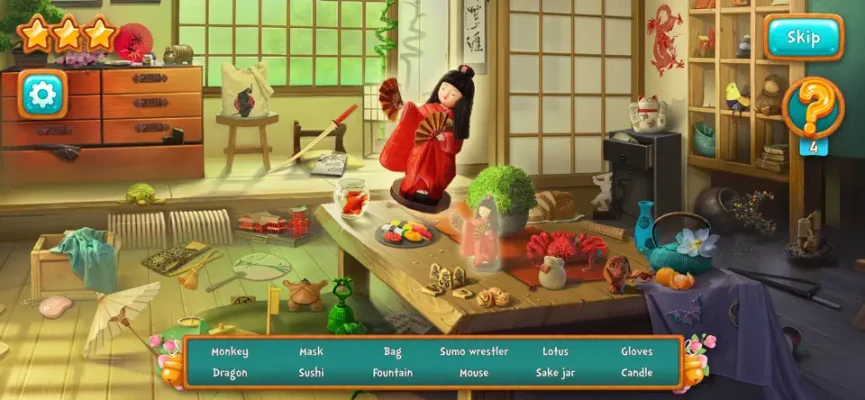
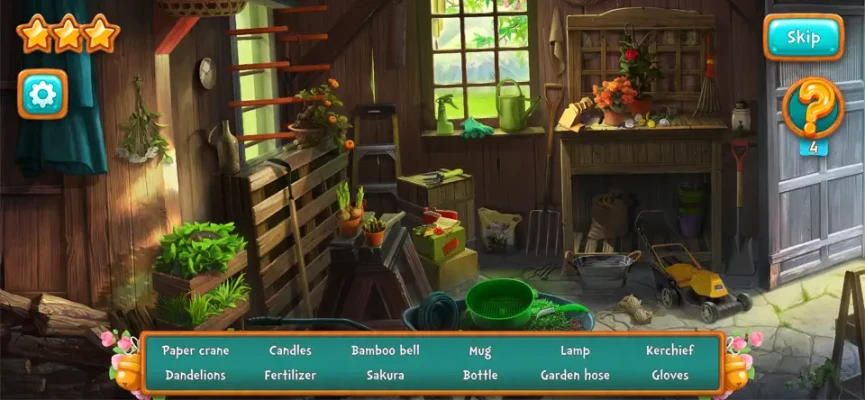
The adventure includes 145 Mahjong and Hidden Object challenges, with the App Store specifically describing 130+ Mahjong puzzles and 12+ Hidden Object challenges.
Instead of simply clearing one Mahjong board after another, every successful puzzle contributes to a larger restoration project.
Story and Atmosphere
Sakura Garden has been neglected and needs a complete transformation.
A determined maid guides you through the restoration process, assigning new tasks and encouraging you as the garden gradually becomes a destination for visitors.
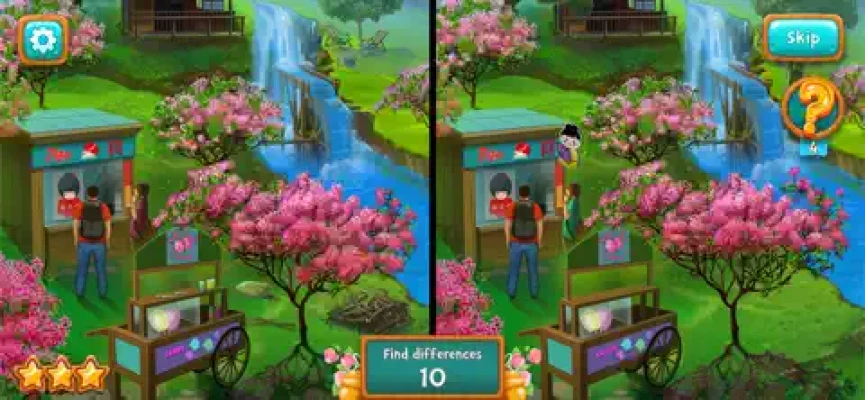
The restoration includes several different projects, from clearing natural areas and rebuilding bridges to improving ponds, creating rock gardens, constructing shops, and eventually restoring an ancient castle.
The arrival of tourists gives the restoration project a clear goal: transform the forgotten grounds into an attractive festival destination before the garden's big celebration.
The Japanese-inspired setting, Sakura scenery, koi ponds, gardens, and castle give the game a peaceful atmosphere that contrasts nicely with the strategic thinking required to clear difficult Mahjong layouts.
How Mahjong Fest: Sakura Garden Works
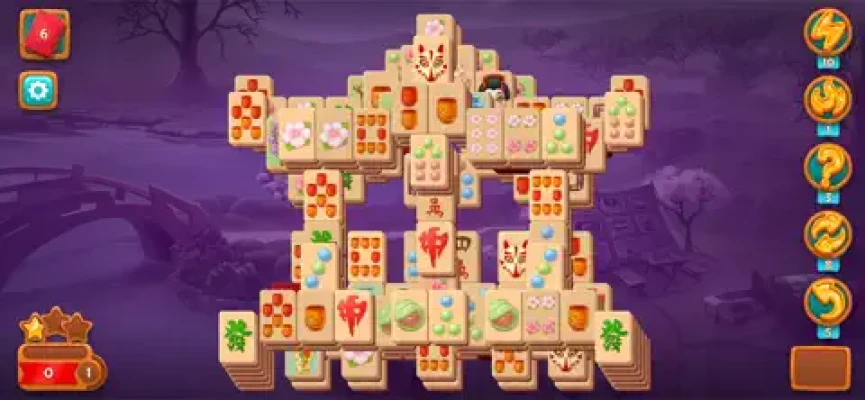
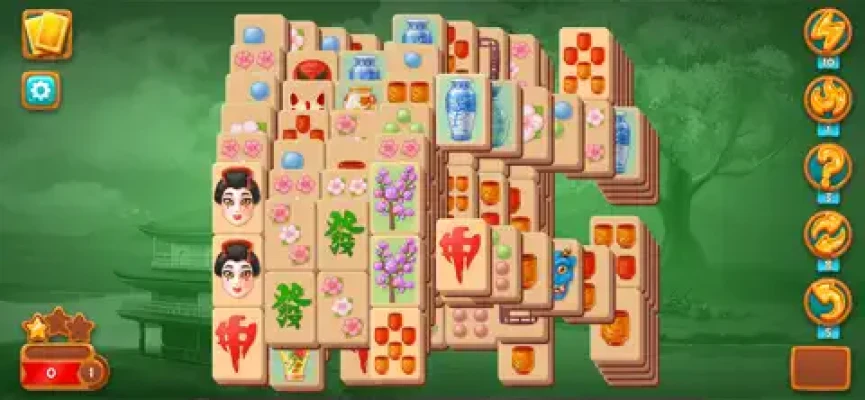
The core gameplay revolves around matching available tiles.
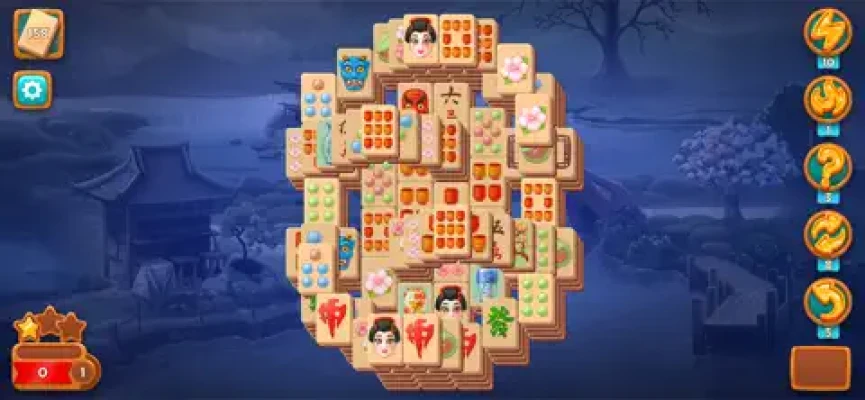
A typical Mahjong puzzle requires you to identify matching tile pairs and remove them from the board.
However, you cannot simply choose any two identical tiles.
The position of the tiles matters.
A tile may be visually matched with another tile but still be unavailable because it is blocked by other pieces.
The basic loop is:
Find an available pair → remove the pair → expose new tiles → create more matches → clear the board → earn rewards → restore the garden.
As the layouts become more complicated, planning becomes increasingly important.
The Garden Restoration System
Puzzle completion is directly connected to the garden.
Rather than making restoration a separate side activity, the game uses it as the larger progression system.
Your rewards can be used to unlock new tasks and improve different areas.
Restoration projects include:
Clearing the waterfall
Improving the lake
Building bridges
Constructing shops
Filling koi ponds
Designing rock gardens
Restoring the ancient castle
Organizing a festive fair
Preparing the garden for tourists
This gives each puzzle a useful purpose beyond simply completing a board.
Mahjong Strategy Guide
1. Don't Remove the First Pair You See
One of the most common Mahjong mistakes is assuming that any available pair is automatically a good move.
It isn't.
Before removing a pair, look at what the move will reveal.
Ask:
Which tiles will become available?
Will removing this pair expose a useful tile?
Could another matching pair become blocked?
Are there only a few remaining copies of an important tile?
Does this move open one side of the board?
A good Mahjong move should improve your future options, not merely reduce the tile count.
2. Look for Tiles That Unlock Other Tiles
When choosing between several possible pairs, prioritize moves that expose additional pieces.
For example, imagine two matching pairs are available:
Pair A removes tiles from an open section but reveals nothing.
Pair B removes tiles covering several pieces.
Pair B is usually the more valuable move because it increases your future choices.
Think of every successful match as an opportunity to open the board.
3. Work From the Outside Toward the Center
Many Mahjong layouts become easier when you focus on tiles that restrict access to other pieces.
Look for:
Tiles covering other tiles
Long horizontal blocks
Large central stacks
Tiles preventing access to multiple pieces
Areas where one removal can reveal several new choices
The objective isn't simply to clear the largest number of tiles.
It is to increase board freedom.
4. Don't Leave Yourself With One Match
A dangerous situation occurs when you remove several pairs without checking what remains.
Eventually you may reach a position where the remaining tiles have no useful matching combination.
To reduce this risk, periodically scan the entire board before making your next move.
Don't let your attention stay focused on one small section.
5. Think One or Two Moves Ahead
You don't need to calculate the entire puzzle.
Instead, think:
If I remove this pair, what does it unlock?
Then:
What could I do with the newly exposed tiles?
This small amount of planning can make a major difference in complicated layouts.
How to Use the Reshuffle Booster
The Reshuffle power-up is designed for situations where the current arrangement is becoming difficult to solve.
Do not use it immediately just because you cannot see a match.
First:
Scan the entire board.
Check the edges.
Look underneath newly exposed tiles.
Recheck partially blocked areas.
Search for less obvious matching pairs.
If you are genuinely running out of useful moves, Reshuffle becomes much more valuable.
Best time to use Reshuffle
Use it when:
Available matches are disappearing
The remaining layout is difficult to read
Your current arrangement is creating a dead end
You have already examined the board carefully
The key is to treat Reshuffle as a recovery tool rather than a shortcut.
How to Use the Lightning Booster
The Lightning power-up can help you break through difficult sections.
Because powerful tools are most useful when the board is under pressure, avoid wasting them on an easy opening.
Save Lightning for moments when:
Several tiles are preventing progress
A difficult section is blocking your remaining moves
You need to open an important part of the board
A normal matching sequence is becoming inefficient
The exact value of the booster depends on the level layout, so learn to recognize when removing a difficult section will create several new opportunities.
Hidden Object Challenges
Mahjong isn't the only puzzle format in Sakura Garden.
The game also includes 12+ Hidden Object challenges woven into the restoration journey.
These stages change the pace of the game.
Instead of concentrating entirely on tile relationships, you must search the scene for requested objects.
Hidden Object Tips
Scan systematically
Don't randomly tap around the screen.
Divide the scene mentally into sections:
top → middle → bottom → left → right
This reduces the chance of repeatedly checking the same area.
Look for unusual shapes
An object may blend into the scenery.
Look for:
Unexpected colors
Familiar shapes in unusual locations
Small objects near larger decorations
Items partly hidden behind scenery
Objects that don't fit their surroundings
Don't rush the first scan
Your first scan should locate the obvious objects.
Your second scan should concentrate on the difficult ones.
This is usually more efficient than randomly searching the entire screen repeatedly.
Gem Management and Garden Progression
Completing levels earns gems that can be used to unlock new restoration tasks.
This creates a simple progression loop:
Play → earn rewards → restore → unlock new tasks → play more puzzles.
When several restoration tasks become available, prioritize the projects that unlock additional areas or progression.
This helps you maintain momentum rather than spending your rewards without considering what becomes available next.
How to Progress Through the Garden Efficiently
A good progression strategy is:
Step 1: Complete available puzzle levels
Focus on earning the rewards needed for your next restoration objective.
Step 2: Check the garden
After earning enough gems, return to the restoration area.
Step 3: Unlock the next project
Restore the available feature rather than leaving earned resources unused.
Step 4: Explore the newly available content
New areas can introduce additional puzzles or Hidden Object activities.
Step 5: Continue building toward the major landmarks
The garden gradually develops through projects involving water features, bridges, shops, gardens, the castle, and the festival.
Building the Sakura Garden
The restoration system provides several different visual goals.
Water Features
Clearing and improving the waterfall and lake helps transform the neglected landscape.
Bridges
Bridges connect different sections of the garden and contribute to the sense that the area is becoming a functioning destination.
Koi Ponds
Koi ponds add another traditional Japanese garden element and form part of the wider restoration process.
Rock Gardens
Rock gardens contribute to the peaceful visual identity of Sakura Garden.
Shops
The construction of shops shifts the garden toward becoming a destination for visitors.
Ancient Castle
The castle is one of the major restoration goals and provides a larger objective to work toward.
The Festival and Tourists
The restoration eventually moves beyond simply repairing the garden.
You also need to prepare for visitors.
The game includes a festive fair that can be organized to impress tourists.
This gives the garden-building system a clear payoff.
You aren't restoring the landscape just for decoration.
You're preparing the location to become a lively destination.
Advanced Mahjong Tips
Preserve Flexible Tiles
If you have multiple possible matches, consider which choice leaves you with the greatest number of future options.
A flexible board is usually safer than a board where only one obvious match remains.
Open Large Sections First
When possible, favor moves that reveal several hidden or blocked tiles.
More visible tiles mean more potential matches.
Avoid Tunnel Vision
Don't stare at one corner of the board.
A useful pair may be available somewhere else.
Recheck After Every Major Match
Removing one pair can dramatically change the board.
Take a quick scan after important moves.
Save Boosters for Genuine Problems
A booster is most valuable when it solves a problem you cannot easily solve through normal matching.
Don't Confuse Speed With Good Play
If the game allows you enough time to think, use that time.
A slower successful chain is better than a fast sequence that creates a dead end.
Beginner Mistakes to Avoid
Matching without looking ahead
The easiest pair isn't always the best pair.
Ignoring blocked tiles
Tile accessibility is often more important than the symbol itself.
Using boosters too early
Save powerful tools for difficult positions.
Searching Hidden Object scenes randomly
Use a systematic scanning pattern.
Forgetting the garden progression
Puzzle rewards are there to advance the restoration project.
Focusing only on the castle
The castle is important, but the surrounding garden projects form part of the overall progression.
Difficulty and Replay Value
Mahjong Fest: Sakura Garden is designed to be accessible, but the challenge increases as layouts become more complicated.
The game works particularly well for players who enjoy:
Mahjong solitaire
Tile-matching puzzles
Casual strategy
Hidden Object games
Garden restoration
Relaxing progression systems
Short puzzle sessions
The restoration system also gives players a reason to keep progressing after completing individual puzzles.
Pros and Cons
Pros
Large collection of Mahjong puzzles
145 Mahjong and Hidden Object challenges advertised
130+ Mahjong puzzles
12+ Hidden Object challenges
Japanese-inspired Sakura garden setting
Garden restoration progression
Bridges, koi ponds, shops and rock gardens
Ancient castle restoration
Festive fair
Reshuffle and Lightning boosters
Simple tile-matching controls
Relaxing visual atmosphere
Good mix of puzzle and building gameplay
Cons
Players looking for traditional competitive Mahjong may find the restoration system more important than the Mahjong itself
Hidden Object sections are shorter than the main Mahjong component
Booster-based mechanics may not appeal to players who prefer completely pure puzzle gameplay
The free version includes advertising
The game uses GameHouse+ subscriptions for its broader ad-free experience
Platforms and Requirements
The current App Store listing supports iPhone and iPad and requires iOS 13.0 or later or iPadOS 13.0 or later.
Apple's listing also shows compatibility with Macs using an M1 chip or later under the listed macOS requirement, as well as Apple Vision. The current listed app size is approximately 109.1 MB.
The game is also available on Android, and a Steam version was released in April 2026.
GameHouse+ Options
The game is available as a free-to-play experience with advertising, while GameHouse+ provides broader access to GameHouse titles.
The current App Store listing shows GameHouse+ VIP at $9.99 per month or $89.99 per year in the U.S. Prices and availability can vary by region.
Ratings and Player Feedback
The U.S. App Store listing currently shows a 4.9/5 rating from 38 ratings. One visible review describes the game as relaxing, easy to learn, and visually appealing.
Google Play currently shows approximately 4.6 stars from 76 reviews in the available listing.
These numbers can change as additional players submit reviews.
Is Mahjong Fest: Sakura Garden Worth Playing?
Mahjong Fest: Sakura Garden is a good fit for players who want something more than a collection of traditional Mahjong boards.
Its strongest feature is the connection between puzzle solving and garden restoration. Every group of completed puzzles contributes to a visible long-term goal, whether that means repairing a bridge, improving a koi pond, constructing a shop, designing a rock garden, or restoring the ancient castle.
The Hidden Object challenges also provide welcome variety when you want a break from tile matching.
For the best experience, approach the Mahjong boards as small strategy puzzles rather than simply matching the first available pair. Look for moves that expose blocked tiles, preserve future options, and create multiple new possibilities.
Frequently Asked Questions
How many levels are in Mahjong Fest: Sakura Garden?
The current store description advertises 145 Mahjong and Hidden Object challenges, including 130+ Mahjong puzzles and 12+ Hidden Object challenges.
What is the main objective?
The main goal is to complete tile-matching puzzles, earn gems, and use your rewards to restore the Japanese-inspired Sakura garden.
Can you restore the garden?
Yes. You can restore and develop features including bridges, koi ponds, rock gardens, shops, water areas, a festive fair, and an ancient castle.
Does the game include Hidden Object puzzles?
Yes. The game includes 12+ Hidden Object challenges as part of the restoration journey.
What boosters are available?
The store listing specifically mentions Reshuffle and Lightning power-ups.
What is the best Mahjong strategy?
Look beyond the first available match. Prioritize pairs that expose blocked tiles, create more choices, and leave you with flexible future moves.
Is Mahjong Fest: Sakura Garden relaxing?
The Japanese-inspired garden setting and straightforward tile matching make it well suited to casual and relaxing puzzle sessions, although more difficult boards require careful planning.
Is Mahjong Fest: Sakura Garden free?
The game can be played for free with advertising. GameHouse+ also offers subscription options for broader access and an ad-free experience.
Final Verdict
Mahjong Fest: Sakura Garden combines Mahjong solitaire, Hidden Object puzzles, and garden restoration into a casual progression adventure.
The Mahjong boards provide the core challenge, while the garden gives those puzzles a larger purpose. Instead of simply watching a score increase, you can see the environment develop as you complete tasks and unlock new restoration projects.
The best strategy is simple but important: don't just match tiles—plan what each match will reveal next.
If you enjoy Mahjong, tile-matching puzzles, Hidden Object games, Japanese-inspired scenery, and relaxing garden-building progression, Mahjong Fest: Sakura Garden is an appealing choice.
Rate the Game
User Reviews















Popular Games



















 Android
 iOS
iOS Windows
 Xbox
Xbox