

Latest Version
October 05, 2026
Gamehouse LLC
Puzzle
iOS
0
Report a Problem
More About :game
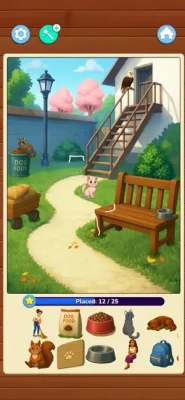
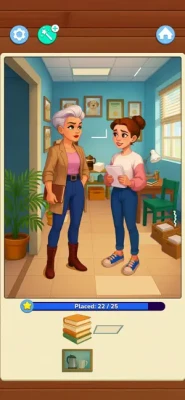
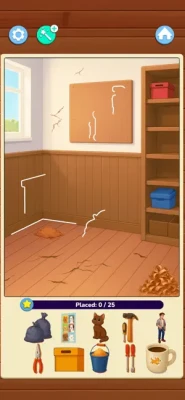
You play as Susan, who travels on a humanitarian mission between animal shelters, farms, peaceful retreats, and other locations. Each destination becomes a handcrafted picture puzzle where you drag and place visual fragments onto their matching outlines.
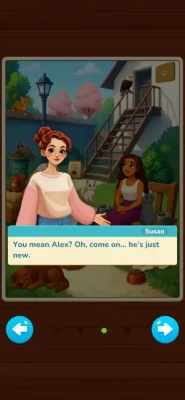
As scenes are completed, the story moves forward and reveals new conversations between Susan and Alex. Their journey gradually develops through friendships, teamwork, and quieter personal moments.
Unlike fast-paced puzzle games, Little Rescue: Mosaic Novel has no timers or pressure, allowing you to solve each scene at your own pace. The game features 60 handcrafted levels, soothing music, and a deliberately calming atmosphere.
What Is Little Rescue: Mosaic Novel?
Little Rescue: Mosaic Novel is designed for players who enjoy relaxing puzzles but also want a story to accompany their gameplay.
Its central gameplay loop is simple:
Enter a picture puzzle.
Examine the incomplete scene.
Identify a piece that belongs to one of the outlines.
Drag the piece into position.
Continue matching fragments.
Complete the picture.
Unlock another part of Susan and Alex's story.
The result is a hybrid of a mosaic puzzle game and visual novel rather than a traditional jigsaw game.
Little Rescue: Mosaic Novel Gameplay
The main gameplay mechanic involves dragging pieces onto their matching outlines.
Instead of assembling a conventional jigsaw by connecting irregular pieces together, the game presents visual fragments that need to be placed into their corresponding positions within a scene.
This makes the gameplay accessible while still requiring careful observation.
The pictures gradually become more complete as you place the correct fragments, giving each level a satisfying restoration effect.
How to Play Little Rescue: Mosaic Novel
Step 1: Examine the Complete Scene
Before moving pieces, take a moment to look at the entire picture.
Identify:
Large objects
Distinctive colors
Animal shapes
Buildings
Landscape elements
Character details
Easily recognizable outlines
Understanding the overall scene makes individual pieces easier to identify.
Step 2: Pick an Easy Fragment
Start with pieces that have distinctive visual characteristics.
For example, a fragment containing a recognizable animal, object, or strong color pattern is generally easier to place than a small piece belonging to a visually repetitive background.
Step 3: Compare the Fragment With the Outlines
Look for the outline that matches the shape and visual content of your selected piece.
Don't simply place pieces randomly.
The objective is to recognize where each fragment belongs.
Step 4: Drag the Piece Into Position
Once you identify the correct location, drag the fragment onto its outline.
Successful placement gradually restores the scene.
Step 5: Repeat Until the Scene Is Complete
Continue matching fragments until all required areas have been filled.
Once the scene is completed, you can move forward through Susan's journey and unlock additional dialogue.
Little Rescue: Mosaic Novel Strategy Guide
1. Study the Picture Before Moving Pieces
One of the easiest ways to make puzzle solving more efficient is to understand the scene before beginning.
Look at the overall composition.
If you immediately start moving random fragments, you may spend more time searching for pieces that could have been identified quickly by looking at the complete picture.
2. Start With Unique Objects
Large or distinctive objects are usually easier to recognize than backgrounds.
Look for:
Animals
People
Vehicles
Signs
Furniture
Plants
Buildings
Unusual objects
Once these pieces are placed, the remaining background fragments become easier to understand.
3. Use Color as a Secondary Clue
Color can help identify where a piece belongs, but don't rely on color alone.
Several sections of a scene may use similar colors.
Instead, combine:
Shape + image details + color + position
This gives you a much more reliable way of identifying a fragment.
4. Pay Attention to Small Details
Some fragments may look almost identical at first glance.
Look for small differences such as:
Lines
Patterns
Shadows
Texture
Edges of objects
Facial details
Landscape features
These small visual clues can reveal the correct position.
5. Work From Foreground to Background
When a scene contains characters or objects in front of a landscape, start with the foreground.
Foreground elements are often easier to recognize because they contain more distinctive shapes.
Once those areas are restored, the background becomes easier to interpret.
6. Don't Rush
Little Rescue: Mosaic Novel specifically avoids timers and pressure.
Use that feature to your advantage.
There is no reason to sacrifice accuracy for speed.
Take time to inspect a piece and compare it with the available outlines.
A careful approach is often faster overall because it reduces unnecessary trial and error.
7. Think About the Whole Scene
Don't view every fragment as an isolated puzzle piece.
Ask yourself:
What is this scene showing?
If you recognize the setting, you can often predict where certain fragments belong.
For example, if you identify an animal shelter, you can expect certain objects and structures to appear around the animals.
Context becomes a useful solving tool.
8. Use the Story as a Break Between Puzzles
Completed scenes reveal additional dialogue between Susan and Alex.
Don't think of the conversations as separate from the puzzle experience.
They are part of the progression system.
The completed scene is both a puzzle reward and a storytelling milestone.
Little Rescue: Mosaic Novel Puzzle Tips
Tip 1: Find the Most Obvious Pieces First
Start with fragments that contain recognizable objects.
Tip 2: Don't Guess Randomly
Compare the fragment carefully with the outlines.
Tip 3: Use Multiple Visual Clues
Combine shape, color, texture, and object details.
Tip 4: Complete Distinctive Areas First
Recognizable areas can make surrounding fragments easier to identify.
Tip 5: Don't Worry About Time
There are no timers, so accuracy is more important than speed.
Tip 6: Study the Scene's Context
Knowing whether you're looking at a shelter, farm, retreat, or landscape can help identify pieces.
Tip 7: Look Closely at Similar Fragments
Background pieces can be deceptive, so compare tiny details.
Tip 8: Clear the Easy Sections
Removing obvious pieces makes the remaining puzzle easier to read.
Tip 9: Enjoy the Dialogue
The visual-novel elements are an important part of the experience.
Tip 10: Let the Puzzle Flow Naturally
The game is designed as an anti-stress experience, so there is little benefit in treating it like a speed challenge.
60 Handcrafted Levels
Little Rescue: Mosaic Novel contains 60 handcrafted levels.
The levels take Susan through different environments, including:
Animal shelters
Farms
Peaceful retreats
Landscapes
Other locations connected to her humanitarian journey
Each scene contributes to both the puzzle progression and the broader story.
Because the levels are handcrafted, the game focuses on curated scenes rather than simply generating endless random puzzles.
Susan and Alex's Story
The story follows Susan during her humanitarian travels.
Along the way, she develops new friendships and works with others while visiting different locations.
A particularly important relationship develops between Susan and Alex.
As players complete scenes, new dialogue reveals more about their journey and the growing connection between them.
This gives the game a more personal tone than a conventional picture puzzle.
Humanitarian Journey
The humanitarian theme is central to the game's setting.
Susan travels between different places and becomes involved with communities and animals along the way.
The puzzles therefore aren't just abstract images.
Each completed scene represents a moment from her journey and contributes to the larger narrative.
This storytelling structure gives players a reason to continue beyond simply completing the next puzzle.
Animal Shelter Puzzles
Animal shelters are among the locations featured in the game.
These scenes can include animals and shelter-related environments, creating opportunities for distinctive visual pieces.
When working on an animal-focused scene, look for recognizable animal shapes first.
Animals are usually easier to identify than repetitive environmental backgrounds.
Farm Puzzle Scenes
Farms provide another type of setting within Susan's journey.
Farm scenes can contain several different visual elements, making them useful examples of why context matters.
Instead of examining each fragment independently, first identify the overall environment.
Then use recognizable objects to establish the surrounding areas.
Peaceful Retreats and Landscapes
The game also takes Susan to peaceful retreats and scenic environments.
These scenes emphasize the game's relaxing atmosphere.
However, landscapes can sometimes contain many similar colors and textures.
When this happens, focus on:
Distinctive outlines
Object boundaries
Changes in texture
Unique shapes
Clear visual transitions
These clues can be more useful than color alone.
Visual Novel Elements
The game describes itself as a combination of mosaic jigsaw puzzles and visual-novel storytelling.
The two systems work together naturally.
Puzzle
Complete the visual scene.
Story
Unlock dialogue and narrative moments.
Progression
Move to the next location and continue Susan's journey.
This structure keeps the game from feeling like an endless series of disconnected picture puzzles.
No Timer, No Pressure
One of Little Rescue: Mosaic Novel's most important features is its no-pressure design.
There are no timers forcing you to finish a puzzle within a certain number of seconds.
That changes the ideal strategy considerably.
In a timed puzzle, speed is usually a major factor.
Here, observation is more important.
You can:
Study the scene
Compare pieces
Think about the image
Search carefully
Place fragments at your own pace
This makes the game suitable for players who prefer relaxing puzzle sessions.
Music and Atmosphere
Little Rescue: Mosaic Novel uses soothing music and calming visual transitions to reinforce its anti-stress design.
The combination of:
Gentle puzzle mechanics
Scenic environments
No timers
Soft presentation
Story dialogue
Relaxing music
creates an experience aimed more at unwinding than competition.
Difficulty Guide
Little Rescue: Mosaic Novel is not primarily designed as a hardcore puzzle game.
Its difficulty comes from visual recognition rather than complicated rules.
The most challenging situations are likely to involve:
Similar-looking fragments
Detailed backgrounds
Small objects
Repeated colors
Scenes containing many visual elements
The best solution is careful observation rather than rushing.
Best Approach for Difficult Puzzles
When you become stuck:
1. Stop Moving Pieces
Take a moment to reassess the scene.
2. Identify the Object
Determine what the fragment appears to show.
3. Locate Similar Visual Features
Search for matching colors, patterns, and outlines.
4. Look at the Scene Context
Ask what type of location you're looking at.
5. Check Small Details
Examine edges, lines, shadows, and textures.
6. Try Again
Because there is no timer, you can approach the puzzle methodically without pressure.
Little Rescue: Mosaic Novel Features
The major features include:
Mosaic jigsaw gameplay
Drag-and-place puzzle mechanics
Coloring-inspired picture restoration
60 handcrafted levels
Animal shelter scenes
Farm environments
Peaceful retreats
Humanitarian journey
Susan and Alex story
Unlockable dialogue
Visual-novel elements
Soothing music
No timers
No-pressure gameplay
Anti-stress design
Game Center support and leaderboards
Game Center and Leaderboards
The App Store listing confirms that Little Rescue: Mosaic Novel supports Game Center and leaderboards.
This adds a small competitive element to an otherwise relaxed game.
However, the core experience remains focused on puzzle completion and story progression rather than competitive gameplay.
Platforms and Requirements
The current App Store listing supports:
iPhone
iPad
Mac with Apple silicon
Apple Vision
The iPhone and iPad versions require iOS/iPadOS 15.0 or later. The Mac version requires macOS 12.0 or later and an Apple M1 chip or newer.
The game is listed as free with in-app purchases.
The Google Play version is also available and supports the same core mosaic puzzle and visual-novel concept.
GameHouse+ and Free Play
Little Rescue: Mosaic Novel can be played through the GameHouse ecosystem.
The current listing describes a GH+ Free option that provides access to games with advertisements, while GH+ VIP offers ad-free play, offline access, and additional in-game perks.
The U.S. App Store currently lists GameHouse+ at $9.99 per month or $89.99 per year. Pricing can vary by country and may change.
Is Little Rescue: Mosaic Novel a Jigsaw Game?
Yes, but it is not a traditional jigsaw game.
It combines mosaic jigsaw mechanics with coloring-style picture completion.
Instead of assembling a conventional pile of interlocking pieces, you drag visual fragments onto their corresponding outlines.
This makes the gameplay easier to understand while retaining the satisfaction of reconstructing a picture.
Is Little Rescue: Mosaic Novel Relaxing?
Yes.
Relaxation is one of the game's central design goals.
The developer emphasizes:
No timers
No pressure
Soothing music
Calm transitions
Anti-stress gameplay
The game is therefore designed for players who want to solve picture puzzles without the urgency found in many mobile puzzle games.
Who Should Play Little Rescue: Mosaic Novel?
This game is particularly suitable for players who enjoy:
Relaxing puzzle games
Mosaic puzzles
Jigsaw games
Picture puzzles
Coloring games
Visual novels
Story-driven casual games
Cozy games
Anti-stress games
Animal-themed scenes
Games without timers
It may be less appealing to players who want intense competition, fast reactions, combat, or highly complex logic puzzles.
Little Rescue: Mosaic Novel Pros and Cons
Pros
Relaxing puzzle design
60 handcrafted levels
No timers
No pressure
Mosaic-jigsaw mechanics
Visual-novel story
Susan and Alex storyline
Animal shelter environments
Farm and countryside scenes
Peaceful retreats
Soothing music
Attractive picture restoration
Easy-to-understand controls
Cons
Players seeking challenging logic puzzles may find the gameplay simple
No-timer design may feel too slow for competitive players
Some scenes can contain visually similar fragments
Story and puzzle progression are closely linked, so players mainly interested in pure puzzles may not need the narrative elements
Little Rescue: Mosaic Novel vs Traditional Jigsaw Games
Traditional jigsaw games normally ask players to connect pieces based on their edges.
Little Rescue: Mosaic Novel takes a different approach.
Here, players identify visual fragments and drag them onto their matching outlines.
This creates a more guided puzzle experience.
The result sits somewhere between:
Mosaic puzzles
Jigsaw games
Coloring games
Picture restoration
Visual novels
That combination is the game's main identity.
Little Rescue: Mosaic Novel Final Verdict
Little Rescue: Mosaic Novel is a peaceful picture puzzle game that successfully combines visual restoration with a character-driven story.
Its strongest feature is its relaxed approach.
There are no timers forcing players to rush, and the 60 handcrafted scenes allow the game to focus on visual detail, atmosphere, and story progression.
The addition of Susan and Alex's developing relationship gives completed scenes more meaning than simply finishing another puzzle.
If you enjoy mosaic jigsaw games, relaxing picture puzzles, coloring-style gameplay, and visual novels, Little Rescue: Mosaic Novel offers a distinctive combination of all four.
Frequently Asked Questions
What is Little Rescue: Mosaic Novel?
Little Rescue: Mosaic Novel is a relaxing mosaic-jigsaw puzzle game from GameHouse that combines picture restoration with visual-novel storytelling.
How many levels are in Little Rescue: Mosaic Novel?
The game contains 60 handcrafted levels.
Who is the main character?
The story follows Susan, who travels on a humanitarian mission between different locations.
Who is Alex?
Alex is an important character in Susan's journey. New dialogue gradually reveals the developing connection between Susan and Alex.
Does Little Rescue: Mosaic Novel have a timer?
No. The game is specifically designed with no timers or pressure, allowing players to solve each scene at their own pace.
What type of puzzles are in Little Rescue?
The game uses mosaic-jigsaw and coloring-inspired mechanics. Players drag visual fragments onto their matching outlines to reconstruct scenes.
What locations appear in the game?
The journey includes animal shelters, farms, peaceful retreats, and other scenic environments.
Does Little Rescue have a story?
Yes. Completing scenes unlocks dialogue and advances Susan and Alex's story.
Is Little Rescue: Mosaic Novel relaxing?
Yes. Its no-timer design, soothing music, soft transitions, and anti-stress presentation are central to the game's identity.
Is Little Rescue: Mosaic Novel free?
The game is listed as free with in-app purchases. GameHouse also provides GH+ Free access with ads and a paid GH+ VIP option with additional benefits.
Can I play Little Rescue: Mosaic Novel on iPhone?
Yes. The App Store version supports iPhone and requires iOS 15.0 or later.
Can I play Little Rescue: Mosaic Novel on iPad?
Yes. The game is designed for iPad and requires iPadOS 15.0 or later.
Does Little Rescue: Mosaic Novel support Android?
Yes. A Google Play version is available from GameHouse.
What is the best strategy for Little Rescue: Mosaic Novel?
Start with recognizable objects, compare each fragment's shape and visual details with the outlines, work through the scene systematically, and take your time because there are no timers.
Rate the Game
User Reviews













Popular Games


















 Android
 iOS
iOS Windows
 Xbox
Xbox