

Latest Version
November 21, 2026
Azur Interactive Games Limited
Card
iOS
0
Report a Problem
More About :game
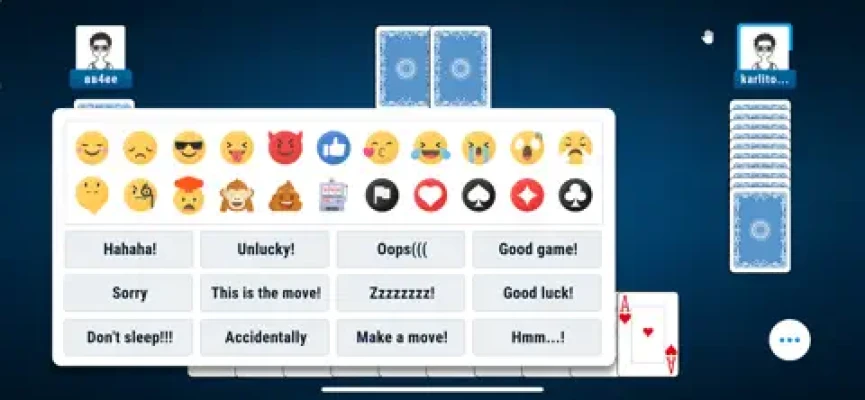
The game includes automatic score calculation, player ratings, private tables, chat, and emoji reactions. Players can start without creating a new account, join online matches, invite friends to private games, and work toward a higher position on the leaderboards.
What Is Preferans: Classic Card Game?
Preferans: Classic Card Game is a digital adaptation of Preferans, a traditional card game known for its emphasis on strategy, memory, and calculated decisions. Developed by Azur Interactive Games Limited, the app allows players to enjoy this classic pastime through online multiplayer matches.
Unlike simple card games that depend heavily on random combinations, Preferans rewards players who understand bidding, card distribution, trick-taking, and risk management. Every decision can influence the result, from estimating the strength of an opening hand to deciding which cards to play during a trick.
The app connects players with opponents from different parts of the world. Its multiplayer focus makes it possible to practice against real people, compare results, and improve through repeated matches.
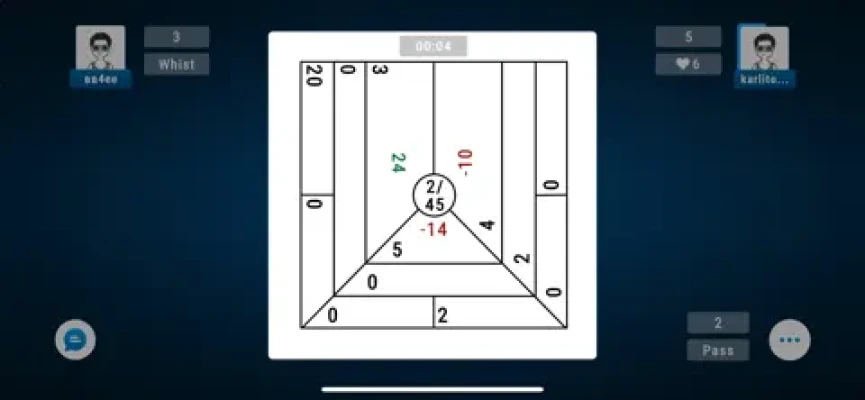
The automatic scoring system handles the calculations at the end of a game session, allowing players to concentrate on their decisions instead of manually tracking every score.
Main Features of Preferans: Classic Card Game
Online Multiplayer Against Real Players
One of the main attractions is the ability to play Preferans online with real opponents. Players can join matches, test their skills, and compete against people with different levels of experience.
The social multiplayer experience gives every session a different challenge because opponents may use different bidding approaches and playing strategies.
Automatic Score Calculation
Preferans uses a detailed scoring system that can be difficult to track manually, especially during longer sessions.
The app includes automatic score calculation at the end of a game session. This makes it easier to follow results and concentrate on the card game itself.
Player Ratings and Leaderboards
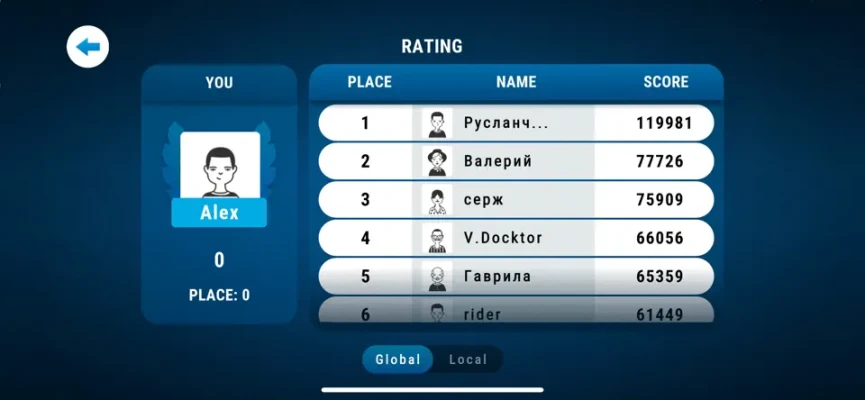
Players can work toward improving their ratings and competing for positions on global and local leaderboards.
The rating system adds a competitive objective beyond winning an individual match. Consistent performance and better decision-making become important for players who want to establish themselves among stronger competitors.
Private Tables
The private-table feature allows players to create a game, protect it with a password, and invite friends.
This is useful for people who prefer playing with familiar opponents rather than joining a public match. Private tables also provide a convenient way to enjoy the game socially.
Chat and Emoji Reactions
Players can communicate during online sessions through chat and emoji reactions. These features add a social element to the experience and make multiplayer games feel more interactive.
No New Registration Required
The App Store description highlights that players do not need to create a new account to start playing. This makes getting into the game more straightforward.
Multiple Languages
The app supports English and many additional languages, including Arabic, Russian, German, French, Spanish, Turkish, and others. This helps make the experience accessible to an international audience.
Understanding the Rules of Preferans
Preferans is a trick-taking card game in which players make contracts and attempt to achieve specific results based on the cards they hold.
The exact rules and scoring conventions can vary between versions and regional styles. Players should become familiar with the rules used at their selected table before entering competitive matches.
The Objective of the Game
The main objective is to make accurate decisions during bidding and card play.
Depending on the contract, a player may need to win a required number of tricks or avoid taking tricks in a special game type. Other players may cooperate temporarily to prevent the declarer from completing the contract.
Success requires understanding both your own hand and the possible strength of the cards held by opponents.
Bidding and Contract Selection
Bidding is one of the most important stages of Preferans.
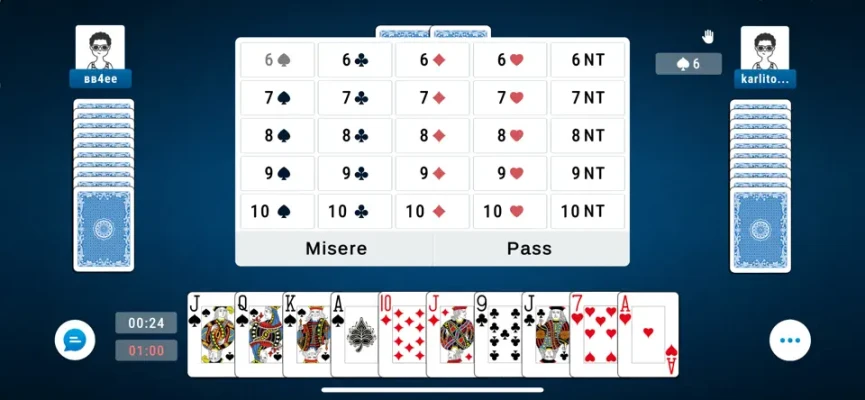
Players evaluate their cards and decide whether they have a hand strong enough to make a contract. A bid communicates an intended level of performance and influences how the rest of the hand will be played.
A strong bidder does not simply choose the highest possible contract. The decision should reflect the actual strength of the hand, the distribution of suits, and the likelihood of fulfilling the commitment.
Trick-Taking Gameplay
After the bidding stage, players take turns playing cards.
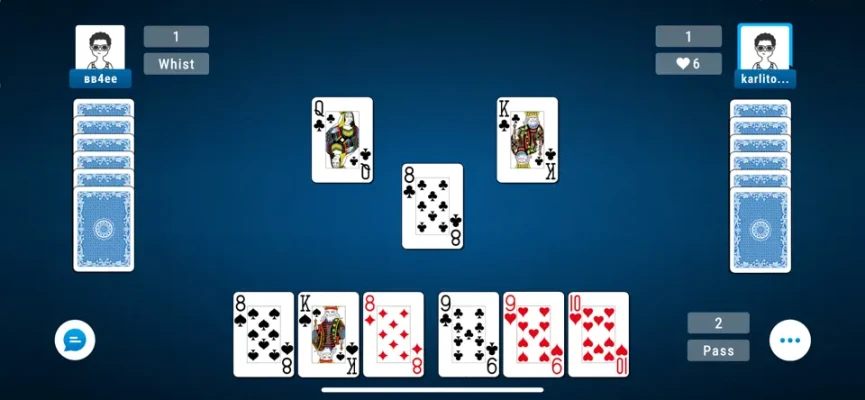
A trick normally consists of one card from each player. Players must follow the applicable suit rules when possible, while trump cards can change which card wins the trick.
The winner of a trick collects the cards and usually leads the next one, depending on the rules being used.
Knowing which cards have already been played is essential. It helps players estimate what opponents may still hold and decide whether to use a high card or save it for a later trick.
Contracts and Special Game Types
Preferans includes different contract possibilities. Some involve declaring a trump suit and attempting to win a specified number of tricks, while special contracts can require a player to avoid taking tricks.
These variations make the game more interesting because a hand that is unsuitable for one contract may be useful for another.
Players should learn the specific contract options and rules available in the app before developing a fixed bidding strategy.
Complete Strategy Guide for Preferans: Classic Card Game
Learn the Rules Before Playing Competitively
A strong foundation is essential for success.
Before joining serious matches, understand how bidding works, how tricks are won, how trump suits affect card strength, and how the scoring system evaluates different contracts.
Pay particular attention to the rules for special contracts. These can require a very different approach from ordinary trick-taking games.
Do not rely on assumptions from another card game. Preferans has its own rules and strategic conventions.
Evaluate Your Hand Carefully
Before making a bid, examine the complete hand rather than focusing only on high-ranking cards.
Consider the following factors:
The number of strong cards in each suit
Whether one suit has a useful length advantage
The strength of your potential trump suit
The distribution of cards across different suits
Whether your hand supports the contract you are considering
A hand with several strong cards in one suit may offer a different opportunity from a hand with high cards spread evenly across all suits.
The best bid is the one supported by the overall structure of your hand.
Avoid Overbidding
One of the most common mistakes among inexperienced players is making contracts that their cards cannot realistically support.
An ambitious bid may look attractive, but failing to complete it can create a significant scoring disadvantage.
Be realistic about the number of tricks you can win. Consider the strength of your cards, the possible distribution of opponents' hands, and the risk of losing control during the play.
Developing patience is more valuable than trying to win every bidding contest.
Understand When to Pass
Passing is an important strategic decision, not a sign of weakness.
If your hand does not support a reasonable contract, passing can protect you from unnecessary risk.
Experienced players understand that long-term success comes from making good decisions consistently. There is no need to participate aggressively in every bidding opportunity.
Choose Trump Suits Strategically
When a contract involves a trump suit, selecting the right suit can strongly influence the result.
Consider both the number of cards you hold in a suit and their strength. A longer suit may provide opportunities to control several tricks, while a short but powerful suit can sometimes be useful in specific situations.
Also think about the likely distribution of cards among opponents. A trump suit is only valuable when it supports your plan for the hand.
Count Cards During Every Trick
Memory is one of the most valuable skills in Preferans.
Try to remember which high cards have already been played and which suits are becoming weaker. This information helps you estimate the remaining strength of each opponent's hand.
For example, if the strongest cards in a suit have already appeared, a lower card may become much more powerful in a later trick.
You do not need to memorize every detail immediately. Start by tracking the highest cards and important trump cards, then improve your memory with practice.
Watch Your Opponents' Playing Patterns
Online multiplayer games provide an opportunity to observe how other players make decisions.
Pay attention to their bidding habits, the cards they choose to lead, and the way they respond to different situations.
Some opponents may bid aggressively, while others prefer conservative contracts. Recognizing these tendencies can help you make better decisions in future hands.
However, avoid assuming that an opponent will always follow the same strategy. Skilled players can change their approach to keep others uncertain.
Plan Several Tricks Ahead
Do not focus only on winning the current trick.
Before playing a card, consider what might happen in the next few rounds. Think about which player could gain the lead, whether your remaining cards will be useful, and whether using a strong card now will leave you vulnerable later.
A good move should support your overall plan rather than simply produce an immediate advantage.
Manage Trump Cards Carefully
Trump cards are powerful resources, and using them at the wrong time can weaken your position.
Avoid spending your strongest trump cards on tricks that could be won safely with ordinary cards.
At the same time, do not save every trump card until the end. If opponents gain control of the game early, you may lose the opportunity to use your strongest cards effectively.
The best approach is to consider the current trick, the remaining trump cards, and your contract requirements together.
Adapt Your Strategy to the Contract
Different contracts require different approaches.
When trying to win a required number of tricks, focus on establishing control and protecting the cards that can secure important rounds.
When playing a contract that requires avoiding tricks, think carefully about which cards are safe to play and how to avoid becoming the winner of a trick unintentionally.
Do not use the same strategy for every game type. Successful players adjust their decisions to match the objective.
Use Private Tables to Practice
Private tables are useful for learning the game with friends.
You can create a password-protected table and invite familiar opponents. This provides an opportunity to practice bidding, test different approaches, and discuss difficult situations.
Playing with friends can also make it easier to learn from mistakes without the pressure of a competitive public match.
Review Your Performance
After completing a session, think about the decisions that influenced the result.
Ask yourself whether you overbid, underestimated your hand, used a trump card too early, or failed to remember important cards.
Identifying recurring mistakes is one of the fastest ways to improve.
The automatic scoring system helps you follow the outcome, but understanding why you achieved that result is what develops your skill.
Advanced Tips for Experienced Players
Estimate the Distribution of Remaining Cards
As cards are played, the possible distribution of the remaining cards becomes easier to estimate.
Experienced players use this information to predict whether opponents still hold powerful cards in a particular suit.
This does not require perfect memory of every card. A good estimate can already provide a meaningful advantage.
Use Information From Bidding
Bidding provides clues about the strength and structure of opponents' hands.
Consider what their decisions may suggest about their preferred suits, potential contracts, and confidence.
Use these clues alongside the cards already played. Neither bidding nor card play should be interpreted in isolation.
Control the Lead
Winning a trick can give you the opportunity to decide which suit is played next.
This can be strategically important. Leading a particular suit may help establish your strong cards, remove dangerous cards from opponents, or force them to use resources they would prefer to save.
Think about the consequences of gaining the lead before choosing a card.
Keep Track of Important Cards
Prioritize remembering the cards that can directly affect your contract.
High-ranking cards, remaining trump cards, and cards that determine control of a suit are particularly important.
Tracking these cards helps you make more accurate predictions and avoid unnecessary risks.
Balance Aggression With Discipline
Aggressive bidding and confident play can be effective, but they should be supported by a clear plan.
Avoid taking risks simply because you want to increase your rating quickly. A disciplined player who makes sensible decisions over many sessions is more likely to achieve consistent results.
Common Mistakes to Avoid
Bidding without evaluating the full hand
High cards alone do not guarantee a successful contract. Consider suit distribution and the overall strength of your hand.
Making overly ambitious contracts
A difficult contract can create unnecessary scoring problems. Bid according to realistic expectations.
Forgetting previously played cards
Ignoring card history makes it harder to predict opponents' remaining strength. Practice remembering the most important cards.
Using trump cards too early
A powerful trump card may be more valuable in a later trick. Consider the long-term consequences before playing it.
Ignoring opponents' decisions
Bidding and card choices can reveal useful information. Observe how other players behave throughout the session.
Using the same approach for every contract
Different game types require different strategies. Adjust your decisions to the objective of each contract.
Focusing only on the leaderboard
Ratings are useful for tracking progress, but improving your actual decision-making should remain the priority.
Is Preferans: Classic Card Game Suitable for Beginners?
Preferans: Classic Card Game can be suitable for beginners who are interested in learning traditional trick-taking games, although the rules may take time to master.
The app provides an accessible way to join online matches without creating a new account. Automatic scoring also removes much of the difficulty associated with calculating results manually.
However, new players should spend time learning the bidding system and contract rules before focusing on competitive rankings.
The best way to improve is to play regularly, study the cards, observe experienced opponents, and learn from unsuccessful decisions.
Multiplayer and Social Experience
The online multiplayer system is an important part of the app.
Players can meet opponents from different countries, participate in matches, and communicate through chat and emoji reactions. The player rating system adds a competitive element, while local and global leaderboards provide longer-term goals.
Private tables offer another way to enjoy the game. By creating a password-protected room, players can invite friends and organize their own sessions.
This combination of public multiplayer and private games makes the app suitable for both competitive players and people who simply want to enjoy Preferans with friends.
Graphics, Interface, and Overall Presentation
Preferans: Classic Card Game focuses on presenting the cards and game information clearly rather than using elaborate visual effects.
Its interface is designed around the needs of a traditional card game, where players must read their hands, follow bidding decisions, and keep track of tricks.
The automatic scoring system helps simplify the experience, while chat and emoji reactions provide additional social interaction.
The game is available for iPhone and iPad, with support for a wide range of languages.
Is Preferans: Classic Card Game Free to Play?
The app is available as a free download on the Apple App Store and includes advertising and optional in-app purchases.
Purchases include coin packages, tournament-related currency, membership options, and other offers. Players can review the available purchases inside the app.
A purchase is not a substitute for understanding the game. Strong bidding, careful card management, and consistent strategic decisions remain the most important skills for improving at Preferans.
Who Should Play Preferans: Classic Card Game?
This game is a good choice for players who enjoy:
Traditional card games with strategic depth
Online multiplayer card matches
Trick-taking and bidding mechanics
Competing against real players
Improving memory and decision-making skills
Private games with friends
Player ratings and competitive leaderboards
Classic card games with automatic scoring
It may be less suitable for players who prefer very simple card games with minimal rules or fast action without much planning.
Final Verdict
Preferans: Classic Card Game brings a traditional and highly strategic card game to mobile devices. Its online multiplayer matches, automatic scoring, private tables, chat features, and player leaderboards create a complete experience for fans of classic card games.
The greatest strength of Preferans is its emphasis on skill. Players must evaluate their hands, make sensible bids, remember important cards, and adapt their strategies as each trick unfolds.
Beginners can start by learning the basic rules and practicing with manageable decisions. More experienced players can focus on reading opponents, predicting card distribution, and improving their contract choices.
For anyone who enjoys thoughtful card games and competitive online matches, Preferans: Classic Card Game offers an engaging way to experience a well-known traditional pastime.
Rate the Game
User Reviews




Popular Games



















 Android
 iOS
 Windows
 Xbox