



Latest Version
February 14, 2025
nerByte GmbH
Card
iOS
0
Report a Problem
More About :game
What Is FreeCell Solitaire ∙ Card Game?
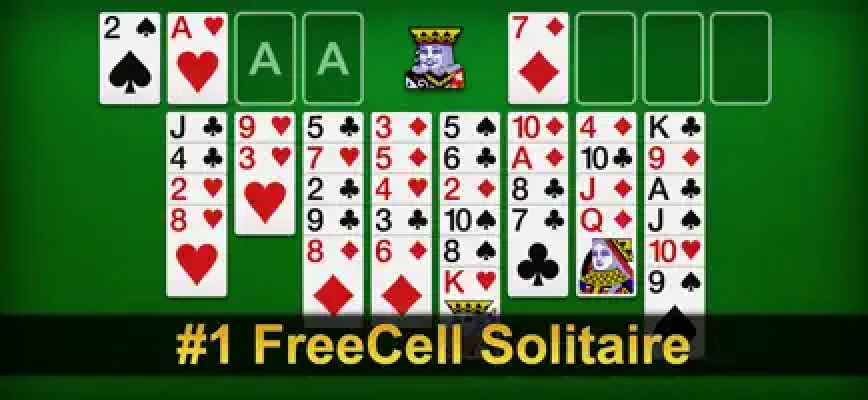
FreeCell Solitaire is one of the most skill-based solitaire variants ever created. Unlike Klondike Solitaire, there are no hidden cards. Players can see the entire board from the beginning and must carefully organize cards using free cells and tableau columns to build foundation piles from Ace to King.
The iOS version of FreeCell Solitaire ∙ Card Game focuses on delivering the traditional FreeCell experience with modern mobile conveniences, making it suitable for both beginners and experienced card game enthusiasts.
Main Features
Classic FreeCell Gameplay
Enjoy the traditional FreeCell rules that have made the game popular for decades.
Key elements include:
- Four free cells
- Four foundation piles
- Eight tableau columns
- Full card visibility
- Strategic gameplay
Daily Challenges
Daily challenges provide fresh puzzles and encourage regular gameplay while helping players improve their strategic thinking.
Achievements and Statistics
Track your progress through achievements and detailed performance statistics that help measure improvement over time.
Customization Options
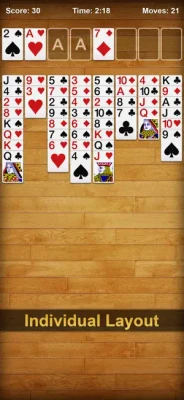
Players can personalize their gameplay experience through various settings and visual customization features.
Mobile-Friendly Controls
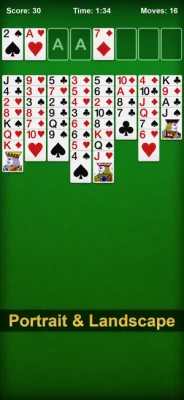
The game is designed specifically for touchscreen devices, allowing smooth card movement and intuitive gameplay.
How to Play FreeCell Solitaire
Step 1: Understand the Layout
The board consists of:
- 8 tableau columns
- 4 free cells
- 4 foundation piles
Every card is visible at the start of the game.
Step 2: Build Foundations
Move cards to the foundation piles in ascending order:
Ace → 2 → 3 → 4 → 5 → 6 → 7 → 8 → 9 → 10 → Jack → Queen → King
Each foundation contains cards from only one suit.
Step 3: Use Free Cells Strategically
Free cells temporarily store individual cards and allow complex rearrangements.
Step 4: Create Empty Columns
Empty tableau columns dramatically increase flexibility and make larger card movements possible.
Step 5: Complete All Foundations
The game ends when all cards are successfully placed into their foundation piles.
Beginner Walkthrough Guide
Early Game Priorities
At the beginning of every deal:
- Locate available Aces.
- Start foundation piles early.
- Keep free cells available.
- Look for opportunities to create empty columns.
- Avoid unnecessary card movements.
These simple habits significantly improve win rates.
Best FreeCell Strategies
Keep Free Cells Open
One of the most important FreeCell principles is flexibility.
Benefits of open free cells include:
- More possible moves
- Easier card rearrangement
- Better recovery options
- Improved board control
Experienced players rarely allow all free cells to become occupied simultaneously.
Prioritize Empty Columns
Empty columns are often even more valuable than free cells.
Advantages include:
- Moving larger card sequences
- Unlocking buried cards
- Improving tableau flexibility
- Creating additional opportunities
Move Aces Early
Whenever possible:
- Free Aces quickly
- Build foundations steadily
- Remove low-ranking cards
This creates space and opens new paths through the tableau.
Plan Multiple Moves Ahead
Because all cards are visible, successful players think several moves into the future before acting.
Ask yourself:
- Does this move create flexibility?
- Will it block another important card?
- Can I recover if the move fails?
Advanced Winning Techniques
Sequence Management
Build alternating-color sequences whenever possible.
Example:
- Black card
- Red card
- Black card
- Red card
Long sequences increase movement efficiency and create more options later.
Foundation Balance
Moving cards to foundations too aggressively can sometimes limit future flexibility.
Strong players balance:
- Foundation progress
- Tableau control
- Free-cell availability
for maximum efficiency.
Resource Awareness
Always monitor:
- Available free cells
- Empty tableau columns
- Movable card sequences
- Future card access
Advanced FreeCell success often comes down to resource management.
Daily Challenge Tips
To improve daily challenge performance:
Play Consistently
Regular play develops:
- Pattern recognition
- Strategic planning
- Faster decision-making
- Better board analysis
Learn From Mistakes
Review difficult games and identify moments where flexibility was lost.
Use Hints Carefully
Hints are useful learning tools, but understanding the reasoning behind a move is more valuable than simply following suggestions.
Common Mistakes to Avoid
Filling Every Free Cell
This severely limits future movement options.
Ignoring Empty Columns
Empty columns are among the most powerful strategic resources in FreeCell.
Playing Too Quickly
FreeCell rewards thoughtful planning rather than fast reactions.
Moving Cards Without Purpose
Every move should improve future flexibility or foundation progress.
Why Players Love FreeCell
The FreeCell community often highlights several reasons for the game's lasting popularity:
- Minimal reliance on luck
- Complete board visibility
- Deep strategic gameplay
- Endless replayability
- Strong puzzle-solving elements
Many players consider FreeCell one of the purest strategy card games because success depends largely on decision-making rather than random card draws.
Frequently Asked Questions
Is FreeCell Solitaire Based on Luck?
Not primarily. Since all cards are visible from the beginning, skill and planning have a much greater impact than luck.
Are Most Deals Winnable?
Many FreeCell deals are solvable when approached with proper strategy and careful planning.
What Are Free Cells Used For?
Free cells temporarily hold cards while players reorganize the tableau and create new movement opportunities.
Is FreeCell Good for Brain Training?
Many players enjoy FreeCell because it exercises logical thinking, planning, sequencing, and problem-solving skills.
Final Verdict
FreeCell Solitaire ∙ Card Game successfully brings the classic FreeCell experience to mobile devices with intuitive controls, daily challenges, achievements, customization options, and strategic gameplay. Whether you are new to solitaire or a long-time FreeCell fan, the game offers a rewarding mix of logic, planning, and puzzle-solving that remains engaging for years.
Rate the Game
User Reviews






Popular Games



















 Android
 iOS
iOS Windows
 Xbox
Xbox