

Latest Version
August 11, 2026
Plug in Digital
Card
iOS
0
Report a Problem
More About :game
Foretales is a narrative-focused card game that blends strategic deckbuilding with an interactive adventure.
Rather than treating cards simply as weapons or abilities, the game uses them as tools for exploration, conversation, stealth, investigation, resource management, and combat.
This means that the cards you play can influence more than the outcome of a single battle. They can change relationships, unlock different paths, alter missions, and ultimately influence the fate of the game's world.
The central character is Volepain, a thief who becomes caught up in a prophecy concerning the end of the world. His unlikely group of companions must navigate a dangerous future where there may be several possible ways to survive—or several ways to cause disaster.
The Story of Foretales
The world of Foretales is threatened by a dark prophecy.
Volepain receives a vision of catastrophe and must determine what to do with the knowledge he has been given.
The game does not force you into a traditional heroic path.
You can make selfish choices, help others, manipulate situations, use stealth, negotiate with characters, or resort to violence.
The important part is that your actions have consequences.
The story is built around the idea that there is no single perfect solution. Your decisions determine which events unfold and which ending you eventually reach.
Meet Volepain
Volepain is the game's central character.
He begins as a thief rather than a traditional fantasy hero, making his role in the world's fate particularly unusual.
His abilities and personality fit naturally with the game's emphasis on stealth, deception, resourcefulness, and unconventional problem-solving.
As the adventure progresses, Volepain becomes connected to a larger group of characters whose decisions and abilities can affect your journey.
A World of Animal Characters
Foretales takes place in a stylized fantasy world populated by anthropomorphic animals.
The cast includes a variety of unusual companions and characters, giving the game a visual identity that feels closer to an illustrated storybook than a conventional fantasy RPG.
The characters aren't simply there for decoration.
Their abilities, relationships, and roles can influence how you approach different situations.
Branching Storylines
One of Foretales' strongest features is its branching narrative.
The game can take you down different paths depending on your decisions.
A choice made early in the story can influence what becomes possible later.
This means you are not simply moving through a fixed sequence of missions.
Instead, you are helping determine which version of the story unfolds.
The game's official description specifically highlights multiple storylines, branching paths, and multiple endings.
Multiple Endings
Foretales is designed to be replayed.
You may finish one playthrough and discover that your choices produced only one possible outcome.
A second run can involve different decisions, different approaches to conflicts, and a different ending.
This makes the game especially attractive to players who enjoy:
- Interactive fiction
- Choice-based adventures
- Branching stories
- Multiple endings
- Narrative games
- Replayable card games
Choices Have Consequences
The phrase "Cards. Choices. Consequences." captures the game's central design philosophy.
A card isn't merely something you play because it has a strong numerical effect.
You need to consider what your action means for the wider story.
Helping one character could close another opportunity.
Stealing an item might make a later mission easier but damage your relationship with someone.
Avoiding a fight could require more resources.
Every decision can change what happens next.
Card-Based Gameplay
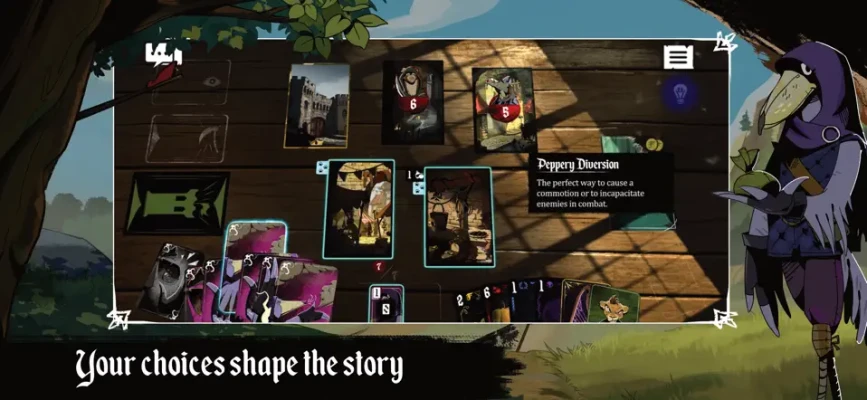
Foretales uses cards as the foundation for both its strategic and narrative systems.
Cards can represent actions, abilities, characters, objects, resources, and other elements of the adventure.
Instead of having separate interfaces for every type of interaction, the game integrates many of these decisions into its card-based structure.
This gives Foretales a distinctive tabletop-inspired feel while still functioning as a story-driven digital adventure.
Deckbuilding
Deckbuilding is an important part of progression.
Your deck determines which options are available when you encounter different situations.
As you progress, you can develop strategies that favor particular approaches.
For example, you may prefer a deck that supports:
- Stealth
- Combat
- Diplomacy
- Resource management
- Character abilities
- Exploration
- Tactical combinations
The best deck isn't necessarily the one with the most powerful cards.
It is the one that fits the way you want to approach the story.
Decksploration
Foretales uses what the developers describe as "decksploration" gameplay.
This means cards are integrated directly into exploration and narrative interaction.
Rather than separating exploration from combat and card mechanics, the game uses the same underlying card-based philosophy throughout the adventure.
That helps Foretales feel more cohesive than a traditional card battler with a story placed around it.
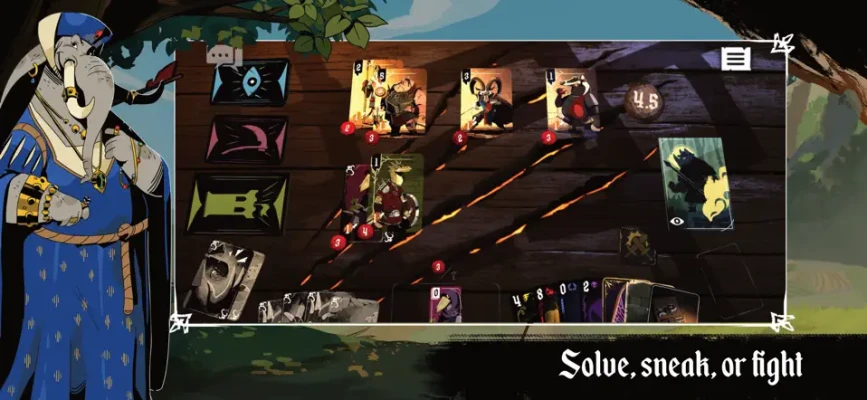
Stealth Gameplay
Stealth is one of the major alternatives to direct combat.
If you don't want to confront an enemy head-on, you can sometimes find ways around the problem.
Stealth allows you to approach situations differently and can open alternative paths through certain encounters.
This is particularly useful for players who enjoy solving problems creatively rather than simply defeating everything in front of them.
Diplomacy and Negotiation
Not every conflict needs to become a fight.
Foretales allows players to use diplomacy and other social approaches when dealing with problems.
This gives conversations a gameplay function rather than making them simple interruptions between battles.
A successful negotiation can potentially produce a different result from combat, changing what happens afterward.
Turn-Based Combat
When combat does become necessary, Foretales uses turn-based card combat.
This gives you time to consider your options rather than requiring fast reflexes.
You can evaluate your available cards, consider your resources, and decide how best to handle the encounter.
The official game information describes the combat system as tactical and turn-based.
Tactical Decision-Making
The combat system rewards thoughtful decisions.
Before playing a card, consider:
- What resources it consumes
- Which enemy it affects
- Whether another card can create a stronger combination
- What you might need on your next turn
- Whether combat is actually the best solution
The game's strategic layer comes from making decisions with limited options rather than simply selecting the strongest attack.
No Grind, No Randomness
One particularly important characteristic of Foretales is that its mobile listing describes the tactical mechanics as being without grind or randomness.
That makes the game different from many modern roguelike deckbuilders.
You aren't primarily replaying runs to overcome random card draws or endlessly grind upgrades.
Instead, the emphasis is on learning the story, understanding your options, and making better decisions.
Resource Management
Resources matter throughout the adventure.
The choices you make can affect what resources you have available later.
This means that spending everything immediately isn't always the best strategy.
A resource that seems unnecessary during one encounter could become extremely valuable during a later mission.
Good resource management therefore works alongside deckbuilding and narrative decision-making.
Exploration
Exploration in Foretales is closely connected to its card system.
You discover places, characters, situations, and opportunities that can be approached in different ways.
The goal isn't simply to reach the next objective.
Exploration can reveal alternative solutions and information that may influence later decisions.
A Board Game Feel
Foretales has a distinctive tabletop-inspired presentation.
The game's cards, character portraits, locations, and interactions are arranged in a way that makes the adventure feel like a living board game.
This approach works particularly well with the narrative because each new location can introduce another collection of cards and decisions.
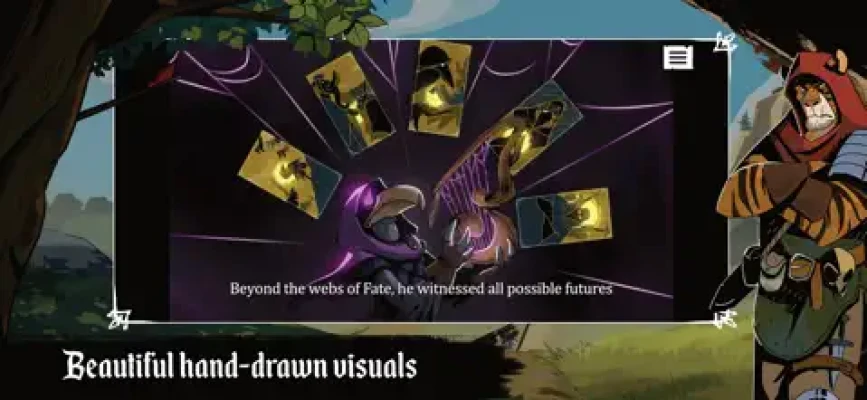
Art Style
The game features a hand-painted visual style with highly expressive animal characters.
Its artwork is one of the game's most noticeable strengths.
The App Store describes Foretales as having a hand-painted art style, while player reviews have also praised its artwork and overall presentation.
The result is a world that feels colorful and inviting despite the dark themes surrounding its story.
Music and Audio
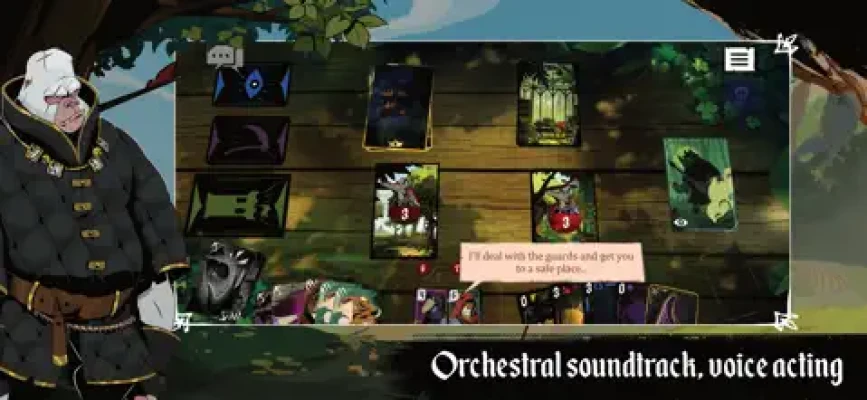
Foretales also places significant emphasis on its audio presentation.
The game's original score was composed by Christophe Héral, known for work including Rayman Legends and Beyond Good & Evil.
The combination of music, sound effects, character voices, and illustrated scenes helps create a cinematic atmosphere.
Voice Acting
Foretales features fully voiced characters.
The PC version also credits Travis Willingham, known for Critical Role and The Legend of Vox Machina, among its narration talent.
Voice acting helps reinforce the game's focus on storytelling and makes important character moments feel more like scenes from an animated adventure.
Main Features
- Story-driven card gameplay
- Branching narrative
- Multiple endings
- Meaningful choices
- Strategic deckbuilding
- Card-based exploration
- Turn-based combat
- Stealth mechanics
- Diplomacy
- Resource management
- Multiple playstyles
- Large cast of characters
- Hand-painted artwork
- Fully voiced characters
- Original music
- Offline play
- No advertisements
- No in-app purchases
- Strong replay value
The current iOS listing describes Foretales as a premium experience with offline support, no ads, and no in-app purchases.
How to Play Foretales
The easiest way to understand Foretales is to think of every encounter as a problem with several possible solutions.
You might be able to:
Sneak past it.
Talk your way through it.
Use a character's special ability.
Spend a resource.
Fight.
Take a risk and accept the consequences.
Your deck determines some of the tools available to you, while your decisions determine which path the story follows.
Beginner's Guide
Don't Assume Combat Is Always Best
If a situation can be resolved through stealth or diplomacy, consider those options.
Combat isn't automatically the optimal solution.
Read the Situation
Pay attention to the characters and environment before making a decision.
Information can be just as valuable as a powerful card.
Think About Future Consequences
A decision may solve your current problem while creating a bigger one later.
Experiment With Your Deck
Different situations reward different card combinations.
Don't be afraid to change your approach.
Save Important Resources
Avoid spending everything simply because you have the opportunity.
Future encounters may require those resources.
Explore Different Choices
Your first playthrough doesn't need to reveal everything.
The game is specifically designed around branching paths and replayability.
Advanced Strategy Tips
Think Beyond the Current Encounter
Before choosing an action, ask what it could change later in the story.
Build for Your Preferred Playstyle
If you enjoy stealth, prioritize tools that support that approach.
If you prefer direct combat, build around tactical fighting.
Use Characters Together
Different companions can complement each other.
Look for combinations that allow one character's strengths to cover another's weaknesses.
Don't Waste Information
Knowing what an encounter can lead to is valuable.
On later playthroughs, previous knowledge can help you make better decisions.
Embrace Different Endings
Trying to force the "best" outcome immediately can prevent you from experiencing what makes Foretales interesting.
The game is designed around discovering different possibilities.
Character and Companion System
Volepain isn't alone.
A colorful group of animal companions joins the adventure, creating a varied cast with different abilities and personalities.
These characters contribute to the game's strategic systems as well as its narrative.
Choosing which characters to rely on can influence how you approach different situations.
Game Progression
Foretales uses narrative progression rather than traditional RPG grinding.
Instead of endlessly increasing character statistics, the game focuses on:
- Story progression
- New locations
- New encounters
- New choices
- Card availability
- Character interactions
- Different story paths
- Discovering alternative endings
This design keeps the experience focused on decision-making.
Difficulty
Foretales is less about reflexes and more about understanding consequences.
The turn-based card system gives you time to think.
However, some situations can become challenging because the game expects you to consider the wider consequences of your decisions.
The difficulty can therefore come from making the wrong choice rather than simply losing a combat encounter.
Replay Value
Replayability is one of Foretales' biggest strengths.
The branching structure means that a single playthrough doesn't necessarily show everything.
You can replay the game to:
- Try different choices
- Find alternate routes
- Use different playstyles
- Discover other character interactions
- Reach different endings
- Experiment with different decks
- See how earlier decisions affect later events
The official game description specifically highlights replayability and multiple endings.
Offline Play
The current iOS listing describes Foretales as an offline premium experience.
This is an important advantage for players who want a narrative card game that doesn't depend on a constant internet connection.
No Ads and No In-App Purchases
Unlike many mobile card games, Foretales is presented as a premium experience.
The current U.S. App Store listing shows a $4.99 purchase price and explicitly states that the game contains no ads and no in-app purchases.
That makes the mobile version particularly straightforward: buy the game and experience the complete adventure without the usual free-to-play monetization systems.
Player Reception
The current U.S. App Store listing shows 4.8 out of 5 stars from 153 ratings.
Recent reviews praise the game's art, story, interface, and overall quality. One reviewer described the game as a complete package with strong art, story, UI, and gameplay. Another praised its creativity and visual presentation while noting some occasional card-interface issues.
On Steam, Foretales has also received a Very Positive overall user rating, with the store page currently showing 86% positive reviews from hundreds of reviews.
Technical Information
Game: Foretales
Developer: Alkemi
iOS Publisher/Seller: Plug In Digital
Genre: Card
Subgenres: Adventure, Strategy, Narrative, Card Battler
Platforms: iPhone, iPad
Price: $4.99 on the current U.S. App Store listing
Age Rating: 13+
Current App Size: 720.6 MB
Languages: English plus five additional languages
Game Type: Premium single-player adventure
Offline Play: Yes
Advertisements: No
In-App Purchases: No
The current App Store listing identifies Plug In Digital as the developer/seller for the iOS release, while the game's PC release credits Alkemi as developer and Dear Villagers as publisher.
Mobile Experience
Foretales works particularly well as a mobile game because its card-based interface naturally suits touchscreen interaction.
You can select cards, examine characters, interact with locations, and make decisions directly through the touch interface.
Because combat is turn-based, there is no pressure to perform rapid actions.
This makes the game comfortable for players who prefer thoughtful mobile experiences.
Controls and Interface
The interface centers around cards and interactive elements.
Typical interactions include:
- Selecting cards
- Playing cards
- Choosing characters
- Interacting with locations
- Reviewing available actions
- Managing resources
- Selecting dialogue or story choices
- Confirming tactical decisions
The controls are relatively simple, allowing the game's complexity to come from the decisions rather than from complicated button combinations.
Pros and Cons
Pros
- Excellent narrative focus
- Meaningful choices
- Multiple endings
- Branching storylines
- Unique card-based adventure
- Strategic deckbuilding
- Stealth and diplomacy options
- Turn-based combat
- No grinding
- No random combat system
- Beautiful hand-painted art
- Strong voice acting
- Excellent soundtrack
- Offline support
- No advertisements
- No in-app purchases
- Premium complete experience
Cons
- Some card-interface issues have been reported by players
- Story-focused gameplay may not appeal to players seeking constant combat
- Replayability depends heavily on interest in discovering alternate paths
- The mobile download is relatively large at 720.6 MB
- Some players may find certain story sections repetitive on subsequent playthroughs
The App Store reviews provide examples of both the game's strong reception and some interface/repetition criticisms.
Who Should Play Foretales?
Foretales is especially suitable for players who enjoy:
- Card adventure games
- Narrative games
- Interactive fiction
- Deckbuilding
- Choice-based games
- Strategy games
- Turn-based combat
- Stealth games
- Fantasy adventures
- Multiple-ending games
- Story-rich indie games
- Board-game-inspired video games
It is an excellent choice if you want a card game where the story matters just as much as the mechanics.
Who Might Not Enjoy It?
Foretales may not be the best choice for players looking for:
- Real-time action
- Competitive online multiplayer
- Endless procedural runs
- Traditional RPG grinding
- Open-world exploration
- Fast-paced combat
- Free-to-play progression
Its focus is firmly on narrative, strategy, and choice.
What Makes Foretales Different?
The biggest difference is the way Foretales treats cards as part of the entire adventure.
In a conventional card battler, you usually think about cards in terms of damage, defense, or special abilities.
In Foretales, a card can be part of a conversation, a stealth attempt, an exploration decision, a resource-management choice, or a battle.
That makes the cards feel like pieces of the story rather than simply combat tools.
Foretales vs Traditional Deckbuilders
Traditional deckbuilders often emphasize:
- Random card draws
- Repeated runs
- Procedural encounters
- Character upgrades
- Combat optimization
Foretales takes a different route.
Its focus is on authored storytelling and player choice.
The game provides branching narratives and multiple endings instead of relying primarily on procedural replayability.
That makes it closer to an interactive adventure built around cards than a conventional roguelike deckbuilder.
Foretales vs Story-Driven Adventure Games
Traditional narrative adventures may give players dialogue choices but have relatively limited gameplay systems.
Foretales makes its cards part of those decisions.
The result is a hybrid where narrative choices and strategic gameplay constantly interact.
Game Modes
Story Campaign
Follow Volepain and his companions through a world threatened by a dark prophecy.
Alternate Playthroughs
Replay the adventure and make different decisions to discover new story paths.
Tactical Encounters
Handle conflicts using turn-based card mechanics.
Exploration
Investigate locations, characters, and opportunities using your deck.
Frequently Asked Questions
What is Foretales?
Foretales is a story-driven card adventure that combines deckbuilding, exploration, tactical combat, stealth, diplomacy, branching choices, and multiple endings.
Who is the main character in Foretales?
The main character is Volepain, a thief who receives a vision of an approaching apocalypse.
Is Foretales a card game?
Yes. Cards are central to exploration, decision-making, deckbuilding, and combat.
Is Foretales a deckbuilding game?
Yes. Deckbuilding is one of the game's main strategic systems.
Does Foretales have multiple endings?
Yes. The game features branching paths and multiple endings based on player choices.
Are choices important in Foretales?
Yes. Your decisions can alter the story, available paths, relationships, and eventual outcome.
Does Foretales have combat?
Yes. Combat is turn-based and card-based.
Can you avoid combat in Foretales?
In many situations, yes. The game supports alternative approaches including stealth and diplomacy.
Is Foretales a roguelike?
Not in the traditional sense. Unlike many modern roguelike deckbuilders, Foretales emphasizes a handcrafted branching narrative rather than repeated randomized runs.
Does Foretales have random combat?
The App Store description specifically describes its tactical turn-based mechanics as being without grind or randomness.
Is Foretales available on iPhone?
Yes. The current U.S. App Store listing supports iPhone and iPad.
Is Foretales available on iPad?
Yes. The game is designed for iPad as well as iPhone.
Is Foretales offline?
Yes. The current App Store listing describes the game as an offline premium experience.
Does Foretales have ads?
No. The current App Store listing states that the premium version has no ads.
Does Foretales have in-app purchases?
No. The current App Store listing states that there are no in-app purchases.
How much does Foretales cost on iPhone?
The current U.S. App Store listing shows Foretales at $4.99.
Who developed Foretales?
The original game was developed by Alkemi. The iOS App Store listing currently identifies Plug In Digital as the developer/seller for the mobile release.
Who composed the music for Foretales?
The game's original score was composed by Christophe Héral, known for work on Rayman Legends and Beyond Good & Evil.
Does Foretales have voice acting?
Yes. The game features fully voiced characters, with Travis Willingham credited among the narration talent on the PC version.
Is Foretales good for fans of story games?
Yes. Its main strengths are branching storylines, meaningful decisions, multiple endings, character interactions, and a strong illustrated presentation.
How long is Foretales?
The exact playtime varies depending on choices and how much of the branching content you explore. Because the game has multiple paths and endings, replaying can reveal substantially different content.
Final Verdict
Foretales is one of the more distinctive narrative card games available on iPhone and iPad.
Instead of using cards solely for combat, it makes them part of exploration, stealth, diplomacy, resource management, and storytelling. That gives the gameplay a strong sense of identity.
Its branching story is another major strength. There isn't simply one route through the adventure; your choices can lead to different situations and endings.
The premium structure is also appealing for mobile players. The current U.S. App Store version costs $4.99 and offers offline play without advertisements or in-app purchases.
With hand-painted artwork, fully voiced characters, music from Christophe Héral, tactical card combat, and a story built around meaningful decisions, Foretales is particularly well suited to players searching for a story-driven card game, narrative deckbuilder, interactive adventure, turn-based card game, or choice-based RPG for iPhone.
Rate the Game
User Reviews







Popular Games



















 Android
 iOS
iOS Windows
 Xbox
Xbox