

Latest Version
August 13, 2026
Acram Digital
Card
iOS
0
Report a Problem
More About :game
Enter the World of Dawnmaker
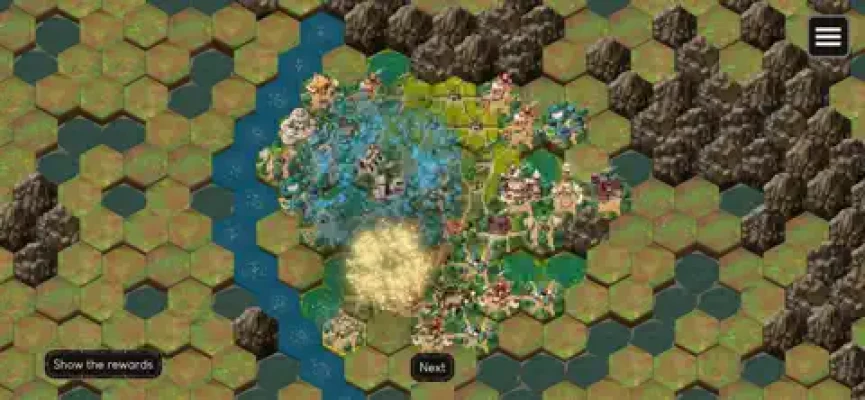
The continent of Heksiga has been consumed by a mysterious and toxic Smog.
Civilization has fallen.
Ancient technologies have been forgotten.
The remaining people need someone capable of bringing light back to the land.
That responsibility falls to you.
Your goal is to restore the magical lighthouses scattered throughout Heksiga, expand your territory and build efficient cities capable of surviving in a hostile world.
But rebuilding isn't simply about placing buildings wherever there is empty space.
Every tile matters.
Every resource matters.
And every card can change the way your city develops.
A Unique Mix of City Building and Deckbuilding
Dawnmaker's biggest strength is how it combines two genres that don't normally appear together.
On one side, you have city building.
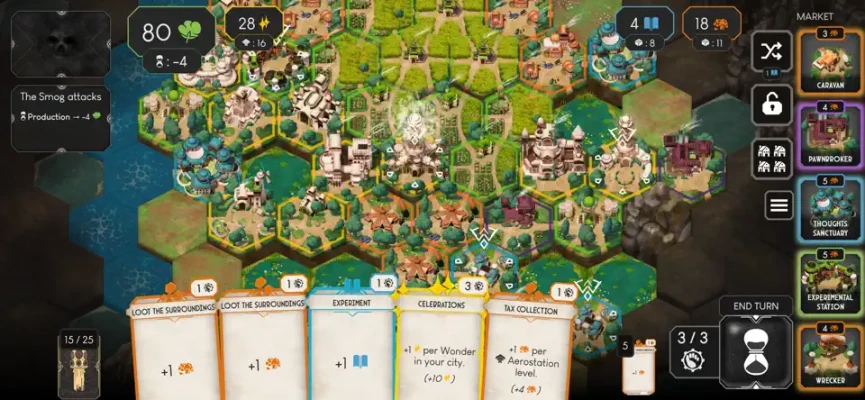
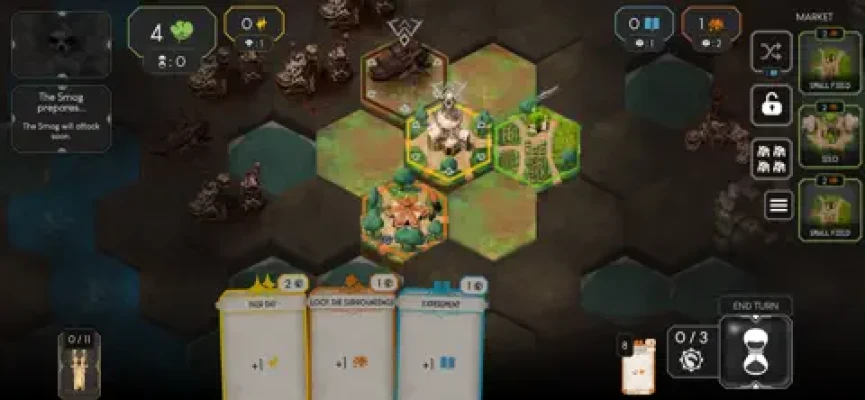
You construct farms, industries, scientific facilities and other structures while carefully managing limited space.
On the other side, you have deckbuilding.
Cards provide new possibilities and increasingly powerful effects as your city develops.
The two systems constantly interact.
A well-designed deck can make certain buildings significantly more effective, while smart city placement can unlock better card combinations.
Build Luminous Cities
Your city is the center of your strategy.
You need to determine where buildings should go and how they interact with one another.
Space is limited, meaning inefficient construction can create problems later.
A successful city should be:
- Productive
- Efficient
- Carefully organized
- Resource-conscious
- Designed around card synergies
- Prepared for future expansion
The best layouts aren't necessarily the biggest ones.
They're the ones that make the most out of every available space.
The Lighthouse Is Your Key to Expansion
At the center of your development is the lighthouse.
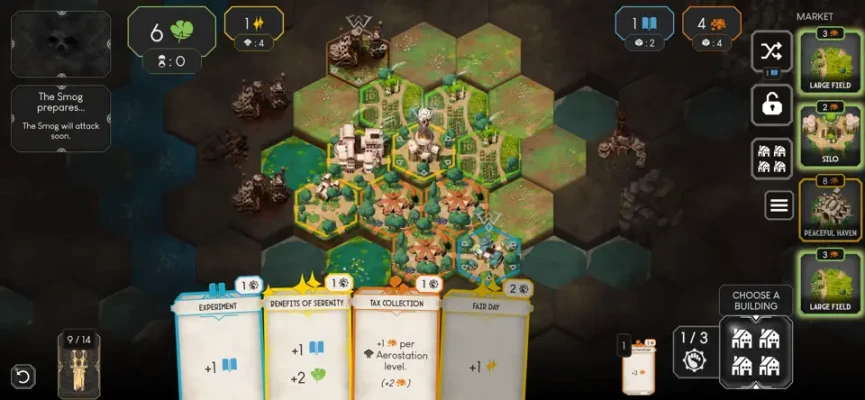
Improving it allows you to push back the Smog and unlock additional building space.
This creates an important strategic relationship:
Better lighthouse → more space → more buildings → stronger economy → better cards and combinations.
However, upgrading the lighthouse requires planning because resources are limited and every turn can influence the development of your city.
Push Back the Toxic Smog
The Smog is more than a visual part of Dawnmaker's setting.
It represents the challenge standing between you and the restoration of Heksiga.
As your lighthouse grows stronger, you can reclaim more territory.
Region by region, the dead landscape begins to recover.
This gives the game a satisfying sense of long-term progress because your strategic decisions visibly contribute to rebuilding the world.
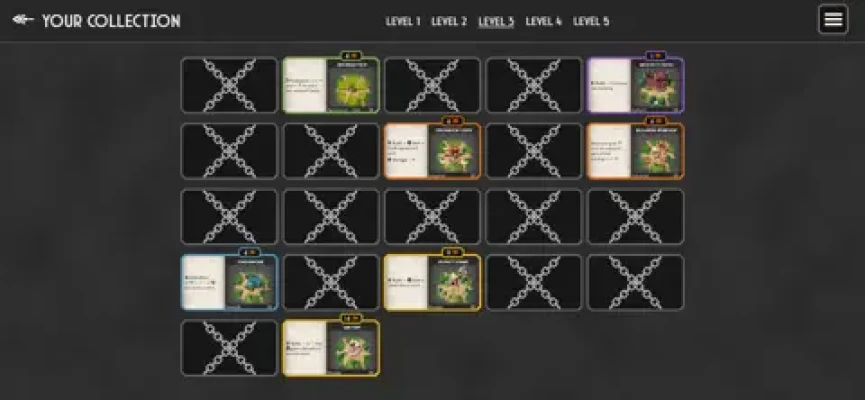
Master the Card System
Your deck is one of your most important strategic tools.
As your city develops, you gain access to increasingly powerful cards.
The key isn't simply collecting as many cards as possible.
Instead, you want to build a deck where individual cards work together.
Look for combinations that complement:
- Building placement
- Resource production
- Lighthouse upgrades
- Industry
- Farming
- Science
- Population development
A carefully optimized deck can dramatically improve your city's efficiency.
Building and Card Synergies
Dawnmaker becomes especially interesting when cards and buildings begin interacting.
One building may generate resources that allow another effect to activate.
A card may make a particular type of building more useful.
Another card may help you expand your city or improve your resource economy.
This creates a strategic puzzle where you're constantly asking:
Which combination produces the greatest long-term benefit?
Manage Your Resources
Resource management is essential.
You need to develop different parts of your city while making sure you have enough resources to continue expanding.
Dawnmaker includes systems involving:
- Farming
- Industry
- Science
- Population
- Lighthouse development
- Eclairium production
Balancing these areas is crucial.
Focusing too heavily on one resource can leave another part of your city underdeveloped.
Discover Eclairium
One of the game's rarest resources is Eclairium.
Developing your farms, industries, science and population can eventually help you generate this valuable resource.
Because it is rare, Eclairium becomes an important part of strategic planning.
Players must think about how their entire city can work together to create the resources required for continued progress.
Recover Lost Technologies
The old civilization left behind traces of its knowledge.
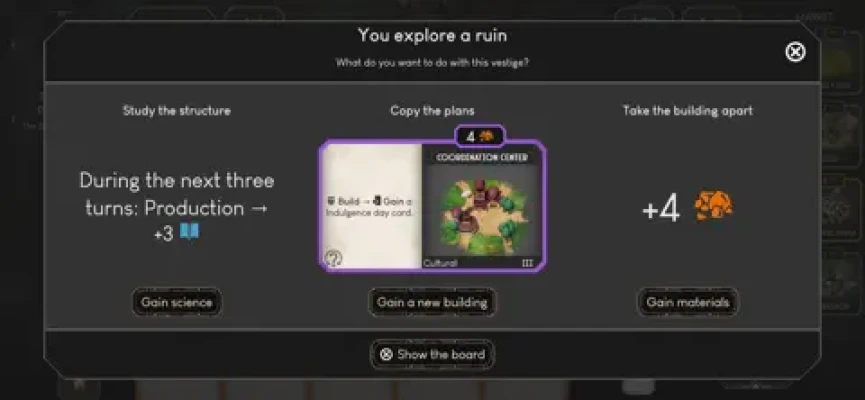
As you explore Heksiga, you can discover remnants of the old Empire and recover technologies that disappeared beneath the Smog.
These discoveries contribute to the game's sense of progression and reinforce its post-apocalyptic worldbuilding.
You aren't simply constructing another city.
You're rebuilding a civilization from the remnants of a forgotten age.
Turn-Based Strategy
Dawnmaker is designed around turn-based decision making.
That means there is no need to rush.
You can evaluate the board, examine your available cards, consider your resources and determine the best way to use your current turn.
This makes the game particularly appealing to players who enjoy thoughtful strategy rather than fast reactions.
Board Game Feel on iPhone and iPad
One of Dawnmaker's defining characteristics is its solo board-game feel.
The game was designed by strategy enthusiasts and combines card management, city placement and resource planning into a compact strategic experience.
Its structure makes it a natural choice for players who enjoy:
- Digital board games
- Turn-based strategy
- Deckbuilding
- City builders
- Resource management
- Tactical planning
Efficient City Placement
Don't place buildings randomly.
Before constructing something, consider:
- What resources does it generate?
- Which buildings benefit from it?
- What spaces will you need later?
- Does it improve your current card strategy?
- Will it help your lighthouse progression?
- Are you wasting valuable board space?
A strong opening can make later turns considerably easier.
Beginner's Guide
1. Study the Board
Before making your first major decisions, look at the available space and understand the surrounding opportunities.
2. Don't Expand Too Quickly
More buildings aren't always better.
Focus on creating an efficient economy before expanding aggressively.
3. Build Around Synergy
Try to make your cards and buildings support one another.
4. Watch Your Resources
Avoid spending everything immediately.
Keep enough resources available for important upgrades.
5. Upgrade the Lighthouse
The lighthouse controls your ability to push back the Smog and unlock more building space.
6. Improve Your Deck
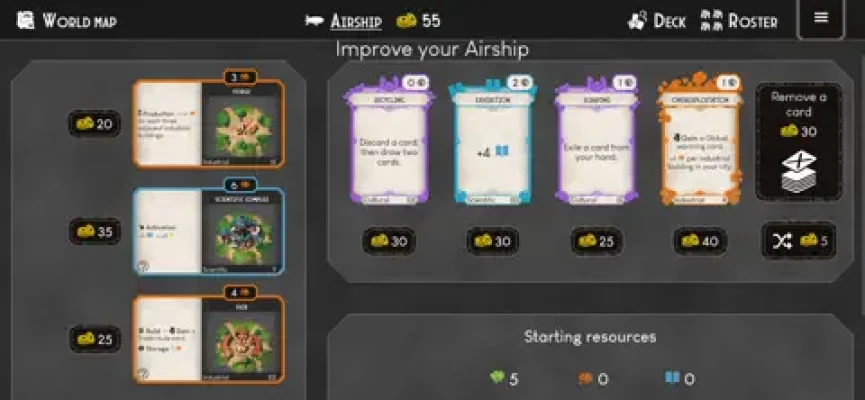
Remove inefficient choices when possible and prioritize cards that support your overall strategy.
7. Plan Several Turns Ahead
A move that looks powerful now may create problems later.
Advanced Strategy Tips
Think About Future Space
Don't fill every available tile immediately.
Future buildings may need strategically important positions.
Build an Engine
The strongest cities develop systems where one building or card supports another, creating increasingly efficient resource production.
Avoid Unfocused Decks
A deck containing too many unrelated effects can be less effective than a smaller collection built around a clear strategy.
Balance Short-Term and Long-Term Gains
Sometimes taking a smaller reward now creates a much stronger position later.
Protect Your Economy
If your resource generation collapses, even powerful cards may become difficult to use.
Optimize Lighthouse Progression
Expanding your available space can create opportunities for much stronger city layouts.
Game Progression
Dawnmaker's progression is driven by strategic development rather than traditional character levels.
A typical progression loop looks like this:
- Start with limited space.
- Construct initial buildings.
- Generate resources.
- Develop your deck.
- Create building-card combinations.
- Improve the lighthouse.
- Push back the Smog.
- Unlock more building space.
- Expand your city.
- Discover lost technologies.
- Reclaim more of Heksiga.
- Build an increasingly efficient civilization.
The Heksiga Continent
Heksiga is the game's central setting.
Once a thriving continent, it has been covered by toxic Smog.
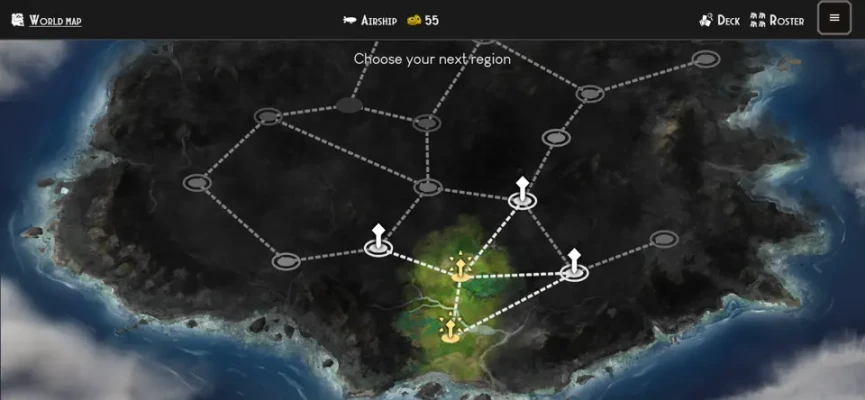
Your objective is to reclaim it region by region.
The restoration of Heksiga provides the game with a clear overarching goal while individual turns focus on optimizing your city and deck.
Atmosphere and Art Direction
Dawnmaker combines a dark post-apocalyptic setting with a more hopeful visual identity.
The world begins under the influence of the Smog, but your city becomes increasingly luminous as you restore the lighthouses and reclaim territory.
This contrast between darkness and light is central to the game's identity.
Why the Strategy Works
Dawnmaker doesn't rely on a single mechanic.
Its appeal comes from the interaction between several systems:
City Building
↓
Resource Generation
↓
Card Acquisition
↓
Building/Card Synergies
↓
Lighthouse Upgrades
↓
Territory Expansion
↓
Stronger City
Every part of the game feeds into another.
Difficulty
Dawnmaker is aimed at players who enjoy thoughtful strategy rather than casual city decoration.
The challenge comes from managing limited space and resources while making decisions that remain effective several turns later.
The game doesn't depend on fast reflexes.
Instead, success comes from understanding the relationships between:
- Buildings
- Cards
- Resources
- Space
- Lighthouse upgrades
- Expansion
This makes it particularly suitable for strategy fans who enjoy analyzing their options before committing to a move.
Replay Value
Dawnmaker's replay value comes from experimenting with different approaches.
You can try to:
- Build different city layouts
- Develop different card combinations
- Focus on different resource strategies
- Experiment with building synergies
- Optimize your lighthouse progression
- Improve your overall efficiency
The board-game structure encourages players to replay the experience with a different strategic mindset.
Controls and Touch Interface
The iOS version is designed for touchscreen play.
A recent update specifically moved the Activate Building button to reduce accidental End Turn selections and also addressed a board-resizing issue. Another update reduced unintended confirmations caused by slight swipe gestures.
These changes show that the developers have continued refining the touch experience since launch.
Accessibility
The App Store lists support for differentiating information without relying on color alone, using shapes or text to distinguish important information.
This is useful for players who may have difficulty distinguishing certain colors.
Updates and Improvements
The current App Store listing shows version 1.1.3, with recent improvements focused on touch interaction and interface behavior.
Notable changes include:
- Improved placement of the Activate Building button
- Reduced accidental End Turn selections
- Fixes for incorrect board resizing
- Reduced unintended confirmations from swipe gestures
- Stability improvements
Technical Details
| Detail | Information |
|---|---|
| Game | Dawnmaker |
| Developer | Acram Digital |
| Original Studio | Arpentor Studio |
| Genre | Strategy / Card / City Building |
| Gameplay | Turn-Based |
| Mode | Single Player |
| Platform | iPhone, iPad |
| Price | $8.99 |
| App Size | 151.1 MB |
| Minimum iOS | iOS 13.0+ |
| Minimum iPadOS | iPadOS 13.0+ |
| Age Rating | 9+ |
| Language | English |
| Family Sharing | Yes |
| Data Collected | None indicated by developer |
Apple's current U.S. App Store listing confirms the $8.99 price, 151.1 MB size, iOS 13/iPadOS 13 requirement, 9+ rating, English language support and Family Sharing.
Price and Purchase Model
Unlike many modern mobile strategy games, Dawnmaker is a premium title rather than a free-to-play game.
The U.S. App Store currently lists it at $8.99. There is no indication on the listing of advertisements or recurring in-game purchases.
This makes it an appealing option for players who prefer purchasing a complete strategy experience instead of dealing with energy systems or frequent monetization prompts.
Player Ratings
The U.S. App Store currently shows 5.0/5 from 2 ratings, although the very small number of ratings means this score shouldn't be treated as a broad measure of player sentiment yet.
On Steam, where the game has a larger review sample, Dawnmaker has received Very Positive feedback, with approximately 90% of 154 reviews positive at the time of the retrieved listing.
Pros and Cons
Pros
- Unique city-building and deckbuilding combination
- Deep strategic planning
- Turn-based gameplay
- Strong building-card synergies
- Resource management
- Limited-space city optimization
- Lighthouse progression
- Post-apocalyptic setting
- Solo board-game atmosphere
- Premium purchase model
- Small 151.1 MB iOS download
- Supports iPhone and iPad
- No developer-reported data collection
- Family Sharing support
Cons
- English is the only language listed on the U.S. App Store
- Strategy can feel demanding for casual players
- Limited board space can make mistakes costly
- Small current iOS review sample
- Primarily aimed at players who enjoy slow, deliberate strategy
- Not designed for players looking for action or real-time gameplay
Dawnmaker vs Traditional City Builders
Dawnmaker is very different from games that focus mainly on designing beautiful cities.
Traditional city builders often emphasize:
- Population growth
- Large maps
- Construction
- Traffic
- Happiness
- Long-term economic simulation
Dawnmaker places greater emphasis on:
- Card combinations
- Limited board space
- Turn-based decisions
- Resource efficiency
- Building synergies
- Lighthouse progression
It is closer to a digital strategy board game with city-building mechanics than a conventional city simulator.
Dawnmaker vs Deckbuilding Games
Dawnmaker also differs from traditional deckbuilders.
Your cards aren't fighting independently of the environment.
They interact directly with your city.
That means your deck and your physical board development need to evolve together.
This combination is one of the game's most distinctive features.
Who Should Play Dawnmaker?
Dawnmaker is ideal for players who enjoy:
- City-building games
- Deckbuilding games
- Turn-based strategy
- Digital board games
- Resource management
- Tactical planning
- Strategy games for iPhone
- Strategy games for iPad
- Solo strategy games
- Post-apocalyptic worlds
- Building optimization
- Card-based strategy
- Games with minimal monetization
If you enjoy thinking several turns ahead and finding efficient combinations, Dawnmaker is particularly worth considering.
Expert Rating
| Category | Rating |
|---|---|
| Strategy Depth | 9.2/10 |
| City Building | 8.9/10 |
| Deckbuilding | 9.1/10 |
| Resource Management | 9.0/10 |
| Building/Card Synergy | 9.4/10 |
| Atmosphere | 8.8/10 |
| Touch Controls | 8.7/10 |
| Replay Value | 8.9/10 |
| Mobile Experience | 9.0/10 |
| Overall | 9.1/10 |
Frequently Asked Questions
What is Dawnmaker?
Dawnmaker is a solo turn-based strategy game combining city building, deckbuilding and resource management in a board-game-inspired format.
Is Dawnmaker available on iPhone?
Yes. The current App Store version supports iPhone devices running iOS 13 or later.
Can I play Dawnmaker on iPad?
Yes. Compatible iPads running iPadOS 13 or later are supported.
Is Dawnmaker free?
No. Dawnmaker is a premium game. The U.S. App Store currently lists it for $8.99.
Does Dawnmaker have multiplayer?
Dawnmaker is designed as a solo strategy game, so its core experience is single-player.
What is the goal in Dawnmaker?
Your goal is to restore the ancient lighthouses, repel the toxic Smog and reclaim the continent of Heksiga region by region.
What is Eclairium?
Eclairium is described as one of the rarest resources in the game, produced through the development of farming, industry, science and your population.
Does Dawnmaker use cards?
Yes. Deckbuilding is one of the game's two major systems, alongside city building.
Can buildings interact with cards?
Yes. Building and card interactions are central to the game's strategy, with different combinations creating powerful effects.
Does Dawnmaker have a post-apocalyptic setting?
Yes. The continent of Heksiga has been covered by toxic Smog following the collapse of the old civilization.
How much storage does Dawnmaker require?
Apple currently lists the iOS app at 151.1 MB.
What iOS version is required?
The current App Store listing requires iOS 13.0 or later and iPadOS 13.0 or later.
Does Dawnmaker support Family Sharing?
Yes. Apple lists Family Sharing support for up to six family members.
Dawnmaker is a refreshing strategy game for players who want something more thoughtful than a conventional mobile city builder.
Its defining feature is the way city construction and deckbuilding directly influence one another. Instead of simply placing buildings or collecting cards, you're constantly searching for combinations that make your entire city more efficient.
The limited building space makes every placement meaningful, while the lighthouse provides a clear progression path by allowing you to repel the Smog and expand your territory. Resource management, technology recovery and Eclairium production add further strategic layers.
The premium $8.99 model is also notable. There are no obvious free-to-play energy systems dominating the experience, making Dawnmaker particularly attractive to players who prefer buying a complete strategy game.
The iOS version is lightweight at 151.1 MB and supports older Apple hardware dating back to iOS 13, while recent updates have continued improving touchscreen interactions.
If you're looking for a city-building game for iPhone, deckbuilding game for iPad, turn-based strategy game, digital board game or resource-management game, Dawnmaker offers a distinctive combination that is well worth exploring.
Overall Rating: 9.1/10
Rate the Game
User Reviews












Popular Games



















 Android
 iOS
iOS Windows
 Xbox
Xbox