

Latest Version
September 09, 2024
Homa
Card
Android
0
com.homa.free.solitaire.card.game
Report a Problem
More About :game
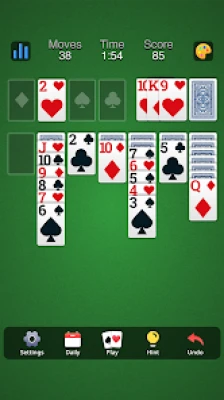
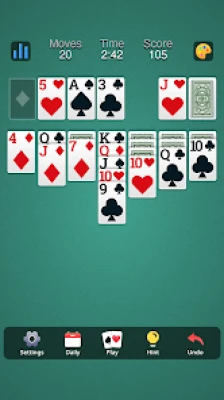
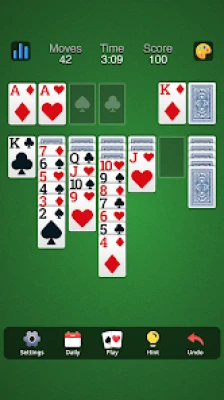
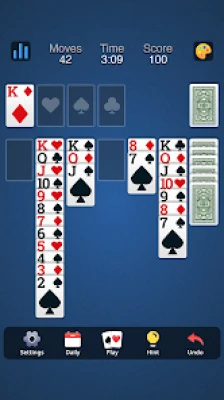
The goal remains simple: expose the hidden cards, organize the seven tableau columns, and move every card into the four foundation piles in ascending suit order from Ace through King. The game supports both Draw 1 and Draw 3 variations, giving players a choice between a more forgiving experience and a more demanding strategic challenge.
What Is Solitaire Classic – Klondike?
Solitaire Classic – Klondike is a digital version of the classic one-player card game that became famous on computers and later moved to smartphones and tablets.
The game uses a standard 52-card deck without Jokers. Cards are arranged across seven tableau columns, while four foundation piles are built upward by suit.
The current version also adds modern features around the traditional rules, including Daily Challenges, monthly events, customization options, hints, undos, and a progress tracker.
The result is a Solitaire experience that remains familiar to longtime players while giving newer players additional tools for learning and improving.
Game Information
Game: Solitaire Classic – Klondike
Developer: Homa
Genre: Card, Casual
Game Type: Classic Klondike Solitaire
Players: Single-player
Deck: Standard 52-card deck
Tableau: Seven columns
Foundation: Four suit piles
Draw Modes: Draw 1 and Draw 3
Controls: Tap or drag cards
Challenges: Daily Challenges
Events: Monthly events
Customization: Card decks and backgrounds
Assistance: Hints and Undos
Offline Play: Supported
Monetization: Ads and in-app purchases
Content Rating: Everyone
Android Requirement: Android 7.0/7.1 or later depending on the current distribution
Current Google Play Rating: About 4.8 stars
Google Play Downloads: 5M+ listed
The current Google Play listing identifies Homa as the developer and states that the game contains advertisements and in-app purchases.
How to Play Klondike Solitaire
The objective is to move all 52 cards into four foundation piles.
Each foundation corresponds to one suit:
Hearts
Diamonds
Clubs
Spades
Every foundation starts with an Ace and continues upward:
Ace → 2 → 3 → 4 → 5 → 6 → 7 → 8 → 9 → 10 → Jack → Queen → King
Meanwhile, the seven tableau columns are built downward in alternating colors.
For example:
Black 9 → Red 8 → Black 7
A red card can therefore be placed on a black card of exactly one higher rank.
Understanding the Seven Tableau Columns
The tableau is where most of the game takes place.
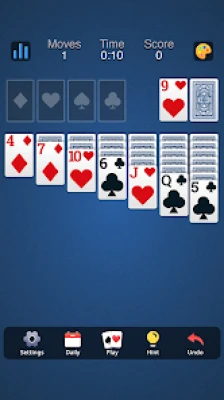
At the beginning of a standard Klondike deal:
Seven columns are created.
The first column contains one card.
The second contains two.
The third contains three.
This continues until the seventh column contains seven.
Only the top card of each column is initially face up.
Your first major objective is to expose the hidden cards.
Why Hidden Cards Matter
A face-down card represents unknown information.
When you move a face-up card away and reveal what is underneath, you gain another potential move.
Therefore, a move that exposes a hidden card is often more valuable than a move that merely rearranges cards you can already see.
Foundation Piles
The four foundation piles are built by suit from Ace upward.
If you have:
Ace of Hearts
you can place the:
2 of Hearts
on top of it.
Then:
3 of Hearts
and continue until the King.
The foundation is ultimately where every card must finish.
Tableau Rules
The tableau follows two important rules.
Descending Order
Cards must be arranged from high rank to low rank.
For example:
King → Queen → Jack → 10 → 9
Alternating Colors
Each successive card must have the opposite color.
For example:
Black Queen → Red Jack
or:
Red 8 → Black 7
You cannot place a red 7 on a red 8.
Moving Groups of Cards
You do not always have to move one card at a time.
If a group already forms a legal descending sequence with alternating colors, you can move the entire sequence onto another appropriate card.
For example:
Red 10 → Black 9 → Red 8 → Black 7
can be moved as a sequence if the destination allows the Red 10 to be placed legally.
This is one of the most important techniques for clearing the tableau.
Empty Tableau Spaces
An empty tableau column is not available for just any card.
Only a King, or a sequence beginning with a King, can normally be moved into an empty tableau space.
This makes Kings strategically important.
Do not move a King into an empty column simply because you can.
First consider whether doing so will expose hidden cards or create useful future moves.
Draw 1 vs Draw 3
Solitaire Classic – Klondike provides both Draw 1 and Draw 3 modes.
Draw 1
One card is revealed from the stock at a time.
This is the easier format because you have greater control over the available cards.
It is a good choice for:
Beginners
Learning the basic mechanics
Practicing planning
Relaxed games
Improving completion consistency
Draw 3
Three cards are drawn at a time.
This creates considerably more strategic complexity because not every visible card can immediately be played.
Draw 3 requires you to think about the order in which cards become accessible.
It is particularly useful for experienced Solitaire players who want a more challenging game.
Draw 3 Strategy
The biggest mistake in Draw 3 is focusing only on the top visible card.
Instead, think about the entire sequence.
If the three exposed cards are:
A → B → C
you need to consider what happens after A is played.
Playing A may expose B, which could then expose C.
Therefore, the best move is not necessarily the card that can be played immediately.
The best move may be the one that creates the most useful sequence of future moves.
The Most Important Solitaire Strategy: Expose Hidden Cards
When choosing between two legal moves, ask:
Which move reveals a face-down card?
If one move exposes a hidden card while another simply rearranges visible cards, the first move is frequently stronger.
This is not an absolute rule, but it is one of the best general principles for improving at Klondike.
Protect Your Aces and Twos
Aces are extremely valuable because they begin foundation piles.
However, finding an Ace does not always mean you should immediately move it.
Sometimes a card currently occupying a tableau position is helping you reveal or organize other cards.
The same applies to Twos.
Before moving an Ace or Two, consider whether the move opens new possibilities or simply transfers a card without improving the tableau.
Do Not Automatically Send Every Card to the Foundation
New players often assume that moving cards to the foundation as quickly as possible is always correct.
It is usually helpful, but not always.
A card in the tableau can sometimes be strategically useful for building another sequence.
For example, moving a low card to the foundation could remove a card that you needed as a destination for another tableau sequence.
Better Rule
Move cards to the foundation when doing so:
Helps expose hidden cards
Opens a tableau column
Creates useful moves
Does not block your remaining tableau structure
Prioritize Face-Down Cards
A face-down card should usually receive high strategic priority.
Your long-term goal is to expose as many hidden cards as possible.
This increases the number of known cards and gives you more options.
A good game therefore tends to create a chain:
Move card → reveal card → create move → reveal another card → create another move
Empty a Tableau Column Carefully
Creating an empty column can be extremely powerful because it gives you somewhere to temporarily store or reorganize a sequence beginning with a King.
But an empty column is not automatically useful.
Before clearing a column, ask:
Do I have a King available?
Can I move a King sequence into the empty space?
Will the empty space help expose cards?
Am I sacrificing a useful tableau structure?
If you cannot use the space effectively, clearing the column may not be worth the move.
King Strategy
Kings are unique because they are the only cards that can start a sequence in an empty tableau column.
When you have two possible Kings, compare them.
Ask which King:
Has a longer sequence behind it
Helps expose hidden cards
Allows more cards to be moved
Creates a useful empty-column strategy
Do not automatically choose the first King you see.
Queen and Jack Management
Queens and Jacks often determine whether a sequence can continue.
For example:
A Red Queen needs a Black King above it.
A Black Jack needs a Red Queen above it.
Before moving one of these cards, check whether doing so will create or destroy useful sequences.
Use the Stock Strategically
The stock is your secondary source of cards after the initial tableau.
Do not click through the stock without thinking.
When a useful card appears, ask:
Can I use it immediately?
Will playing it expose another useful card?
Does it block a more important card?
Will I see it again later?
This is particularly important in Draw 3.
Track Unused Cards
Strong Solitaire players mentally track important cards.
You do not need to remember every card in the deck.
Instead, remember important missing cards such as:
Kings
Aces
Queens
Cards needed to free a blocked sequence
Cards that could create an empty-column move
This gradually improves your ability to plan several moves ahead.
Daily Challenge Strategy
Solitaire Classic includes Daily Challenges designed to give players a fresh puzzle to solve. The game also provides rewards for participating in these challenges.
Treat Daily Challenges differently from completely random casual games.
Take more time to analyze the initial tableau.
Before making your first move, look for:
Hidden Aces
Accessible Twos
Possible King placements
Tableau columns with many face-down cards
Blocked sequences
Potential empty-column opportunities
A slower opening can often lead to a much stronger finish.
How to Improve Your Win Rate
If your goal is to win more Solitaire games, focus on decision quality rather than speed.
Step 1: Expose Cards
Look for moves that reveal hidden cards.
Step 2: Create Options
Avoid moves that unnecessarily reduce your future choices.
Step 3: Build Foundations
Move appropriate low cards upward when doing so does not damage your tableau.
Step 4: Open Columns
Work toward creating useful empty spaces.
Step 5: Manage Kings
Use empty columns intelligently.
Step 6: Plan Several Moves Ahead
Especially in Draw 3, consider what your current move will expose.
Step 7: Finish Efficiently
Once the remaining cards are clearly organized, move them toward the foundations rather than continuing unnecessary rearrangements.
Common Solitaire Mistakes
Moving the First Available Card
A legal move is not automatically a good move.
Ignoring Face-Down Cards
Visible cards are useful, but hidden cards contain the information you need to solve the board.
Emptying a Column Without a Plan
An empty space has the greatest value when you can use it strategically.
Moving Kings Too Quickly
Kings can either solve a problem or create one.
Playing Too Fast
The game rewards quicker play in its scoring system, but speed should not come at the expense of good decisions.
Relying Too Much on Hints
Hints are useful for learning, but solving positions independently improves your understanding of the game.
Overusing Undo
Undo can help you test alternative moves, but try to understand why the original decision failed.
Beginner Strategy
If you are new to Klondike, use this simple checklist:
Look for available Aces.
Look for moves that expose face-down cards.
Build alternating-color sequences.
Avoid blocking useful cards.
Use Kings carefully.
Open tableau columns when useful.
Move cards to the foundations when strategically safe.
Use the stock only after considering its order.
Use hints when genuinely stuck.
Review your mistakes after losing.
Intermediate Strategy
Once you understand the rules, start thinking in terms of future moves.
Instead of asking:
“What can I move now?”
ask:
“What will this move allow me to move next?”
This single change can dramatically improve your play.
A strong move often creates two or three future possibilities.
A weak move may create one immediate action but leave the rest of the board unchanged.
Advanced Strategy
Preserve Flexibility
Avoid moves that reduce your options unless they provide a significant benefit.
Build Sequences Intentionally
Do not create long tableau sequences simply because they are legal.
Consider whether the cards underneath them will remain accessible.
Use Empty Columns as Temporary Storage
An empty space can allow you to reorganize multiple cards and expose hidden cards.
Think About Color Balance
If too many cards of one color are trapped behind cards of the same color, your tableau may become difficult to move.
Consider Card Location
Knowing where an important card is located can determine whether a move is worthwhile.
Draw 1 Winning Strategy
Draw 1 is considerably more forgiving because every stock card is individually visible.
For better results:
Clear tableau cards first when possible.
Expose hidden cards.
Avoid unnecessary stock cycling.
Build foundation piles steadily.
Use empty columns strategically.
Look several moves ahead.
Because the next stock card is known, you can plan more confidently.
Draw 3 Winning Strategy
Draw 3 requires stronger planning.
The key is to understand that the stock is not simply a collection of random cards.
Its order matters.
Before using a card, consider which cards it may expose next.
When possible, create a sequence of moves that allows you to reach deeper into the stock.
When to Use Hints
Hints are useful when:
You are learning the game
You have been staring at the same position
You want to discover a legal move
You are unsure whether the tableau still contains an option
The game provides multiple hints and undo tools.
However, do not treat hints as the main strategy.
Try to identify the reason behind the suggested move.
When to Use Undo
Undo is particularly useful for learning.
If you make a move and immediately discover that it blocks a more important sequence, undo and test another option.
Over time, this teaches you which moves create stronger positions.
Customization
Solitaire Classic – Klondike includes customizable card decks and backgrounds.
These options do not fundamentally change the rules, but they allow players to personalize the visual presentation.
For longer sessions, choosing a clear deck design can also make card recognition easier.
Left-Handed and Right-Handed Play
The game supports both left-handed and right-handed layouts.
This is particularly useful on larger phones or tablets because it can make dragging and selecting cards more comfortable.
Offline Play
The game supports playing offline with random deals, making it suitable for situations where an internet connection is unavailable.
Some connected features, such as events or certain rewards, may naturally depend on online functionality.
Monthly Events
Alongside standard Solitaire games, the app features recurring events and special challenges with prizes.
These events provide an additional reason to return after completing ordinary games.
Progress Tracking
The game includes a progress tracker that records wins and allows players to monitor improvement over time.
For players who enjoy measurable progress, this creates a useful long-term objective beyond simply finishing individual deals.
Difficulty
Klondike Solitaire is easy to learn but increasingly challenging to master.
The rules are simple:
Build downward
Alternate colors
Start empty columns with Kings
Build foundations upward by suit
The difficult part is deciding which legal move is strategically correct.
That makes Solitaire a game of planning rather than reflexes.
Ads and In-App Purchases
The current Google Play listing identifies the game as containing advertisements and in-app purchases.
Player feedback has praised the relaxing classic gameplay but also criticized advertising frequency, some rewards, autoplay behavior, and occasional unwinnable or frustrating deals.
This is important to mention because the underlying card game and the monetization experience are two different aspects of the app.
Player Feedback
The current Google Play listing shows approximately 4.8 stars and more than 160,000 reviews, with 5M+ downloads.
The strongest positive theme is familiarity. Players who already enjoy Klondike get a recognizable Solitaire experience with additional conveniences.
Critical feedback tends to focus on advertisements, progression/reward issues, autoplay behavior, and situations where players encounter difficult or apparently unwinnable deals.
Pros and Cons
Pros
Classic Klondike rules
Easy to learn
Draw 1 and Draw 3 modes
Daily Challenges
Monthly events
Custom card decks
Custom backgrounds
Hints
Undo functionality
Left- and right-handed layouts
Offline random deals
Progress tracking
Familiar Microsoft Solitaire-style experience
Large active player base
Cons
Advertisements can be intrusive
Some players dislike autoplay behavior
Certain deals can feel frustrating or unwinnable
Rewards and progression have received criticism
The basic gameplay can become repetitive
In-app purchases are present
Is Solitaire Classic – Klondike Worth Playing?
If you want a straightforward mobile version of traditional Klondike Solitaire, this game offers the essential experience without requiring you to learn a new ruleset.
Its strongest advantage is the combination of familiar Solitaire rules with modern conveniences such as Daily Challenges, customization, hints, undo, progress tracking and different draw modes.
It is particularly suitable for players who want a relaxing card game that can be played for a few minutes or for much longer sessions.
Players who dislike frequent advertising or prefer completely controlled Solitaire deals may find some of the app's monetization and progression choices frustrating.
Final Verdict
Solitaire Classic – Klondike succeeds because it keeps the most important part of Solitaire intact: the satisfying process of turning a messy tableau into four perfectly organized foundation piles.
The best players do not simply make legal moves. They think several steps ahead.
Focus on exposing hidden cards, protect your useful sequences, manage Kings carefully, use empty columns intelligently, and pay close attention to the stock in Draw 3 mode.
For beginners, Draw 1 is the best place to learn. Once you become comfortable with planning several moves ahead, Draw 3 offers a much more demanding challenge.
Whether you play Daily Challenges, chase a higher win rate, or simply want a relaxing classic card game, Solitaire Classic – Klondike provides a familiar and accessible Solitaire experience.
Frequently Asked Questions
What is Solitaire Classic – Klondike?
It is a mobile version of the traditional Klondike Solitaire, also known as Patience.
Who developed Solitaire Classic – Klondike?
The game is developed by Homa.
How many cards are in Klondike Solitaire?
Klondike uses a standard 52-card deck without Jokers.
How many tableau columns are there?
There are seven tableau columns.
How many foundation piles are there?
There are four foundation piles, one for each suit.
What is the objective?
Move every card to the four foundation piles in ascending order from Ace through King.
Can I play Draw 1?
Yes. The game supports Draw 1.
Can I play Draw 3?
Yes. Draw 3 is also available and provides a more challenging experience.
Can I move multiple cards together?
Yes. A properly ordered descending sequence with alternating colors can be moved together.
What card can go into an empty tableau column?
A King, or a sequence beginning with a King, can be placed into an empty tableau space.
Does the game have Daily Challenges?
Yes. Daily Challenges are one of the game's major additional features.
Does Solitaire Classic have hints?
Yes. The game includes hints and undo tools.
Can I customize the cards?
Yes. You can customize card decks and backgrounds.
Can I play offline?
Yes. The listing states that random deals can be played offline.
Does the game support left-handed players?
Yes. Both left-handed and right-handed play are supported.
Does Solitaire Classic contain ads?
Yes. The current Google Play listing says the game contains ads and in-app purchases.
What is the best strategy for beginners?
Focus first on exposing face-down cards, building alternating-color sequences, and avoiding moves that unnecessarily block future options.
Is Draw 3 harder than Draw 1?
Yes. Draw 3 requires more planning because the stock is revealed in groups of three and the order of cards becomes more important.
How can I improve my Solitaire win rate?
Prioritize hidden cards, preserve flexibility, manage Kings carefully, use empty columns strategically, and think several moves ahead instead of choosing the first legal move.
Rate the Game
User Reviews







Popular Games



















 Android
 iOS
iOS Windows
 Xbox
Xbox