



Latest Version
April 04, 2026
MobilityWare
Card
iOS
0
Report a Problem
More About :game
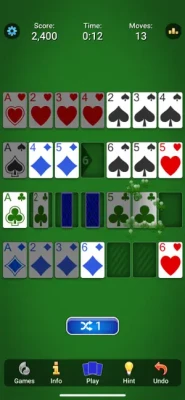
Addiction Solitaire is a variation of the classic patience card game created by MobilityWare. Unlike traditional Klondike Solitaire, where cards are moved between tableau piles, this version revolves around gaps and sequential card placement.
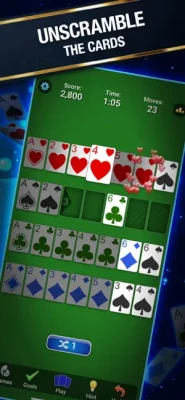
The objective is to organize the cards into matching-suit sequences from Ace through 6. Empty spaces become the key to solving each puzzle because a card can only move into a gap when it follows the correct card by both value and suit.
That simple rule creates surprisingly deep strategic decisions.
How Addiction Solitaire Works
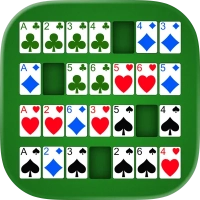
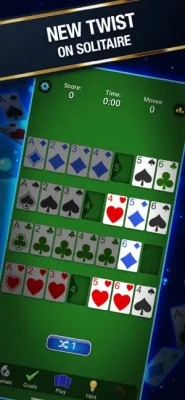
The game begins with a specially arranged card layout containing four rows and four gaps.
The four Aces establish the beginning of the sequences, while the 7s are removed from play. The remaining cards must then be organized so that every row contains a same-suit sequence from Ace through 6.
A card can be moved into a gap when:
- It is one rank higher than the card immediately to the left.
- It belongs to the same suit.
- The destination gap is still usable.
If the card immediately to the left of a gap is a 6, that gap becomes unusable. This makes positioning extremely important.
The Goal of the Game
The ultimate goal is to arrange every row correctly:
Ace → 2 → 3 → 4 → 5 → 6
Each sequence must contain cards from the same suit.
When all four rows have been correctly organized and the gaps are positioned at the end of the rows, the puzzle is complete.
The rules are simple enough for beginners to understand quickly, but solving difficult layouts requires careful planning.
Why Addiction Solitaire Is Different
Traditional Klondike Solitaire is largely about building descending stacks and transferring cards between piles. Addiction Solitaire takes a different approach.
Here, the empty spaces themselves become part of the puzzle.
Every move can change which gaps remain useful. A move that looks helpful may actually block a future sequence, while leaving the right gap open can unlock several moves in succession.
That makes Addiction Solitaire feel closer to a logic puzzle with cards than a conventional Solitaire game.
Main Features
According to the current App Store listing, Addiction Solitaire includes a variety of customization, progression, and competitive features.
Key Features
- Fast-paced Solitaire gameplay
- Gaps Solitaire rules
- Strategic card puzzles
- Sequential same-suit card placement
- Level progression
- Unlockable player titles
- Custom card designs
- Custom backgrounds
- Personal photo backgrounds
- Winning animations
- Weekly leaderboards
- Monthly leaderboards
- All-time leaderboards
- Personal statistics
- Tap-to-move controls
- Portrait mode
- Landscape mode
Gaps Solitaire Strategy
The most important thing to understand is that not every empty space is equally useful.
A gap immediately following a 5 can potentially accept a 6 of the same suit. However, a gap following a 6 cannot be filled and effectively becomes dead.
This means you should think beyond the move you are making now.
Ask yourself:
- What card will become available?
- Which gap will remain open?
- Will this move create a dead space?
- Can I continue the same-suit sequence?
- Am I making the puzzle easier or harder?
Good Addiction Solitaire play is about controlling the board rather than simply making the first legal move.
The One-Shuffle Rule
One of the most important strategic elements is the limited shuffle.
MobilityWare's instructions explain that players have only one shuffle during a game, so it is generally better to save it until it is genuinely necessary.
Using the shuffle too early can remove an important safety option later in the puzzle.
A good approach is to first explore the available moves and only use the shuffle when the current arrangement no longer provides a productive path.
How to Play Addiction Solitaire
Step 1: Study the Board
Before moving anything, look across all four rows and identify cards that can immediately move into gaps.
Step 2: Look for Sequential Moves
A card must be exactly one rank higher and the same suit as the card to the left of the gap.
Step 3: Prioritize Useful Gaps
Not all gaps should be filled immediately. Some spaces may be more valuable for future moves.
Step 4: Avoid Dead Gaps
Be particularly careful when a gap appears immediately after a 6 because that position cannot be filled.
Step 5: Save Your Shuffle
Because you only get one shuffle, don't use it simply because the board looks inconvenient.
Step 6: Complete the Sequences
Continue rearranging cards until all four rows contain their correct same-suit sequences from Ace through 6.
Beginner's Guide
If this is your first time playing Addiction Solitaire, don't worry about solving the entire board immediately.
Start by understanding one rule:
A card can move into a gap only when it is one rank higher and the same suit as the card on the left.
Once that becomes familiar, begin looking at the board as four separate sequences rather than as individual cards.
Try to identify which cards are closest to being correctly positioned. Then consider whether moving one card will create another useful gap.
The game rewards patience. Sometimes the best move is the one that creates better options rather than immediately completing a sequence.
Advanced Strategy Tips
Save the Shuffle
The single shuffle can be extremely valuable. Use it only when your available moves have genuinely run out or when the arrangement cannot reasonably be improved.
Watch the Card on the Left
Every gap is controlled by the card immediately before it. Before filling a space, consider what the move does to the next available gap.
Avoid Creating Dead Spaces
A gap after a 6 cannot be filled. Try to avoid creating unnecessary dead spaces during the early and middle stages of a puzzle.
Think Several Moves Ahead
A legal move isn't automatically a good move. The strongest decisions often involve setting up a sequence of future placements.
Protect Flexible Positions
Some gaps can support multiple future decisions. Don't waste them unless the resulting move provides a clear advantage.
Levels and Progression
Addiction Solitaire adds a progression system on top of its core card puzzles.
As you play and win, you can progress through levels and earn new titles, giving your Solitaire sessions a sense of long-term advancement.
This is particularly useful for players who enjoy having goals beyond simply completing a single card puzzle.
Instead of every game feeling isolated, your performance contributes to an ongoing progression system.
Leaderboards and Statistics
For competitive players, Addiction Solitaire includes weekly, monthly, and all-time leaderboards. The game also provides personal leaderboards and statistics for tracking your performance.
This allows you to approach the game in different ways.
You can simply play for relaxation, or you can try to:
- Improve your scores
- Beat previous results
- Climb the weekly rankings
- Compete for monthly positions
- Improve your personal statistics
- Build a stronger win record
Customization Options
The game isn't limited to a single visual presentation.
Players can customize their experience with different card designs and backgrounds, and the App Store listing specifically notes that you can even use one of your own photos as a background.
This gives the game a more personal feel, especially for players who return regularly.
Winning Animations
Completing a difficult Addiction Solitaire puzzle is accompanied by winning animations.
These small presentation touches make successful solutions feel more rewarding and provide a satisfying conclusion after working through a challenging board.
Controls and Interface
Addiction Solitaire is designed around quick touchscreen interaction.
Tap to Move
The game provides tap-to-move interactions, allowing players to move cards without relying on complicated gestures.
Portrait Mode
Play vertically on your iPhone or iPad.
Landscape Mode
Switch to a horizontal layout when you prefer a wider view of the board.
The simple interface works particularly well for a game where the main challenge comes from thinking rather than complicated controls.
Game Difficulty
Difficulty: Easy to learn, challenging to master
The basic rules can be understood in a few minutes, but successful play requires considerably more thought.
Beginners may initially focus on finding any legal move. Experienced players start thinking about the consequences of each gap and the sequence of moves that will follow.
That difference gives the game a strong learning curve without making its controls complicated.
Addiction Solitaire vs. Classic Klondike Solitaire
| Feature | Addiction Solitaire | Classic Klondike |
|---|---|---|
| Main mechanic | Gaps and sequences | Tableau stacking |
| Card order | Same-suit sequences | Alternating colors |
| Primary goal | Ace through 6 | Ace through King |
| Empty spaces | Central strategic mechanic | Used primarily for Kings |
| Shuffle strategy | Limited shuffle | Depends on variant |
| Gameplay style | Logic and positioning | Card management |
| Session length | Quick-paced | Varies |
| Strategy | Forward planning | Tableau and stock management |
If you enjoy Klondike but want something substantially different, Addiction Solitaire offers a refreshing alternative.
Addiction Solitaire as a Brain Puzzle
Although it uses playing cards, the game has many qualities associated with logic puzzles.
You need to:
- Recognize patterns
- Plan several moves ahead
- Evaluate consequences
- Manage limited resources
- Avoid dead positions
- Optimize the order of moves
The cards provide the theme, while the gaps create the actual puzzle.
Player Experience
The strongest part of Addiction Solitaire is its balance between accessibility and depth.
A new player can understand the basic objective quickly, but mastering the game requires learning how to manipulate the gaps and preserve future options.
The short, focused games also make it suitable for quick sessions. You don't need a long uninterrupted period to enjoy a round.
Pros and Cons
Pros
- Easy rules
- Deep strategic gameplay
- Fast-paced rounds
- Unique alternative to Klondike
- Known as Gaps Solitaire
- Level progression
- Unlockable titles
- Custom cards
- Custom backgrounds
- Personal photo backgrounds
- Winning animations
- Weekly, monthly, and all-time leaderboards
- Personal statistics
- Portrait and landscape modes
- Simple tap-to-move controls
Cons
- The rules are quite different from traditional Klondike Solitaire.
- The limited shuffle makes some decisions feel especially important.
- Players who prefer many different Solitaire variants may want a broader card-game collection.
Technical Details
Game: Addiction Solitaire•
Developer: MobilityWare
Genre: Card
Subgenre: Solitaire / Patience / Gaps Solitaire
Platforms: iPhone, iPad
Age Rating: 4+
Price: Free
App Size: Approximately 280.4 MB according to the current U.S. App Store listing
Current App Store Rating: 4.7/5 from approximately 86K ratings at the time of checking
The App Store lists the game as designed for iPad and available on both iPhone and iPad.
Who Should Play Addiction Solitaire?
Addiction Solitaire is particularly suited to players who enjoy:
- Solitaire card games
- Gaps Solitaire
- Logic puzzles
- Strategy games
- Brain teasers
- Short gaming sessions
- Single-player card games
- Competitive leaderboards
- Pattern-based puzzles
- Games that are easy to learn but difficult to master
If traditional Klondike feels too familiar, the unusual gap-based mechanics make this a worthwhile alternative.
What Makes Addiction Solitaire Stand Out?
The game's defining feature is its gap-based strategy.
Instead of simply moving cards between piles, you're effectively designing four perfect sequences while controlling the spaces that allow those sequences to form.
The one-shuffle limitation adds another layer of resource management, making each decision more meaningful.
That combination makes Addiction Solitaire feel more like a compact strategic puzzle than a standard Solitaire clone.
Expert Rating
Gameplay: 9/10
Strategy: 9.5/10
Controls: 9/10
Replay Value: 9/10
Customization: 8.5/10
Progression: 8.5/10
Overall: 9/10
Final Verdict
Addiction Solitaire by MobilityWare is an excellent choice for players who want something more strategic than ordinary Klondike Solitaire.
Its rules are straightforward, but the interaction between card order, gaps, dead spaces, and the limited shuffle creates a surprisingly deep puzzle. The addition of levels, titles, leaderboards, statistics, customization, and winning animations gives the experience plenty of replay value.
If you enjoy Gaps Solitaire, patience games, card puzzles, or strategic Solitaire, Addiction Solitaire is well worth trying.
Frequently Asked Questions
What is Addiction Solitaire?
Addiction Solitaire is a strategic variation of the classic patience card game. It is also commonly called Gaps Solitaire or Addictive Solitaire.
How do you win Addiction Solitaire?
You win by arranging the cards into same-suit sequences from Ace through 6, with the gaps ending in the appropriate final positions.
How many cards are used?
MobilityWare's official rules describe a 28-card setup using the Ace through 7 of all four suits, with the four 7s removed after the initial deal.
Can you shuffle in Addiction Solitaire?
Yes. The game gives you one shuffle during a game, so using it strategically is important.
What happens when a gap is after a 6?
A gap immediately following a 6 is considered dead and cannot be filled.
Is Addiction Solitaire difficult?
It's easy to learn but can be difficult to master. The deeper challenge comes from planning future moves and managing gaps effectively.
Does Addiction Solitaire have leaderboards?
Yes. The game includes weekly, monthly, and all-time leaderboards, along with personal statistics.
Can I customize the game?
Yes. You can customize cards and backgrounds, including using a personal photo as a background.
Does Addiction Solitaire have levels?
Yes. Players can progress through levels and earn new titles.
Is Addiction Solitaire available on iPhone?
Yes. The current App Store listing supports iPhone and iPad.
Rate the Game
User Reviews




Popular Games



















 Android
 iOS
iOS Windows
 Xbox
Xbox