
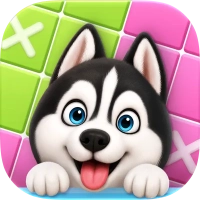






Latest Version
October 09, 2026
Nebula Studio
Puzzle
iOS
0
Report a Problem
More About :game
What Is Zoodoku?
Zoodoku is a casual brain puzzle game developed by Nebula Studio. Instead of solving number grids, players work with colorful territories and animal characters to discover the only correct arrangement for each board.
Every puzzle follows a set of simple rules. Each row must contain exactly one animal, each column must contain exactly one animal, and every colored territory must contain exactly one animal. In addition, animals cannot occupy neighboring squares, including diagonally adjacent cells.
The challenge is to find a position that satisfies all these conditions simultaneously. A square might look suitable when considered on its own, but placing an animal there could prevent an entire row or territory from being completed.
Zoodoku rewards careful observation and logical elimination rather than quick reactions. As the layouts become more complicated, players must combine clues from different parts of the board to uncover the correct solution.
Zoodoku Gameplay Features
Sudoku-Style Animal Logic
Zoodoku replaces traditional Sudoku numbers with charming animal characters. The objective is still based on satisfying multiple constraints, but the colorful regions and no-touching rule create a different kind of reasoning challenge.
Colorful Territory Puzzles
Each board is divided into colored regions. Every region must contain exactly one animal, even when a region has an unusual shape or appears in separate sections of the grid.
Learning to recognize these territories is essential for finding forced moves and eliminating incorrect positions.
No-Touching Rule
Animals cannot share the same row or column, and they cannot touch diagonally. This extra restriction is one of the most important parts of the game because placing an animal immediately rules out several nearby squares.
Hundreds of Logic Puzzles
The game advertises hundreds of handcrafted puzzles, offering plenty of opportunities to practise deduction and solve increasingly challenging arrangements.
Daily Puzzle Challenges
Daily puzzles provide a fresh challenge for players who enjoy returning to a game regularly. They are also a useful way to practise logical reasoning without needing to commit to a long gaming session.
Collectible Animal Themes
Zoodoku begins with charming animal characters and offers additional animal themes as players progress. These visual variations add personality while keeping the central puzzle mechanics familiar.
Offline Play
The App Store listing advertises offline gameplay, making Zoodoku convenient for travel, waiting rooms, or quiet breaks when an internet connection is unavailable.
Relaxing Brain Teaser Gameplay
There is no need for fast reflexes or complicated controls. Players can study the board, mark impossible positions, and work through each puzzle at their own pace.
How to Play Zoodoku
The goal is to place all the animals on the board while following every rule.
Examine the grid. Identify the rows, columns, and differently colored territories.
Find possible positions. Look for squares where an animal could fit without immediately breaking any rule.
Eliminate impossible squares. Remove positions that conflict with an existing animal in the same row, column, territory, or neighboring area.
Place a confirmed animal. Choose a square when the available clues establish that it is the correct position.
Update the remaining possibilities. Every placement rules out additional squares.
Look for forced moves. Check whether any row, column, or territory has only one possible position left.
Complete the board. Continue until every row, column, and colored territory contains exactly one animal and no two animals touch.
The most important principle is that a position must satisfy all the rules at once. A square that works for a row may still be impossible because of its territory or diagonal neighbors.
Complete Zoodoku Strategy Guide
1. Learn All Four Core Rules
Before tackling difficult puzzles, make sure you understand every placement restriction.
One animal per row: No row can contain two animals.
One animal per column: Each column must contain exactly one animal.
One animal per colored territory: Every region must contain exactly one animal.
No touching: Animals cannot occupy neighboring squares, including diagonal neighbors.
These rules work together. A strong move usually becomes clear when you combine two or more of them instead of considering each rule separately.
2. Start With the Most Restricted Areas
Some rows, columns, and territories have many possible positions. Others have only two or three.
Begin with the most restricted areas because they offer fewer possibilities to investigate. A small territory may contain only a handful of available squares, making it easier to identify a forced placement.
After resolving one of these areas, revisit the rest of the board. A single confirmed animal may eliminate several possibilities elsewhere.
3. Mark Impossible Squares
One of the most useful techniques in Zoodoku is to record positions where an animal cannot go.
When an animal is placed, eliminate every other square in its row and column. Remove the remaining squares in its territory as well. Finally, eliminate the eight surrounding squares that touch it horizontally, vertically, or diagonally.
This creates a clearer picture of the remaining possibilities and prevents you from repeatedly considering positions that have already been ruled out.
If your version provides a marking feature, use it to keep track of these eliminations.
4. Use the Last-Available-Square Technique
This is one of the simplest and most reliable ways to solve a puzzle.
Suppose a row contains several squares that have already been ruled out. If only one square remains possible, the animal must go there.
The same logic applies to columns and colored territories.
Whenever you eliminate a position, check whether you have created a row, column, or region with only one remaining option. These forced moves often lead directly to additional deductions.
5. Apply the No-Touching Rule Carefully
The diagonal restriction can eliminate positions that otherwise look perfectly valid.
Imagine placing an animal in a central square. Every square immediately surrounding it becomes unavailable, including the four diagonal neighbors.
This restriction can help you narrow down a crowded area of the board. Sometimes a row has several possible squares, but the diagonal neighbors of an existing animal eliminate all except one.
Always check diagonal relationships before placing an animal.
6. Look for Territory Confinement
A colored territory may occupy several rows or columns, but its remaining available squares might be concentrated in just one of them.
For example, suppose every possible position for a particular territory lies in the same row. Because that territory must contain exactly one animal, the animal in that row must belong to that territory.
You can then eliminate every other square in that row that lies outside the territory.
This technique also works with columns. It is especially useful when colored regions have irregular shapes.
7. Combine Row, Column, and Territory Clues
Do not solve each section independently. The strongest deductions often happen when several restrictions point to the same square.
For example, a square may be the only remaining option for its territory, but it could also be the only position that remains available in its column. When multiple clues agree, the placement becomes much easier to establish.
After every important deduction, examine the affected row, column, territory, and neighboring squares again.
8. Solve One Area at a Time Without Ignoring the Rest
It can be helpful to focus on a small part of the grid, especially when the board is crowded. However, avoid treating that section as a separate puzzle.
A placement in one corner can affect a territory that stretches across the opposite side of the board. Likewise, an animal in a lower row may eliminate a diagonal position near the center.
Use focused inspection to simplify your thinking, then return to the full board to see how the new information affects other areas.
9. Use Elimination Before Making a Guess
When a puzzle looks difficult, resist the temptation to place an animal in a square simply because it seems plausible.
Instead, list the remaining possibilities and examine which rules can eliminate them. If one position violates the row, column, territory, or no-touching rule, remove it.
Repeat the process until a confirmed placement becomes available.
The App Store describes Zoodoku as a logic game built around deduction. Developing a habit of proving placements instead of guessing helps you understand the intended puzzle-solving process.
10. Learn to Recognize Contradictions
Sometimes a position appears possible at first but leads to an impossible situation after you consider its consequences.
For example, a hypothetical placement might leave a row with no available squares or force two animals into the same column. That tells you the original position cannot be correct.
When the game allows you to experiment safely, use this kind of reasoning to eliminate impossible candidates. If a wrong placement carries a penalty in your version, avoid committing to a speculative move before checking its consequences.
11. Use Hints Strategically
If your version provides hints, try to solve the board independently before using one.
Start by checking for rows, columns, or territories with only one remaining option. Then inspect diagonal restrictions and look for areas where a territory is confined to a single row or column.
If you remain stuck, a hint can help you discover a move you overlooked. Study why that move is valid so you can apply the same reasoning to future puzzles.
12. Review the Entire Board After Every Placement
An animal placement can trigger a chain of deductions.
It eliminates positions in its row, column, territory, and surrounding squares. Those eliminations may create another forced move, which then removes even more possibilities.
After each confirmed placement, pause and look for these new opportunities. This step-by-step process can solve a complicated puzzle without requiring random experimentation.
Advanced Zoodoku Tips and Tricks
Prioritize small territories. Regions with fewer available squares are often easier to resolve than large, irregular ones.
Track diagonal neighbors. A square can remain valid in its row and column but still be impossible because an animal would touch another diagonally.
Look for a single remaining option. Always check rows, columns, and territories after making eliminations.
Use pencil marks consistently. Recording impossible positions reduces repeated work and makes complicated boards easier to understand.
Search for confined territories. If every remaining square in a region lies in one row or column, use that restriction to eliminate other positions.
Avoid unsupported assumptions. Do not decide that a region must use a particular square unless the available clues justify it.
Think in terms of consequences. Before placing an animal, consider what it would eliminate and whether those eliminations would leave the rest of the board solvable.
Practise daily. Regular puzzles help you become more familiar with common patterns and deduction techniques.
Common Zoodoku Mistakes to Avoid
Forgetting Diagonal Neighbors
Checking only rows and columns is not enough. Animals must also remain separated diagonally, so inspect all eight neighboring squares before placing a new one.
Ignoring the Colored Territories
A square may satisfy the row and column rules but still be invalid because another animal already occupies its colored region.
Placing an Animal Too Early
A position that looks reasonable is not necessarily correct. Check every restriction before committing to a move.
Failing to Update Eliminations
After placing an animal, new squares become impossible. If you fail to mark them, you may overlook useful deductions or accidentally consider an invalid position later.
Focusing on Only One Part of the Grid
A territory may extend beyond the section you are examining. Always consider the full board when evaluating its remaining positions.
Using Hints Without Learning the Reason
A hint may help complete a stage, but understanding why the move works will make you better at solving future puzzles independently.
Is Zoodoku Good for Beginners?
Yes. Zoodoku is accessible to beginners because its rules are straightforward and its controls are easy to understand.
New players can start by learning how rows, columns, and colored territories work. Once these rules become familiar, the diagonal restriction introduces another layer of reasoning that makes the puzzles more interesting.
Beginners should concentrate on eliminating impossible positions and finding squares where an animal must go. There is no need to solve the entire board mentally before starting.
More experienced players can challenge themselves by completing daily puzzles, solving larger or more complicated layouts, and finding deductions that eliminate several possibilities at once.
Zoodoku Pros and Cons
Pros
Easy-to-understand animal puzzle mechanics.
Combines Sudoku-style logic with additional spatial restrictions.
Colorful territories make each board visually distinctive.
Hundreds of advertised puzzle levels.
Daily challenges for regular play.
Different animal themes to discover.
Encourages careful observation and logical deduction.
Offline gameplay is advertised.
Suitable for short sessions and longer puzzle-solving breaks.
Cons
More complicated boards can require patience and several rounds of elimination.
The colored territories and diagonal restrictions may confuse new players at first.
Players who prefer action or fast-paced gameplay may find the experience too slow.
Advertising and optional purchases may affect the experience, depending on the current version and settings.
Zoodoku Game Information
Game title: Zoodoku
Developer: Nebula Studio
Genre: Puzzle, logic, brain teaser
Game type: Single-player animal logic puzzle
Main objective: Place one animal in every row, column, and colored territory without allowing animals to touch.
Core mechanics: Logical deduction, candidate elimination, territory analysis, and spatial reasoning.
Controls: Touch-based placement and board interaction.
Puzzle content: Hundreds of advertised puzzles and daily challenges.
Animal themes: Cats, dogs, cows, and other animal characters.
Platforms: iPhone and iPad.
Minimum operating system: iOS 15.0 or later; iPadOS 15.0 or later.
Pricing: Free to download; check the current listing for purchase options.
Offline support: Advertised by the developer.
Best suited for: Sudoku fans, casual puzzle players, and people who enjoy deduction-based brain teasers.
Features, device compatibility, pricing, and available animal themes may change with updates. Check the current App Store listing for the latest details.
Zoodoku Frequently Asked Questions
What is Zoodoku?
Zoodoku is an animal-themed logic puzzle game that challenges players to place animals in colored territories while following row, column, and no-touching rules.
How do you play Zoodoku?
Place exactly one animal in each row, column, and colored territory. Animals cannot share a row or column, and they cannot touch diagonally. Use logical elimination to find the correct positions.
What is the best strategy for Zoodoku?
Start with the most restricted rows, columns, or territories. Eliminate impossible squares, check diagonal neighbors, and look for areas with only one possible position remaining.
Is Zoodoku similar to Sudoku?
Yes, Zoodoku uses Sudoku-style logical constraints, but it does not rely on filling a grid with numbers. Instead, players place animals in colored territories and must also follow the no-touching rule.
Is Zoodoku similar to Minesweeper?
It shares the general idea of using clues and eliminating impossible possibilities, but its rules are different from traditional Minesweeper. Zoodoku focuses on rows, columns, colored territories, and diagonal spacing.
Can you solve Zoodoku without guessing?
The game's intended approach emphasizes logical deduction. You can make progress by eliminating impossible positions and proving where animals must go rather than relying on random guesses.
Does Zoodoku have daily puzzles?
Yes. The game advertises daily puzzle challenges that provide another opportunity to practise logical reasoning.
Can you play Zoodoku offline?
Offline gameplay is advertised in the App Store listing. Features that rely on online services may have separate connection requirements.
Is Zoodoku free to play?
Zoodoku is listed as free to download. Check the current App Store listing for the latest information about optional purchases and other features.
How do you avoid diagonal conflicts in Zoodoku?
Whenever you place an animal, check the four diagonal squares around it as well as the horizontal and vertical neighbors. Those diagonal positions cannot contain another animal.
What should you do when you get stuck?
Look for rows, columns, or territories with only one available square. Then examine restricted territories and diagonal conflicts. If your version includes hints, use one after trying these techniques.
Is Zoodoku suitable for children?
The game's colorful animals and simple rules may appeal to younger puzzle fans, but suitability depends on the child's age and the current app's content and advertising. Parents should review the current age rating and available settings.
Does Zoodoku help improve logical thinking?
The game encourages players to practise observation, elimination, and logical reasoning while solving puzzles. However, playing it does not guarantee lasting improvements in general cognitive abilities.
Final Verdict: Is Zoodoku Worth Playing?
Zoodoku is a good option for players who enjoy Sudoku, Minesweeper-style deduction, and casual brain puzzles with a colorful animal theme. Its rules are easy to learn, but the combination of row, column, territory, and diagonal restrictions creates a satisfying challenge.
The best way to improve is to eliminate impossible positions methodically, focus on the most restricted parts of the board, and check every placement against all four rules. Daily puzzles and increasingly challenging layouts provide opportunities to practise these techniques.
If you enjoy relaxing games that reward patience and logical thinking, Zoodoku is worth considering.
Rate the Game
User Reviews









Popular Games



















 Android
 iOS
iOS Windows
 Xbox
Xbox