

Latest Version
October 09, 2026
PLAYSTUDIOS US, LLC
Puzzle
Android
0
com.n3twork.tetris
Report a Problem
More About :game
About TETRIS®
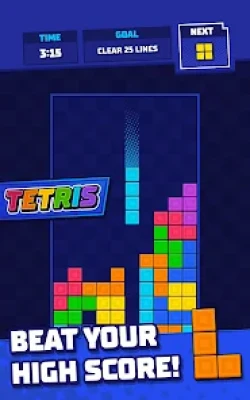
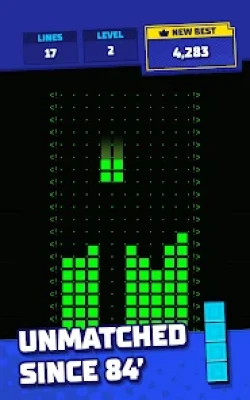
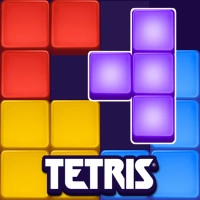
TETRIS® is one of the most recognizable puzzle games in gaming history. Its central idea is simple: arrange falling geometric shapes to create complete horizontal lines. Once a line is filled, it disappears, freeing space for the pieces that follow. The challenge comes from making good decisions while the playfield gradually becomes more crowded.
The mobile version published by PLAYSTUDIOS brings this familiar formula to Android devices, with traditional line-clearing gameplay and additional puzzle content. Players can work through specially designed levels, pursue personal high scores, complete daily challenges, and customize their player profiles.
Although the rules are easy to understand, mastering Tetris takes practice. Successful players learn to recognize useful placements, manage empty spaces, and prepare for pieces that may not arrive in the order they want.
Game Information
Game title: TETRIS®
Developer and publisher: PLAYSTUDIOS US, LLC
Game genre: Puzzle, block-stacking, casual
Platform: Android
Gameplay style: Single-player puzzle gameplay
Main objective: Clear lines, complete puzzle objectives, and improve your scores
Featured modes: Marathon, Quick Play, and level-based puzzles
Additional activities: Daily challenges and rewards
Offline play: Supported for core gameplay
Monetization: Free to play, with advertisements and in-app purchases
Suitable for: Players who enjoy logic puzzles, spatial reasoning, and high-score challenges
Features and available content may change as the game receives updates.
Story and Atmosphere
TETRIS® does not depend on a complicated story or a large fictional world. Its appeal comes from the immediate challenge of arranging shapes and making the best use of limited space.
The atmosphere is focused and engaging. Every new piece creates another decision: place it quickly to complete a line, save an open area for a future shape, or adjust the stack to avoid creating a difficult gap. As the board fills, mistakes become more expensive and successful placements feel increasingly rewarding.
The minimalist puzzle concept makes the game suitable for short breaks, while longer sessions can become a test of concentration and consistency.
Core Gameplay Mechanics
1. Falling Blocks
The game uses different geometric shapes made from four connected squares. These pieces, commonly called Tetriminos, fall into the playfield.
Your task is to rotate and position each piece before it settles. The goal is to arrange the shapes so that they complete horizontal lines without allowing the stack to reach the top.
2. Clearing Lines
A complete horizontal line disappears from the board, creating room for additional pieces. Clearing several lines together is especially valuable in traditional Tetris scoring systems.
Avoid filling the board with disconnected blocks. Every placement should help clear lines or preserve a useful arrangement for later pieces.
3. Level-Based Puzzles
The mobile game includes hundreds of designed levels with different objectives. Some stages require you to clear lines, work through obstacles, or solve a particular arrangement puzzle.
Unlike an endless high-score session, a level-based challenge asks you to focus on a specific goal. The most effective approach is to understand the objective before placing the first piece.
4. Marathon Mode
Marathon mode is designed for extended play. Continue clearing lines and managing the board for as long as possible while trying to improve your personal performance.
This mode is useful for practicing the fundamentals because it encourages consistent placement, efficient line clearing, and better control of the growing stack.
5. Quick Play
Quick Play provides a shorter way to enjoy Tetris when you do not have time for a long session. It is a convenient option for practicing your timing or trying to beat a previous score.
Use short sessions to focus on one skill at a time, such as reducing gaps or keeping the stack level.
6. Daily Challenges and Rewards
Daily challenges offer additional goals across supported game modes. Completing them can provide experience points and rewards, giving you a reason to return and try different types of puzzles.
Check the available objectives before starting. If a challenge requires a particular result, shape your strategy around that goal instead of playing only for the highest possible score.
7. Personalization
TETRIS® includes profile customization options such as themes, backgrounds, avatars, and avatar frames. These features let you give your player profile a more personal appearance.
How to Play TETRIS®
The basic rules are straightforward, but a few habits can make a major difference.
Watch the incoming piece. Identify its shape and consider where it will fit before moving it into position.
Move and rotate the piece. Use the available touch controls or on-screen controls, depending on your selected control setup.
Build complete horizontal lines. Arrange the blocks so there are no empty spaces within a line you want to clear.
Keep the stack manageable. Avoid building tall columns on one side while leaving deep gaps elsewhere.
Plan your next placement. Think about how the current piece will affect the pieces that follow.
Complete the objective. In level-based puzzles, prioritize the stated goal instead of making unnecessary placements.
Learn from failed attempts. Identify the placement that created the biggest problem and try a different arrangement next time.
The main lesson is to think about the board as a whole. A placement that looks useful immediately may create a difficult gap that takes several later pieces to repair.
Complete TETRIS® Strategy Guide
Beginner Strategy: Build Good Habits
Keep the Stack Low
A tall stack leaves little room for correcting mistakes. Whenever possible, clear lines regularly and avoid letting the board become crowded.
You do not need to clear every possible line immediately, but you should understand what each placement does to the overall shape of the board.
Avoid Unnecessary Gaps
One of the most common beginner mistakes is creating a hole that cannot be filled easily by the next few pieces.
Before dropping a block, check whether it will leave an empty square beneath an overhang or between neighboring columns. If a placement creates a deep hole, consider another position.
Maintain a Flexible Surface
A relatively even surface gives you more placement options. Large differences in column height can make certain shapes difficult to use and limit your ability to complete lines.
The surface does not need to be perfectly flat. Instead, aim to avoid narrow, deep valleys and isolated high columns.
Learn the Shapes
Recognizing the available pieces quickly helps you make decisions with less hesitation.
Practice identifying the straight piece, square piece, T-shaped piece, and the various L-shaped and zigzag pieces. Understanding how each shape fits into different spaces will make your placements more reliable.
Use a Comfortable Control Style
Choose the touch or on-screen control option that gives you the best control on your device. Spend a little time learning the movement and rotation behavior before attempting difficult levels.
Accurate placement matters more than moving quickly without a plan.
Intermediate Strategy: Think Several Moves Ahead
Create a Plan for the Next Piece
Do not focus exclusively on where the current piece can fit. Consider what the board will look like afterward and whether the next likely shapes will have useful positions.
You cannot control the order in which pieces arrive, but you can preserve options for different possibilities.
Prepare for Long-Line Clears
In traditional Tetris play, clearing four lines at once is known as a Tetris. This usually requires leaving a suitable vertical space for the long straight piece.
The strategy can produce a rewarding result, but it also creates risk if you wait too long for the right piece. Keep the stack low enough that you can change plans when necessary.
Repair Difficult Columns Early
If one column becomes much taller than the others, consider lowering it before the situation becomes dangerous. A small correction early in a run is often easier than fixing a major height difference later.
Rotate Before Committing
A shape may fit in several orientations. Check whether rotating it creates a cleaner surface or completes a line without leaving a difficult hole.
Avoid choosing the first available position simply because it works. Compare a few reasonable placements whenever you have time.
Adapt to the Mode
Marathon and level-based puzzles reward different priorities. Marathon emphasizes long-term survival and score improvement, while designed levels may require you to complete a specific objective within limited opportunities.
Read the goal first and adjust your approach accordingly.
Advanced Strategy: Improve Consistency
Balance Safety and Scoring
High-scoring placements are useful, but an aggressive strategy can leave the board difficult to manage. Strong play balances immediate rewards with the need to preserve space.
If your stack is already high, prioritize safe line clears and recovery. When the board is under control, you can consider more ambitious setups.
Build With Recovery in Mind
Before placing a piece, ask yourself two questions:
Does this placement improve the board now?
If the next piece is awkward, will I still have a reasonable option?
The second question is especially important. A placement that is perfect for one specific piece may become a problem if that piece does not arrive soon.
Recognize When to Abandon a Setup
A plan is useful only while the board supports it. If the pieces arrive in an inconvenient order or your stack becomes too high, stop pursuing a planned multi-line clear and return to safer placements.
Adapting early can protect a long run from a single bad decision.
Use Deliberate Practice
Choose one weakness to improve during each session. You might focus on avoiding holes, keeping the board even, clearing lines consistently, or making fewer rushed placements.
Trying to improve everything at once can make it difficult to understand which decisions are helping.
Tips for Completing Difficult Puzzle Levels
Read the objective carefully. Identify exactly what the stage asks you to accomplish.
Inspect the starting board. Look for obstacles, open spaces, and areas that could become difficult to reach.
Prioritize useful placements. Choose pieces that move you closer to the objective while keeping the remaining board manageable.
Avoid unnecessary moves. In challenges with limited moves or opportunities, each placement should have a clear purpose.
Look for combinations. A single placement may help prepare the board for a later line clear.
Retry with a different plan. If the same approach repeatedly fails, change the order in which you address the difficult areas.
Use rewards thoughtfully. When the game offers extra moves or other assistance, consider saving them for stages where they provide meaningful value.
Common Mistakes to Avoid
Building Too High
A crowded board reduces your ability to correct mistakes. Clear lines and create space before the stack becomes difficult to manage.
Leaving Deep Holes
Deep gaps are hard to repair because the required shape may not arrive soon. Think about the empty spaces a placement will leave behind.
Ignoring the Level Objective
A high score does not automatically complete a puzzle stage. Keep the level's stated requirement in mind.
Rushing Every Placement
Speed is useful, but careless placements can create problems that take several pieces to fix. Take the time to recognize the shape and its likely effect.
Forcing a Perfect Setup
Waiting for one ideal piece can make the board increasingly dangerous. Be willing to abandon a planned combination when the safer option is to clear space.
Repeating the Same Failed Approach
If a level or run ends because of the same problem, change your strategy rather than repeating the exact sequence of decisions.
Progression, Challenges, and Customization
TETRIS® offers more than a single endless mode. Its level-based puzzles provide structured goals, while Marathon and Quick Play let you practice the classic mechanics in different session lengths.
Daily challenges introduce additional objectives and rewards. Profile customization adds a personal touch through visual options, while score improvement gives experienced players a reason to refine their technique.
A good progression routine is to alternate between challenge levels and traditional gameplay. Use the designed levels to practice solving specific problems, then apply those lessons during longer sessions.
Is TETRIS® Playable Offline?
The game's official listing identifies offline play as a supported feature. This makes it a convenient choice for travel or situations where a stable internet connection is unavailable.
However, some online-dependent features, account services, events, or reward systems may require a connection. Availability can also vary by game version.
Pros and Cons
Pros
Classic block-stacking gameplay that is easy to understand.
Challenging puzzle levels with varied objectives.
Marathon mode for longer sessions and high-score attempts.
Quick Play for short gaming breaks.
Daily challenges and progression rewards.
Customizable backgrounds, themes, avatars, and frames.
Offline play for core gameplay.
Suitable for both casual players and puzzle enthusiasts.
Cons
Difficult stages can require patience and repeated attempts.
Strong results depend on careful placement and planning.
Players who prefer story-driven games may find the experience too focused on puzzles.
Advertisements and optional purchases may affect the experience.
The basic mechanics remain familiar, so players seeking a completely different puzzle concept may want more variety.
Frequently Asked Questions
What is TETRIS®?
TETRIS® is a block puzzle game in which players rotate and position falling shapes to complete horizontal lines. This mobile edition adds designed puzzle levels, Marathon mode, Quick Play, and daily challenges.
Is TETRIS® free to play?
The Android listing offers the game for free with advertisements and optional in-app purchases. The available purchase options may vary by region and version.
Can I play TETRIS® offline?
Yes. Offline play is supported for core gameplay, although certain online features may require an internet connection.
What is Marathon mode?
Marathon is an extended single-player mode where you continue stacking pieces and clearing lines while trying to improve your score and keep the board under control.
What is Quick Play?
Quick Play is designed for shorter sessions. It gives players a way to enjoy Tetris without committing to a lengthy run.
How do you clear lines in TETRIS®?
Position the falling shapes so that they fill every space in a horizontal row. A complete line disappears from the board, creating room for additional pieces.
How can I improve my TETRIS® score?
Practice accurate placement, avoid unnecessary gaps, maintain a manageable stack, and learn how different shapes fit together. In traditional play, clearing multiple lines at once can be especially rewarding.
Why do I keep losing in TETRIS®?
Common causes include building the stack too high, leaving difficult gaps, rushing placements, and waiting too long for a particular piece. Review the board before each move and prioritize safe ways to clear space.
Does TETRIS® have puzzle levels?
Yes. The mobile game features hundreds of designed levels with objectives that add variety to the familiar block-stacking mechanics.
Does TETRIS® have daily challenges?
Yes. Daily challenges provide additional goals and opportunities to earn experience points and rewards.
Is TETRIS® suitable for beginners?
Yes. The basic rules are easy to learn. New players can begin with short sessions, focus on clearing lines, and gradually develop better placement and planning skills.
What makes TETRIS® challenging?
The shapes arrive in changing sequences, and each placement affects the space available for future pieces. Players must make quick decisions while preventing the stack from reaching the top.
Final Verdict
TETRIS® remains an appealing choice for anyone who enjoys logic puzzles, spatial reasoning, and the satisfaction of clearing lines. The mobile edition builds on the familiar formula with designed levels, Marathon mode, Quick Play, daily challenges, and customization options.
Its greatest strength is the balance between simple rules and meaningful decisions. Beginners can learn the basics quickly, while experienced players can keep improving their placement, planning, and recovery skills over time.
If you are looking for a classic block puzzle game that works for both short breaks and longer sessions, TETRIS® is worth considering.
Recommended for: Fans of classic Tetris, casual puzzle games, high-score challenges, and offline-friendly mobile gameplay.
Rate the Game
User Reviews






Popular Games


















 Android
 iOS
iOS Windows
 Xbox
Xbox