
Latest Version
October 23, 2026
Supercent, Inc.
Casual
iOS
0
Report a Problem
More About :game
What Is Whack Stack! – Smash Puzzle?
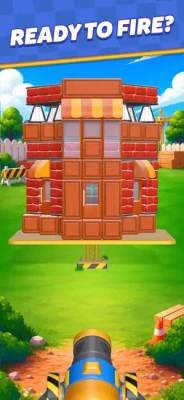
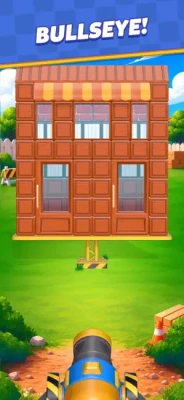
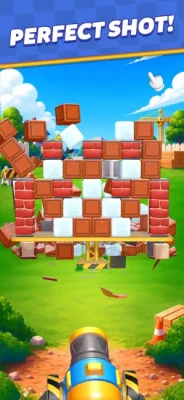
Whack Stack! – Smash Puzzle turns building destruction into a test of accuracy, timing, and logical thinking. Instead of simply firing at everything on the screen, players must study each structure and decide where a cannonball will cause the greatest impact.
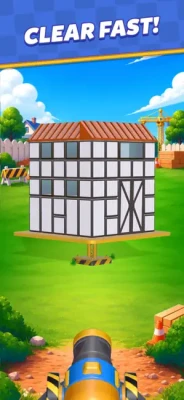
Every level presents a different arrangement of objects. Some structures rely on carefully positioned support blocks, while others contain fragile pieces that can cause a larger collapse when struck. The challenge is to identify the most effective target and use the cannon to bring down as much of the structure as possible.
The game's physics-based gameplay makes each successful shot satisfying. Blocks tumble, boards shift, and unstable towers collapse in response to the impact. A carefully chosen shot can achieve far more than repeated firing at random targets.
Main Features of Whack Stack!
Physics-Based Destruction
The central attraction is the way structures react to cannonball impacts. Objects can move, fall, and collide with surrounding pieces, creating chain reactions that help clear a level.
Simple Cannon Controls
The main gameplay revolves around aiming and shooting. The controls are straightforward, allowing new players to begin quickly while leaving room to improve their accuracy and understanding of the physics.
Different Structures and Materials
Levels feature arrangements of stone blocks, wooden boards, crates, barrels, and other construction materials. Each arrangement presents a different challenge, encouraging players to examine how the pieces fit together before firing.
Challenging Puzzle Levels
The game combines destruction with problem-solving. Players must determine which object to hit, where to aim, and how to make the most of each shot.
Short and Satisfying Sessions
The level-based format makes the game suitable for quick breaks. Players can focus on a single puzzle, experiment with different shots, and move on to another challenge.
Progression and Rewards
Successful play can unlock additional cannons and new destruction scenarios. The game also features events and daily rewards according to its published store information, although available activities may change between updates.
How to Play Whack Stack! – Smash Puzzle
The basic objective is to knock down the target structure by firing a cannonball at the right location. Although the controls are simple, choosing the best shot requires observation and planning.
Understand the Level Before Shooting
When a new level begins, take a moment to examine the structure. Look for narrow supports, isolated blocks, fragile objects, and pieces that appear to hold several other objects in place.
Avoid firing immediately just because a target looks easy to hit. A shot that damages one small object may accomplish very little, while a shot that destabilizes a central support can bring down a large part of the structure.
Aim the Cannon Carefully
Pay attention to the cannon's angle and the position of your target. Consider whether a direct shot can reach the weakest point or whether a different angle would produce a more useful impact.
Aiming at the center of a large structure is not always the best approach. In many physics puzzles, the most effective target is a small supporting piece near the bottom or middle of a tower.
Fire and Observe the Results
After shooting, watch how the objects move. Notice which pieces fall, which remain stable, and whether the impact creates a chain reaction.
This information can help you understand the level's structure and make better decisions on subsequent attempts. Treat unsuccessful shots as opportunities to learn rather than reasons to keep firing randomly.
Complete the Destruction Objective
Continue identifying important targets until the structure meets the level's completion requirements. If some objects remain standing, examine their position and determine whether they need a direct hit or can be knocked down indirectly by destabilizing nearby pieces.
Complete Strategy Guide for Whack Stack!
Study Structural Weak Points
One of the most useful skills in Whack Stack! is recognizing which pieces keep a structure standing. A tower may look solid because its blocks are tightly packed together, but its stability may depend on only a few supporting objects.
Start by examining the lower section of the structure. If a narrow support holds a wide platform, hitting that support may cause several objects above it to fall. If the bottom is particularly strong, look for a vulnerable connection in the middle or upper section instead.
The key is to think about how the entire structure is supported rather than focusing only on the object that is easiest to hit.
Target Supports Instead of Random Blocks
A common beginner mistake is aiming at the largest or most noticeable object. Large blocks may absorb an impact without causing much movement elsewhere.
Instead, look for objects that connect different parts of the structure. Removing or moving one of these pieces can change the balance of the entire arrangement.
Before every shot, ask yourself whether the target is structurally important. If the answer is yes, it may be a better choice than a larger object with little influence on the surrounding pieces.
Create Chain Reactions
Chain reactions are among the most effective ways to clear complicated levels. Rather than knocking down each object individually, try to trigger a sequence in which one falling piece pushes or dislodges several others.
To do this, identify the part of the structure that could start the largest movement. A well-placed shot near a support, an unstable stack, or a vulnerable connection may cause surrounding objects to fall naturally.
Give the physics time to play out after each shot. Some pieces may move gradually before the entire arrangement collapses, so judging the result too quickly can lead to unnecessary additional shots.
Choose the Right Shooting Angle
The direction of impact can influence which objects move and how far they travel. A direct horizontal hit may push a block sideways, while a different angle may affect the balance of a stacked arrangement.
Experiment with the available aiming controls to find a trajectory that reaches the target cleanly. If the cannonball repeatedly strikes the wrong section, adjust the angle instead of repeating the same shot.
On complicated levels, accuracy is often more valuable than force alone. A precise hit on a strategically important piece can produce a better result than a powerful impact against a stable wall.
Understand Different Materials
Whack Stack! features different types of objects, including stone blocks, wooden boards, crates, barrels, and fragile components. Their placement and behavior can influence the best approach to a puzzle.
Stone blocks may form sturdy supports, while wooden boards can connect or balance different sections. Crates and barrels may shift or roll when disturbed, potentially affecting nearby objects. Fragile pieces can provide useful opportunities to start a collapse.
Do not assume that every material behaves identically. Observe what happens when a shot connects and use those results to guide your next decision.
Manage Your Shots Efficiently
Even when a level allows experimentation, a thoughtful approach saves time and makes the game more enjoyable.
Try to identify your primary target before firing. If the first shot fails to produce the expected result, consider what went wrong. Perhaps the target was stronger than expected, the impact came from the wrong direction, or another object was supporting the structure.
Change one aspect of your approach at a time. Adjusting the target and angle together can make it difficult to understand which change improved the result.
The goal is to develop a repeatable method for solving different types of structures.
Handle Tall Towers
Tall towers can be difficult because their upper sections may move independently of their lower supports. Shooting directly at the top might remove a few pieces without destabilizing the entire structure.
Begin by examining the base and the connections between major sections. If the tower depends on a small number of lower supports, targeting one of them may cause a larger collapse.
However, some towers have strong foundations. In those situations, look for an upper connection or an unbalanced section that could initiate a falling sequence. Choose your target according to the actual arrangement rather than following the same strategy every time.
Solve Wide Structures and Bridges
Wide structures often distribute their weight across several supports. Removing just one support may cause only part of the structure to fall, so it is important to identify how the different sections are connected.
Look for narrow connecting pieces, unsupported platforms, and objects that bridge two separate sections. If one component links several parts of the structure, it may be a valuable target.
After the initial impact, reassess the remaining arrangement. A successful first shot may create a new weak point that was not accessible or important before the structure shifted.
Deal With Heavy and Stable Objects
Some structures may resist ordinary shots because their largest blocks are supported by several other objects. Repeatedly attacking the same heavy block may not be the most efficient solution.
Instead, examine what keeps that object in place. If it rests on multiple supports, determine whether one of those supports can be moved first. If the object is part of a tightly connected arrangement, look for a vulnerable section elsewhere.
When direct force produces little movement, reconsider the structural problem. The solution may depend on changing the arrangement rather than attacking the strongest piece.
Improve Accuracy Through Observation
The most effective players learn from every attempt. Pay attention to the impact point, the direction in which objects move, and which parts of the structure remain stable.
If a shot moves the target but fails to start a collapse, that result still reveals something about the structure. You may discover that the target is not essential or that another support is preventing the remaining pieces from falling.
Use this information to refine your next attempt. Over time, recognizing useful targets becomes more intuitive, and complicated arrangements become easier to understand.
Beginner Tips for Whack Stack!
Start with the simplest visible weak point. Early levels are useful for learning how the cannon interacts with different objects and how structures respond to impacts.
Examine the entire structure before every shot. A small block can be more important than a large one if it supports several other objects.
Avoid firing repeatedly without changing your approach. If a shot fails, reconsider the target, angle, or structural connection.
Watch for opportunities to create chain reactions. One carefully planned impact can be more effective than several scattered shots.
Be patient when objects begin falling. Allow the movement to settle before deciding whether another shot is necessary.
Pay attention to new arrangements as the game progresses. A strategy that works well for a simple tower may not be effective against a wide bridge or a structure with several independent supports.
Advanced Strategies for Difficult Levels
Think Several Steps Ahead
Experienced players can improve their results by predicting what might happen after the first impact. Instead of asking only which object will be hit, consider which objects may move next and how those movements could affect the rest of the structure.
For example, moving a central support may cause an upper platform to tilt. That movement could dislodge nearby pieces and push objects into another section. Anticipating this sequence helps you choose targets that create larger effects.
These predictions will not always be correct because the final movement depends on the arrangement and physics, but careful observation makes them increasingly reliable.
Compare Multiple Possible Targets
When a structure has several weak points, compare the likely results before firing. One target may cause a small local collapse, while another could destabilize two connected sections.
Consider the height of the target, its supporting role, and the number of objects that could be affected. Prioritize the option that offers the clearest route toward completing the objective.
You do not need to calculate every possible movement. A quick comparison of the most promising targets is often enough to avoid an unnecessary shot.
Adapt After Every Collapse
A structure changes as pieces fall. The best target at the beginning of a level may no longer be useful after the first impact.
Once the movement stops, inspect what remains. Look for newly exposed supports, separated groups of blocks, or objects that are now unbalanced.
Treat each successful shot as a new puzzle state. This flexible approach is more reliable than following a fixed sequence without considering the results.
Avoid Unnecessary Risk
If a shot has already created a useful chain reaction, wait to see whether the remaining objects fall naturally. Firing again too quickly may interfere with the movement or waste an opportunity to observe the structure.
When you are unsure which target to choose, prefer a shot with a clear purpose. Deliberate experimentation is useful, but random firing makes it harder to learn which strategies actually work.
Common Mistakes to Avoid
Firing without studying the structure: This often leads to impacts that move only one or two objects. Take a moment to identify supports and connections before choosing a target.
Always aiming at the center: Central objects are not necessarily the weakest. Check the base, outer supports, and connections between different sections.
Ignoring the shooting angle: A target may be easy to see but difficult to hit effectively from a particular direction. Adjust your aim when the impact does not produce the desired result.
Expecting every object to react the same way: Different materials and arrangements can produce different outcomes. Observe the results instead of relying on assumptions.
Repeating failed shots: If an approach does not work, change your target or trajectory. Repeating an ineffective shot without learning from it rarely improves your strategy.
Rushing through the level: A few seconds of observation can prevent several unnecessary attempts. Patience is especially valuable when dealing with tall or interconnected structures.
Is Whack Stack! – Smash Puzzle Free to Play?
Whack Stack! – Smash Puzzle is listed as a free-to-download game with in-app purchases. The store listing also indicates that the game contains advertising. Optional purchases and advertising experiences may vary depending on the version and region.
Players can begin without purchasing optional items. If you prefer a budget-friendly experience, review any purchase prompts carefully and use your device's purchase controls to prevent unintended spending.
Which Devices Support Whack Stack!?
The Apple App Store listing identifies Whack Stack! – Smash Puzzle as a game for iPhone and iPad, with iOS 15.0 or later and iPadOS 15.0 or later required, respectively. The game is also available on Google Play for compatible Android devices. Check the relevant store listing for the latest compatibility requirements before installing.
Frequently Asked Questions
What is the main objective in Whack Stack!?
The main objective is to use a cannon to knock down stacked structures and complete each level's destruction challenge. Players must identify weak points and choose effective shots to produce the desired collapse.
Is Whack Stack! easy to learn?
Yes. Its basic gameplay revolves around aiming and firing a cannon. However, mastering the physics puzzles requires observation, accuracy, and an understanding of how objects support one another.
How can I knock down a whole tower with one shot?
Look for a weak support or connection that holds several objects in place. A well-aimed shot at this location may trigger a chain reaction, although the outcome depends on the structure and the physics of the level.
What is the best strategy for difficult puzzles?
Study the structure, identify its most important supports, and compare possible targets. Fire with a clear objective, observe the result, and adapt your next move to the remaining arrangement.
Why do some shots fail to destroy the structure?
A shot may hit a stable object, miss an important support, or move only a small part of the structure. Try a different target or angle and look for a way to destabilize several connected objects.
Does Whack Stack! have rewards?
The published game information describes progression rewards, additional cannons, daily rewards, and events. The availability of specific rewards and activities may depend on the current game version.
Can I play Whack Stack! in short sessions?
Yes. Its level-based puzzle format is suitable for short play sessions. You can focus on a single structure, experiment with a shot, and continue when you have more time.
Final Thoughts on Whack Stack! – Smash Puzzle
Whack Stack! – Smash Puzzle combines straightforward cannon controls with satisfying physics-based destruction and practical problem-solving. Its appeal comes from finding the right target, watching a structure react, and discovering how one well-planned shot can change an entire level.
For the best results, study each arrangement, prioritize weak supports, experiment with shooting angles, and learn from every impact. Instead of relying on random shots, focus on understanding how the pieces work together.
Whether you enjoy casual puzzle games, destruction challenges, or games that reward careful aiming, Whack Stack! offers an approachable experience with plenty of opportunities to sharpen your strategy and enjoy each successful collapse.
Rate the Game
User Reviews









Popular Games



















 Android
 iOS
 Windows
 Xbox