

Latest Version
October 22, 2026
Lion Studios
Casual
0
com.tpgame.fillthecloset
Report a Problem
More About :game
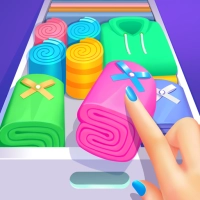
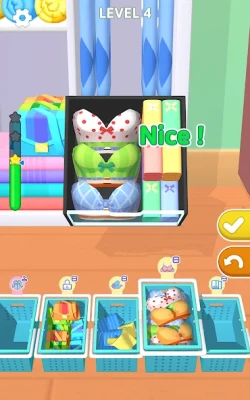
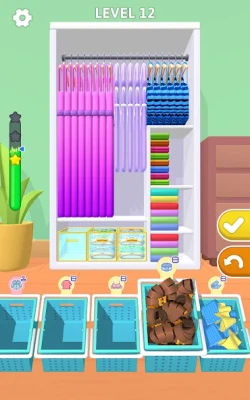
Closet Organizer is a mobile organizing game published by Lion Studios. It turns the everyday task of arranging personal belongings into a series of interactive puzzles. Instead of simply placing objects wherever they fit, you need to think about their sizes, shapes, categories, and the storage areas available in each level.
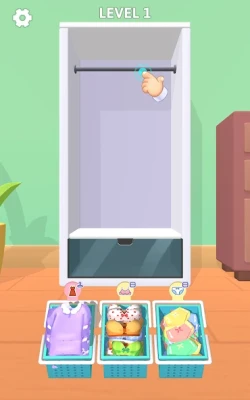
The game presents you with a collection of items that must be transferred from a basket into a closet. These items can include dresses, shirts, underwear, shoes, bags, belts, watches, towels, and other belongings. Each object takes up space, so your goal is to create an arrangement that fits everything as neatly and efficiently as possible.
The controls are easy to understand, making the game accessible to casual players. However, completing a crowded closet can require careful planning. Placing a large object too early or using a small compartment inefficiently may leave you struggling to fit the remaining items.
Closet Organizer combines spatial reasoning, sorting, and relaxing visual feedback. It is a good choice for players who enjoy transforming cluttered spaces into orderly arrangements without the pressure of fast-paced action.
Main Features of Closet Organizer
Closet Organization Puzzles
The main activity involves filling closets with different personal belongings. Each challenge encourages you to identify suitable storage areas and arrange objects in a way that makes good use of the available space.
Drag-and-Drop Gameplay
The game uses straightforward touch controls. Select an item, move it toward the desired location, and position it within the closet. This simple system allows you to focus on solving the arrangement puzzle.
A Variety of Items
You can organize different types of belongings, including:
Dresses and other clothing
Shirts and smaller garments
Underwear and towels
Shoes and socks
Handbags and other bags
Belts, watches, and accessories
The mixture of object types creates different space-management challenges and encourages you to consider each item's shape and purpose.
Multiple Storage Areas
Closets include different storage features, such as shelves, containers, hanging spaces, and cabinets. Understanding how these areas differ can help you decide where particular objects should go.
Unlockable Closet Space
The game allows players to unlock additional closet space as they progress. More storage areas create new opportunities for organizing belongings and completing larger arrangements.
Relaxing ASMR-Style Experience
Colorful visual effects and satisfying organizing interactions contribute to the game's relaxing atmosphere. The emphasis is on sorting, arranging, and creating order rather than reacting quickly to enemies or time-sensitive action.
Color and Category Sorting
Organizing items by their type, color, and appropriate location helps create a more structured closet. These principles also make it easier to recognize where objects belong as you work through each level.
Casual Single-Player Gameplay
Closet Organizer is designed for solo play. You can focus on the current arrangement, experiment with different placements, and improve your organizational approach at your own pace.
Offline-Friendly Play
The Google Play listing identifies the game as playable offline. This makes it a convenient option for casual gaming when an internet connection is unavailable, although certain optional features or services may still require connectivity.
How to Play Closet Organizer
Open the Closet
Start by examining the closet presented in the level. Look at its shelves, hanging sections, containers, and cabinets before moving any objects.
Understanding the layout helps you determine which spaces are suitable for different types of belongings.
Inspect the Items in the Basket
Review the collection of objects you need to organize. Pay attention to their sizes, shapes, and categories.
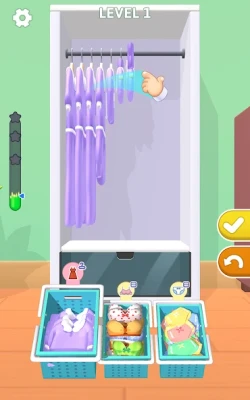
A long garment may require a hanging area, while shoes may fit better on a shelf. Small accessories can often be accommodated in narrower spaces, depending on the layout.
Drag Items Into Suitable Positions
Use the drag-and-drop controls to move each item from the basket into the closet. Try to select a position that accommodates the object without unnecessarily blocking other useful spaces.
Organize by Type and Color
Whenever practical, keep similar items together. Grouping clothing, shoes, bags, and accessories can make the final arrangement look cleaner and help you maintain a logical layout.
Color coordination can also improve the appearance of the closet when the available items and storage areas allow it.
Make the Most of Limited Space
Every object occupies part of the closet, so placement matters. Consider the space required by each item and leave suitable areas for belongings that have not yet been placed.
Review Your Arrangement
After placing several objects, inspect the remaining space and the items still in the basket. If the layout becomes difficult, consider whether an earlier placement could be improved.
Complete the Level
Continue arranging items until the required task is finished. As you progress, use the experience gained from earlier levels to approach new closet layouts more efficiently.
Beginner's Guide: How to Get Started
Study the Closet Before Moving Anything
The most useful first step is to examine the entire storage area. Identify the larger compartments, smaller shelves, hanging sections, and containers.
This gives you a clearer idea of where different items might fit and reduces unnecessary rearranging.
Identify the Largest Items
Large garments and bulky bags can take up significant space. Look at these objects first and consider which storage areas can accommodate them.
Planning around larger items can help prevent smaller belongings from occupying useful positions too early.
Separate Items Into Categories
Mentally divide the available belongings into groups such as clothing, shoes, bags, towels, and accessories. This makes the task easier to manage because you can consider one category at a time.
You do not necessarily need to place every category together, but having a general plan helps maintain order.
Leave Room for Unplaced Objects
Do not fill every available gap immediately. Keep track of the remaining items and preserve suitable spaces for objects that may be harder to accommodate.
An apparently empty section could be the ideal location for a large item that has not yet been placed.
Use Small Spaces Carefully
Compact accessories may fit into narrow compartments or gaps. Consider these possibilities before filling small areas with objects that could fit elsewhere.
Learn Through Experimentation
If a placement does not work, try another position and observe the difference. Small adjustments can reveal a better arrangement without requiring you to rethink the entire closet.
Best Strategies for Organizing the Closet
Place Large Items First
One of the most effective general strategies is to plan for bulky objects before arranging smaller belongings. Large items tend to determine how much space remains for everything else.
For example, a handbag may require a broad shelf, while a long garment may need a suitable hanging area. Once these objects have appropriate positions, the remaining spaces become easier to evaluate.
However, the best order depends on the level. If the game clearly indicates a specific placement sequence, follow the requirements of that challenge.
Use Every Storage Area Intentionally
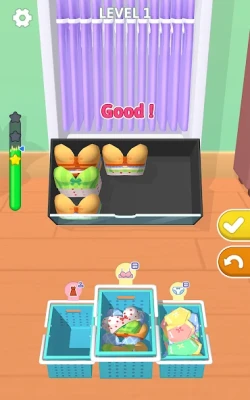
Do not treat the closet as one large open space. Shelves, drawers, hanging sections, and containers may each be better suited to particular types of objects.
Consider the purpose and dimensions of each area before placing an item. A good match can improve both the appearance and efficiency of the arrangement.
Group Similar Belongings Together
Keeping similar items close to one another creates a more organized layout. Clothing can be grouped by type, shoes can occupy suitable shelves, and small accessories can be placed in appropriate compartments.
When possible, arrange items by color as well. A coordinated appearance makes the finished closet feel more deliberate and satisfying.
Avoid Wasting Valuable Space
Large unused gaps can make it harder to fit the remaining belongings. Before settling on an arrangement, look for smaller items that could fit into available spaces.
At the same time, avoid forcing objects into unsuitable gaps simply to eliminate every empty area. A practical layout is more important than filling every corner.
Think About the Remaining Items
Every placement affects the choices available later. Before putting an object in a particular position, consider which items still need to be organized.
This habit helps you avoid using a convenient space for one object when it would be more useful for another.
Reassess the Layout Regularly
After placing several items, pause and examine the closet again. The remaining space may suggest a different strategy from the one you initially planned.
Being willing to adjust earlier placements is often the key to completing difficult arrangements.
How to Fit More Items Into the Closet
Space management is one of the main challenges in Closet Organizer. The goal is to accommodate the available belongings without creating a confusing or inefficient layout.
Compare Object Sizes
Before placing an item, estimate how much space it will occupy. A bulky object may be difficult to relocate once the surrounding compartments are full.
Compare its proportions with the available storage areas and select a position that makes practical use of the closet.
Match Items to Suitable Compartments
Look for storage areas that correspond to the shape and size of each object. Long garments may work best in hanging sections, while compact items may be more suitable for drawers or small containers.
These are general guidelines rather than fixed rules, so adapt them to the actual layout of each level.
Preserve Flexible Spaces
Try not to occupy every available section at the beginning. Keeping some room open allows you to accommodate items that are difficult to place later.
This is particularly useful when the basket contains several objects with different shapes and dimensions.
Use Small Gaps for Accessories
Belts, watches, and other compact accessories may fit into spaces that are unsuitable for larger belongings. Consider these items when reviewing the remaining gaps.
Rearrange Before Starting Over
If the final few items do not fit, inspect the objects already in the closet. Moving one or two belongings may create enough room to finish the arrangement.
A small correction is often more efficient than rebuilding the entire layout.
Tips for Organizing Different Types of Items
Dresses and Long Garments
Long clothing items generally need storage areas that can accommodate their proportions. Check the available hanging space and avoid using a compartment that leaves insufficient room for other garments.
Shirts and Smaller Clothing
Smaller garments may fit into compact areas, depending on their shape and the closet's design. Arrange them so that they do not unnecessarily block larger storage sections.
Shoes and Socks
Shoes often benefit from being grouped together in a suitable shelf area. Smaller items such as socks may fit into containers or compact spaces if the level allows it.
Handbags and Bags
Bags can vary significantly in size. Consider their width and overall shape before choosing a shelf or cabinet. Bulky bags should be accounted for early in your plan.
Belts and Watches
Accessories generally require less room than clothing or bags. Consider placing them in smaller compartments or gaps after planning the larger objects.
Towels and Other Personal Items
Towels and similar belongings may be easier to arrange in compact stacks or designated storage areas when the game supports that placement. Look for spaces that accommodate their shape without interfering with the rest of the layout.
How to Unlock More Closet Space
Closet Organizer features unlockable storage areas that let you expand the space available for organizing items.
Progress Through the Game
Focus on completing the current challenges and advancing through the available levels. Progression can provide access to additional closet areas.
Understand the Current Objective
Before arranging items, identify what the level requires. Completing the task efficiently helps you avoid unnecessary adjustments and makes the overall experience smoother.
Use New Storage Areas Wisely
When additional compartments become available, think about how they can improve the overall layout. Extra space can provide room for larger belongings or allow you to separate categories more clearly.
Avoid Relying on More Space Alone
Unlocking additional areas can make organizing easier, but efficient placement remains important. Continue applying good space-management habits even when the closet becomes larger.
Common Mistakes to Avoid
Placing Items Randomly
Random placement can fill the most convenient areas before you have considered the complete set of belongings. Inspect the closet and make a basic plan first.
Ignoring the Shape of an Object
Two items of similar size may fit differently because of their proportions. Consider both shape and dimensions when choosing a position.
Filling Every Gap Too Early
Small spaces may be useful for accessories or other compact items. Avoid occupying them before you know what remains in the basket.
Forgetting About Bulky Belongings
Large garments and bags can be difficult to accommodate after the closet is mostly full. Consider their placement early in the process.
Ignoring Storage Categories
Putting unrelated items together may make the arrangement harder to manage. Group similar belongings when the layout permits it.
Rearranging Too Much at Once
Changing several placements simultaneously can make it difficult to understand what improved or worsened the layout. Try adjusting one or two objects at a time.
Expecting Every Level to Use the Same Layout
Different stages may present different storage areas and item combinations. Adapt your approach to the specific closet rather than following one rigid placement pattern.
How to Make the Most of the Relaxing ASMR Experience
Closet Organizer emphasizes the satisfying process of arranging belongings and creating order. To enjoy this aspect of the game, focus on the process instead of treating every level as a race.
Take time to inspect the items, consider their best positions, and enjoy the visual transformation as the closet becomes more organized. If a particular arrangement is difficult, experiment with different options instead of rushing through the task.
The colorful effects and sorting interactions contribute to the game's relaxing style. Playing in short sessions can also make it a pleasant way to take a break from more demanding games.
Is Closet Organizer Suitable for Casual Players?
Yes. Closet Organizer uses simple touch controls and familiar organizing concepts, making it approachable for people who prefer casual mobile games.
The main challenge comes from arranging different objects within limited space. Players who enjoy sorting, tidying, color coordination, and spatial puzzles may find the gameplay especially appealing.
Because the game focuses on individual organizing tasks, it can also suit short gaming sessions. You can concentrate on a level without needing to learn complex combat systems or advanced controls.
Can You Play Closet Organizer Offline?
The Google Play listing identifies Closet Organizer as an offline-capable game. This means its core gameplay is intended to be available without a continuous internet connection.
However, advertisements, optional rewards, purchases, or other services may require connectivity. Availability can vary by version and device, so check the game directly if offline access is important to you.
Is Closet Organizer Free to Play?
The Google Play listing presents Closet Organizer as free to download and play, with advertisements and in-app purchases.
Some optional content or features may involve additional costs. Review the purchase details displayed in the game before confirming a transaction.
Frequently Asked Questions
What Is Closet Organizer?
Closet Organizer is a casual mobile game in which you arrange clothes, shoes, bags, accessories, and other personal belongings inside a closet using drag-and-drop controls.
Who Developed Closet Organizer?
Closet Organizer is published by Lion Studios.
How Do You Play Closet Organizer?
Examine the closet, review the items in the basket, and drag each object into a suitable storage area. Plan your placements carefully to make efficient use of the available space.
What Is the Best Strategy for Completing Levels?
Start by inspecting the entire closet and identifying its storage areas. Plan for large items, preserve space for smaller belongings, and adjust earlier placements if the remaining objects become difficult to fit.
Can You Unlock More Closet Space?
Yes. The game listing describes unlockable closet spaces that allow you to organize more belongings as you progress.
What Items Can You Organize?
The game includes clothing, underwear, shoes, bags, belts, watches, towels, and other personal items.
Is Closet Organizer a Puzzle Game?
Yes. It combines organizing and simulation elements with spatial puzzles that require you to choose appropriate positions for different objects.
Does Closet Organizer Have ASMR Effects?
The game is described as offering an ASMR-style organizing experience, with colorful visual effects and satisfying interactions as you arrange belongings.
Can Closet Organizer Be Played Offline?
The Google Play listing identifies the game as offline-capable. Some optional features or services may still require an internet connection.
Does Closet Organizer Include Advertisements?
Yes. The Google Play listing indicates that the game contains advertisements and offers in-app purchases.
How Can Beginners Improve Their Organizing Skills?
Study the closet before placing items, consider the size and shape of each object, and plan around the largest belongings. Leave useful gaps for smaller items and avoid filling every compartment too early.
What Should You Do When Items No Longer Fit?
Review the objects already placed and consider moving one or two of them. A small change can create enough space for the remaining belongings without requiring you to restart the entire arrangement.
Final Thoughts
Closet Organizer offers a relaxing combination of sorting, space management, and casual puzzle-solving. Its simple drag-and-drop controls make it easy to learn, while the challenge of fitting different belongings into limited storage space encourages careful planning.
The most effective approach is to examine the closet before moving anything, plan around larger objects, and keep track of the items that still need a place. Grouping similar belongings and using available compartments thoughtfully can help you create cleaner, more efficient arrangements.
Whether you enjoy organizing games, satisfying ASMR-style interactions, or puzzles that reward patience and creativity, Closet Organizer provides an accessible way to turn clutter into order one level at a time.
Rate the Game
User Reviews













Popular Games



















 Android
 iOS
 Windows
 Xbox