

Latest Version
October 18, 2026
Tim Kretz
Casual
iOS
0
Report a Problem
More About :game
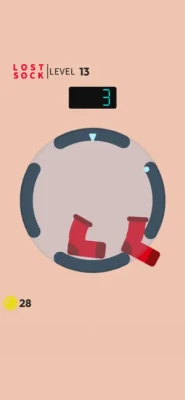
Developed by Tim Kretz, Lost Sock combines one-touch controls, unpredictable physics, collectible coins and unlockable socks in a colorful casual gaming experience. Hold to spin the machine, release to stop, and learn how to control the movement of your socks as they tumble through increasingly challenging stages.
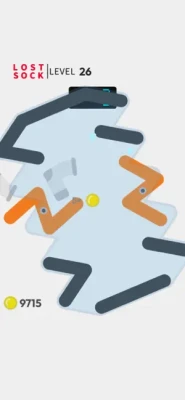
With unusual washing machine designs, moving obstacles, trapdoors, bumpers and slingshot mechanics, every level presents a different challenge. If you enjoy casual arcade games that are easy to learn but tricky to master, Lost Sock offers a fun test of timing, patience and precision.
What Is Lost Sock?
Lost Sock is a casual arcade game built around a humorous everyday mystery: where do missing socks go when the laundry is done?
Instead of simply washing clothes, you control a spinning machine filled with socks that must stay inside while the machine rotates. Each level has its own design and physical challenges, so the same strategy will not always work.
The controls are deliberately simple. You hold your finger on the screen to spin the machine and release it to stop. The challenge comes from deciding when to spin, how long to maintain the movement and when to let the socks settle.
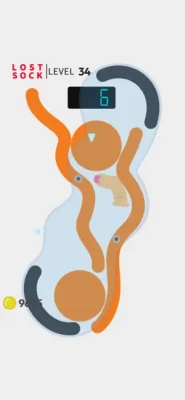
The game's updated design introduces unusual machine shapes, including objects resembling a hot dog, guitar, airplane and broccoli. Rotating obstacles, trapdoors, moving parts and launch mechanisms add further unpredictability.
Lost Sock also features coins and unlockable socks, some of which have special effects. These extras provide additional goals beyond simply completing a level.
Lost Sock Game Features
1. One-Touch Spin Controls
The central mechanic is easy to understand: hold to spin and release to stop. Mastering the timing, however, takes practice because the socks continue to react to the machine's movement.
2. Physics-Based Arcade Gameplay
The socks move according to the forces created by the spinning machine and its obstacles. Their movement can be unpredictable, making observation and careful timing essential.
3. Unique Washing Machine Designs
Each level can introduce a different machine shape and layout. The unusual designs keep the experience fresh and require you to adapt your approach.
4. Moving Obstacles and Trapdoors
Bumpers, rotating parts, flaps and trapdoors can change the path of a sock. Learning how these elements affect movement is important for completing difficult stages.
5. Slingshot Mechanics
Some levels include elements that launch socks across the machine. These can help move a sock through the course, but they also make its trajectory harder to predict.
6. Coins and Collectibles
Collecting coins adds a risk-versus-reward element. You may need to decide whether an opportunity is worth taking when your main objective is keeping every sock inside.
7. Unlockable Socks With Special Effects
You can unlock dozens of colorful and unusual socks. Some have special effects that change the experience, giving players another reason to keep progressing.
8. Increasing Difficulty
The levels become more demanding as you advance. Updates have also redesigned stages to make early gameplay more approachable while offering greater challenges later on.
9. Game Center Support
The iOS version supports Game Center leaderboards and achievements, providing additional goals for players who enjoy tracking their progress.
How to Play Lost Sock
The objective is to spin the washing machine enough times to complete the current stage while keeping every sock inside.
Follow these steps to get started:
Study the machine. Look at its shape, the position of the obstacles and the route your socks may take.
Hold to spin. Press and hold the screen to make the machine rotate.
Watch the socks. Observe how they move as the machine spins and how they interact with bumpers, flaps and other objects.
Release to stop. Let go of the screen when you need to interrupt the rotation and control the situation.
Keep every sock inside. Avoid spinning recklessly if a sock is approaching an opening or a dangerous obstacle.
Collect coins when practical. Take advantage of safe opportunities to gather coins without putting the entire run at risk.
Complete the stage. Continue until you meet the level's objective and can advance to the next challenge.
The most important skill is learning when to stop spinning. Constant movement might seem helpful at first, but controlled bursts are often easier to manage.
Complete Lost Sock Strategy Guide
1. Master the Hold-and-Release Mechanic
Your first goal should be understanding how long to spin the machine before releasing the control.
Start with short bursts and watch how the socks react. Once you understand the relationship between rotation and movement, gradually experiment with longer spins.
Avoid assuming that maximum rotation is always the best option. A short, controlled burst may be enough to move a sock safely past an obstacle.
2. Watch the Position of Every Sock
Keeping track of the socks is more important than focusing only on the machine's rotation.
A sock near the center may be relatively safe, while one approaching an opening or moving part could be at greater risk. Before starting another spin, check where the socks are and anticipate where they might travel.
When several socks are moving simultaneously, pay particular attention to the one closest to escaping.
3. Learn Each Machine's Layout
Lost Sock uses different machine shapes and obstacle arrangements. A strategy that works in one level may not work in another.
At the beginning of a new stage, identify the main hazards. Look for rotating obstacles, openings, bumpers and elements that could redirect the socks.
Use your first attempt to learn how the machine behaves. Once you understand its layout, you can develop a more deliberate strategy.
4. Use Short Spins Near Dangerous Obstacles
When a sock approaches a trapdoor or an opening, avoid making unnecessary movements.
Try a short spin, observe the result and release when the sock reaches a safer position. This approach gives you more opportunities to respond to unexpected movement.
The ideal timing varies from level to level, so use the position and behavior of the sock rather than relying on a fixed number of seconds.
5. Understand the Effect of Bumpers and Flaps
Bumpers and moving flaps can redirect a sock, change its speed or send it toward another part of the machine.
Watch how a sock reacts when it contacts one of these objects. If the same obstacle causes repeated failures, change your timing so the sock reaches it from a different position.
Do not assume that every collision is harmful. Some obstacles may help move a sock toward the desired area, while others require extra caution.
6. Approach Slingshot Elements Carefully
Slingshot mechanisms can launch socks across the machine. Although these elements can help with movement, the resulting trajectory may be difficult to predict.
Before triggering a launch, look at the surrounding layout and consider where the sock could land. If a launch repeatedly sends a sock toward danger, try adjusting the timing of the spin.
The goal is not simply to launch the sock but to keep it safely inside the machine afterward.
7. Balance Coin Collection With Survival
Coins provide an additional objective, but collecting them can introduce risk.
Before going after a coin, consider whether the sock is in a safe position and whether the route involves a dangerous opening or unpredictable obstacle. If the attempt could cost you the entire run, prioritize completing the level.
Once you understand a stage, return to its coin opportunities with a better idea of how to approach them.
8. Experiment With Different Socks
Unlockable socks are more than cosmetic rewards in every case. Some have special effects that can change how a run feels.
Experiment with the socks you unlock and observe any differences in their behavior. A sock with a particular effect may suit your preferred approach, while another may require a different timing strategy.
Avoid assuming that all socks behave identically. Learning their characteristics can add another layer to the game.
9. Adapt to Unusual Machine Shapes
A machine shaped like an airplane, guitar or hot dog can create a different movement pattern from a more conventional layout.
Pay attention to the shape of the interior and the location of any openings or moving parts. Think about how the machine's rotation may carry the socks around its edges.
When a familiar strategy stops working, treat the new layout as a separate puzzle rather than repeating the same inputs.
10. Learn From Failed Attempts
Failure is a useful source of information in a physics-based game.
After losing a sock, consider what happened immediately beforehand. Did you spin for too long? Did a bumper redirect the sock? Did you overlook a trapdoor?
Change one aspect of your approach during the next attempt. This makes it easier to identify what works and gradually improve your performance.
Advanced Tips for Difficult Levels
Once you are comfortable with the controls, use these techniques to improve your consistency.
Think in short cycles: Spin, observe, release and reassess before making the next move.
Prioritize the greatest danger: Focus on the sock most likely to escape rather than trying to control every movement at once.
Avoid unnecessary rotation: More spinning does not automatically mean better progress.
Study unusual obstacles: Learn how a particular bumper, flap or launch mechanism affects the sock before committing to a longer spin.
Separate your goals: Complete a level first when necessary, then pursue coins or other optional objectives when the risk is manageable.
Use deliberate experiments: Change your timing gradually so you can identify the effect of each adjustment.
Stay patient: The game's physics can produce unexpected outcomes, and some levels may require several attempts.
Common Mistakes to Avoid in Lost Sock
Spinning for Too Long
Holding the control continuously can make it difficult to respond to an approaching hazard. Use shorter bursts when precise control matters.
Ignoring the Socks' Positions
Watching the machine spin without tracking the socks can cause you to miss a dangerous movement. Keep your attention on their location and trajectory.
Chasing Every Coin
Optional rewards are tempting, but taking unnecessary risks can undermine your progress. Choose your opportunities carefully.
Using the Same Strategy Everywhere
Different machine shapes and obstacle arrangements require different approaches. Reassess the layout whenever you start a new stage.
Repeating a Failed Attempt Without Adjustments
If the same movement causes the same problem, change your timing or approach instead of repeating it blindly.
Expecting Perfectly Predictable Physics
Small changes in movement can produce different outcomes. Observe the result of each attempt and adapt accordingly.
Lost Sock Progression and Collectibles
Progress in Lost Sock revolves around completing increasingly challenging stages, collecting coins and unlocking unusual socks.
The different washing machine designs are a central part of the progression system. As you encounter new layouts, you must adapt your timing and learn to manage additional obstacles.
Collectible socks provide another reason to continue playing. Their unusual appearances and special effects add variety, while coin collection introduces decisions about how much risk to take during a level.
For the most enjoyable experience, concentrate on learning the basic mechanics before pursuing every optional reward. Strong control over the spin-and-stop system makes the more complicated stages easier to approach.
Graphics, Sound and Atmosphere
Lost Sock embraces a humorous concept and builds its presentation around colorful socks and ridiculous washing machine designs.
The machines themselves are a major source of visual variety. Instead of repeating the same conventional laundry setup, the game uses unusual shapes and moving parts to make each course feel different.
Its physics-driven movement creates unpredictable moments, giving successful runs a satisfying sense of control and failed attempts a sometimes funny outcome.
The overall presentation suits a casual arcade game: the controls are simple, the objective is easy to understand, and the increasing difficulty provides a reason to keep improving.
Lost Sock Pros and Cons
Pros
An original washing-machine arcade concept.
Simple hold-to-spin and release-to-stop controls.
Physics-based challenges that reward observation.
Unusual machine designs and changing obstacle layouts.
Coins and unlockable socks with special effects.
Increasing difficulty that provides room for improvement.
Game Center leaderboards and achievements on iOS.
Suitable for short gaming sessions.
Cons
Physics-based movement can feel unpredictable.
Some levels may require several attempts to master.
Repeating similar spin-and-stop actions may become familiar over time.
Coin collection can encourage risky decisions.
Players who prefer story-driven adventures or complex combat may want a different type of game.
Is Lost Sock Worth Playing?
Lost Sock is worth trying if you enjoy casual arcade games that combine simple controls with increasingly challenging physics puzzles.
Its main strength is the way it turns an ordinary washing machine into an obstacle course. The variety of machine designs, moving hazards and unlockable socks gives the game more character than its simple controls might initially suggest.
It is particularly appealing to players who enjoy learning through experimentation. You can begin with basic spins and gradually develop more precise control as the stages become harder.
The game may not offer the depth of a large adventure or strategy title, but its unusual concept and quick gameplay make it a good option for short breaks.
Frequently Asked Questions
What is Lost Sock?
Lost Sock is a casual physics-based arcade game developed by Tim Kretz. Players control a spinning washing machine and must complete each stage without allowing a sock to escape.
How do you play Lost Sock?
Hold the screen to spin the machine and release to stop. Observe the socks' movement, avoid dangerous obstacles and spin enough times to complete the stage.
Is Lost Sock difficult?
The controls are simple, but the physics and changing obstacle layouts can make later levels challenging. Careful timing and repeated practice help you improve.
How do you keep socks from escaping?
Watch their positions, use controlled spins and release the control when a sock approaches a dangerous opening. The best timing depends on the machine and the current obstacle layout.
Can you collect coins in Lost Sock?
Yes. Coin collection is part of the gameplay, but it involves balancing optional rewards against the risk of losing a sock.
Can you unlock different socks?
Yes. The game features dozens of colorful and unusual socks, some with special effects that add variety to the experience.
What kinds of obstacles appear in Lost Sock?
Depending on the level, you may encounter rotating obstacles, bumpers, trapdoors, moving flaps and slingshot elements that launch socks across the machine.
Is Lost Sock free to play?
The Apple App Store lists Lost Sock as free to download with in-app purchases. An option to remove advertisements is listed separately.
Is Lost Sock available on iPhone and iPad?
Yes. The Apple App Store lists compatibility with iPhone and iPad. The stated minimum requirements are iOS 13.0 or later for iPhone and iPadOS 13.0 or later for iPad.
Does Lost Sock support achievements?
Yes. The iOS listing indicates support for Game Center achievements and leaderboards.
Who developed Lost Sock?
Lost Sock was developed by Tim Kretz.
Final Thoughts
Lost Sock turns a familiar household object into an entertaining arcade challenge built around timing and physics. Its simple controls make it easy to start, while unusual machine designs and increasingly difficult obstacles give players plenty of opportunities to improve.
The best strategy is to spin with purpose, watch the position of every sock and learn from each failed attempt. Once you understand how the machine behaves, you can tackle difficult stages more confidently and collect unusual socks along the way.
Rate the Game
User Reviews












Popular Games


















 Android
 iOS
iOS Windows
 Xbox
Xbox