
Latest Version
October 22, 2026
Lion Studios
Casual
0
com.onelion.newcrane
Report a Problem
More About :game
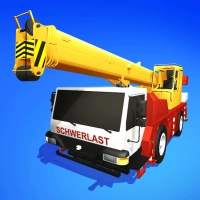
Crane Rescue 3D is a mobile crane simulation game built around precision, timing, and physics-based challenges. Instead of simply driving a vehicle or operating machinery in a traditional simulator, you must solve practical lifting puzzles to complete each mission.
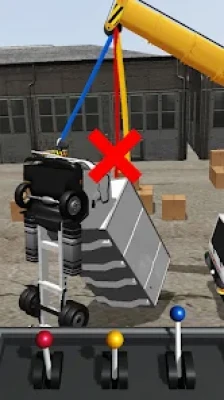
Your main responsibility is to operate a crane, attach lifting cables to the appropriate points, and move heavy objects toward their intended destinations. Depending on the mission, you may need to lift vehicles, transport oversized cargo, rescue people from dangerous situations, or help repair damaged structures.
The game combines straightforward controls with challenges that require careful planning. A cable attached to the wrong location can make lifting difficult, while uncontrolled crane movements may cause the load to swing, collide with nearby objects, or damage the equipment.
As you progress, you can explore additional crane equipment and upgrades to improve your capabilities. These features give you more opportunities to tackle different lifting tasks and develop your skills as a virtual crane operator.
How to Play Crane Rescue 3D
The main objective is to complete the assigned mission by lifting, transporting, or positioning an object correctly.
Begin by examining the scene and identifying the object that needs to be moved. Look for the appropriate attachment points and determine where the load must be delivered.
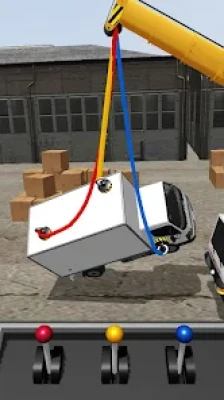
Use the game's joystick controls to position and operate the crane. Attach the cables to the correct locations before attempting to lift the object. Once the load is secured, raise it carefully and make controlled movements toward the target area.
Pay attention to the object's weight, shape, and balance. Different loads may behave differently when lifted, so avoid moving too quickly or making sudden changes in direction.
When you reach the destination, lower the load gradually and make sure it is positioned correctly. Completing the objective without damaging the crane or the cargo is an important part of successful gameplay.
Main Features of Crane Rescue 3D
Realistic 3D Crane Physics
The game uses physics-based mechanics to make lifting and transporting objects more challenging. Heavy loads can move unpredictably if the crane is operated carelessly, so controlling the lifting process is essential.
Heavy Cargo Transportation
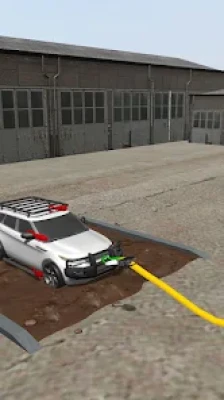
Players can lift and transport a variety of objects, including cars, trucks, and container vehicles. These missions test your ability to attach cables, manage the load, and move it safely.
Challenging Rescue Missions
Some levels involve emergency situations, such as rescuing a person from a fire. These tasks require careful crane operation and a clear understanding of the objective.
Construction and Bridge Repair
Crane Rescue 3D also includes construction-related challenges. Certain missions require you to move objects into specific positions to help complete repairs or restore damaged structures.
Crane Upgrades and Equipment
The game provides opportunities to acquire different crane machines and upgrade equipment. Improving your available machinery can add variety to the gameplay and help you approach later challenges.
Cable Attachment Puzzles
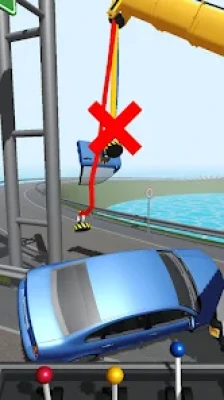
Selecting the correct attachment points is an important part of the experience. Incorrect connections can prevent you from lifting an object properly or lead to an unsuccessful attempt.
Claw-Style Challenges
The game includes crane-claw-style interactions that emphasize accuracy and object handling. These tasks provide a different challenge from conventional cargo transportation.
Complete Crane Rescue 3D Strategy Guide
Study the Mission Before Moving the Crane
Before operating the machinery, take a moment to examine the entire scene. Identify the object you need to lift, the destination, and any nearby obstacles that could interfere with your movement.
Understanding the objective first can prevent unnecessary actions. For example, a vehicle that needs to be placed on a platform requires a different approach from a person who must be rescued from a dangerous location.
Look for the safest path between the starting position and the target. If the load must pass through a narrow space, plan how you will position the crane before lifting it.
A few seconds of preparation can save multiple failed attempts.
Attach the Cables to the Correct Points
Cable placement is one of the most important mechanics in Crane Rescue 3D. A suitable attachment helps keep the object stable during the lifting process.
Inspect the cargo and locate the connection points indicated by the game. Follow the level's visual instructions rather than attaching cables randomly.
When several attachment points are available, consider how the load will hang once it leaves the ground. A poorly balanced object may tilt or swing, making it difficult to transport.
If the game indicates that a connection is incorrect, reposition the cable before lifting. It is generally better to correct the setup while the object is still on the ground than to attempt to fix an unstable load in midair.
Lift Heavy Objects Slowly
Heavy cargo requires controlled movements. Raising an object too quickly can make it harder to manage its position, particularly when the load begins to swing.
Start by lifting the object just enough to clear the ground or supporting surface. Check whether it is hanging evenly and whether any part of the cargo is catching on nearby obstacles.
Once the load is stable, continue raising it gradually until you have enough clearance to move toward the destination.
Avoid unnecessary lifting. Carrying an object higher than required may make it more difficult to position accurately, especially when you need to pass beneath structures or approach a narrow landing area.
Master the Joystick Controls
The joystick is central to crane operation. You use it to position the machinery and control lifting or rotating movements, depending on the current interaction.
Practice moving the crane in small increments instead of making large, sudden adjustments. Gentle movements give you more control over the load and make it easier to correct your position.
When approaching an object, slow down and align the crane carefully. The same principle applies when transporting cargo or preparing to lower it onto a platform.
If your load begins to swing, avoid overcorrecting immediately. Make smaller adjustments and allow the movement to settle before continuing.
Consistent control is more reliable than trying to complete the entire operation as quickly as possible.
Keep the Load Balanced
Balance affects how easily an object can be lifted and transported. If the load hangs unevenly, it may rotate, tilt, or become difficult to guide.
Check the cable arrangement before lifting and pay attention to how the object responds when it leaves the ground.
If the cargo tilts noticeably, stop moving forward and reassess the situation. Depending on the available controls, you may need to lower the object and adjust the attachment points.
Do not assume that a load will remain stable simply because it has been lifted successfully. Continue making controlled movements and watch for signs of swinging or unwanted rotation.
Plan a Safe Transportation Route
Once the cargo is lifted, identify a clear route to its destination. Avoid moving directly toward the target without considering the surrounding environment.
Buildings, platforms, vehicles, and other structures can obstruct the load. A route that looks short may require difficult turns or leave little room for correction.
Whenever possible, position the crane so that you can transport the object along a relatively clear path. If the load must pass around an obstacle, make the necessary adjustments gradually.
Keep the cargo at a suitable height throughout the journey. You need enough clearance to avoid collisions, but excessive height may make placement harder.
A well-planned route reduces the number of corrections needed during transportation.
Prevent Collisions and Equipment Damage
Some missions can fail if the crane, cargo, or nearby structures are damaged. Avoiding collisions should therefore be a priority.
Pay attention to the distance between the load and surrounding objects. Large cargo may extend farther than expected, so allow extra space when moving through narrow areas.
Avoid swinging the load unnecessarily. Sudden rotations and abrupt changes in direction can send it into nearby obstacles.
When a collision seems likely, stop and reconsider your position rather than continuing with the same movement. Small corrections are usually easier than recovering from a major mistake.
If an attempt fails, identify what caused the collision and change your approach on the next try.
Lower Cargo With Precision
Delivering an object is not complete until it reaches the required position. Lowering cargo can be just as challenging as lifting it, particularly when the target area is small.
Approach the destination slowly and align the load above the placement zone. Make sure the object is positioned correctly before lowering it further.
Use small movements to correct horizontal alignment. Once the load is directly above the target, lower it gradually until it makes contact with the intended surface.
Avoid rushing the final stage. An object that lands at the wrong angle or outside the target area may require another attempt.
Careful placement helps you finish missions more consistently.
Complete Rescue Missions Carefully
Rescue missions require you to focus on the person or object that needs assistance. In these levels, the goal is not simply to lift something heavy but to complete a specific task without causing further problems.
Study the scene and identify the safest approach. Consider where the crane can be positioned and how the lifting equipment must be attached.
Move cautiously when operating near people, buildings, or emergency hazards. Keep the load stable and avoid unnecessary movements that could interfere with the rescue.
If the target is in a difficult location, break the task into smaller steps. Position the crane first, secure the load or attachment, and then carry out the lift.
A methodical approach is particularly useful when a mission combines several objectives.
Approach Bridge Repair Tasks With Care
Bridge repair missions require accurate placement rather than simply moving an object from one location to another.
First, examine the damaged structure and identify the missing piece or object that must be positioned. Look at the available space and consider how the cargo needs to be aligned.
Lift the object high enough to clear surrounding structures, then move it toward the required location. As you approach the gap, slow down and make smaller adjustments.
Check the alignment from the available camera angle before lowering the piece. If it is not positioned correctly, adjust the crane instead of forcing the object into place.
Patience is especially important in these missions because even a small positioning error can prevent you from completing the objective.
Handle Oversized Cargo
Large objects, such as container vehicles or unusual cargo, may require additional care because their dimensions make them harder to maneuver.
Before lifting, consider the object's length, width, and likely movement once suspended. A load that fits beneath the crane may still collide with an obstacle when rotated.
Keep the cargo as stable as possible and avoid sharp movements. When turning, allow sufficient space for the entire object rather than focusing only on the position of the crane itself.
For unusually shaped loads, use a slower approach and check the surrounding clearance frequently.
The key is to manage the entire object, not just the hook or lifting point.
Learn From Failed Attempts
Failure is part of learning a physics-based puzzle game. If a lift goes wrong, review the steps that led to the problem rather than repeating the same movements.
Consider whether the cable was attached incorrectly, the load was unbalanced, the crane moved too quickly, or the cargo collided with an obstacle.
Try changing one part of your approach at a time. For example, adjust the cable setup before attempting to change your route, or slow down the lowering process if the object keeps missing its target.
This makes it easier to identify what works and build a more reliable technique for future missions.
Advanced Tips for Better Results
Use Small Corrections Near Targets
Large movements may be useful when positioning the crane at the beginning of a task, but they are less suitable when you are close to a target.
As you approach the final position, reduce the size of your movements. This gives you more control and makes it easier to align the cargo precisely.
Prioritize Stability Over Speed
Fast operation may seem efficient, but it can cause unnecessary swinging and collisions. A stable load is easier to transport and position.
Focus on completing each stage correctly instead of trying to finish every mission as quickly as possible.
Check the Cable Setup Before Every Lift
Do not rush past the attachment stage. Confirm that the cables are connected to the intended points and that the arrangement looks suitable for the object.
Correcting a cable connection early can prevent a failed lift later.
Watch the Entire Load During Turns
When moving large cargo around obstacles, remember that the object may extend well beyond the crane's central lifting point.
Allow extra space for the load to move, and avoid turning too sharply when clearance is limited.
Use Equipment Upgrades Thoughtfully
If the game offers crane upgrades or different machines, review the available options and their stated benefits before spending resources.
Choose improvements that support the types of tasks you find most difficult. If precise positioning is a recurring challenge, consider whether an available upgrade makes the relevant operation easier.
The exact benefit depends on the equipment and upgrade system presented in your version of the game.
Stay Patient With Difficult Missions
Some levels require several carefully coordinated actions. If the first attempt fails, take a moment to understand why before trying again.
Breaking a complicated task into smaller stages can make it easier to manage. Concentrate on correct attachment, stable lifting, safe transportation, and precise placement in that order.
Common Mistakes to Avoid in Crane Rescue 3D
Attaching Cables Without Checking the Object
Random cable placement can make a load unstable or prevent it from being lifted correctly. Inspect the indicated attachment points and confirm the setup before raising the cargo.
Moving the Crane Too Aggressively
Sudden movements can cause a suspended object to swing or collide with nearby structures. Use controlled joystick movements and slow down whenever the load becomes difficult to manage.
Ignoring Obstacles
A direct route is not always the safest route. Check the environment before lifting and plan how the cargo will pass around buildings, platforms, or other objects.
Lifting Too High
Excessive lifting can make the load harder to control and may create unnecessary positioning problems. Raise the cargo only as much as the route requires.
Rushing the Final Placement
An object can reach the destination area but still fail to satisfy the objective if it is poorly aligned. Take your time when lowering cargo and make small corrections before setting it down.
Repeating a Failed Approach
If the same movement repeatedly causes a collision or an unstable lift, change your technique. Review the cause of the failure and adjust your cable setup, route, or movement speed.
Beginner's Guide to Crane Rescue 3D
New players should begin by becoming comfortable with the joystick and learning how the crane responds to movement.
Start each mission by examining the objective. Identify what needs to be lifted, where it must go, and which obstacles could interfere with the task.
Next, focus on cable placement. Make sure the lifting setup is correct before attempting to raise the cargo.
Once the object is suspended, use small movements to transport it. Watch for swinging, maintain enough clearance from nearby structures, and slow down when approaching the destination.
Finally, practice lowering objects accurately. Precise placement is an essential skill that improves with repetition.
You do not need to master every challenge immediately. Concentrate on the fundamentals first, then gradually tackle more demanding missions.
Is Crane Rescue 3D Difficult?
Crane Rescue 3D is relatively easy to understand because its basic objective is straightforward: attach the crane, lift the object, and move it to the required destination.
However, completing missions successfully can require patience and careful control. The physics-based mechanics mean that heavy objects may swing, tilt, or collide with nearby structures if the crane is operated poorly.
Beginners may need several attempts to understand cable placement and movement. As you become familiar with the controls, you can improve your accuracy and complete more challenging tasks with greater confidence.
Is Crane Rescue 3D Worth Playing?
Crane Rescue 3D is worth considering if you enjoy casual simulation games, physics puzzles, and challenges involving machinery.
Its main attraction is the variety of lifting tasks. You can transport vehicles, manage unusual cargo, assist with rescues, and complete construction-related objectives while learning to control a crane.
The combination of cable attachment, load management, and precise positioning gives the gameplay a problem-solving element beyond basic vehicle movement.
Players looking for a realistic professional crane simulator may find the experience more arcade-oriented than a dedicated industrial simulation. However, those who enjoy accessible controls and short, practical challenges may find it entertaining.
Crane Rescue 3D Game Information
Game Title: Crane Rescue 3D
Developer and Publisher: Lion Studios
Genre: Casual, simulation, and physics-based puzzle
Platform: Android
Gameplay Style: Crane operation, cargo transportation, rescue missions, and construction challenges
Main Objective: Lift, move, and position objects correctly to complete each mission
Controls: On-screen joystick controls for operating and maneuvering the crane
Featured Activities: Lifting vehicles, transporting heavy cargo, rescuing people, repairing structures, and completing claw-style challenges
Progression: Additional crane equipment and upgrade opportunities
Monetization: The Google Play listing indicates advertisements and in-app purchases
Frequently Asked Questions About Crane Rescue 3D
What Is Crane Rescue 3D?
Crane Rescue 3D is a casual physics-based mobile game in which you operate cranes to lift heavy objects, transport cargo, complete rescue missions, and solve construction-related puzzles.
Who Developed Crane Rescue 3D?
The game was developed and published by Lion Studios.
How Do You Play Crane Rescue 3D?
Examine the mission, attach the cables to the correct points, use the joystick to lift and move the cargo, and position the object at the required destination.
How Do You Lift Objects Without Damaging Them?
Use the correct cable attachment points, lift gradually, and avoid sudden crane movements. Keep the load stable and maintain enough clearance from nearby objects.
Why Do Cables Need to Be Attached Correctly?
Cable placement affects how the load hangs and moves. Incorrect connections can make an object unstable or prevent you from completing the lifting task successfully.
How Can You Prevent Cargo From Swinging?
Use controlled movements, avoid abrupt changes in direction, and give the load time to settle when necessary. Smaller corrections can help maintain stability.
Does Crane Rescue 3D Include Rescue Missions?
Yes. The game features rescue-related challenges, including missions involving a person in a dangerous situation.
Can You Upgrade Your Crane?
The game listing describes opportunities to acquire crane machines and upgrade equipment. Check the available in-game options to see which improvements you can unlock.
Is Crane Rescue 3D Free to Play?
The game is listed on Google Play with advertisements and in-app purchases. Check the current listing for the latest information about optional purchases.
What Is the Best Strategy for Difficult Levels?
Study the objective first, check cable connections, plan a safe route, lift gradually, and make precise movements near the destination. If an attempt fails, identify the cause and adjust your approach.
Final Thoughts on Crane Rescue 3D
Crane Rescue 3D offers a casual and entertaining take on crane operation, combining heavy lifting, physics-based movement, and puzzle-solving challenges. From transporting vehicles to completing rescue missions and repairing structures, each task encourages players to think carefully about cable placement, balance, and positioning.
The best way to succeed is to work methodically. Examine the objective, secure the load correctly, move the crane with controlled precision, and take your time when placing objects at their destinations.
With practice, you can improve your crane-handling skills, avoid common mistakes, and approach difficult missions with greater confidence. Whether you enjoy construction-themed games or simply want a casual physics challenge, Crane Rescue 3D provides plenty of opportunities to test your accuracy and problem-solving abilities.
Rate the Game
User Reviews















Popular Games



















 Android
 iOS
 Windows
 Xbox