

Latest Version
October 22, 2026
Lion Studios
Casual
Android
0
com.relaxgames.foodcutting
Report a Problem
More About :game
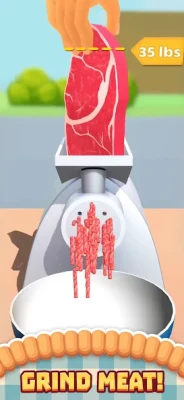
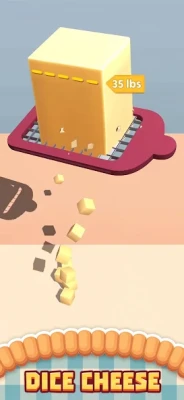
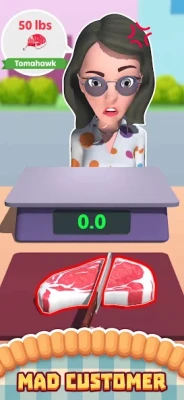
Food Cutting - Chopping Game is a casual mobile game published by Lion Studios. It combines food preparation, weight-based cutting challenges, and customer service into a straightforward gameplay experience.
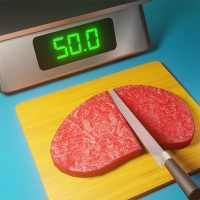
Your main responsibility is to prepare food portions according to the weight requested by each customer. Instead of simply cutting ingredients into equal pieces, you must pay attention to the required amount and make careful cuts to reach the target as accurately as possible.
The game starts with relatively simple tasks that help you understand how the cutting mechanics work. As you progress, the challenges become more demanding, requiring better judgment, faster reactions, and more precise movements.
Customer satisfaction is another important part of the experience. You must prepare the requested portions correctly while avoiding mistakes that could frustrate waiting customers. When you make an inaccurate cut, you may need to adjust your approach and correct the problem before completing the order.
Food Cutting is designed for players who enjoy casual simulation games, satisfying cutting animations, and challenges that reward attention to detail. Its simple swipe controls make it easy to begin playing, while the increasing difficulty provides opportunities to improve your skills.
How to Play Food Cutting
The main objective is to cut food into portions that match the weight requested by the customer.
Begin by checking the target weight before making your first cut. This number determines how much food you need to prepare, so understanding it is essential for completing the order successfully.
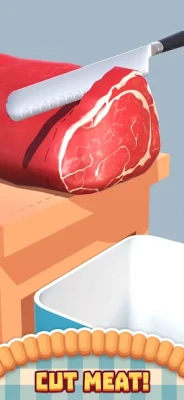
Use your finger to swipe across the food or operate the available virtual knife. Try to estimate the size of the portion you need rather than cutting randomly.
After making a cut, pay attention to the remaining food and the weight of the portion you have prepared. If your result is not accurate enough, follow the available in-game mechanics to correct the mistake whenever possible.
Once the food meets the required specifications, continue preparing the order and serve the customer.
As you advance, you will encounter additional levels with more intricate cutting tasks. These challenges reward careful observation, controlled movements, and the ability to react quickly without sacrificing accuracy.
Main Features of Food Cutting
Weight-Based Food Cutting
The central feature is the ability to slice food according to a specific weight requirement. You must estimate the amount of food needed and make appropriate cuts to prepare the correct portion.
This mechanic turns a simple chopping activity into a practical precision challenge.
Simple Swipe Controls
The game uses intuitive swipe-based controls that allow you to cut food with straightforward finger movements. The accessible control system makes the experience easy to understand, even for players who have never tried a food-preparation simulation.
Customer Service Challenges
Customers expect their orders to be prepared correctly. Meeting their requirements is essential to maintaining satisfaction and progressing through the game.
You must balance accuracy with speed, especially when dealing with impatient customers.
Increasingly Difficult Levels
New levels introduce more challenging food-cutting tasks as you progress. The difficulty encourages you to improve your ability to estimate portions and make accurate cuts.
Mistake Correction
Food Cutting emphasizes learning from mistakes. When a portion is inaccurate, you should do your best to correct the problem using the options available in the game.
This encourages players to remain attentive and improve rather than giving up after an imperfect cut.
Satisfying Chopping Gameplay
The cutting mechanics provide a hands-on experience built around slicing food into portions. The simple presentation and direct controls make it suitable for short, casual gaming sessions.
Sales and Customer Satisfaction
Preparing the correct portions helps you meet customer expectations and supports your progress through the game. Accuracy is therefore important not only for completing individual cutting tasks but also for maintaining good service.
Complete Food Cutting Strategy Guide
Check the Required Weight Before Cutting
The most important rule in Food Cutting is to understand the requested weight before making any movement.
Look at the target displayed for the current order and use it as your reference throughout the cutting process. Avoid starting immediately just because the food appears easy to divide.
If the requested portion is small, a large cut may leave you with too much food removed. If the target is larger, several carefully planned cuts may be necessary to reach the correct amount.
Take a moment to assess the ingredient and consider how much needs to be removed. This simple habit can reduce unnecessary mistakes and make your performance more consistent.
Learn to Estimate Portion Sizes
Accurate cutting requires you to develop a sense of how the size of a piece relates to its weight.
At first, you may need to make cautious estimates and learn from the results. Over time, you can become better at judging how much food to remove with each swipe.
Do not assume that the visual size of a portion always tells you its exact weight. Different ingredients can have different shapes and densities, so a piece that looks large may not weigh the same as another piece of similar size.
Use the game's weight indicators and feedback whenever available. They provide more reliable information than appearance alone.
Make Controlled Cuts Instead of Rushing
Fast movements can be tempting when a customer is waiting, but speed is not useful if it produces an incorrect portion.
Try to make deliberate cuts that remove the amount you actually need. Avoid sweeping across the entire ingredient when a smaller adjustment would be sufficient.
Controlled movements allow you to observe the result of each action and make better decisions about the next cut.
As your confidence improves, you can increase your speed while maintaining accuracy. The goal is to develop a consistent technique rather than rushing through every order.
Aim for the Target Weight
When preparing a portion, focus on matching the requested weight as closely as the game allows.
If you cut too much, you may be left with a portion that does not meet the requirement. If you remove too little, you may need additional adjustments before the order is complete.
Use the available weight information to guide your next action. When you are close to the target, make smaller and more cautious cuts rather than removing a large amount at once.
This approach is particularly helpful when the game introduces more demanding levels that require greater precision.
Avoid Cutting Without a Clear Plan
Random swiping can lead to uneven portions and unnecessary mistakes. Before each cut, think about how much food you need and how the movement will affect the remaining ingredient.
If you have a clear target, make the cut that best supports it. Afterward, check the result before continuing.
Planning does not need to be complicated. Even a brief pause to assess the food and requested weight can improve your accuracy.
The more consistently you follow this method, the easier it becomes to handle challenging orders.
Learn From Every Incorrect Cut
Mistakes are a normal part of learning Food Cutting. If a portion does not meet the target, use the experience to understand what went wrong.
Consider whether you removed too much food, underestimated the required amount, or made a cut that was difficult to control.
If the game allows you to correct the mistake, use the available options carefully. Avoid making another rushed movement that could worsen the result.
Each unsuccessful attempt provides useful feedback about your cutting technique. Adjust your approach on the next order instead of repeating the same mistake.
Keep Customers Satisfied
Customer satisfaction is an important part of the gameplay. Customers expect their orders to be prepared properly, and delays or inaccurate portions can create additional pressure.
Read the order before beginning and focus on preparing the correct amount efficiently. Avoid unnecessary cuts or repeated movements that slow down the process.
When a customer appears impatient, remain focused rather than rushing blindly. A controlled approach is often more effective than making a quick mistake that requires additional correction.
Good service comes from combining accuracy with sensible time management.
Balance Speed and Precision
As you advance through the game, you may encounter tasks that demand faster reactions. Learning to balance speed and precision will help you complete these challenges more consistently.
Start by developing accurate cutting habits. Once you understand how much food a particular movement removes, you can perform similar actions more quickly.
Do not sacrifice all accuracy for speed. A fast but incorrect cut may create extra work and make the order harder to finish.
The most effective technique is to make efficient movements that consistently produce the required results.
Adapt to Different Foods
Different ingredients may require different cutting approaches. A long piece of food may be easier to divide into sections, while a rounded or irregular ingredient may require more careful adjustments.
Observe the shape of each item before cutting. Think about where the cut should go and how much food it is likely to remove.
Do not rely on exactly the same movement for every ingredient. Adapt your technique according to the shape, available weight information, and target portion.
With practice, you can become more comfortable handling a wider variety of cutting challenges.
Pay Attention to the Remaining Food
After making a cut, check the remaining ingredient before deciding what to do next.
The amount left may affect whether you can prepare another required portion or need to adjust your current approach. Ignoring the remaining food can lead to wasteful movements and poor decisions.
Keep track of the portion you are preparing and the food that remains available. This awareness helps you make better choices and reduces the likelihood of unnecessary errors.
Approach Difficult Levels Patiently
Later levels introduce more intricate food-cutting challenges. If you find a task difficult, avoid rushing through it simply to finish faster.
Read the target weight carefully, examine the ingredient, and plan the first cut. After each movement, evaluate the result before proceeding.
If an attempt fails, identify the specific mistake and change your technique. You may need to use smaller cuts, pay closer attention to the displayed weight, or adjust the direction of your swipe.
Patience and consistent practice can help you handle more demanding levels with confidence.
Advanced Tips for Better Results
Use the Weight Indicator as Your Main Guide
Visual estimates are useful, but the requested weight should remain your primary reference. Check the game's available feedback after each cut and use it to decide what to do next.
Make Smaller Adjustments Near the Target
When your portion is already close to the requested weight, avoid large cuts. Smaller adjustments give you more control and reduce the chance of removing too much food.
Develop a Consistent Cutting Rhythm
Try to establish a repeatable pattern: read the target, assess the ingredient, make a controlled cut, and check the result.
This rhythm can make your decisions more reliable, especially when you face several orders in succession.
Avoid Unnecessary Movements
Every additional cut creates another opportunity to make a mistake. If your portion already meets the requirement, avoid changing it without a clear reason.
Focus on completing the order rather than performing extra actions.
Stay Calm When Customers Are Waiting
Customer pressure can make it tempting to rush. However, a poor cut may create more work than taking a moment to assess the situation.
Keep your attention on the target weight and use controlled movements to complete the task efficiently.
Treat Difficult Orders as Practice
When a level challenges your accuracy, use it as an opportunity to improve your estimation skills. Pay attention to the relationship between the size of each cut and the resulting weight.
As you gain experience, you should become more confident in choosing the right movement for each ingredient.
Common Mistakes to Avoid in Food Cutting
Ignoring the Target Weight
Cutting without checking the requested weight is one of the easiest ways to make a mistake. Always identify the target before beginning an order.
Removing Too Much Food
Large cuts can leave you with an inaccurate portion. Start cautiously and make smaller adjustments when you are close to the required weight.
Making Random Swipes
Unplanned movements reduce control and make it harder to predict the result. Think about the amount you need to remove before cutting.
Rushing Because of Impatient Customers
Trying to work too quickly can lead to inaccurate portions. Maintain a steady pace and prioritize correct preparation.
Ignoring Feedback After a Cut
The result of each movement provides information about your accuracy. Check the available indicators before deciding on the next action.
Using the Same Technique for Every Ingredient
Food items vary in shape and size. Adapt your movements to the ingredient instead of relying on an identical cut every time.
Repeating Mistakes Without Adjusting
If the same approach repeatedly produces poor results, change your technique. Use previous attempts to identify where you need to improve.
Beginner's Guide to Food Cutting
If you are new to Food Cutting, begin by learning how the swipe controls work and how the game measures your portions.
Start each order by checking the required weight. Examine the ingredient and estimate how much food needs to be removed before making your first cut.
Use controlled movements and check the result after each action. When you are close to the target, make smaller adjustments rather than attempting to finish with one large cut.
Pay attention to customer expectations and avoid unnecessary delays. If you make a mistake, use the available correction mechanics and learn from the result.
As you progress, gradually improve your speed while maintaining accuracy. Building reliable habits early makes the more challenging levels easier to understand.
Is Food Cutting Difficult to Play?
Food Cutting is easy to understand because its controls are simple and the main objective is clear. You use swipes or the virtual knife to prepare food portions that match specified weights.
However, the game becomes more challenging when you need to make precise cuts while keeping customers satisfied. Estimating portion sizes, avoiding mistakes, and reacting quickly require practice.
Players who enjoy casual games with a focus on accuracy and hand-eye coordination may find the experience engaging.
Is Food Cutting Worth Playing?
Food Cutting is a good choice for players who enjoy casual food-preparation games, satisfying chopping mechanics, and tasks that reward precision.
Its weight-based cutting system adds a practical challenge to the familiar activity of slicing ingredients. Instead of cutting randomly, you must pay attention to each order and prepare the requested portion as accurately as possible.
The customer service element adds another layer of pressure, encouraging you to balance speed with quality.
Players who prefer deep cooking simulations or complex restaurant management may find the gameplay relatively simple. However, those looking for short, accessible challenges centered on cutting accuracy may enjoy its straightforward approach.
Food Cutting Game Information
Game Title: Food Cutting - Chopping Game
Developer and Publisher: Lion Studios
Genre: Casual, food preparation, and simulation
Platform: Android
Gameplay Style: Swipe-based cutting, weight-based portioning, and customer service
Main Objective: Cut food into portions that match the requested weight and satisfy customers
Controls: Finger swipes and a virtual knife
Core Activities: Cutting ingredients, checking portion weights, correcting mistakes, and completing customer orders
Progression: New levels with increasingly challenging cutting tasks
Monetization: The Google Play listing indicates advertisements and in-app purchases
Frequently Asked Questions About Food Cutting
What Is Food Cutting - Chopping Game?
Food Cutting is a casual mobile game in which you slice food into portions that match specific weight requirements while preparing orders for customers.
Who Developed Food Cutting?
The game is published by Lion Studios.
How Do You Play Food Cutting?
Check the requested weight, use swipes or the virtual knife to cut the ingredient, and adjust your portion as needed to meet the order requirements.
How Can You Cut Food More Accurately?
Examine the target weight before cutting, use controlled movements, and check the result after each cut. Make smaller adjustments when you are close to the required amount.
What Happens if You Cut Too Much Food?
An inaccurate cut may prevent the portion from meeting the order requirements. Use any available correction mechanics and adjust your technique to avoid repeating the mistake.
How Do You Keep Customers Happy?
Prepare the requested portions accurately and work efficiently. Avoid unnecessary cuts and focus on completing each order without creating additional problems.
Does Food Cutting Become More Difficult?
Yes. The game introduces new levels with more intricate cutting tasks as you progress, requiring greater precision and quicker reactions.
Can You Correct Cutting Mistakes?
The game's description encourages players to correct mistakes whenever possible. The exact options depend on the situation and the mechanics available in the current level.
Is Food Cutting Suitable for Casual Players?
Yes. Its simple swipe controls and clear objectives make it accessible to players who prefer short, straightforward gaming sessions.
Is Food Cutting Free to Play?
The Google Play listing indicates that the game contains advertisements and in-app purchases. Check the current store listing for the latest details about optional purchases.
What Is the Best Strategy for Difficult Levels?
Read the target weight carefully, assess the ingredient before cutting, use smaller adjustments near the target, and learn from any mistakes. Balancing precision with speed is the key to consistent results.
Final Thoughts on Food Cutting - Chopping Game
Food Cutting - Chopping Game turns a simple food-preparation activity into a casual challenge that rewards precision, patience, and quick decision-making. Your task is to prepare the correct portions, satisfy customers, and improve your performance as the levels become more demanding.
The most effective strategy is to check every target weight, make controlled cuts, review the results, and correct mistakes whenever the game allows. Avoid rushing simply because a customer is waiting, and adapt your cutting technique to the shape and size of each ingredient.
With practice, you can develop better portion estimates, improve your reaction speed, and handle increasingly challenging orders more confidently. Whether you enjoy food-themed games or satisfying precision challenges, Food Cutting offers a simple way to test your attention to detail and cutting skills.
Rate the Game
User Reviews













Popular Games



















 Android
 iOS
 Windows
 Xbox