




Latest Version
November 25, 2026
Devsisters
Card
iOS
0
Report a Problem
More About :game
Introduction to Solitaire: Decked Out
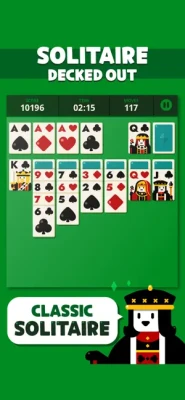
Solitaire: Decked Out brings the familiar experience of classic Solitaire to mobile devices with a colorful presentation and plenty of customization options.
Developed by Devsisters, the game takes the traditional Klondike card format and adds collectible themes, decorative items, and entertaining winning effects. Rather than focusing exclusively on completing card layouts, players also have opportunities to earn coins, discover new designs, and personalize their gaming environment.
The main objective is to organize cards into four foundation piles, arranging each suit from Ace to King. Players must also organize the cards in the main playing area by alternating colors and arranging them in descending order.
Although the rules are easy to understand, winning consistently requires patience, planning, and smart decisions. Every move can affect the available cards, making it important to think ahead before moving cards between columns.
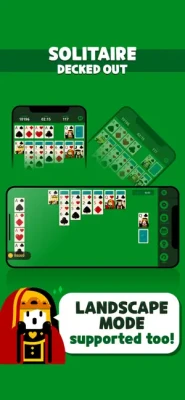
One of the game's most appealing features is its flexibility. Players can choose between one-card and three-card draw modes depending on their preferred difficulty. Portrait and landscape orientations are also supported, allowing everyone to enjoy the game in a comfortable layout.
Whether you enjoy traditional Solitaire, relaxing card games, or collecting attractive card designs, Solitaire: Decked Out offers a pleasant combination of familiar gameplay and additional rewards.
Main Features of Solitaire: Decked Out
Classic Klondike Solitaire Gameplay
The game follows the traditional Klondike rules. Players organize cards, uncover hidden cards, and build four foundation piles using the correct suits and numerical order.
Unlimited Free Games
Players can enjoy unlimited Solitaire games, providing plenty of opportunities to practice, experiment with strategies, and improve their winning consistency.
One-Card and Three-Card Draw Modes
The game offers two draw options. One-card draw provides a more accessible experience, while three-card draw introduces additional planning and difficulty.
Collectible Themed Card Decks
Players can unlock different themed decks featuring creative designs inspired by penguins, flowers, hot dogs, UFOs, and other playful subjects.
Lucky Box Rewards
Winning games earns coins that can be used toward unlocking Lucky Boxes. These rewards provide access to additional themed decks, decorations, and victory effects.
More Than 90 Achievements
The achievement system gives players additional objectives to complete while improving their Solitaire skills.
More Than 90 Decorative Items
Customization is another important feature. Players can collect decorative items and personalize different aspects of their gaming experience.
Offline Gameplay
Solitaire: Decked Out supports offline play, allowing players to enjoy their favorite card game without needing a continuous internet connection.
Portrait and Landscape Modes
Players can choose between vertical and horizontal screen orientations, making it easier to find a comfortable playing position.
Hints and Undo Options
The game provides helpful hints and undo functionality. These tools are particularly useful when learning the rules or correcting an unsuccessful move.
Automatic Game Saving
Game status is saved automatically, helping players continue their progress without having to manually save every session.
These features are described in the game's App Store listing.
Gameplay Mechanics and Rules
Understanding the basic Solitaire rules is the first step toward becoming a better player.
Solitaire: Decked Out uses the traditional Klondike format, where the objective is to move all 52 cards into four foundation piles.
The Seven Tableau Columns
At the beginning of a standard game, cards are arranged into seven columns. The first column contains one card, the second contains two cards, and this pattern continues until the seventh column contains seven cards.
Only the top card of each column is face up. The remaining cards are hidden until uncovered through gameplay.
Building Card Sequences
Cards in the tableau must be arranged in descending numerical order while alternating between red and black suits.
For example, a black 9 can be placed on a red 10, while a red 7 can be placed on a black 8.
Moving Cards to Foundation Piles
The four foundation piles represent the four suits: hearts, diamonds, clubs, and spades.
Each foundation begins with an Ace and continues upward in numerical order until reaching the King.
Using the Stock Pile
Cards that are not initially placed in the tableau remain in the stock pile. Players draw cards from this pile to discover additional opportunities for making moves.
Creating Empty Columns
When an entire tableau column becomes empty, only a King or a valid sequence beginning with a King can be moved into that space.
Using empty columns wisely is one of the most important advanced Solitaire techniques.
One-Card Draw vs. Three-Card Draw
Solitaire: Decked Out allows players to choose between two card-drawing options. Each mode offers a different level of challenge.
One-Card Draw
This mode reveals one card at a time from the stock pile. It is generally easier for beginners because more individual cards become accessible during each cycle.
It is a good choice for learning card sequences and practicing basic strategies.
Three-Card Draw
This mode reveals three cards at a time, making the order of the stock pile more important.
Players must plan carefully because the card they need may be temporarily hidden behind other cards.
Beginners should start with one-card draw until they understand the basic mechanics. Once comfortable, switching to three-card draw can provide a more demanding challenge.
Coins, Lucky Boxes, and Rewards
Progression in Solitaire: Decked Out is not limited to winning individual games.
Players earn coins by completing successful Solitaire games. These coins can then be used to unlock Lucky Boxes and discover additional customization items.
The Lucky Box system makes each victory more rewarding because it gives players something to work toward beyond completing the card layout.
Rewards include themed decks, decorative items, and fun winning ceremony effects.
A good approach is to play consistently, collect the available coins, and gradually expand your collection rather than spending resources without considering your favorite themes.
Customization and Collectible Decks
One of the most distinctive aspects of Solitaire: Decked Out is its collection of themed decks.
Instead of using only traditional-looking playing cards, players can explore creative designs inspired by different subjects.
Some of the advertised themes include:
Penguin-inspired card designs
Colorful flower themes
Hot dog-themed decks
UFO-inspired designs
Other playful and imaginative collections
The game also includes more than 90 decorative items, allowing players to personalize their experience.
These collectibles give Solitaire fans another reason to return after completing individual games.
Game Information and Specifications
Category | Information |
|---|---|
Game title | Solitaire: Decked Out |
Developer | Devsisters |
Genre | Board / Card |
Game type | Klondike Solitaire |
Platform | iPhone and iPad |
Price | Free to download |
In-app purchases | Yes |
Main game mode | Classic Solitaire |
Draw options | One-card and three-card |
Game orientations | Portrait and landscape |
Collectible decks | Multiple themed decks |
Achievements | 90+ |
Decorative items | 90+ |
Offline gameplay | Supported |
Hints | Available |
Undo feature | Available |
Progress saving | Automatic |
Age rating | 4+ |
Listed app size | Approximately 212.1 MB |
Developer | Devsisters Corp. |
Specifications reflect the available US App Store listing and may change with future updates or regional availability.
Complete Solitaire: Decked Out Strategy Guide
Winning at Solitaire consistently requires a combination of observation, patience, and careful planning. Although the rules are straightforward, experienced players understand that the order of their moves can significantly affect the outcome.
The following strategies will help you make better decisions and improve your chances of completing each game.
Understand the Board Before Making Your First Move
Before moving any cards, take a moment to examine the seven tableau columns.
Identify which face-up cards can be moved immediately and look for opportunities to uncover hidden cards.
Do not automatically move the first available card. Sometimes a different move can reveal more useful cards or create a better sequence.
A few seconds of observation at the beginning of a game can prevent unnecessary mistakes later.
Prioritize Uncovering Hidden Cards
One of the most effective Solitaire strategies is revealing face-down cards as early as possible.
Hidden cards limit your available choices because you cannot use them until they are uncovered.
Whenever possible, prioritize moves that reveal hidden cards, especially in columns containing several face-down cards.
The more information you have about the board, the easier it becomes to plan your next moves.
Focus on the Longest Columns
Columns containing many hidden cards often deserve special attention.
Uncovering cards in these columns can significantly expand your available options and create new opportunities for moving sequences.
However, do not ignore shorter columns completely. A useful move in a shorter column may create the opening needed to reorganize the entire board.
The best strategy is to balance your attention between uncovering hidden cards and maintaining useful card sequences.
Move Aces and Twos to the Foundations
Aces are essential because every foundation pile must begin with one.
Whenever an Ace becomes available, moving it to its foundation is generally a good decision.
Twos can also be moved onto matching foundation piles once the appropriate Ace is already there.
These early foundation moves help establish the four piles and simplify your board.
Think Carefully Before Moving Higher Cards to Foundations
Moving cards to foundation piles is important, but advancing every possible card immediately is not always the best choice.
Sometimes a card is more useful in the tableau because it can support another card of the opposite color.
For example, a black 6 may be needed to accommodate a red 5.
Before moving a card to its foundation, consider whether keeping it in the tableau could help you uncover hidden cards or build a longer sequence.
Use Kings Wisely
Kings play a special role because they are the only cards that can begin a new empty tableau column.
Creating an empty column can be extremely valuable, but the space is not useful unless you have an appropriate King or King-led sequence available.
Try to avoid emptying a column without a plan.
When possible, use the new space to move a King that allows you to reorganize other cards and reveal hidden positions.
Create Empty Columns Strategically
An empty column offers flexibility and can become an important tool for reorganizing the tableau.
However, creating one too early without an available King may not provide an immediate advantage.
Before clearing a column, consider what you will move into the empty space.
The best empty columns are those that allow you to move useful sequences and expose cards that were previously inaccessible.
Alternate Red and Black Cards Correctly
Building descending sequences with alternating colors is the foundation of tableau management.
Always check both the numerical value and the color before moving a card.
For example, a red 9 can be placed on a black 10, but it cannot be placed on another red 10.
Keeping this rule in mind will help you avoid invalid moves and recognize opportunities more quickly.
Manage the Stock Pile Carefully
The stock pile can provide valuable cards, but careless use can make it harder to find the card you need.
In one-card draw mode, observe each card revealed and remember useful cards that may become available later.
In three-card draw mode, pay particular attention to the order of the visible cards.
Avoid repeatedly cycling through the stock pile without considering how each revealed card could improve your tableau.
Use the Undo Feature as a Learning Tool
The undo feature is particularly useful for beginners.
If you make a move that creates an unfavorable situation, you can use undo to return to the previous position and consider another possibility.
Instead of using undo randomly, treat it as a way to understand how different moves affect the board.
Experimenting with alternative decisions can help you develop better Solitaire instincts.
Use Hints When You Become Stuck
Hints can help identify available moves when you are unsure what to do next.
However, avoid depending on them for every decision.
Try examining the tableau, checking the stock pile, and looking for possible sequences before requesting assistance.
Over time, this practice will help you recognize opportunities independently.
Advanced Solitaire Strategies
Once you understand the basic rules, you can improve your performance by using more advanced techniques.
Plan Several Moves Ahead
Try to think about the consequences of your next two or three moves rather than concentrating only on the card you can move immediately.
A move that looks useful at first may block another sequence or prevent you from uncovering an important card.
Preserve Useful Cards in the Tableau
Not every card should immediately move to a foundation pile. Some cards are valuable because they help build descending sequences.
Keeping certain cards available in the tableau can provide more flexibility.
Balance Foundation Progress and Tableau Development
Moving cards to the foundations helps complete the game, but uncovering hidden cards is equally important.
Avoid focusing exclusively on one objective. Successful players balance both priorities.
Remember the Stock Pile Order
Knowing which cards have appeared can help you predict future opportunities, especially in three-card draw mode.
Pay attention to cards that become temporarily inaccessible and consider how many stock cycles may be needed to reach them again.
Use Empty Columns to Reorganize Sequences
An empty column is an opportunity to reposition Kings and other sequences.
Use these spaces to uncover hidden cards, improve the arrangement of the tableau, and create more possible moves.
Choose the Right Draw Mode for Your Goals
One-card draw is useful for relaxed sessions and learning. Three-card draw is better when you want an additional challenge.
Switching between these modes can keep the experience interesting.
Common Mistakes to Avoid
Moving Cards Without a Plan
Making every available move immediately can create unnecessary problems. Think about the consequences before changing the tableau.
Ignoring Face-Down Cards
Hidden cards restrict your options. Prioritize uncovering them whenever a sensible opportunity appears.
Emptying Columns Too Early
An empty space without an available King may not help your current position. Plan ahead before clearing a column.
Moving Every Card to the Foundation Immediately
Some cards are more useful in the tableau. Consider whether a card can help build another sequence before moving it permanently.
Ignoring the Stock Pile
The stock pile is an important source of additional cards. Learn to use it strategically rather than cycling through it without a plan.
Depending Too Much on Hints
Hints are helpful, but developing your own decision-making skills will make you a stronger Solitaire player.
Forgetting About Three-Card Draw Order
Three-card draw requires greater attention to the sequence of cards. Remember which cards are currently accessible and which ones are blocked.
How to Complete More Solitaire Games
If your goal is to improve your overall winning consistency, follow these practical recommendations:
Start each game by examining all seven columns.
Prioritize moves that reveal hidden cards.
Move available Aces to their matching foundations.
Build alternating-color sequences carefully.
Preserve useful cards when they can support other moves.
Use empty columns strategically.
Monitor the stock pile before drawing repeatedly.
Use undo to correct mistakes and explore alternatives.
Choose one-card draw when you prefer a more relaxed experience.
Practice three-card draw to improve your planning skills.
Remember that not every Solitaire layout is necessarily winnable. Some games depend on the initial card arrangement, so an unsuccessful attempt does not always mean you made a mistake.
Frequently Asked Questions
What is Solitaire: Decked Out?
Solitaire: Decked Out is a mobile Klondike Solitaire game developed by Devsisters. It combines classic card gameplay with collectible decks, decorative items, achievements, and customization options.
Is Solitaire: Decked Out free?
Yes. The game is free to download and offers unlimited free Solitaire games. Optional in-app purchases are also available.
Can I play Solitaire: Decked Out offline?
Yes. Offline gameplay is supported, allowing you to enjoy Solitaire without a continuous internet connection.
Who developed Solitaire: Decked Out?
The game was developed by Devsisters Corp.
What is the difference between one-card and three-card draw?
One-card draw reveals one card at a time from the stock pile, while three-card draw reveals three cards at once. Three-card mode generally requires more planning.
How do I earn coins?
Players earn coins by winning Solitaire games. These coins can be used to unlock Lucky Boxes and obtain additional customization rewards.
What are Lucky Boxes?
Lucky Boxes are collectible reward items that can provide themed card decks, decorative items, and winning ceremony effects.
How many achievements are available?
The game advertises more than 90 achievements, offering additional objectives for players to complete.
Can I customize my card decks?
Yes. Players can unlock different themed decks featuring designs such as penguins, flowers, hot dogs, and UFOs.
Does Solitaire: Decked Out have a hint system?
Yes. The game includes hints that help players identify possible moves when they become stuck.
Can I undo a move?
Yes. An undo feature is available, allowing players to reverse previous moves and try different strategies.
Does the game support iPad?
Yes. Solitaire: Decked Out is available for both iPhone and iPad.
Can I play in landscape mode?
Yes. The game supports both portrait and landscape orientations.
Is Solitaire: Decked Out suitable for beginners?
Yes. Its familiar Klondike rules, simple controls, and helpful hints make it accessible to new Solitaire players.
Is Solitaire: Decked Out suitable for children?
The US App Store lists the game with an age rating of 4+. Parents should still review its optional purchases and other settings.
Is Solitaire: Decked Out Worth Playing?
Solitaire: Decked Out is a refreshing take on a familiar card game. Instead of offering only traditional Klondike gameplay, it introduces collectible themes, decorative items, achievements, and entertaining victory animations.
Its two draw modes make it suitable for different experience levels. Beginners can enjoy the more accessible one-card option, while experienced players can challenge themselves with three-card draw.
The offline mode is another useful advantage, making it convenient for travel, breaks, and relaxing sessions without internet access.
The collectible rewards also provide additional motivation to continue playing. Winning games becomes more satisfying when players can use their coins to expand their themed deck collection.
Although the core gameplay follows traditional Solitaire rules, its visual customization and progression features give it a distinctive personality.
Final Verdict
Solitaire: Decked Out successfully combines the timeless appeal of Klondike Solitaire with colorful graphics, collectible card decks, and rewarding customization features.
Its familiar rules make it easy to understand, while the different draw modes provide enough flexibility to accommodate both casual players and experienced card game fans.
With offline support, more than 90 achievements, more than 90 decorative items, and a collection of creative card themes, the game offers plenty of reasons to return for another round.
Whether you want a relaxing way to spend a few minutes or a card game that rewards careful planning, Solitaire: Decked Out is a charming option worth exploring.
Learn the rules, plan your moves, collect beautiful decks, and enjoy the classic Solitaire experience with a creative twist.
Rate the Game
User Reviews








Popular Games



















 Android
 iOS
 Windows
 Xbox