


Latest Version
Visit PageMore About :game
Spades – Classic Card Game: Master the Art of Winning Tricks
Spades - Classic Card Game brings one of the world's most recognizable trick-taking card games to mobile devices. Developed by FIOGONIA LIMITED, this game offers a traditional Spades experience with intelligent AI opponents, customizable settings, attractive card graphics, and multiple scoring options.
Spades is a game where success depends on more than simply holding powerful cards. Players must estimate how many tricks they can win, communicate through their bidding decisions, manage their cards carefully, and understand when to play aggressively or defensively.
This version makes the classic experience accessible to beginners while offering enough strategic depth to keep experienced players interested.
Whether you want to enjoy a quick card match or challenge yourself through longer games, Spades provides an engaging combination of planning, competition, and traditional card-playing entertainment.
Experience Classic Spades Gameplay
The main objective in Spades is to win tricks according to the number of tricks your team predicts during the bidding phase.
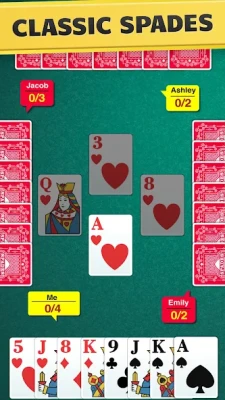
The game traditionally uses a standard 52-card deck without jokers. Four players participate, forming two opposing teams. Each player receives 13 cards, and partners sit opposite one another.
Before playing begins, every player estimates how many tricks they expect to win.
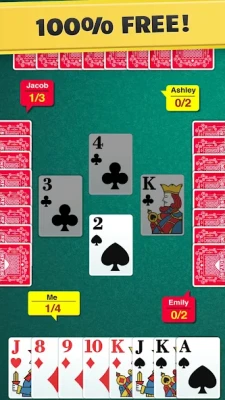
Once bidding is complete, players take turns placing cards into the current trick. The highest card in the leading suit normally wins, unless a Spade is played. Spades are the trump suit and can beat cards from other suits.
This simple rule creates plenty of opportunities for strategic decisions.
Adaptive Artificial Intelligence
One of the most interesting features of this game is its adaptive AI.
The artificial intelligence adjusts to your playing ability, helping create a challenging experience for different skill levels.
Beginners can become familiar with the rules and develop their bidding strategies, while experienced players can test their ability to predict tricks and manage difficult hands.
The AI adds variety to matches and makes the single-player experience more engaging.
Choose Your Preferred Match Length
Spades - Classic Card Game offers different scoring targets, allowing players to choose the type of match they prefer.
The available match options include:
120-point games for shorter sessions.
500-point games for a more traditional and balanced match.
750-point games for longer challenges that require consistent performance.
These options allow you to enjoy a quick game or spend more time developing a winning strategy.
Blind Nil Challenges
Players can customize their experience by choosing whether to play with or without Blind Nil.
A Nil bid means that a player predicts they will win zero tricks during the round.
Blind Nil is a more demanding variation in which the player makes the zero-trick prediction before examining their cards, according to the game's rules.
This option introduces additional risk and makes bidding decisions even more interesting.
Players who enjoy challenging card strategies can experiment with this setting to add another layer of difficulty.
Customize Cards and Backgrounds
Personalization is another enjoyable part of the experience.
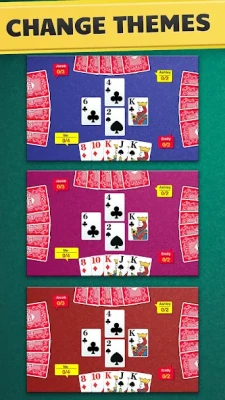
Players can customize their cards and backgrounds to create a playing environment that suits their preferences.
These options help make the card table feel more personal while maintaining the familiar appearance of classic Spades.
Scoreboard and Game Statistics
Keeping track of performance is important in a strategic card game.
The game provides a comprehensive scoreboard and statistics that allow players to monitor their progress.
By reviewing previous results, players can identify areas where their bidding or trick-taking decisions need improvement.
Statistics also make it easier to evaluate consistency over multiple matches.
Automatic Saving and Resume
Spades matches can require several rounds before reaching the final score.
The automatic save and resume feature helps preserve your progress so you can return to an unfinished match instead of starting again.
This is particularly convenient for players who prefer shorter gaming sessions.
Enjoy Spades Offline
The game supports offline gameplay, allowing players to enjoy its single-player card experience without requiring a continuous internet connection.
This makes it a convenient option when traveling, relaxing at home, or spending time somewhere with limited connectivity.
Smooth Controls and Attractive Graphics
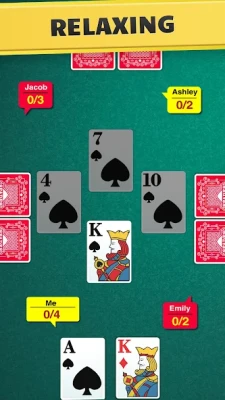
The game combines traditional card mechanics with a clean visual presentation.
Smooth controls make it easy to select cards and follow the action, while clear card graphics help players concentrate on their hands.
Sound effects and visual feedback add to the atmosphere of each match.
Free Card Game Entertainment
Spades - Classic Card Game is available as a free download and includes advertisements and optional in-app purchases.
Players can enjoy the core card-playing experience while exploring its different match settings and customization options.
Why Play Spades - Classic Card Game?
The game offers several reasons to appeal to fans of traditional card games.
Its classic trick-taking mechanics provide a familiar foundation, while adaptive AI introduces an additional challenge.
Different scoring targets allow players to select their preferred match length, and Blind Nil provides an optional way to increase the difficulty.
Combined with card customization, statistics, and offline gameplay, these features create a well-rounded experience for anyone who enjoys strategic card games.
Whether you are learning Spades for the first time or looking to sharpen your existing skills, this game offers an entertaining way to enjoy the classic card experience.
Main Game Titles and Categories
Spades Classic Card Game
Free Spades Card Game
Traditional Spades Game
Offline Spades Card Game
Spades Strategy and Trick-Taking Game
Classic Four-Player Card Game
Spades AI Card Challenge
Blind Nil Spades Game
Competitive Spades Card Matches
Smart Spades Card Strategy
Main Gameplay Features
Classic Spades Rules
Enjoy traditional trick-taking gameplay using a standard 52-card deck without jokers.
Adaptive AI Opponents
Play against artificial intelligence that adjusts to your skill level and provides a competitive single-player experience.
Multiple Scoring Options
Choose 120, 500, or 750-point matches depending on your preferred game length.
Blind Nil Mode
Customize your challenge by choosing whether to play with or without Blind Nil.
Customizable Cards
Personalize the appearance of your playing cards.
Customizable Backgrounds
Change your card table background for a more personalized experience.
Detailed Scoreboard
Follow match results and keep track of your performance.
Game Statistics
Review your progress and evaluate your card-playing decisions.
Automatic Saving
Preserve your progress and resume unfinished matches.
Offline Gameplay
Enjoy single-player Spades without needing a continuous internet connection.
Smooth Controls
Select cards easily through a straightforward interface.
Classic Card Graphics
Enjoy a familiar card table with clear graphics and visual effects.
Game Information
Game Name: Spades - Classic Card Game
Developer: FIOGONIA LIMITED
Package Name: com.fiogonia.spades
Category: Card Games
Genre: Classic Card / Strategy
Game Mode: Single Player
Gameplay Type: Trick-Taking Card Game
Number of Players in Standard Rules: Four
Deck: Standard 52 Cards
Jokers: Not Included
Trump Suit: Spades
Match Targets: 120, 500, and 750 Points
Special Rule: Blind Nil Option
Artificial Intelligence: Adaptive AI
Customization: Cards and Backgrounds
Progress Tracking: Scoreboard and Statistics
Saving: Automatic Save and Resume
Offline Support: Yes
Monetization: Contains Ads and In-App Purchases
Developer Website: Fiogonia
Spades – Complete Strategy Guide: Learn to Bid, Win Tricks, and Master Every Match
Spades is a card game that rewards patience, planning, and teamwork. Although the basic rules are straightforward, becoming a successful player requires a good understanding of bidding, trump cards, card distribution, and strategic decision-making.
Every hand presents a different challenge. Sometimes you will receive several powerful Spades, while other hands may contain strong cards from multiple suits. Learning how to evaluate these situations is essential for winning consistently.
This complete guide explains the rules, bidding system, advanced techniques, and practical tips that can help you improve your performance in Spades - Classic Card Game.
Understanding the Basic Rules of Spades
Spades is traditionally played by four players divided into two teams.
Each player receives 13 cards from a standard 52-card deck.
The objective is to win tricks and achieve the number of tricks predicted during the bidding phase.
A trick begins when one player places a card on the table. The other players must follow the leading suit whenever possible.
For example, if the first player leads with a Heart, the other players must play a Heart if they have one.
If a player does not have a card from the leading suit, they can play another suit, including a Spade.
Spades are the trump suit, meaning they normally beat cards from other suits.
The highest card in the leading suit wins unless a Spade is played. If multiple Spades are played, the highest Spade wins.
The player who wins the trick leads the next one.
Understand the Card Ranking System
Knowing card strength is essential for making good decisions.
Within each suit, cards follow this ranking:
Ace is the highest card.
King is the second highest.
Queen follows King.
Jack comes next.
The remaining cards descend from ten to two.
Spades have an additional advantage because they are the trump suit.
For example, an Ace of Hearts can normally beat other Hearts, but a low Spade can beat it if Spades have been played as trump.
Understanding this relationship helps you decide when to use powerful cards and when to save them for later tricks.
How the Bidding System Works
Bidding is one of the most important parts of Spades.
Before the first trick begins, every player estimates how many tricks they believe they can win.
Your bid should reflect the actual strength of your hand rather than your desire to win as many tricks as possible.
A hand containing several high Spades, Aces, and Kings in other suits may support a stronger bid.
A hand with many low cards and weak suit coverage usually requires a more conservative prediction.
Remember that bidding too high can create unnecessary pressure, while bidding too low may leave your team with additional tricks that can affect the final score.
How to Evaluate Your Hand Before Bidding
Before choosing your bid, examine your cards carefully.
Start by counting your Spades.
A hand with several high Spades is usually stronger because these cards can win tricks even when other players lead different suits.
Next, identify your Aces.
Aces are powerful because they can often win tricks when their suits are led.
Then examine your Kings and Queens.
Their value depends on the number of cards remaining in the same suit and the possibility that an opponent holds a higher card.
Finally, consider your short suits.
Having only one or two cards in a particular suit may become useful because it can allow you to play a Spade when another player leads that suit.
Learn When to Play Your Spades
Spades are your most valuable trump cards, but using them too early can reduce your options later.
Try to save powerful Spades for situations where they can win important tricks.
However, do not hold every Spade until the end.
Sometimes playing a Spade early is useful for taking control of the trick or preventing an opponent from winning.
A successful player understands when to preserve trump cards and when to use them aggressively.
Understand Your Partner's Strategy
Traditional Spades is a partnership game.
Your teammate's bid is an important piece of information because it indicates how many tricks they expect to win.
You should consider your partner's prediction when deciding how to play your own cards.
For example, if your partner has made a strong bid, you may need to help them win their expected tricks.
Avoid taking tricks unnecessarily when your partner already has a winning card and needs the trick to fulfill their bid.
The best teams balance individual card strength with the overall partnership target.
Pay Attention to the Cards Already Played
Memory is one of the most valuable skills in Spades.
As each trick is completed, pay attention to the cards that have been played.
Remembering which high cards have disappeared can help you estimate the strength of the remaining hands.
For example, if the Ace and King of a suit have already been played, you know that the remaining cards in that suit cannot be beaten by those higher cards.
You should also track how many Spades have been used.
This information becomes particularly useful during the later stages of a match.
Understand the Importance of Leading a Trick
The player who leads a trick has an opportunity to influence how the other players respond.
Leading a strong suit can help you win a trick with an Ace or another high card.
Leading a weaker suit may encourage opponents to use their Spades, reducing their available trump cards.
Your choice should depend on your hand, the current score, and your team's bidding position.
Avoid repeating the same lead automatically. Consider what your opponents are likely to hold.
When to Lead With an Ace
An Ace can be a reliable trick-winning card, especially early in a round.
If you have the Ace of a suit, leading it can often secure a trick before opponents have an opportunity to use their trump cards.
However, timing matters.
If the suit has already been played several times, an opponent may be out of that suit and able to trump your Ace with a Spade.
Think about the cards that have already appeared before using your strongest cards.
Understand Nil Bidding
Nil bidding means predicting that you will win zero tricks during the round.
This strategy can be rewarding, but it requires careful card management.
If you bid Nil, your objective is to avoid winning any tricks.
Low cards become particularly valuable because they are less likely to win when other players lead the same suit.
Try to identify cards that could force you to win a trick.
For example, an Ace or a high Spade may create difficulties if opponents cannot take the trick before you.
A successful Nil bid requires patience and careful timing.
Master Blind Nil
Blind Nil is a more challenging variation of the traditional Nil bid.
Instead of examining your cards first, you make the zero-trick prediction before seeing your hand, according to the game's Blind Nil rules.
This creates a greater level of uncertainty.
Before choosing Blind Nil, consider the possible reward and penalty structure of the match.
It is generally a high-risk decision and should not be treated as an automatic opportunity.
Use it when the game situation and available rules make the risk worthwhile.
Understand Bags and Overtricks
In standard Spades scoring, a team that wins more tricks than its combined bid earns additional points for those extra tricks, commonly called bags.
However, accumulating too many bags can create a penalty.
A common traditional scoring system awards ten points for each trick bid and completed, while each additional trick earns one point.
After accumulating ten bags, a team typically receives a 100-point penalty.
The exact scoring settings should be checked in the game.
This means winning every possible trick is not always the best strategy.
Sometimes it is better to avoid unnecessary extra tricks when your team has already fulfilled its bid.
Choose the Right Match Length
The game offers 120, 500, and 750-point match options.
Each target creates a different playing experience.
120-Point Matches
These matches are suitable for short sessions.
You can practice bidding and trick-taking without committing to a long game.
500-Point Matches
This option provides a more extended experience and allows you to develop a consistent strategy over multiple rounds.
750-Point Matches
Longer matches require patience and reliable decision-making. A single successful round is not enough; you must maintain strong performance throughout the game.
Manage Your Cards During the Middle of a Round
The middle stage of a round is where many important decisions happen.
By this point, several high cards may have been played, and you should have a better understanding of the remaining distribution.
Pay attention to which players are running out of particular suits.
If an opponent cannot follow a suit, they may be able to use Spades on future tricks involving that suit.
Use this information to plan your next moves.
Try to avoid wasting valuable cards on tricks that your partner can already win.
Advanced Strategy: Control the Trump Suit
Managing the number of Spades remaining in play is an advanced but important technique.
If your team holds several powerful Spades, leading the trump suit can reduce the opponents' ability to use their own trump cards later.
This is commonly known as drawing trump.
However, drawing trump is not always the correct move.
If you need Spades to cut other suits, using them too early may weaken your position.
Evaluate your hand before deciding whether to remove your opponents' trump cards.
Advanced Strategy: Use Short Suits Effectively
A short suit is one in which you hold only a few cards.
Short suits can create opportunities to play Spades when another player leads that suit.
For example, if you have only one Diamond, you may be able to play your Diamond early and become void in that suit.
Later, when another player leads Diamonds, you can use a Spade to compete for the trick.
This technique can help you turn a relatively weak hand into a useful one.
Advanced Strategy: Avoid Taking Your Partner's Tricks
One of the most common partnership mistakes is playing a higher card when your partner is already winning the trick.
If your teammate has played a strong card and no opponent has beaten it, consider playing a lower card when possible.
This preserves your powerful cards for future tricks and helps your partner fulfill their bid.
However, make sure the trick is actually safe before deciding not to compete.
Advanced Strategy: Watch Your Opponents' Bids
Bidding provides useful information about the likely strength of each player's hand.
If an opponent makes a high bid, they probably expect to win several tricks.
This can help you predict which suits they may control and when they might use their strongest cards.
You should also compare the combined bids of both teams.
The difference between the two totals can influence whether you should play conservatively or aggressively.
Common Mistakes to Avoid
Bidding Too Aggressively
Overestimating your hand can make it difficult to fulfill your prediction. Evaluate your Spades, Aces, and suit distribution carefully.
Ignoring Your Partner's Bid
Spades is a team game. Your decisions should support the combined team target.
Playing High Cards Too Early
Using every powerful card immediately can leave you with fewer options later.
Saving Every Spade
Holding trump cards for too long can also be a mistake. Use them when they provide a meaningful advantage.
Forgetting Played Cards
Failing to track important cards makes it harder to predict what opponents can still play.
Taking Unnecessary Tricks
Winning extra tricks can increase your bag count and create scoring penalties in traditional rules.
Misjudging Nil Bids
A Nil bid requires a different approach from ordinary bidding. Avoid playing high cards unnecessarily when trying to win zero tricks.
How to Improve Against Adaptive AI
The adaptive AI offers an opportunity to practice different strategies.
Instead of repeating the same approach in every match, experiment with different bidding decisions and card combinations.
Try playing conservatively in some rounds and more aggressively in others.
Observe how the AI responds to your moves and use the experience to improve your decision-making.
Review your statistics and identify patterns in your unsuccessful rounds.
For example, if you frequently fail to complete high bids, you may need to become more conservative when evaluating your cards.
If you accumulate too many bags, practice controlling the number of tricks your team wins.
Best Beginner Tips for Winning More Matches
Learn the ranking of cards in each suit.
Remember that Spades are the trump suit.
Count your high Spades before bidding.
Consider Aces and Kings when estimating your tricks.
Pay attention to your partner's bid.
Avoid taking tricks your partner can already win.
Remember which powerful cards have been played.
Use Nil and Blind Nil only when you understand their risks.
Choose a match length that suits your experience.
Review your statistics to identify areas for improvement.
Frequently Asked Questions
What is Spades - Classic Card Game?
It is a traditional trick-taking card game developed by FIOGONIA LIMITED, featuring adaptive AI, different match targets, customizable cards, and offline gameplay.
How many players are in a standard Spades game?
Traditional Spades is played by four players divided into two teams of two.
How many cards does each player receive?
Each player receives 13 cards from a standard 52-card deck.
What is the trump suit in Spades?
Spades are always the trump suit in traditional Spades rules.
What are the available match scores?
The game offers 120, 500, and 750-point match options.
What is Nil in Spades?
Nil is a bid in which a player predicts they will win zero tricks during the round.
What is Blind Nil?
Blind Nil is a more challenging variation in which a player makes a Nil prediction before examining their cards.
Can you play Spades offline?
Yes. The game supports offline single-player gameplay against AI opponents.
Does Spades have artificial intelligence?
Yes. It features adaptive AI designed to adjust to different playing skill levels.
Can you customize the cards?
Yes. Players can personalize their cards and backgrounds.
Does the game save match progress?
Yes. The automatic save and resume feature helps preserve unfinished match progress.
Is Spades suitable for beginners?
Yes. Beginners can learn the traditional rules and gradually develop their bidding and trick-taking strategies.
Final Thoughts
Spades - Classic Card Game offers an enjoyable way to experience one of the most recognizable trick-taking games on mobile devices.
Its combination of adaptive AI, different match lengths, Blind Nil challenges, customization options, and offline gameplay provides plenty of opportunities to practice and improve.
The secret to becoming a stronger Spades player is understanding your cards, making realistic bids, supporting your partner, and using your Spades strategically.
Whether you are playing a quick 120-point match or working toward a longer 750-point challenge, every hand provides another opportunity to sharpen your skills and master the art of winning tricks.
Rate the Game
User Reviews









Popular Games



















 Android
 iOS
 Windows
 Xbox