


Latest Version
November 22, 2026
Fruit Puzzle Games
Card
Android
0
Report a Problem
More About :game
What Is Okey – Çanak Okey?
Okey – Çanak Okey is a digital tile-based game developed by Fruit Puzzle Games. It brings one of Turkey's most recognizable traditional games to mobile devices, allowing players to enjoy its familiar combination of strategy, chance, and careful tile arrangement.
The game is based on the traditional Okey format, which is closely related to Rummy. Instead of playing with ordinary cards, participants use numbered tiles in different colors. The objective is to organize the tiles into valid combinations and complete a winning hand before the other players.
A standard Okey set contains 106 tiles. The numbered tiles range from 1 to 13 and appear in four different colors, with two copies of each numbered tile. The set also includes two special false joker tiles.
At the beginning of a traditional round, each player receives 14 tiles, while the starting player receives 15. Players take turns drawing a tile and discarding one they no longer need. The challenge is to recognize useful combinations, remember discarded tiles, and decide which pieces are worth keeping.
What makes Okey particularly interesting is the balance between luck and strategy. Drawing the right tile can create an opportunity to finish a hand, but successful players also need to make thoughtful decisions about every discard.
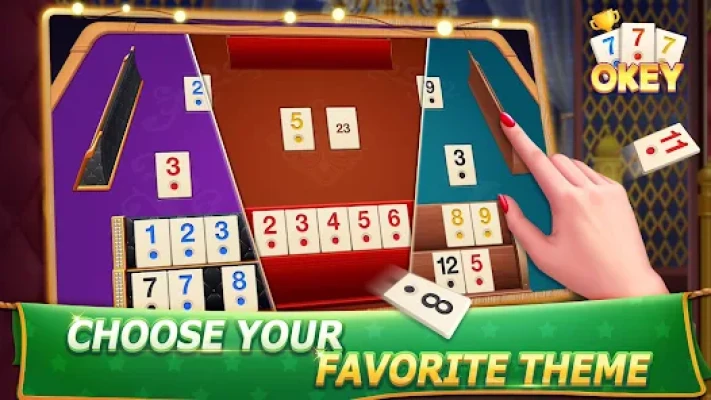
The mobile version includes daily free coin rewards, customizable rack layouts and backgrounds, attractive animations, and a user-friendly interface.
Main Features of Okey – Çanak Okey
Traditional Turkish Okey Gameplay
The game recreates the familiar rules and mechanics of traditional Turkish Okey. Players arrange numbered tiles into valid groups and sequences while competing to complete their hands.
Daily Free Coin Rewards
Players can receive free coins through daily rewards. These bonuses provide an additional incentive to return regularly and enjoy more rounds.
Customizable Tile Racks
The game allows players to customize their tile rack layout. This feature makes it easier to organize tiles according to personal preferences and create a comfortable playing environment.
Beautiful Backgrounds
Different background options give players the opportunity to personalize the appearance of the game and enjoy a more visually appealing experience.
Smooth Animations
Attractive animations and responsive interactions make drawing, arranging, and discarding tiles enjoyable.
Exciting Matches
Every round offers a different combination of tiles and strategic opportunities. Players must adapt their decisions according to the pieces they receive and the progress of the game.
Easy-to-Use Interface
The straightforward interface makes it easier for beginners to understand the game and for experienced Okey fans to enjoy familiar mechanics.
Strategic and Logical Gameplay
Okey encourages players to think ahead, recognize patterns, remember discarded tiles, and make decisions based on the available information.
Understanding the Okey Game Rules
Understanding the basic rules is essential for anyone who wants to become better at Okey.
Traditional Okey uses 106 tiles divided into four colors. Each color contains numbered tiles from 1 to 13, with two copies of every number. The remaining two tiles are special false jokers.
The game is traditionally played by four participants.
At the beginning of a round, each player receives 14 tiles, except for the starting player, who receives 15.
The starting player begins by discarding one tile. The next player draws a tile from the remaining stack or takes the most recently discarded tile, depending on the game situation.
After drawing, the player discards one tile to end their turn.
The objective is to organize 14 tiles into valid combinations. A player who successfully completes the required arrangement and discards the final unwanted tile wins the round.
Understanding Valid Tile Combinations
There are two main types of combinations in traditional Okey.
Groups of the Same Number
A group consists of three or four tiles with the same number but different colors.
For example:
Red 5, Blue 5, and Black 5.
Yellow 9, Red 9, and Blue 9.
Four tiles showing the number 12 in different colors.
These combinations are useful because they allow players to collect matching numbers instead of focusing exclusively on consecutive sequences.
Consecutive Number Sequences
A sequence consists of at least three consecutive numbers in the same color.
For example:
Red 3, Red 4, and Red 5.
Blue 7, Blue 8, Blue 9, and Blue 10.
Black 10, Black 11, Black 12, and Black 13.
Sequences can contain three or more tiles, provided that the numbers are consecutive and the colors match.
False Jokers
The two false joker tiles have a special role in the traditional game. They are not ordinary wildcards that can automatically represent any number. Their function is connected to the designated joker tile and the traditional rules.
Understanding this distinction is important because beginners sometimes confuse false jokers with the actual joker.
The Joker Tile
At the beginning of a traditional round, a special indicator tile determines which numbered tile becomes the joker.
The joker can represent a missing tile in a valid combination, making it particularly valuable.
For example, if the joker represents a Blue 6, it can substitute for Blue 6 when completing a sequence or matching group.
Complete Strategy Guide for Okey – Çanak Okey
Organize Your Tiles Immediately
One of the first things you should do after receiving your tiles is organize them by color and number.
Place consecutive numbers together and identify matching numbers across different colors.
This makes it easier to recognize potential combinations and understand which tiles are useful.
A well-organized rack also reduces the chance of overlooking a winning opportunity.
Look for Both Groups and Sequences
Do not focus exclusively on one type of combination.
A hand containing several consecutive numbers may be suitable for sequences, while matching numbers in different colors may create excellent groups.
Compare both possibilities before deciding which tiles to keep.
Flexibility is important because the tiles you draw may change the best strategy during a round.
Protect Valuable Joker Tiles
Jokers are among the most useful tiles in Okey because they can complete combinations that would otherwise remain unfinished.
Avoid discarding a valuable joker without carefully considering its potential.
Look for situations where it could connect two sequences or complete a group of matching numbers.
However, keeping a joker for too long without developing a practical combination can also slow your progress.
Use it where it creates the greatest advantage.
Watch the Discarded Tiles
Paying attention to discarded tiles is one of the most effective ways to improve your game.
Every discarded tile provides information about what other players may no longer need.
For example, if a player repeatedly discards high numbers from one color, they may be focusing on different combinations.
Remembering these details can help you make better decisions about which tiles to collect and which ones to discard.
Avoid Keeping Too Many Unrelated Tiles
A common beginner mistake is holding onto tiles simply because they might become useful later.
Although keeping different possibilities can sometimes be beneficial, an overly scattered hand makes it harder to complete combinations.
Review your rack regularly and identify tiles that have little connection to your existing groups or sequences.
Replacing unnecessary tiles with more promising options can improve your chances of finishing.
Build Multiple Potential Combinations
Try to maintain more than one possible way to complete your hand.
For example, a group of two consecutive tiles might eventually become part of a sequence, while two matching numbers could become a group.
Having multiple possibilities makes your strategy more flexible.
It also reduces dependence on drawing one specific tile.
Think Before Discarding
Every discard is important because it affects your own hand and provides an opportunity for another player.
Before throwing away a tile, ask yourself whether it could complete a combination for someone else.
Avoid discarding tiles that appear particularly useful based on the available game information.
This does not mean you can always predict what other players need, but careful observation can help you avoid unnecessary mistakes.
Remember the Joker Indicator
Always pay attention to the tile that determines the joker.
Knowing which number and color the joker represents can change how you organize your entire rack.
A tile that initially appears ordinary may become extremely valuable if it is the designated joker.
Keep this information in mind throughout the round.
Adapt Your Strategy as the Game Progresses
Your initial plan should not remain fixed throughout the entire game.
As you draw new tiles and observe other players' discards, your best combinations may change.
Be prepared to abandon an unpromising sequence and concentrate on a more achievable group.
Adaptability is one of the most useful skills in Okey.
Focus on Completing Your Hand
The ultimate objective is to finish a valid arrangement of 14 tiles.
Avoid collecting combinations simply because they look attractive.
Evaluate whether each tile helps you move closer to a complete hand.
A practical strategy focuses on completing combinations rather than building an unnecessarily complicated rack.
Use Daily Coin Rewards Wisely
Daily free coins provide an additional reason to return to the game.
Collect available rewards regularly and manage your coin balance carefully.
Avoid using all your coins without considering how many opportunities you want to keep available for future matches.
Advanced Okey Strategies for Experienced Players
Learn to Read the Discard Pile
Experienced players pay attention to the entire discard history rather than looking only at the latest tile.
Remembering previously discarded numbers can help you estimate which combinations remain practical.
Recognize Multiple Ways to Complete a Sequence
Suppose you have Red 5 and Red 6. You may be waiting for Red 4 or Red 7.
Understanding these alternative possibilities helps you evaluate which tiles are most valuable.
Calculate Your Remaining Options
Before deciding to keep a particular tile, consider how many possible draws could complete the combination.
A hand with several potential finishing tiles may be more promising than one that depends on a single specific number.
Observe Your Opponents
Pay attention to the tiles other players take and discard.
Their decisions may provide clues about the combinations they are building.
Although you cannot know their exact hands, observing their behavior can help you make more informed choices.
Avoid Predictable Discards
Repeatedly discarding tiles from the same color or number range may provide information to other players.
Changing your approach when appropriate can make your decisions less predictable.
Balance Short-Term and Long-Term Opportunities
Sometimes keeping a tile for a possible future sequence is worthwhile. In other situations, completing an almost-finished combination is the better choice.
Compare the available opportunities instead of following one strategy throughout every round.
Common Mistakes to Avoid in Okey
Ignoring Tile Organization
An untidy rack makes it difficult to recognize combinations and identify useful opportunities.
Discarding Potentially Valuable Jokers
Jokers can complete otherwise difficult combinations. Think carefully before throwing them away.
Forgetting Previous Discards
Ignoring the discard pile means losing useful information about the progress of the round.
Focusing on Only One Combination
A hand can often be completed in different ways. Keeping alternative possibilities open makes your strategy more flexible.
Holding Unrelated Tiles for Too Long
Keeping too many disconnected tiles can prevent you from building useful groups and sequences.
Making Decisions Too Quickly
A quick discard may seem convenient, but it can create unnecessary problems. Take a moment to examine your options.
Ignoring Other Players' Actions
Observing which tiles other participants collect and discard can provide useful information.
Why Is Okey So Popular?
Okey has remained popular for generations because it combines simple rules with considerable strategic depth.
New players can understand the basic idea quickly, but mastering the game requires practice, memory, and the ability to recognize different combinations.
The mixture of numbered tiles, colors, jokers, and changing possibilities makes every round different.
Another reason for its popularity is its social and traditional background. Okey is widely enjoyed in Turkey and among Turkish communities around the world.
The digital format makes the familiar experience more accessible, allowing players to enjoy the game through a convenient mobile interface.
What Makes Okey – Çanak Okey Different?
Okey – Çanak Okey combines traditional Turkish tile gameplay with convenient mobile features.
Its daily coin rewards encourage regular participation, while customizable racks allow players to organize their tiles according to their preferences.
The background customization options also provide a more personal playing environment.
Rather than changing the fundamental rules of Okey, these features make the traditional experience more convenient and visually appealing on Android devices.
The smooth animations and straightforward interface help maintain the familiar feeling of a traditional tile game while adapting it to modern mobile gaming.
Frequently Asked Questions
What is Okey – Çanak Okey?
Okey – Çanak Okey is a digital version of the traditional Turkish tile game. It combines Rummy-style gameplay with numbered tiles, matching groups, consecutive sequences, and strategic discarding.
Who developed Okey – Çanak Okey?
The game was developed by Fruit Puzzle Games.
How many tiles are used in traditional Okey?
A standard Okey set contains 106 tiles, including 104 numbered tiles and two false jokers.
How many players participate in traditional Okey?
Traditional Okey is generally played by four players.
What is the objective of Okey?
The objective is to organize your tiles into valid groups and consecutive sequences, then discard the final unwanted tile to complete your hand.
What are the main combinations in Okey?
The two main combinations are groups of the same number in different colors and consecutive numbers in the same color.
What is a joker in Okey?
A joker is a special tile determined by the indicator tile at the beginning of the round. It can represent a missing tile in a valid combination.
Does Okey – Çanak Okey offer daily rewards?
Yes. Players can receive daily free coin rewards.
Can players customize the game interface?
Yes. The game offers customizable rack layouts and backgrounds.
Is Okey – Çanak Okey suitable for beginners?
Yes. Its familiar rules and straightforward interface make it accessible to beginners, although developing advanced strategies requires practice.
Does Okey require logical thinking?
Yes. Players need to recognize patterns, remember discarded tiles, plan combinations, and make strategic decisions.
Is Okey – Çanak Okey free to download?
The game is listed as a free download on Google Play. Check its store listing for current information about advertisements and optional purchases.
Final Thoughts
Okey – Çanak Okey offers an enjoyable way to experience one of Turkey's most recognizable traditional tile games on an Android device. Its combination of numbered tiles, colorful designs, strategic combinations, and daily coin rewards creates an engaging experience for both newcomers and longtime Okey fans.
The game stands out through its customizable racks, attractive backgrounds, smooth animations, and accessible interface. Although the basic rules are easy to understand, developing an effective strategy takes observation, memory, patience, and practice.
Whether you enjoy traditional Turkish games, Rummy-style challenges, or thoughtful tile-based entertainment, Okey – Çanak Okey provides an entertaining mobile experience that brings classic gameplay into a convenient digital format.
Rate the Game
User Reviews






Popular Games



















 Android
 iOS
 Windows
 Xbox