
Latest Version
February 19, 2024
city park games
Casual
Android
17
Report a Problem
More About :game
Snake And The Colors Challenge – Game Overview
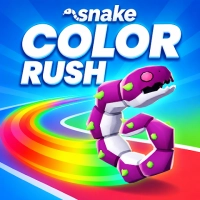
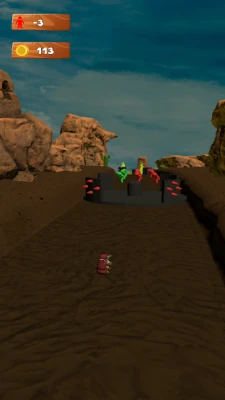
Snake And The Colors Challenge gives the classic snake concept a colorful arcade twist. Instead of concentrating on growing a snake while navigating a traditional grid, you guide a moving, glowing creature through an endless course filled with barriers, color changes, and collectible stars.
The central rule is simple: your snake can break through obstacles that match its current color, but it must avoid obstacles of different colors. A green snake can pass through green barriers, for example, while a red snake needs to stay away from green and other mismatched obstacles.
That rule creates the main challenge. You are not simply trying to move out of the way of everything ahead. Some obstacles can be safely destroyed, while others can end a promising run. Knowing the difference and positioning your snake early are essential for lasting longer.
Color-changing lines make the experience more demanding. When the snake crosses a line that changes its color, the obstacles that were safe a moment ago may become dangerous, and previously unsuitable barriers may become passable. Players must therefore pay attention to both the current color and the obstacles coming next.
Stars provide another objective during each run. Collecting them can increase your score, but chasing every star is not always worth the risk. The strongest players learn to balance rewards with survival, choosing safe routes instead of making sudden movements for every collectible.
With colorful graphics, responsive swipe controls, endless gameplay, and a straightforward but demanding color-matching rule, Snake And The Colors Challenge is suitable for short arcade sessions and players who enjoy testing their reflexes.
Game Information
Game Title: Snake And The Colors Challenge
Developer: City Park Games
Genre: Casual Arcade, Endless Runner, Snake Game, Color-Matching Action
Platform: Android
Core Gameplay: Guide a colorful snake through obstacles, break matching-color barriers, avoid mismatched colors, and collect stars.
Controls: Swipe to move the snake.
Main Challenge: React to upcoming obstacles and adapt when the snake changes color.
Scoring Objective: Collect stars and try to achieve a higher score while keeping the run going.
Gameplay Style: Endless arcade action focused on timing, reflexes, and obstacle avoidance.
Difficulty: Easy to understand, but increasingly challenging as you try to survive longer and react more accurately.
Monetization: The Google Play listing indicates that the game contains advertisements.
Main Features of Snake And The Colors Challenge
1. Color-Matching Obstacles
The defining feature is the relationship between the snake's color and the obstacles ahead. Matching colors allow the snake to break through certain barriers, while different colors must be avoided.
This transforms ordinary obstacle avoidance into a decision-making challenge. You need to identify which objects are safe before committing to a movement.
The key is to make decisions based on the color the snake has now, not the color you expect it to have later.
2. Endless Arcade Gameplay
Snake And The Colors Challenge uses an endless-runner structure that encourages players to improve their previous performance.
Each run offers another opportunity to sharpen your reflexes, recognize obstacle patterns, and become more comfortable with color changes. Rather than completing a fixed campaign, the main objective is to stay alive, collect useful rewards, and achieve a better score.
3. Color-Changing Lines
Some lines change the snake's color when it passes through them. This mechanic requires players to look beyond the immediate obstacle and prepare for what happens after the change.
A barrier that was safe before crossing a line may become dangerous afterward. Similarly, a different barrier may become passable once the snake adopts a new color.
Planning ahead is particularly important around these transitions because reacting only after the color changes may leave too little time to move safely.
4. Collectible Stars
Stars give players an additional reason to pay attention to their surroundings. Collecting them can increase the score and reward accurate movement.
However, stars should not distract you from the primary objective of survival. If collecting one requires a risky move toward a mismatched obstacle, it may be better to leave it behind.
5. Simple Swipe Controls
The game uses swipe-based movement, making it easy for new players to understand the basic controls.
The challenge comes from using those controls accurately while obstacles approach. Small, deliberate movements can help you maintain a safe route, while unnecessary swipes can put the snake in danger.
6. Bright, Colorful Visual Design
The glowing snake, colorful barriers, and contrasting obstacles give the game a distinctive arcade appearance.
Color is not just decoration; it communicates important gameplay information. Learning to recognize colors quickly helps you make safer decisions and reduces hesitation during difficult sections.
7. A Simple Concept With Room for Improvement
The basic rules can be learned quickly, but consistently achieving a strong score takes practice. You must combine observation, timing, movement, and risk assessment while the course continues to unfold.
This makes the game suitable for players who enjoy short sessions where each attempt offers a chance to improve.
How to Play Snake And The Colors Challenge
Step 1: Learn the Swipe Controls
Start by practicing how the snake responds to your swipes. Try to move deliberately rather than making several rapid gestures at once.
Understanding the control response helps you estimate how much movement is needed to reach a safe path.
Step 2: Check the Snake's Current Color
Before approaching an obstacle, identify the snake's current color. That determines which barriers it can safely destroy.
Do not assume that every obstacle is dangerous or that every barrier can be broken. Compare the colors and choose your movement accordingly.
Step 3: Avoid Mismatched Obstacles
If an obstacle has a different color from your snake, prioritize avoiding it.
Move early when possible. Waiting until the last moment reduces your options and makes it harder to correct an inaccurate swipe.
Step 4: Use Matching Obstacles to Your Advantage
Barriers that match the snake's current color can be destroyed. Recognizing these safe obstacles can help you maintain a good route through the course.
However, do not become so focused on breaking matching barriers that you overlook a dangerous obstacle immediately afterward.
Step 5: Prepare for Color Changes
Watch for lines that change the snake's color. Before crossing one, look ahead and consider which obstacles will become safe or dangerous afterward.
A good route should account for the new color, not merely the situation before the transition.
Step 6: Collect Stars When the Route Is Safe
Look for stars along your path and collect them when doing so does not create unnecessary danger.
If a star requires a sudden movement toward a mismatched barrier, prioritize survival. A longer run gives you more opportunities to score.
Step 7: Learn From Every Run
When a run ends, consider what caused the mistake. You may have reacted too late, forgotten about a color change, or moved toward a star without checking the next obstacle.
Use that lesson during your next attempt instead of repeating the same movement pattern.
Full Strategy Guide for Snake And The Colors Challenge
1. Prioritize Survival Over Breaking Obstacles
One of the most important principles is to avoid danger before thinking about destroying barriers.
Matching-color obstacles can be broken, but destroying them is not always necessary. If you have a clear route around an obstacle, maintaining that route may be safer than making an unnecessary movement toward it.
Focus first on identifying mismatched obstacles. Once you know which areas are dangerous, choose a route that keeps the snake away from them.
This approach reduces impulsive decisions and helps you stay in control during fast sections.
2. Look Ahead Instead of Reacting at the Last Second
The most common mistake in an endless runner is concentrating only on what is directly in front of the character.
Try to scan farther ahead whenever the game gives you enough visual information. Look for upcoming barriers, stars, and color-changing lines before deciding where to move.
This extra awareness gives you more time to select a safe path. It also makes color transitions easier to manage because you can prepare before the snake reaches the line.
As you improve, aim to make decisions based on the next obstacle and the one that follows it, rather than handling each barrier in isolation.
3. Treat Every Color Change as a New Situation
Color-changing lines are among the most important mechanics to understand.
Before crossing a line, remember which color your snake will become and check the obstacles that follow. A route that appears safe before the transition may no longer work afterward.
For example, if a green snake is approaching a line that turns it red, a green barrier beyond that line will become dangerous. A red barrier, by contrast, may become safe.
Do not rely on the route that worked a moment earlier. Reassess the situation whenever the color changes.
4. Avoid Overcorrecting With Swipe Controls
Quick reactions are useful, but uncontrolled movement can create problems of its own.
When you see a dangerous obstacle, make a deliberate swipe toward a safer route. Avoid adding extra movements unless the course requires them.
Overcorrecting can take the snake away from a safe position and place it directly in the path of another obstacle.
Practice making the smallest movement that achieves your objective. Consistent control is more valuable than frantic swiping.
5. Collect Stars Without Sacrificing the Run
Stars are tempting because they provide an additional scoring objective. However, a collectible is only worthwhile when the route to it is reasonably safe.
Before moving toward a star, check three things:
Is the snake's current color compatible with the obstacles around it?
Will collecting the star move the snake toward a dangerous barrier?
Is there another obstacle immediately after the star?
If the route is clear, collecting the star is a sensible choice. If it requires a risky detour, continuing safely is often better.
A strong run depends on maintaining control, not collecting every available reward.
6. Make Color Recognition Automatic
The game becomes easier when you can recognize matching and mismatched colors without lengthy hesitation.
During early runs, consciously compare the snake's color with the next barriers. Over time, this process can become faster and more natural.
Pay special attention when several colors appear close together. Do not let a matching barrier distract you from a dangerous one beside or beyond it.
The faster you recognize the important differences, the more time you have to make an accurate movement.
7. Keep Your Attention on the Route, Not Just the Score
It is easy to become focused on improving your score and forget the decisions needed to stay alive.
Use the score as a measure of progress, but do not let it dictate every movement. If you become too aggressive while chasing stars or trying to extend a run, you may take unnecessary risks.
Concentrate on the next safe movement first. Strong scores are more likely to follow when you consistently avoid avoidable mistakes.
8. Anticipate Obstacles After a Safe Barrier
Breaking through a matching-color obstacle may feel like a successful move, but the next part of the route still matters.
Before committing to a barrier, check whether a mismatched obstacle follows immediately. If the path beyond the matching barrier is dangerous, prepare your next movement in advance.
This prevents a common problem: successfully passing one obstacle only to collide with the next because there was no plan for what followed.
Think of each movement as part of a sequence rather than a separate action.
9. Stay Calm When the Course Becomes Difficult
As you try to extend your run, the need for quick decisions can make the game feel more demanding.
When the screen becomes busy, avoid reacting to every obstacle with a sudden movement. Focus on the immediate threat, identify a safe direction, and consider the next color transition.
Panic tends to produce unnecessary swipes. A calm response gives you a better chance of choosing a route that remains safe for more than a moment.
10. Use Failed Runs as Practice
Every failed attempt can reveal something about your habits.
If you collide with a mismatched barrier, you may have identified it too late. If you fail immediately after a color change, you may have focused on the old color rather than the new one. If you miss a star, you may have chosen survival over risk, which can be the correct decision.
Separate mistakes from sensible choices. Not collecting a star is not necessarily a failure if doing so would have endangered the run.
Improve the decisions that caused avoidable collisions instead of treating every missed reward as a problem.
11. Develop a Consistent Decision Routine
A simple mental routine can help you respond more reliably:
Identify the snake's current color.
Locate the next mismatched obstacle.
Check whether a color-changing line is approaching.
Choose a safe route through the next section.
Collect stars when they fit naturally into that route.
Reassess the course after every color change.
With practice, this routine becomes faster and requires less conscious effort.
12. Improve One Skill at a Time
Trying to perfect every part of your performance immediately can make improvement harder to measure.
Instead, focus on one skill during each run. You might concentrate on anticipating color changes, avoiding late swipes, or identifying dangerous obstacles earlier.
Once that skill becomes more reliable, focus on another.
This method creates a clear path to improvement and helps you understand which habits are responsible for longer runs.
Advanced Tips for Higher Scores
Check colors before moving. Never assume an obstacle is safe simply because it is directly in your path.
Look beyond the nearest barrier. Planning for the next section reduces sudden movements.
Prepare before color-changing lines. The new color determines which obstacles are safe after the transition.
Treat stars as optional rewards. Collect them when the route is safe instead of risking the entire run.
Use controlled swipes. Avoid unnecessary corrections that can move the snake into danger.
Remember what follows a matching obstacle. Breaking one barrier does not guarantee a safe route beyond it.
Stay consistent under pressure. Calm decisions are easier to repeat than frantic reactions.
Practice color recognition. Faster recognition gives you more time to choose a safe path.
Learn from collisions. Identify whether the problem was late recognition, poor positioning, or a missed color change.
Focus on longer survival. Consistency is the foundation for improving your score over time.
Common Mistakes to Avoid
Chasing Every Star
Stars add a scoring objective, but taking a dangerous route for a collectible can end a promising run. Collect them when the path is safe.
Ignoring the Snake's Current Color
Always check the current color before approaching a barrier. A previously safe obstacle may become dangerous after a transition.
Reacting Too Late
Waiting until an obstacle is almost upon you leaves little room for correction. Look ahead and move before the route becomes critical.
Swiping Too Many Times
Repeated, unnecessary swipes can take the snake away from a safe position. Make deliberate movements and reassess the route.
Forgetting About Color-Changing Lines
These lines change the rules for the obstacles ahead. Prepare for the new color before crossing.
Focusing Only on Breaking Barriers
Destroying matching-color obstacles is part of the game, but survival comes first. Avoid unnecessary contact with dangerous obstacles.
Ignoring What Comes After an Obstacle
A safe barrier can be followed by a dangerous one. Plan for the next section instead of focusing on a single obstacle.
Is Snake And The Colors Challenge Worth Playing?
Snake And The Colors Challenge is a good fit for players who enjoy quick arcade games that are easy to understand but reward practice. Its color-matching system adds a useful twist to the endless-runner format, turning obstacle avoidance into a constant series of small decisions.
The game stands out through its simple rules: match your snake's color to the right barriers, avoid mismatched obstacles, collect stars, and react when your color changes. These mechanics make timing and anticipation central to the experience.
Its swipe controls are accessible to new players, while the need to recognize colors and plan ahead gives experienced players room to improve. The endless format also makes it suitable for short play sessions when you want a quick challenge.
The main limitation is that the experience focuses on repeated runs and score improvement rather than a story-driven campaign or a large collection of progression systems.
Final verdict: Snake And The Colors Challenge offers a straightforward, colorful arcade challenge built around reflexes, color recognition, and obstacle avoidance. If you enjoy endless runners and games that reward quick thinking, it is worth trying.
Frequently Asked Questions
What is Snake And The Colors Challenge?
Snake And The Colors Challenge is a casual endless-runner game in which you guide a colorful snake through barriers, break obstacles that match its color, avoid mismatched colors, and collect stars.
How do you play Snake And The Colors Challenge?
Swipe to move the snake through the course. Match your snake's color to barriers it can safely break, avoid obstacles of different colors, and collect stars when doing so does not put the run at risk.
Can the snake destroy every obstacle?
No. The central rule is that the snake can break obstacles that match its current color. Barriers with different colors must be avoided.
How does the snake change color?
Certain lines change the snake's color when it passes through them. After crossing one, you must reassess the obstacles ahead because the set of safe barriers has changed.
What are stars used for?
Stars are collectibles that contribute to your score. They offer an additional objective, but collecting them should not take priority over avoiding dangerous obstacles.
Is Snake And The Colors Challenge an endless runner?
Yes. Its core gameplay is an endless arcade run in which players try to survive longer, avoid obstacles, collect stars, and improve their scores.
Is Snake And The Colors Challenge easy to play?
The controls and basic rules are simple to learn. However, longer runs require quick color recognition, careful movement, and anticipation of upcoming obstacles.
What is the best strategy for getting a higher score?
Focus on survival, look ahead, prepare for color changes, and collect stars when they are on a safe route. Avoid unnecessary swipes and learn from mistakes that end your runs.
Does Snake And The Colors Challenge contain ads?
Yes. Its Google Play listing indicates that the game contains advertisements.
Who should play Snake And The Colors Challenge?
It is suited to casual arcade fans, endless-runner players, and anyone who enjoys games built around quick reactions, color matching, and short challenges.
Final Thoughts
Snake And The Colors Challenge turns a simple idea into a fast-paced arcade test. The snake must break matching-color obstacles, avoid mismatched barriers, collect stars when practical, and adapt whenever a color-changing line alters the route.
The best way to improve is to look ahead, recognize colors quickly, make controlled movements, and treat survival as the main objective. With practice, players can develop more reliable reactions and aim for longer runs and better scores.
Rate the Game
User Reviews















Popular Games



















 Android
 iOS
 Windows
 Xbox