
Latest Version
October 25, 2026
MOBIRIX
Puzzle
iOS
0
Report a Problem
More About :game
What Is Sand Block Crush?
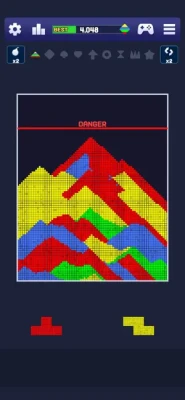
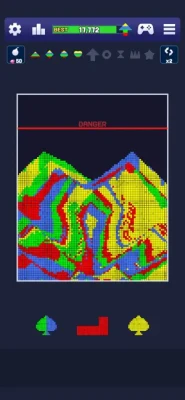
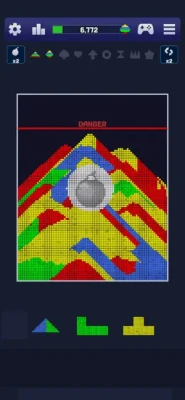
Sand Block Crush is a casual puzzle game that challenges players to manage a growing field of colorful sand. Instead of simply filling conventional block rows, the main objective is to create an unbroken connection of the same color between the left and right walls. Once the connection is complete, the connected sand clears from the playfield.
The central challenge is balancing quick decisions with careful placement. Every block affects the available space, the position of different colors, and the opportunities for future clears. A move that looks useful in the moment may create a difficult arrangement later, while a carefully positioned block can trigger a chain of consecutive clears.
Developed by MOBIRIX, Sand Block Crush includes a main arcade experience, collectible shapes, special sand blocks, a weekly Adventure Mode, rankings, and a collection of 14 mini-games. The game also supports offline play, making it suitable for short sessions at home or while traveling.
Sand Block Crush Gameplay Overview
The main gameplay revolves around positioning colorful blocks to create connections between matching sand on opposite sides of the board. Players can move blocks left and right before dropping them into place. An alternative drag-and-drop control option allows direct placement.
Once matching sand forms a continuous path from the left wall to the right wall, the connected sand is cleared. Removing sand creates more room for upcoming blocks and can help maintain a strong scoring streak.
However, the playing field can become crowded if blocks are placed without a plan. The goal is not simply to clear individual colors whenever possible. Players must also think about how each move affects the next opportunity, how much space remains, and whether a placement helps maintain consecutive clears.
The game becomes more strategic as players learn to recognize useful connections, prepare future clears, and make better use of special items.
How to Play Sand Block Crush
Understand the Basic Controls
Move the current block horizontally to find a suitable position, then drop it into the playfield. If you prefer more direct control, try the drag-and-drop option available in the game.
Take a moment to inspect the current arrangement before placing a block. Look for matching colors near both walls and identify locations where the new sand could complete a connection.
Connect Matching Sand Colors
The most important rule is that matching sand must form an unbroken path from the left wall to the right wall. A color appearing on both sides is not enough if the sand between them remains disconnected.
Before making a move, trace the potential path across the board. Consider whether the current block can close a gap or extend an existing connection.
Clear Sand Efficiently
A successful connection removes the connected sand and opens space for future placements. These clears are essential for controlling the board and increasing your score.
Avoid focusing exclusively on one small area. A placement that helps complete a wider connection can be more valuable than one that only improves a local cluster.
Maintain Consecutive Clears
Sand Block Crush rewards consecutive clears with increasingly valuable combos. Clearing sand repeatedly without breaking the chain is an important part of maximizing your score.
Pay attention to moves that can prepare the next clear immediately after the current one. A good sequence is often more valuable than a single isolated success.
Watch the Deadline
The game challenges you to clear as much sand as possible before it reaches the deadline. As the field grows, available space becomes more important, and inefficient placements can make later moves harder.
Prioritize moves that remove meaningful amounts of sand while keeping enough room for future blocks.
Complete Sand Block Crush Strategy Guide
Plan Your Moves Before Dropping Blocks
One of the most effective ways to improve in Sand Block Crush is to examine the board before committing to a placement. Rather than dropping every block into the first available opening, look for connections that can be completed with minimal disruption to the rest of the field.
Identify colors that are already close to forming a path between the walls. Then determine whether the current block can finish that connection or prepare the board for a likely follow-up move.
This habit reduces unnecessary buildup and helps you recognize opportunities that might otherwise be missed.
Prioritize Moves That Clear Large Connections
Not every successful clear offers the same strategic value. When you have multiple options, consider which placement will remove the most connected sand while preserving useful space.
A larger clear can open several areas of the board at once, making it easier to position upcoming blocks. It may also help you continue a scoring combo.
However, the biggest immediate clear is not always the best choice. If another move creates a more reliable follow-up, preserving the combo may offer greater overall value.
Keep the Playing Field Under Control
Allowing sand to accumulate in awkward positions can make the game much harder. When the board becomes crowded, blocks have fewer useful landing positions, and creating a continuous path may require several additional moves.
Make space management part of every decision. Look for opportunities to remove connected sand before adding more material to an already crowded area.
Avoid repeatedly building up the same section without a clear plan for clearing it. A balanced board generally gives you more flexibility when new blocks appear.
Build Combos Through Consecutive Clears
Combos are among the most important scoring opportunities in Sand Block Crush. The game rewards players who keep clearing sand without interrupting the sequence, so every move should be considered in relation to what comes next.
After completing a clear, immediately inspect the new board. Check whether the cleared space exposes a connection, opens a useful route, or makes another color easier to connect.
Try to prepare future clears before making the current one whenever possible. This approach reduces the chance of losing momentum because the next move has no obvious solution.
Do not force a weak placement just to continue a combo. If maintaining the streak would leave the board dangerously crowded, restoring control may be the smarter long-term decision.
Use Special Sand Blocks Strategically
Sand Block Crush features special shapes such as stars, crowns, spades, hearts, rings, and butterflies. These shapes unlock as you progress and can appear during gameplay. Different shapes award different numbers of points.
Learn to recognize the value of the special shapes available to you and consider both their scoring potential and their placement requirements.
A high-value shape can be especially useful when it completes a connection or fits into a position that would otherwise be difficult to fill. However, placing it carelessly may create an awkward arrangement that limits future options.
Whenever possible, use special blocks to support a broader strategy instead of treating their appearance as an automatic reason to place them immediately.
Know When to Use Bombs
Bombs are helpful items designed to clear blocked spaces. They can provide relief when sand accumulates in an inconvenient area or when the current arrangement makes normal placements difficult.
The best time to use a bomb is when it solves a meaningful problem. Consider whether the blocked space is preventing a useful connection, restricting access to a promising area, or contributing to dangerous buildup.
Avoid using bombs simply because they are available. If normal placements can create a clear without sacrificing valuable resources, saving the item may be more beneficial.
Make Smart Use of Shuffle
Shuffle replaces your current blocks and gives you an opportunity to reconsider your approach. It can be useful when the available arrangement does not support your current plan or when a fresh set of blocks may create better possibilities.
Before activating Shuffle, assess the board and identify what is causing the difficulty. If the problem is a poor block selection, a shuffle may help. If the real issue is a crowded field with very little room, you may need to clear space first.
Treat Shuffle as a recovery tool rather than a routine action. Using it at the right moment can help you avoid wasting several moves on an unproductive arrangement.
Adapt to the Current Board
A successful strategy should change as the field changes. Early in a run, you can usually focus on establishing useful connections and learning which colors are easiest to clear. As the board fills, preserving open space and finding efficient clears become increasingly important.
Do not continue following a plan simply because it worked earlier. Reassess the available connections after every clear and adjust your next move to match the new layout.
Flexibility is particularly important when special shapes or unexpected block arrangements appear.
Sand Block Crush Adventure Mode Guide
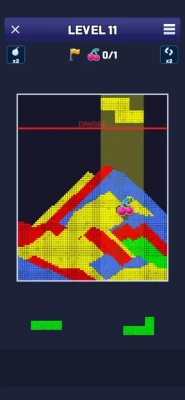
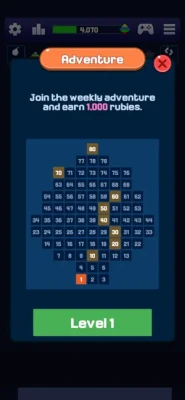
Adventure Mode introduces a series of stages with different objectives. The weekly map can change, so players should be prepared to adapt their strategies to the missions available during each rotation.
Read Each Mission Carefully
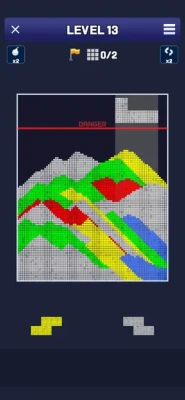
Adventure Mode missions can involve collecting particular colors, building combos, or using large blocks. Before starting a stage, identify the exact objective and consider how it changes your priorities.
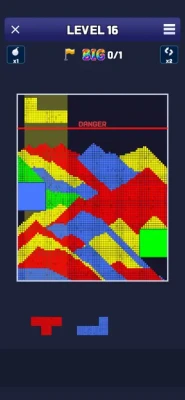
A color-collection mission may require you to focus on specific connections instead of simply maximizing your general score. A combo mission rewards planning a sequence of clears. A large-block mission may require you to think more carefully about where larger pieces can fit.
Choose placements that contribute to the mission while keeping the board manageable.
Complete Multiple Objectives in Boss Stages
Boss stages require players to complete two missions at the same time. These challenges demand more careful planning because a move that helps one objective may not automatically help the other.
Start by identifying which objectives can be advanced together. If a single placement can contribute to both missions, it may be especially valuable.
Keep checking your progress during the stage. Avoid spending too many moves on one objective while allowing the other to become difficult to complete.
Reach the Final Adventure Stage
Progress through the available stages while adjusting your approach to each mission. Completing the final stage provides Rubies as a reward, making Adventure Mode worthwhile for players who want to advance beyond the standard arcade experience.
Because the map changes weekly, check the available challenges regularly and prioritize stages that match your strengths. If a mission proves difficult, use it as an opportunity to improve the particular skill it tests, whether that means managing space, creating combos, or placing special blocks.
How to Collect Shapes and Complete Gold Stars
Sand Block Crush includes a collectible progression system built around nine shapes and the completion of a Gold Star.
Unlock new shapes as you progress through the required stages. Completing the collection contributes to earning a Gold Star, and players can continue collecting Gold Stars and challenging their best scores afterward.
To make steady progress, focus on understanding the requirements associated with the available stages. Avoid assuming that a high score alone will satisfy every progression objective.
When a particular shape or stage becomes available, consider how its requirements fit your normal gameplay. You may be able to work toward collection progress while still maintaining efficient clears and strong combos.
Gold Star progression also gives experienced players a reason to return after completing their initial objectives.
How to Get a High Score in Sand Block Crush
Focus on Efficiency
A high score comes from making useful placements consistently rather than relying on occasional lucky clears. Try to maximize the value of each move by considering the amount of sand removed, the space recovered, and the opportunities created for subsequent clears.
Protect Your Combo Streak
Consecutive clears increase scoring potential, so maintaining momentum is an important part of a strong run. After every successful connection, look for the next practical opportunity instead of placing the next block without a plan.
Avoid Unnecessary Buildup
Excess sand can restrict movement and make future connections harder to complete. Clear useful paths regularly and avoid filling spaces that do not support a realistic follow-up strategy.
Learn From Failed Runs
When a run ends earlier than expected, review the decisions that caused the biggest problems. Consider whether you ignored a possible connection, used an item too early, or allowed one area to become crowded.
Changing one habit at a time makes it easier to identify which improvements lead to better results.
Challenge Your Personal Best
The game includes a weekly high-score ranking and an all-time Gold Star ranking. Use your own previous results as a benchmark and focus on steady improvement.
Instead of trying to achieve a perfect run every time, work on improving one part of your play, such as recognizing connections faster or maintaining combos for longer.
Common Sand Block Crush Mistakes to Avoid
Dropping Blocks Without a Plan
Random placements can quickly create unnecessary buildup. Before dropping a block, check whether it contributes to a connection or leaves useful space for future moves.
Ignoring Other Colors
Focusing on a single color can cause you to miss better opportunities elsewhere. Examine the whole board before deciding which connection to pursue.
Breaking Combos Unnecessarily
Clearing sand without considering the next move can interrupt a promising scoring streak. Whenever possible, prepare a follow-up clear before committing to the current placement.
Saving Items Forever
Bombs and Shuffle are useful because they can help overcome difficult situations. Holding them indefinitely provides no benefit if the board becomes unmanageable. Use them when they can solve a meaningful problem.
Spending Items Too Quickly
The opposite mistake is using every available item as soon as a minor obstacle appears. Consider whether an ordinary placement can solve the problem before spending a resource.
Forgetting the Stage Objective
In Adventure Mode, a move that increases your general score may not contribute much toward the mission. Keep the objective in mind throughout the stage and adjust your priorities accordingly.
Rushing When the Board Gets Crowded
Pressure can lead to careless placements. Even when space is limited, take a brief moment to inspect the available connections and choose the move most likely to restore control.
Sand Block Crush Mini-Games Guide
Beyond its main sand puzzle, Sand Block Crush includes 14 mini-games that provide different kinds of challenges. These modes are useful when you want a change of pace or prefer to practice other puzzle-solving skills.
Merge Watermelon
This mode focuses on combining items as you work toward larger results. Plan your placements to avoid running out of space and look for opportunities to create useful combinations.
2048
The goal is to combine matching numbered tiles to create larger values. Keep the board organized and think ahead before making moves that could leave important tiles trapped.
Block Puzzle
Block Puzzle challenges you to fit pieces into available spaces. Consider the shape of each piece and preserve enough room for the next placements.
Water Sort
Water Sort focuses on organizing colored liquids into suitable containers. Plan a sequence of transfers and avoid filling containers in ways that restrict later moves.
Shanghai Classic
This tile-matching puzzle rewards careful observation. Identify available matches and think about which removals will reveal more useful options.
Triple Puzzle
Triple Puzzle centers on matching groups of items. Pay attention to the available combinations and avoid moves that unnecessarily restrict future matches.
Shanghai Plus
This additional Shanghai-style challenge provides another opportunity to practice tile recognition and removal planning. Look beyond the most obvious match and consider how each removal affects the remaining layout.
Klondike
Klondike is a classic solitaire card game. Organize cards by following the game's rules, reveal hidden cards when possible, and plan moves that keep more options available.
FreeCell
FreeCell requires careful card sequencing and effective use of temporary spaces. Avoid filling every free cell too early, because those spaces can be essential for rearranging cards.
Spider
Spider Solitaire rewards long-term planning and the organization of descending card sequences. Prioritize moves that reveal hidden cards and create opportunities to complete sequences.
Sudoku
Sudoku challenges you to fill the grid according to its number-placement rules. Use elimination and logical deductions rather than guessing whenever possible.
Minesweeper
Minesweeper requires you to interpret numerical clues and identify dangerous squares. Use the information already revealed before opening uncertain spaces.
Math Puzzle
Math Puzzle tests numerical reasoning. Work carefully through the available problem and prioritize accuracy over speed when a mistake could affect the result.
Reversi
Reversi is a strategic board game based on capturing opposing pieces. Think about positional control and the consequences of each move instead of focusing only on immediate captures.
Best Tips for Beginners
New players should begin by learning how matching colors connect across the playfield. Understanding this central mechanic is more important than chasing high scores immediately.
Experiment with both movement and drag-and-drop controls to discover which feels more comfortable. Use early runs to practice recognizing possible connections and learning how the board changes after a clear.
Keep the playing field open whenever possible. Try to create straightforward connections rather than building complicated arrangements that are difficult to finish.
Once the basic rules feel familiar, begin focusing on consecutive clears and the strategic use of Bombs and Shuffle. These skills provide a stronger foundation for longer runs and more demanding challenges.
Advanced Tips for Experienced Players
Experienced players should concentrate on maximizing the value of each placement. Evaluate potential clears according to their scoring opportunities, the amount of space they recover, and the ease of the next move.
Look for ways to prepare multiple connections before making the first clear. This encourages more consistent combos and reduces the likelihood of becoming stuck with an awkward arrangement.
Use special-shaped blocks with both their point value and their placement requirements in mind. A high-value piece is most useful when it contributes to an efficient overall sequence.
In Adventure Mode, adapt your strategy to the specific mission rather than relying on the same approach for every stage. When two objectives appear together, look for moves that advance both whenever practical.
Finally, review your results regularly. Identifying recurring mistakes is one of the most reliable ways to improve performance over time.
Is Sand Block Crush Free to Play?
Sand Block Crush is listed as a free-to-play game with in-app purchases and advertising. Optional purchases include Rubies and an option to remove advertisements. Exact prices and available offers may vary by storefront and region.
Players can enjoy the core puzzle experience without necessarily making a purchase. If you are considering an optional item, think about whether it meaningfully improves your experience before spending money.
Can You Play Sand Block Crush Offline?
Yes. The game's published description states that offline play is supported, allowing you to enjoy the main puzzle experience without an active internet or Wi-Fi connection.
Some features, such as online rankings or content that requires server access, may still need connectivity. Availability can depend on the feature and the current version of the game.
Sand Block Crush Compatibility and Features
Sand Block Crush is developed by MOBIRIX and is listed for iPhone and iPad. The published Apple listing specifies iOS 15.6 or later for iPhone compatibility and iPadOS 15.6 or later for iPad compatibility.
The game supports 16 languages and carries an age rating of 4+ on the US App Store listing. Its main features include colorful sand-clearing puzzles, special blocks, consecutive-clear combos, Adventure Mode, collectible Gold Stars, player rankings, offline play, and 14 mini-games.
Check your device's storefront for the latest compatibility details and purchase information before installing the game.
Frequently Asked Questions
What is the main goal of Sand Block Crush?
The main objective is to connect matching sand from the left wall to the right wall, clear the connected sand, and score as many points as possible before the field reaches the deadline.
How do you clear sand in Sand Block Crush?
Move a block into a suitable position and drop it so that sand of the same color forms an unbroken path between the two walls. The connected sand is then cleared.
How do combos work?
Combos reward consecutive sand clears without breaking the chain. Maintaining a sequence of successful clears is an important way to increase your score.
What are Bombs used for?
Bombs help clear blocked spaces and can be useful when the current arrangement makes normal progress difficult.
What does Shuffle do?
Shuffle replaces your current blocks, allowing you to reconsider your approach when the available pieces do not support a useful strategy.
How does Adventure Mode work?
Adventure Mode offers a series of stages with different missions, including color collection, combo building, and challenges involving large blocks. Boss stages combine two objectives, and the map changes weekly.
How do you earn Gold Stars?
Progress through the shape-collection system and complete the required stages to work toward Gold Stars. The game allows players to continue collecting them and pursuing higher scores.
Does Sand Block Crush have mini-games?
Yes. It includes 14 mini-games, featuring options such as 2048, Block Puzzle, Water Sort, solitaire variations, Sudoku, Minesweeper, and Reversi.
Can you play Sand Block Crush without Wi-Fi?
Yes. The published game description confirms offline play support, although certain online features may require an internet connection.
Is Sand Block Crush suitable for casual players?
Yes. Its simple controls and short-session gameplay make it accessible to casual players, while combo management, special blocks, and Adventure Mode provide additional challenges for those who want to improve.
What is the best strategy for getting a higher score?
Focus on efficient clears, maintain consecutive-clear combos, preserve open space, and plan your next placement before dropping the current block. Use Bombs and Shuffle when they can solve a meaningful problem.
Final Thoughts on Sand Block Crush
Sand Block Crush combines straightforward controls with a satisfying puzzle mechanic that rewards observation, planning, and smart decision-making. Connecting matching sand across the board is easy to understand, but maintaining space, creating consecutive clears, and adapting to special blocks provide plenty of room to improve.
Beginners can start by learning the basic color-connection rules and avoiding unnecessary buildup. More experienced players can focus on efficient combos, mission-specific strategies, and careful item management.
With its weekly Adventure Mode, collectible shapes, Gold Star progression, rankings, offline support, and varied mini-games, Sand Block Crush offers more than a simple block puzzle. A thoughtful approach to every placement can make each run more rewarding and help you steadily improve your personal best.
Rate the Game
User Reviews





Popular Games



















 Android
 iOS
 Windows
 Xbox