






Latest Version
October 25, 2026
MOBIRIX
Puzzle
iOS
0
Report a Problem
More About :game
What Is Hamdoku: Sudoku Logic Puzzle?
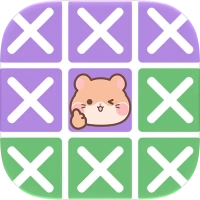
Hamdoku is a logic puzzle game that replaces traditional Sudoku numbers with cute hamster characters. Its colorful board and friendly presentation make the game approachable, but the rules require careful planning to solve each puzzle correctly.
The objective is to place every hamster in a valid position while following three main restrictions. Each row must contain exactly one hamster, each column must contain exactly one hamster, and each colored region must contain exactly one hamster. Hamsters must also remain separated, meaning they cannot touch each other diagonally or in neighboring positions.
These overlapping rules create a puzzle that rewards logical thinking rather than random guessing. A position that appears available at first may become impossible once you consider the neighboring cells, the colored regions, and the remaining rows and columns.
Developed by MOBIRIX, Hamdoku includes daily puzzles, a stopwatch for tracking completion times, hints, notes, streaks, rankings, achievements, and hamster customization. It is suitable for short breaks or longer puzzle-solving sessions, making it an appealing choice for fans of Sudoku, Queens-style logic puzzles, and relaxing brain games.
Hamdoku Gameplay Overview
The gameplay revolves around identifying the correct position for every hamster on a grid divided into colored regions. Each placement affects several constraints at once, so players must consider the whole board rather than solving individual rows in isolation.
For example, placing a hamster in one cell occupies its row and column and satisfies the requirement for its colored region. It also prevents hamsters from occupying neighboring cells, including diagonal neighbors.
As the puzzle progresses, the available positions become more restricted. Every confirmed placement provides new information about where the remaining hamsters can go.
The key to success is eliminating impossible positions until the correct choices become clear. The more familiar you become with the interaction between rows, columns, regions, and neighboring cells, the easier it becomes to recognize patterns and solve puzzles efficiently.
How to Play Hamdoku
Understand the Main Rules
Before placing a hamster, check the three major requirements. Every row must have one hamster, every column must have one hamster, and every colored region must have one hamster.
You must also ensure that no two hamsters touch, even diagonally. This extra restriction makes Hamdoku different from ordinary Sudoku and adds another layer of deduction.
A position is valid only when it satisfies all the relevant rules. Even if a cell completes a row correctly, it cannot be used if it violates a neighboring-cell restriction or creates a conflict with a colored region.
Learn How the Colored Regions Work
The board is divided into colored areas, and each area must contain exactly one hamster. These regions are just as important as rows and columns.
When considering a cell, identify its colored region and check whether that region already contains a hamster. If it does, every other cell in that region can be eliminated as a possible location for another hamster.
Likewise, if a region has only one remaining valid cell, that position becomes a necessary placement.
Respect the No-Touching Rule
Hamsters cannot occupy neighboring cells, including diagonal neighbors. This rule can eliminate several potential positions after a single placement.
Whenever you place a hamster, inspect the surrounding cells. Remove any position that would allow another hamster to touch it.
Do not overlook diagonal relationships. Two hamsters can be in different rows, columns, and colored regions yet still violate the puzzle because they occupy neighboring diagonal cells.
Use Notes to Track Possibilities
Hamdoku provides a note-taking feature that helps you record possible positions while you work through a puzzle.
Use notes when several cells remain possible and you are not ready to commit to a placement. As you eliminate candidates through logical deductions, update your notes so they reflect the current board.
Accurate notes reduce mental clutter and make it easier to recognize when a row, column, or region has only one possible position remaining.
Use Hints When Necessary
Hints are useful when you cannot identify the next logical move. Before using one, review the board and check whether any row, column, or colored region has only one valid candidate.
If you still cannot progress, a hint can help you understand the puzzle's intended direction. Pay attention to why the suggested position works instead of simply accepting it and moving on.
Learning from hints can improve your ability to solve similar situations independently.
Complete Hamdoku Strategy Guide
Start With the Most Restricted Areas
The best place to begin is usually a row, column, or colored region with very few possible positions.
Inspect the board and identify the areas where most cells have already been eliminated. These areas are often easier to solve because fewer candidates remain.
If a row has only one valid position for a hamster, the placement is forced. Once you confirm it, update the affected column, region, and neighboring cells.
This process can trigger a chain of deductions that reveals several additional placements.
Eliminate Impossible Cells First
You do not always need to know where a hamster belongs immediately. Sometimes the fastest route to a solution is identifying where it cannot go.
A cell can be eliminated if its row already contains a hamster, its column is occupied, its colored region is filled, or placing a hamster there would cause two hamsters to touch.
Continue removing impossible positions until a clear choice appears. This systematic approach is more reliable than guessing between several seemingly reasonable cells.
Solve One Constraint at a Time
When a puzzle becomes confusing, focus on a single row, column, or colored region. Examine every remaining cell in that area and apply the rules one by one.
Once you have narrowed the possibilities, move to another part of the board and repeat the process. Then return to the original area with the new information.
Working through individual constraints helps prevent mistakes caused by trying to evaluate the entire puzzle at once.
Use the Diagonal Rule to Your Advantage
The no-touching rule is not merely an obstacle. It is also a powerful source of information.
When a hamster is placed, the surrounding diagonal cells become unavailable. In a tightly constrained puzzle, this can leave a row or region with very few remaining candidates.
After every confirmed placement, check the diagonals immediately. You may discover that a seemingly complicated area has become much easier to solve.
Track Rows and Columns Together
Rows and columns form an interconnected system. A placement that completes one row also determines which column is occupied, potentially eliminating candidates elsewhere.
Whenever you confirm a hamster, review both its row and its column. Do not wait until the end of the puzzle to check whether all the requirements are satisfied.
This habit helps reveal hidden single candidates and reduces the chance of overlooking a conflict.
Check Colored Regions After Every Placement
Colored regions can create deductions that are not obvious from the rows and columns alone.
After placing a hamster, inspect its region and eliminate every other cell in that region. Then examine nearby regions to see whether the diagonal restriction has reduced their available positions.
Some puzzles become much easier once you start treating colored regions as an equal part of the solving process rather than a final requirement.
Avoid Guessing
Guessing may appear faster when several positions seem possible, but it can lead to mistakes that consume your limited sunflower seeds.
Instead, record the candidates and search for another constraint that distinguishes them. A different row, column, region, or diagonal relationship may reveal which option is impossible.
If no immediate deduction is available, continue checking other areas rather than committing to an uncertain placement.
Reassess the Board After Every Move
Each confirmed hamster changes the available possibilities across the board. A position that was previously uncertain may become obvious after another placement.
Make it a habit to review the surrounding rows, columns, regions, and diagonals after every move. Update your notes and remove candidates that are no longer valid.
This simple routine keeps your reasoning consistent and prevents outdated assumptions from affecting later decisions.
How to Solve Hamdoku Puzzles Faster
Look for Forced Placements
A forced placement occurs when only one valid cell remains in a particular row, column, or colored region. These moves are among the safest and most efficient ways to progress.
Scan the board for areas with the fewest available candidates. Resolve those areas before spending time on sections that still have many possibilities.
Recognize Repeated Patterns
As you solve more puzzles, you will begin to recognize recurring situations. A hamster placed near a corner, for example, may restrict several neighboring cells, while a nearly completed region may force a specific placement.
Learning these patterns helps you process the board more quickly without sacrificing accuracy.
Keep Your Notes Updated
Old or incorrect notes can make a puzzle appear more complicated than it really is. Remove candidates immediately when a placement invalidates them.
Organized notes allow you to compare possibilities more easily and spot cells that have become forced choices.
Improve Accuracy Before Speed
The daily challenge includes a stopwatch, making completion time a useful personal benchmark. However, rushing through placements can waste sunflower seeds and force you to restart or reconsider your progress.
Focus on solving puzzles correctly first. As your pattern recognition improves, you will naturally make decisions faster.
Develop a Consistent Scanning Routine
Use the same general order whenever you inspect the board. Check rows, then columns, then colored regions, and finally diagonal restrictions.
A consistent routine reduces the likelihood of missing an important rule. It also makes it easier to return to a puzzle after taking a break.
Hamdoku Daily Challenge Guide
Hamdoku offers a new Daily Challenge every day. Completing these puzzles can help you maintain your streak and improve your personal completion time.
Make Daily Play a Habit
Regular practice is one of the best ways to improve your logic skills. Try completing the daily puzzle at a convenient time rather than waiting until you have a long period available.
Even a short session can help you become more familiar with candidate elimination and diagonal restrictions.
Protect Your Streak
If maintaining a daily streak is important to you, make the Daily Challenge part of your routine. Complete the puzzle carefully and avoid unnecessary mistakes.
Remember that the objective is to solve the puzzle correctly. A slightly slower completion is better than a rushed attempt that wastes seeds or leaves you unsure about the solution.
Improve Your Personal Best
Once you can solve a puzzle consistently, begin working on speed. Look for repeated patterns, reduce unnecessary scanning, and use notes more efficiently.
Compare your completion times across attempts when the game allows you to replay the daily puzzle. Focus on improving your decision-making rather than simply tapping faster.
Learn From Difficult Daily Puzzles
Some puzzles may require more deductions than others. When you encounter a difficult challenge, identify the part of the board that caused the most trouble.
Consider whether you overlooked a diagonal restriction, failed to eliminate a candidate, or spent too long examining an area with many possibilities.
Applying what you learn to future challenges will help you become a more confident solver.
Sunflower Seeds and Mistake Management
Hamdoku limits mistakes through a sunflower-seed system. Each incorrect placement costs a seed, and players have only three before the available allowance is exhausted.
This makes accuracy especially important. A move should be based on a valid deduction rather than a guess.
Before confirming a hamster's position, check its row, column, colored region, and neighboring cells. If any of these rules would be violated, the placement is not valid.
If you are uncertain, use the notes feature to record possible positions and continue investigating. Hints are also available when you need help finding the next step.
Treat the sunflower seeds as a reminder to solve carefully, not as a reason to rush. Consistent logical reasoning is the best way to preserve them.
Hamdoku Rankings, Streaks, and Customization
Hamdoku includes features that encourage continued play beyond completing individual puzzles.
Rankings and Achievements
The game supports Game Center achievements and leaderboards. These features allow players to track accomplishments and compare their progress through supported ranking systems.
Use rankings as motivation rather than a reason to rush. Consistent puzzle-solving skills are more valuable than taking unnecessary risks to improve a score.
Streak Tracking
Daily streaks encourage players to return regularly. Maintaining a streak can be a satisfying personal goal, especially when combined with gradually improving completion times.
Choose a routine that works for you and focus on completing each challenge carefully.
Hamster Customization
The game includes hamster customization features, allowing players to personalize their profiles with available costumes and other cosmetic options.
Seasonal events may also introduce limited-time rewards. Check the current in-game event information to see which customization items are available.
Profile Features
Hamdoku includes profile options and ranking-related features that let players personalize their presence in the game. Depending on the current version, these may include profile mottos, ranking frames, and the ability to view other players' streak gardens.
These features provide additional reasons to return while keeping the main focus on solving logic puzzles.
Common Hamdoku Mistakes to Avoid
Forgetting Diagonal Neighbors
One of the easiest mistakes is checking only rows and columns. Hamsters cannot touch diagonally, so a position may appear valid under the standard Sudoku-style rules but still be incorrect.
Always inspect neighboring cells before confirming a placement.
Ignoring Colored Regions
A row and column may both appear valid while the selected cell belongs to a region that already contains a hamster. Check all three major constraints before placing a new character.
Guessing Too Early
When multiple candidates remain, guessing can waste sunflower seeds. Look for additional deductions elsewhere on the board and return when new information becomes available.
Keeping Incorrect Notes
Candidates that were valid earlier may become impossible after another hamster is placed. Update notes regularly so you do not rely on outdated information.
Focusing Only on One Part of the Board
Spending too much time on a difficult area can cause you to overlook an easy deduction elsewhere. If you become stuck, scan the remaining rows, columns, and regions for a simpler move.
Rushing for a Better Time
Speed is useful, but accuracy should come first. A reliable solving routine will eventually improve your completion time without increasing the risk of mistakes.
Beginner Tips for Hamdoku
If you are new to Hamdoku, start by learning how the three main constraints work together. Every row, column, and colored region must contain exactly one hamster, and no two hamsters may touch, including diagonally.
Begin with the most restricted areas of the board. When a row or region has only one possible position, confirm that placement and update the affected cells.
Use notes whenever you are unsure about a candidate. This lets you continue making logical progress without committing to a risky choice.
Do not worry about solving every puzzle quickly at first. Focus on understanding why a placement is valid and how it affects the rest of the grid.
Advanced Strategies for Experienced Players
Experienced players can improve efficiency by combining several deductions instead of examining every cell independently.
Look for interactions between rows and colored regions. If a region's remaining candidates are all in the same row, that row's other cells may become impossible positions for the hamster assigned to that region.
Use diagonal restrictions alongside these deductions to narrow the board further. A candidate that survives the row, column, and region checks may still be eliminated by the no-touching rule.
Keep your notes concise and organized. Rather than repeatedly reconsidering every possible position, concentrate on the cells where a new deduction could change the board.
Finally, review the entire grid whenever a major placement is confirmed. Advanced solving is often less about making complicated moves and more about applying simple rules consistently across the board.
Is Hamdoku Free to Play?
Hamdoku is available as a free download with advertisements and optional in-app purchases. The US App Store listing includes optional item packs, starter offers, and a purchase to remove advertisements.
You can begin playing without buying optional items. The availability and prices of purchases may vary by region and can change over time.
If you prefer a quieter experience, review the available purchase options and decide whether removing advertisements is worthwhile for you.
Can You Play Hamdoku Offline?
Hamdoku supports offline puzzle play, making it suitable for short sessions while traveling or when an internet connection is unavailable.
Features such as leaderboards, account synchronization, and some event-related services may require connectivity. If a particular online feature is unavailable, check whether it needs an active internet connection.
Hamdoku Compatibility and Game Information
Hamdoku: Sudoku Logic Puzzle is developed by MOBIRIX and is available for iPhone and iPad. The US App Store listing specifies iOS 15.0 or later for iPhone and iPadOS 15.0 or later for iPad.
The game is listed in the Puzzle category and carries a 4+ age rating on the US App Store. It supports multiple languages and includes daily challenges, hints, notes, streak tracking, achievements, leaderboards, and hamster customization.
The game is also available on Android. Device requirements, available features, and purchase options may differ depending on the platform and region.
Frequently Asked Questions
What is Hamdoku: Sudoku Logic Puzzle?
Hamdoku is a logic puzzle game that uses cute hamsters instead of numbers. Players must place one hamster in each row, column, and colored region while ensuring that no two hamsters touch, even diagonally.
How is Hamdoku different from Sudoku?
Traditional Sudoku uses numbers and requires each number to appear once in each row, column, and designated box. Hamdoku uses hamster placements, colored regions, and an additional restriction that prevents hamsters from touching diagonally or in neighboring cells.
How many mistakes can you make?
The game provides three sunflower seeds for mistakes. An incorrect placement costs a seed, so careful deduction is important.
Does Hamdoku have hints?
Yes. Hints can help you find a way forward when you become stuck. The game also includes notes for tracking possible positions.
How do you solve Hamdoku puzzles faster?
Start with rows, columns, or colored regions that have the fewest possible positions. Eliminate invalid candidates, check diagonal restrictions, and update your notes after each confirmed placement.
What is the Daily Challenge?
The Daily Challenge provides a new puzzle every day. Completing it helps maintain your streak and gives you an opportunity to improve your personal completion time.
Can you replay a Daily Challenge?
The game's published feature information indicates that players can try the completed daily puzzle again to improve their record. Availability may depend on the current version and challenge status.
Does Hamdoku include leaderboards?
Yes. The game supports Game Center achievements and leaderboards, allowing players to track accomplishments and compare progress through supported ranking features.
Can you customize the hamsters?
Yes. Available customization features include hamster costumes and profile-related cosmetics. Seasonal events may introduce additional limited-time rewards.
Is Hamdoku suitable for beginners?
Yes. Its rules are straightforward to learn, and the notes and hint features help beginners understand the logic. The puzzles still offer enough complexity to challenge experienced players.
Can Hamdoku be played offline?
Yes. The core puzzle experience supports offline play, although some online features may require an internet connection.
Is Hamdoku free?
Hamdoku is free to download and includes advertisements and optional in-app purchases. Players can begin solving puzzles without necessarily buying additional items.
Final Thoughts on Hamdoku: Sudoku Logic Puzzle
Hamdoku offers a charming alternative to traditional Sudoku by combining cute hamster characters with a thoughtful set of logic rules. Its colored regions, row and column requirements, and diagonal restrictions create puzzles that reward careful observation and systematic deduction.
The best way to improve is to focus on accuracy first. Start with the most restricted areas, eliminate impossible positions, use notes to track candidates, and check neighboring cells after every placement. Once these habits become natural, you can work toward faster completion times and longer daily streaks.
With its daily challenges, hints, customization options, achievements, and relaxing presentation, Hamdoku is a good choice for anyone who enjoys logic puzzles without the pressure of conventional number-based games.
Rate the Game
User Reviews













Popular Games



















 Android
 iOS
 Windows
 Xbox