
Latest Version
October 23, 2026
Lion Studios
Puzzle
0
com.onebutton.jd
Report a Problem
More About :game
Just Draw is a casual drawing puzzle game developed by Lion Studios. It combines simple touch controls with clever visual riddles, encouraging players to look at a picture, identify what is missing, and draw the object needed to complete the scene. Instead of requiring professional artistic skills, the game focuses on recognizing clues and finding practical solutions.
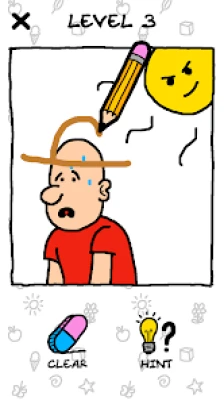
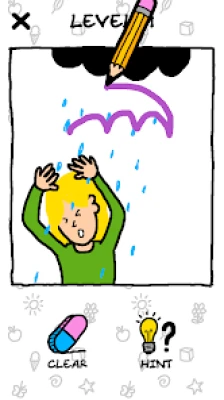
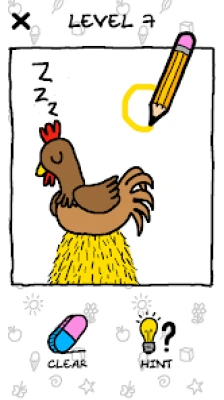
Each level presents a small situation that needs your help. A character caught in the rain might need an umbrella, while someone feeling cold could benefit from sunshine. Your task is to understand the scene, determine what would improve it, and sketch the missing item in the appropriate place.
The drawing recognition system is designed to accept imperfect sketches, so you can concentrate on solving the puzzle rather than producing beautiful artwork. As you progress, different scenarios challenge your ability to interpret visual details and connect objects with their purposes.
Just Draw is suitable for casual gaming sessions, whether you want to solve a few puzzles during a break or spend more time working through the available levels. Its combination of creativity, observation, and problem-solving makes it appealing to players who enjoy brain teasers and simple drawing games.
What Makes Just Draw Fun?
Creative Drawing Puzzles
The main attraction is the freedom to solve problems by drawing. Rather than selecting an answer from a list, you must decide which object belongs in the scene and create a recognizable sketch yourself.
Simple Touch Controls
Drawing is straightforward. Touch the screen and move your finger to sketch the missing object. The accessible controls make it easy for newcomers to understand the basic gameplay without a lengthy tutorial.
Observation and Logical Thinking
The illustrations provide clues about the intended solution. Players must consider what the characters are doing, what problems they face, and which missing object would make the situation complete.
Forgiving Drawing Recognition
You do not need to be an experienced artist. Simple outlines and recognizable shapes can be enough, allowing you to focus on the idea behind your drawing instead of perfect proportions.
Short and Entertaining Challenges
Each puzzle offers a small objective that can usually be approached independently. This makes the game convenient for quick sessions and provides a steady sense of progress as you solve successive challenges.
How to Play Just Draw
Understand the Picture
Begin by examining the entire illustration before drawing anything. Look at the characters, nearby objects, weather conditions, and anything that seems unusual or incomplete. The scene usually contains enough information to help you identify the missing element.
Identify the Missing Object
Think about what would make the situation more logical. If a character is standing in the rain, consider what could protect them from getting wet. If someone is struggling with a problem, look for an object that could provide a simple solution.
Draw the Essential Shape
Once you have an idea, sketch the object directly on the screen. Focus on its most recognizable features. An umbrella needs a curved canopy and a handle, for example, while a sun can be represented by a circle with rays.
Wait for the Game to Recognize Your Drawing
After completing your sketch, allow the game to evaluate it. If the answer is not accepted, do not assume that your drawing needs to be artistic. You may have chosen the wrong object, drawn an unclear shape, or placed it somewhere that does not match the scene.
Try Again with a Better Approach
Review the illustration and reconsider your interpretation. Remove unnecessary details from your mental approach and focus on the simplest object that solves the problem. A clear, recognizable drawing is generally more useful than a complicated sketch.
Complete Strategy Guide for Just Draw
Study the Scene Before Making a Move
One of the most effective strategies is to spend a few seconds analyzing the illustration. Players sometimes draw the first object that comes to mind without considering the complete situation.
Look for the central problem first. A character's expression, body position, surroundings, or interaction with another object may reveal the intended answer. Understanding the problem before drawing reduces unnecessary attempts and makes difficult puzzles easier to approach.
Think About Function Rather Than Appearance
The correct answer is often determined by what an object does, not how complicated it looks. Ask yourself what would protect, warm, support, connect, or otherwise help the character.
For instance, if a person needs protection from rain, an umbrella makes sense because of its function. You do not need to draw a detailed umbrella with decorative patterns. The essential structure is enough to communicate the idea.
This functional approach is especially useful when a puzzle contains several possible objects that might fit the illustration.
Look for Missing Elements
Treat every picture as an incomplete story. Something may be missing from the environment, a character may need a useful item, or an unfinished object may require one important part.
Examine the edges of objects and the empty spaces around the characters. An obvious gap can be a clue, but the answer is not always located exactly where you expect. Consider both the missing object and the reason it belongs in the scene.
Use Simple and Recognizable Shapes
Avoid drawing too many details. A complicated sketch can take longer to create and may make it harder to identify the important features.
Break the object into basic shapes before drawing it. A tree can begin with a trunk and a leafy top. A house can be represented by a rectangular body and a triangular roof. A sun can be a circle surrounded by short lines.
Keep your strokes clean and make the defining features easy to recognize. If the first attempt fails, simplify the drawing before adding unnecessary details.
Draw in the Most Logical Location
Placement can matter as much as the object itself. A correct object drawn far away from the character or the relevant part of the scene may not communicate the intended solution clearly.
Consider where the object would naturally be used. An umbrella belongs above a person who needs shelter, while an object intended to complete a larger structure should be drawn close to the missing section.
Use the surrounding illustration as your guide instead of placing the drawing randomly.
Change One Thing at a Time
When a solution is rejected, avoid changing the object, size, shape, and position all at once. Doing so makes it difficult to determine what went wrong.
First, check whether your chosen object is appropriate. If it is, improve its outline. If the drawing looks recognizable, reconsider its placement. This systematic method helps you learn from unsuccessful attempts and prevents repeated guessing.
Avoid Overthinking Easy Puzzles
Not every level requires an unusual or elaborate answer. Many situations are solved by everyday objects that perform obvious functions.
If your first idea fits the scene naturally, try it before exploring complicated alternatives. Simple reasoning is often the most efficient way to move through straightforward levels.
Approach Difficult Puzzles from Different Angles
When an illustration is confusing, consider several interpretations before drawing.
Ask yourself what the character needs, what is preventing the scene from working, and whether the missing object is meant to solve a practical problem or complete an illustration. Think about the relationships between the visible elements rather than focusing on one small detail.
If your first interpretation does not work, reconsider the problem itself instead of repeatedly drawing the same object in slightly different forms.
Advanced Tips and Tricks
Pay Attention to Character Expressions
Facial expressions and body language can provide useful clues. A worried character may need help, while someone shivering could need warmth. These details help explain the purpose of the missing object.
Use the Environment as a Hint
Weather, buildings, furniture, animals, and surrounding objects can all contribute to the solution. A puzzle involving rain suggests different answers from one involving heat or an unfinished object.
Consider the entire environment before deciding what to draw.
Start with an Outline
For objects with distinctive silhouettes, draw the outer shape first. Once the basic form is recognizable, add only the details needed to make the answer clearer.
This technique works well for common objects such as umbrellas, houses, tools, and simple natural features.
Keep Your Drawing Proportional
An object does not need perfect proportions, but its size should make sense within the illustration. A tiny umbrella may not appear useful to a standing character, while an excessively large object can obscure important parts of the scene.
Use nearby objects and characters as rough size references.
Learn from Repeated Puzzle Patterns
As you play, you may notice recurring problem-solving principles. Some levels rely on everyday object recognition, while others require you to complete a missing part or interpret a character's needs.
Remembering these patterns can help you recognize similar clues in later puzzles without assuming that every level has the same solution.
Be Patient with Drawing Recognition
The game's drawing recognition system is designed to identify imperfect sketches, but an unsuccessful attempt can still happen. If your answer seems correct, try making the key features more distinct or adjusting the position.
If a level appears unresponsive or repeatedly rejects a clear answer, consider whether the game itself may be experiencing a technical issue rather than assuming the puzzle is impossible.
Common Mistakes to Avoid
Drawing Before Understanding the Problem
Rushing into a sketch often leads to incorrect answers. Take a moment to understand what the picture is communicating before choosing an object.
Adding Too Many Details
Detailed artwork is unnecessary for most puzzles. Extra strokes can waste time without improving recognition. Concentrate on the object's defining shape.
Ignoring the Character's Needs
An object might fit the picture visually but fail to solve the character's problem. Always connect your answer to the situation shown on the screen.
Placing the Drawing Randomly
A recognizable object can still be confusing if it is placed in an illogical position. Draw near the relevant character or incomplete structure whenever the scene suggests a clear location.
Repeating the Same Failed Attempt
If a drawing does not work, repeating it without making a meaningful change is unlikely to help. Reassess your interpretation, simplify the sketch, or reconsider the placement.
Assuming Every Level Uses the Same Logic
Although many puzzles involve identifying a missing object, different illustrations may require different kinds of reasoning. Examine each scene independently rather than relying entirely on the previous answer.
Is Just Draw Difficult?
Just Draw is easy to understand because its main control involves drawing directly on the screen. The challenge comes from interpreting the illustrations and determining which object belongs in each situation.
Early puzzles can feel intuitive because they often present familiar problems with straightforward solutions. More confusing illustrations may require closer observation, creative thinking, and experimentation.
The forgiving drawing system helps keep the experience accessible to players who are not confident artists. When a puzzle becomes difficult, focusing on the object's purpose, basic shape, and correct position provides a practical way forward.
Who Should Play Just Draw?
Just Draw is a good choice for players who enjoy casual puzzle games, visual riddles, and creative challenges. It can appeal to people who like experimenting with ideas but do not want to learn complicated controls or drawing techniques.
The game is also suitable for short breaks because its individual puzzles offer clear objectives. Players who enjoy observing details, finding missing objects, and solving everyday problems through creative thinking may find the gameplay particularly satisfying.
Anyone looking for a competitive action game or a professional drawing application should understand that Just Draw is primarily a casual puzzle experience rather than a full-featured art tool.
Frequently Asked Questions
What Is Just Draw?
Just Draw is a casual drawing puzzle game from Lion Studios. Players examine illustrations, identify missing objects, and draw the items needed to complete each scene or help its characters.
How Do You Play Just Draw?
Study the picture, determine what is missing, and draw the appropriate object on the screen. The game evaluates your sketch and allows you to continue when the puzzle is solved.
Do You Need Drawing Skills to Play Just Draw?
No advanced drawing skills are required. Simple sketches can work because the game is designed to recognize imperfect drawings. Observation and logical thinking are more important than artistic precision.
How Do You Solve Difficult Levels in Just Draw?
Examine the entire illustration, identify the main problem, and think about which object would solve it. Draw a simple outline in a logical location. If the answer fails, reconsider the object, shape, or placement rather than repeating the same attempt.
Why Is My Correct Drawing Not Accepted?
The drawing might not be recognizable enough, the object may be misplaced, or the intended answer may differ from your interpretation. Simplify the outline, emphasize the object's distinctive features, and reconsider the clues in the scene. A technical issue is also possible if the game repeatedly fails to respond as expected.
Is Just Draw Free to Play?
The Google Play listing identifies Just Draw as a game that contains advertisements and in-app purchases. Availability of particular features and purchase options may vary by version.
Can Beginners Enjoy Just Draw?
Yes. The game uses simple touch controls and does not expect players to produce polished artwork. Beginners can learn its basic mechanics quickly and improve their puzzle-solving approach as they progress.
What Is the Best Strategy for Just Draw?
The best strategy is to understand the scene before drawing. Identify the character's problem, choose an object that solves it, sketch its most recognizable features, and place it where it logically belongs.
Final Thoughts on Just Draw
Just Draw turns everyday situations into creative visual puzzles that reward observation, imagination, and practical reasoning. Its simple controls make it accessible, while the variety of illustrations encourages players to think carefully about what each scene needs.
To make consistent progress, focus on understanding the problem rather than producing elaborate artwork. Choose functional objects, draw recognizable outlines, and pay attention to placement. When an answer fails, treat it as an opportunity to reconsider the clues instead of relying on random guesses.
With a patient approach and a little creativity, Just Draw becomes an enjoyable way to challenge your thinking, solve amusing puzzles, and discover how a simple drawing can complete an entire scene.
Rate the Game
User Reviews






Popular Games



















 Android
 iOS
 Windows
 Xbox