
Latest Version
October 25, 2026
MOBIRIX
Puzzle
iOS
0
Report a Problem
More About :game
Introduction to Screw Out Quest
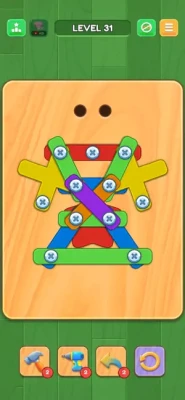
Screw Out Quest offers a puzzle-solving experience centered on screws, obstacles, and the order in which different pieces can be removed. What may initially look like a simple task can become more complicated as the board fills with overlapping elements and limited options. Each move can influence what becomes available next, making careful planning an important part of the experience.
The key to making progress is to look beyond the most obvious screw. Instead of immediately removing the first piece that appears accessible, players should study the entire arrangement and consider how each action might change the board. A screw that seems unimportant at first may be blocking another piece, while removing the wrong one may leave a difficult situation to resolve.
This guide explains useful puzzle-solving techniques, practical strategies for difficult stages, common mistakes to avoid, and ways to develop a more reliable approach as the challenges become harder.
Understanding the Gameplay
The central idea behind screw-removal puzzles is to dismantle an arrangement by selecting screws in a suitable order. Depending on the puzzle design, pieces may overlap, occupy shared spaces, or prevent other components from being removed. Understanding these relationships is essential before making a move.
Players should begin by identifying the visible screws and examining how they relate to the surrounding pieces. Some screws may be immediately accessible, while others may require an obstruction to be cleared first. Recognizing these dependencies helps establish a sensible order of operations.
The game rewards patience and careful observation. A move should not be judged only by whether it is currently possible. It should also be evaluated by whether it creates more useful options for the next stage of the puzzle.
As levels become more demanding, players may need to think several moves ahead. Developing this habit makes complicated boards easier to understand and reduces the need for repeated trial and error.
Main Objectives and Puzzle Challenges
The primary objective is to solve each screw puzzle by removing pieces in an effective order. Reaching that goal may require players to manage limited space, identify blocked components, and avoid moves that prevent further progress.
The most important challenge is understanding the relationship between individual screws. A piece that looks independent may be connected to the removal sequence of several others. Finding the correct starting point can therefore be just as important as identifying the final move.
Another challenge is managing available space. If a particular puzzle uses limited empty slots or designated areas for removed screws, players must consider where each piece will go before selecting it. Creating space too early in the wrong area may not help, while leaving a useful opening available can make later moves much easier.
Some stages may also require more precise planning than others. When a board contains several overlapping pieces, the safest approach is to separate the puzzle into smaller groups and solve the relationships within each group before attempting the entire arrangement.
Essential Tips for Beginners
Study the Entire Board Before Moving
Take a moment to inspect the puzzle from top to bottom. Identify visible screws, overlapping components, potential obstructions, and any spaces that may become useful later. A few seconds of observation can prevent several unnecessary moves.
Start With Clearly Accessible Screws
Look for pieces that can be removed without creating new problems. An accessible screw is a useful starting point when removing it reveals another piece or opens space needed for the next step. However, do not assume that every available screw should be removed immediately.
Look for Blocked Pieces
When a screw cannot be removed, examine what is preventing access. The obstruction may be another screw, an overlapping component, or a restriction imposed by the puzzle's layout. Identifying the exact obstacle makes it easier to determine the next useful move.
Think About the Consequences
Before selecting a screw, ask yourself what will change afterward. Will another piece become accessible? Will a useful space open up? Could the move leave an important component trapped? These questions help turn random attempts into deliberate decisions.
Change One Thing at a Time
When learning a new puzzle, make moves that have a clear purpose. Observe the result before continuing. This approach helps you understand how the board works and makes it easier to recognize the cause of a mistake.
Be Patient With Difficult Levels
A complicated arrangement does not necessarily require a complicated solution. Many puzzles become manageable once the correct removal order is discovered. If progress stops, review the board instead of repeatedly selecting the same blocked pieces.
Complete Strategy Guide for Screw Out Quest
Analyze the Puzzle Before Choosing a Starting Move
Begin by looking at the full arrangement rather than focusing on one corner. Identify which screws are exposed, which pieces overlap, and which areas appear especially crowded.
Next, consider the likely sequence of removal. If one screw blocks two others, removing it may be more valuable than removing a nearby piece that does not affect anything else. The goal is to find moves that improve the overall position rather than simply reduce the number of screws.
Pay attention to any instructions or visual indicators presented by the level. These may clarify the objective, available spaces, or restrictions that affect the solution.
Identify Dependencies Between Screws
A dependency exists when one piece must be removed before another can be accessed. Finding these relationships is one of the most useful skills in screw puzzles.
Imagine that one component overlaps two screws, while a second component blocks the first. The logical sequence may require removing the second component before the first, even if the first appears more important at a glance.
Work backward from difficult-to-reach pieces when necessary. Ask which obstruction must disappear before a target screw becomes accessible, then determine what prevents that obstruction from being removed. Repeating this process can reveal the correct order.
Prioritize Moves That Open New Options
A good move often does more than remove one screw. It may expose additional pieces, create room for another action, or simplify an otherwise crowded section of the board.
When comparing two possible moves, consider which one creates more opportunities. If one move clears an obstruction while another changes very little, the first may be the stronger choice.
This does not mean that every move must unlock several pieces. Sometimes a necessary preparatory move has no immediate reward. What matters is understanding how it contributes to the eventual solution.
Manage Empty Spaces Carefully
If the level includes limited holes, slots, or destinations for removed screws, treat them as important resources. An available space can be just as valuable as an accessible screw because it may determine whether the next move is possible.
Avoid filling every convenient opening without considering future requirements. Before removing a screw, check whether the resulting arrangement leaves enough room for pieces that must be moved later.
If a puzzle becomes stuck because no suitable space remains, review the order of earlier moves. A different sequence may preserve the opening needed to complete the board.
Solve Crowded Areas in Stages
Large puzzles can be difficult to process all at once. Divide the board into smaller sections based on overlapping pieces, clusters of screws, or areas that appear to share the same obstruction.
Focus on the section that controls access to the others. Once that section is cleared, reassess the board rather than following an outdated plan automatically.
This method reduces visual confusion and makes cause-and-effect relationships easier to recognize. It also helps you avoid removing pieces from one area when another section should be handled first.
Plan Several Moves Ahead
Experienced puzzle players rarely consider only the immediate action. They evaluate a possible move by imagining the next few steps.
Before committing to a move, consider whether it leaves at least one useful follow-up action. If the move opens a new screw but blocks the only available space, it may not be as beneficial as it first appears.
Planning several moves ahead does not require memorizing the entire solution. Even a short sequence of two or three logical actions can prevent mistakes and improve consistency.
Reassess the Board After Major Changes
Every important removal can change the puzzle's structure. A piece that previously blocked several screws may disappear, exposing new options and making the original plan unnecessary.
After clearing a major obstruction, pause and inspect the remaining pieces. Look for newly accessible screws, newly opened spaces, and any changes to the most efficient removal order.
Adapting to the updated board is better than following a plan simply because it seemed correct at the beginning.
Use Trial and Error Strategically
Experimentation can be useful when a puzzle's dependencies are unclear, but each attempt should teach you something. Choose a move, observe its effect, and identify whether it improved or worsened the situation.
If a move leads to a dead end, consider what caused the problem. Perhaps an important space was occupied too early, or a blocking screw should have been removed first. Apply that lesson to the next attempt.
Repeatedly making different moves without examining the results is less effective because it does not build a clear understanding of the puzzle.
Handle the Final Screws With Care
The last few pieces can be surprisingly difficult because earlier moves may have limited the remaining options. Do not assume the puzzle will solve itself once most of the board has been cleared.
Inspect the remaining screws and determine whether any still depend on another piece. If available space is limited, plan the final sequence before removing anything else.
A successful finish usually comes from maintaining a workable position throughout the puzzle, not from making a lucky final move.
How to Use Boost Items Effectively
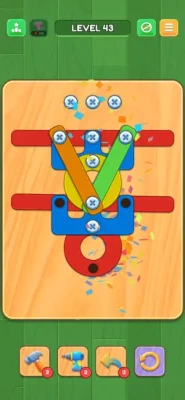
Screw Out Quest includes helpful boost items that can create additional holes, giving players more flexibility when a puzzle becomes difficult. These tools can be especially valuable when the available spaces are nearly full and there are still several screws to move.
The best time to use a boost is when the extra space solves a specific problem. For example, an additional hole may allow you to move a screw that is blocking a wooden stick, which then drops away and opens further opportunities.
Avoid using a boost immediately whenever a level looks complicated. First, determine whether the puzzle can be solved by changing the removal order. If a simple sequence can free the necessary pieces, saving the boost for a more restrictive stage may be the better decision.
When you do use a boost, reconsider the entire board. The additional hole changes your available options, so look for a sequence that takes full advantage of the new space.
How to Beat Difficult Levels
Difficult levels often combine several obstacles with a limited number of empty holes. The solution is not simply to remove screws as quickly as possible. It is to identify which pieces control the rest of the board.
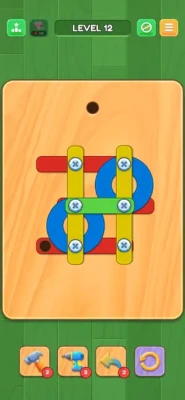
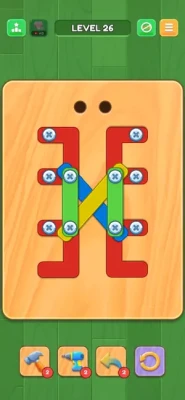
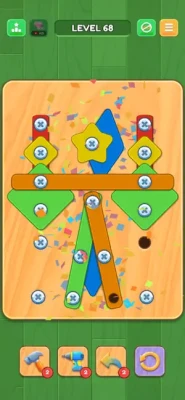
Start by examining the wooden sticks and determining which screws hold them in place. Pay particular attention to pieces that overlap other components or prevent multiple sticks from dropping. Removing a screw that releases a wooden stick can simplify the puzzle considerably.
Next, check the available holes. Every screw you move should have a suitable destination, and the remaining spaces must accommodate future moves. If the board becomes crowded, stop and reconsider the sequence instead of continuing without a plan.
When several screws appear equally useful, favor the move that either releases a wooden stick or creates access to another important screw. This approach gradually reduces the number of obstacles and makes the remaining puzzle easier to manage.
If you reach a dead end, review the order of the previous moves. Identify the first action that caused the board to become difficult or impossible to complete. Restarting with a different opening sequence may be more effective than trying to repair an unfavorable position.
Common Mistakes to Avoid
Moving Screws Without a Plan
One of the most common mistakes is moving screws simply because they are available. An accessible screw is not always the best choice. Consider whether moving it helps release a wooden stick or preserves the space needed for future actions.
Filling Every Empty Hole Too Early
Empty holes are valuable resources. Moving screws into them without considering the remaining puzzle can leave you with too few options later. Keep track of how much space is available and avoid unnecessary moves.
Ignoring the Wooden Sticks
The objective is to make all the wooden sticks drop, not merely to move screws around the board. Focus on the pieces that need to be released and identify the screws preventing that from happening.
Repeating the Same Failed Sequence
If a strategy repeatedly leads to a dead end, changing only the final move may not solve the underlying problem. Look back at the earlier decisions and try a different order that preserves more options.
Using Boosts Without a Clear Purpose
Additional holes can make a difficult puzzle easier, but using them without a plan may waste a useful advantage. Identify the exact restriction you want to overcome before activating a boost.
Rushing Through Complex Stages
Quick moves can work on simple boards, but more complicated arrangements require careful observation. Taking a moment to study the relationships between screws and wooden sticks often saves time overall.
Best Strategy for Limited Empty Holes
Managing empty holes is one of the most important parts of Screw Out Quest. Since each selected screw must be moved to an available hole, players need to think about both the screw being moved and the space it will occupy.
Before making a move, count the available holes and consider how many screws still need to be relocated. Then look for wooden sticks that can drop after a particular screw is moved. When a stick disappears, it may reduce the number of obstacles and simplify the remaining sequence.
Try to avoid moves that consume space without helping the puzzle progress. If two screws can be moved, but only one contributes to releasing a wooden stick, prioritize that move when it does not create a worse problem elsewhere.
A useful habit is to reassess the number of available holes after every major change. This keeps you aware of your remaining options and makes it easier to identify when a different approach is necessary.
How to Solve Overlapping Wooden Stick Puzzles
Overlapping wooden sticks can make it difficult to understand which screw should be removed first. The key is to examine how the pieces interact rather than treating every screw as an independent object.
Look for a wooden stick that can be released with a relatively small number of moves. Removing the screws that hold it in place may cause the stick to drop, exposing pieces that were previously difficult to reach.
If one stick appears to block another, determine which screw or component is responsible for the obstruction. Work backward from the blocked piece until you find a move that can be made safely.
After a stick drops, inspect the newly exposed area. The remaining arrangement may be much simpler than the original board, and a fresh assessment can reveal a better sequence than the one you initially considered.
How to Improve Your Puzzle-Solving Skills
Improvement comes from understanding why a solution works. Instead of memorizing individual moves, learn to recognize the patterns that appear across different puzzles.
Practice identifying screws that release multiple wooden sticks, spaces that must remain available, and pieces that cannot be moved until an obstruction disappears. These patterns are useful even when the board layout changes.
Pay attention to mistakes that happen repeatedly. If you often run out of holes, focus on space management. If you frequently leave wooden sticks trapped, practice examining overlapping components and their dependencies.
It is also useful to slow down when a new level introduces an unfamiliar arrangement. The time spent studying the board can help you solve the puzzle more efficiently and develop habits that carry over to later stages.
Recommended Approach for Each Level
A consistent routine can make Screw Out Quest easier to manage, especially when moving between straightforward puzzles and more demanding layouts.
Inspect the board. Identify the wooden sticks, their supporting screws, and the empty holes available for moving pieces.
Find the most useful opening move. Choose a screw that can be moved safely and contributes to releasing a wooden stick or unlocking another important action.
Preserve enough space. Make sure that the next few moves remain possible after relocating a screw.
Release wooden sticks strategically. Focus on removing the pieces that hold the arrangement together, then reassess the board when they drop.
Adapt to new openings. Each dropped stick can change the puzzle. Look for newly accessible screws instead of blindly following your original plan.
Use a boost when necessary. If the remaining holes prevent a promising sequence, consider creating additional space with an available boost item.
Check the final arrangement. Before making the last few moves, ensure that the remaining screws can be relocated and that every wooden stick can be released.
Is Screw Out Quest Suitable for Casual Players?
Screw Out Quest is accessible to casual players because its basic controls are straightforward. Players select a screw and move it to an empty hole, while the wooden sticks drop as they become free. The challenge comes from determining the correct order of moves.
This combination makes the game suitable for people who enjoy short puzzle sessions and gradually more demanding challenges. Beginners can learn the basic mechanics quickly, while experienced puzzle fans can focus on planning, spatial reasoning, and efficient problem-solving.
The game can also appeal to players who prefer thoughtful challenges over fast reactions. Success depends more on understanding the arrangement and making deliberate decisions than on tapping quickly.
Is Screw Out Quest Difficult?
The difficulty depends on the layout of each stage. Simple puzzles may require only a few well-chosen moves, while more complicated levels can involve several connected wooden sticks, obstructed screws, and limited empty holes.
The most challenging situations occur when a move that seems helpful at first leaves insufficient space for the remaining screws. These puzzles require players to consider the consequences of their actions and sometimes rethink their entire approach.
The good news is that a difficult board often becomes easier once its dependencies are understood. By identifying the correct order, protecting available space, and using boosts thoughtfully, players can approach challenging stages with greater confidence.
Frequently Asked Questions
What is Screw Out Quest?
Screw Out Quest is a puzzle game developed by MOBIRIX in which players move screws to empty holes to release wooden sticks. The objective is to choose the correct sequence of moves and clear each puzzle.
How do you play Screw Out Quest?
Tap a screw to select it and move it to an empty hole. The wooden sticks supported by the screws can then drop away. Continue moving screws in the correct order until all the wooden sticks have been removed and the stage is complete.
What is the main goal in Screw Out Quest?
The main goal is to remove all the wooden sticks by relocating their screws in the correct order. Players must consider the available holes and the relationships between different pieces.
Why do I run out of empty holes?
You may be moving screws without considering the space needed for later actions. Try to prioritize moves that release wooden sticks, avoid unnecessary relocations, and preserve enough empty holes to complete the remaining sequence.
How can I solve a difficult Screw Out Quest level?
Study the entire board, identify which screws hold the wooden sticks in place, and look for moves that release important pieces. Plan a few moves ahead and change your approach if the available space becomes restricted.
What are boost items used for?
Boost items can create additional holes, providing more room to move screws. They are especially helpful when a puzzle becomes difficult because of limited space.
Should I remove the easiest screw first?
Not necessarily. An easy move may be useful, but the best starting point is the screw that contributes most to the solution without creating a space problem. Consider how each move affects the rest of the board.
Can I solve puzzles through trial and error?
Yes. Experimenting can help you discover how the pieces interact. However, observe the result of each move and learn from unsuccessful attempts instead of repeating the same sequence without a clear reason.
Does Screw Out Quest require fast reactions?
The game primarily emphasizes logical thinking and strategic judgment. Careful planning and understanding the puzzle layout are generally more important than speed.
Is Screw Out Quest free to play?
The game is listed as free to download with in-app purchases. Optional purchases and the availability of particular items may vary by storefront and region.
Final Thoughts on Screw Out Quest
Screw Out Quest combines simple controls with puzzles that reward careful thinking. Although moving a screw may seem like a small action, its effect on the wooden sticks and available holes can determine whether the rest of the board remains solvable.
The most reliable strategy is to examine the entire arrangement, identify which screws control important pieces, and prioritize moves that open new possibilities. Managing empty holes is equally important, especially when several screws must be moved before the final sticks can drop.
When a puzzle becomes difficult, take a step back and look for the move that removes an obstruction or preserves the space needed for future actions. Use boosts when they solve a specific problem, and treat failed attempts as opportunities to understand the board better.
With practice, you can recognize useful patterns, avoid common mistakes, and approach increasingly complicated levels with a clearer plan. The combination of observation, patience, and smart decision-making is the key to enjoying Screw Out Quest and progressing through its screw-removal challenges.
Rate the Game
User Reviews













Popular Games



















 Android
 iOS
 Windows
 Xbox