


Latest Version
October 23, 2026
Lion Studios
Puzzle
0
com.game5mobile.lineandwater
Report a Problem
More About :game
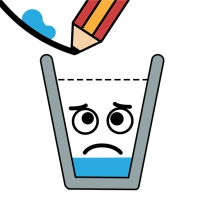
Happy Glass is a drawing puzzle game built around one simple objective: make an empty glass happy by filling it with water. At first, the challenges seem easy, but later levels require more careful planning, creative thinking, and an understanding of how objects interact with water and gravity.
Instead of controlling a character or moving objects directly, you draw lines on the screen. These lines act as physical structures that can guide flowing water, block unwanted movement, create ramps, and support other objects. Your task is to determine how a simple drawing can solve the puzzle.
Developed by Lion Studios, Happy Glass offers a colorful presentation, expressive glass animations, and a large collection of levels. The game rewards experimentation because many puzzles can be solved in different ways. You are encouraged to think creatively rather than follow a single fixed solution.
The main challenge is balancing creativity with efficiency. A long, complicated drawing may work, but a short and carefully positioned line can sometimes achieve the same result with less effort.
Main Features of Happy Glass
Creative Drawing Mechanics
The central feature is the ability to draw lines and shapes directly on the screen. These drawings interact with the game's physics, allowing you to create ramps, bridges, barriers, and supports that guide the water toward the glass.
Physics-Based Puzzles
Gravity affects the movement of water and drawn objects. Understanding how water flows, how objects fall, and how lines support or redirect movement is essential for solving more difficult levels.
Hundreds of Challenges
Happy Glass offers a wide range of puzzle levels. Early challenges introduce the basic mechanics, while later stages combine different obstacles and require more thoughtful solutions.
Multiple Ways to Solve Puzzles
The game encourages creative problem-solving. Some levels allow several possible drawings, giving you freedom to experiment with different shapes and arrangements.
Star-Based Performance
Many levels reward efficient solutions with stars. Drawing less or completing a challenge more effectively can help you improve your performance and aim for higher ratings.
Interactive Obstacles
Some puzzles include objects that move, block the water, or change how the liquid flows. These elements add complexity and require you to consider timing and object placement.
Simple Touch Controls
The controls are easy to understand. You draw with your finger, release the line, and observe the result. If the solution fails, you can retry with a different approach.
Relaxing Visual Style
The minimalist graphics and the glass's changing facial expression create a lighthearted atmosphere. Watching the glass become happy after receiving enough water provides satisfying feedback for each successful solution.
How to Play Happy Glass
Examine the Level
Start by looking at the empty glass, the water source, and the surrounding obstacles. Identify the distance between the water and the glass, along with any gaps or objects that might prevent the water from reaching its destination.
Plan Your Drawing
Before drawing, decide what your line needs to accomplish. It might create a ramp, form a channel, support a falling object, or prevent water from spilling away from the glass.
Draw a Line or Shape
Use your finger to draw the structure you need. Keep the shape simple whenever possible. A short line placed at the correct angle may guide the water more effectively than a complicated drawing.
Release the Line
Once your drawing is complete, allow the physics simulation to begin. Watch how the water moves and whether your structure guides it toward the glass.
Observe the Result
If the glass fills successfully, you complete the level. If water spills or the drawing fails to guide it correctly, examine what happened and identify the part of your solution that needs improvement.
Retry with a Better Design
Adjust the angle, length, or position of your line. You can also try a completely different approach if the original design does not work.
Aim for Better Results
After completing a level, consider whether a simpler solution could earn a better rating. Experimenting with shorter lines and more efficient shapes can improve your performance.
Complete Strategy Guide for Happy Glass
Understand Gravity Before Drawing
Gravity is one of the most important mechanics in Happy Glass. Water generally moves downward, so your lines must work with that movement rather than against it.
When the glass is positioned below the water source, a sloping line may be enough to guide the liquid. If the glass is off to one side, you may need a curved channel or a barrier that redirects the water.
Always consider the direction in which the water will naturally travel. Understanding this basic principle can help you solve many levels without unnecessary experimentation.
Identify the Main Problem
Every puzzle contains a central obstacle. The glass might be positioned too far from the water source, a wall might block the flow, or an object might interfere with the route.
Focus on the main problem before drawing. If the water simply needs to change direction, create a guide. If it needs protection from spilling, build a barrier. If an object must be held in place, consider using a supporting line.
Identifying the purpose of your drawing makes your solution more direct and easier to adjust.
Keep Your Drawings Simple
One of the best strategies is to use the smallest effective drawing. Large shapes can consume more drawing material and may introduce unnecessary interactions.
Start by imagining the shortest route between the water source and the glass. Then draw only the structure needed to create that route.
Simple solutions are often easier to understand, test, and improve. They can also help you achieve better star ratings on levels that reward efficient drawings.
Use Angles to Control Water Flow
The angle of a line can determine whether water moves toward the glass or spills in the wrong direction. A steep slope may cause the water to move quickly, while a gentler angle may provide more control.
Experiment with different angles when the water does not follow your intended route. A small adjustment can change the direction of the flow enough to complete the puzzle.
Build Channels Instead of Flat Barriers
When water needs to travel a longer distance, a channel can be more effective than a single flat line. Use a sloping surface to guide the liquid, and add a small edge where necessary to prevent it from spilling.
The channel should direct the water toward the glass without creating unnecessary obstacles. Avoid making the walls too complicated unless the level requires additional control.
Use Drawn Lines as Supports
Your drawings can do more than guide water. In some puzzles, they can support objects, prevent items from falling, or create a structure that changes how the level behaves.
Before drawing, consider whether an object needs to be held in place or redirected. A supporting line may solve the problem before the water even begins to flow.
Think About the Entire Sequence
Some levels require several events to happen in the correct order. An object may need to move first, followed by the water flowing toward the glass.
Do not focus only on the final destination. Consider what happens immediately after you release your drawing and how each movement affects the rest of the puzzle.
A successful design should account for the entire sequence, not just the first interaction.
Use Trial and Error Intelligently
Experimentation is part of Happy Glass, but random drawings are not the most effective way to learn. After each failed attempt, identify what went wrong.
If the water overshoots the glass, change the angle or add a small barrier. If it never reaches the glass, adjust the channel or remove an obstruction. If an object falls unexpectedly, rethink the supporting structure.
Changing one element at a time helps you understand how the physics behave and makes future attempts more productive.
Pay Attention to Moving Objects
Some challenges introduce objects that change position or affect the water's route. In these situations, your drawing may need to account for movement rather than simply creating a static path.
Observe how the objects move and determine whether your structure needs to redirect, support, or block them. A well-placed line can sometimes solve several problems at once.
Protect the Water from Spilling
Getting water close to the glass is not enough if most of it spills before entering. Look for places where the liquid could escape from your drawing.
Small barriers can help keep the water on the intended path. However, avoid enclosing the water unnecessarily, because an overly restrictive structure can prevent it from reaching the glass.
The goal is to guide the liquid while allowing it to flow naturally.
Learn from Successful Solutions
When you complete a difficult level, take a moment to understand why your drawing worked. Notice the line's angle, the position of the glass, and the way the water moved through the structure.
This understanding can help you solve similar puzzles more quickly. Even if a later level looks different, the same principles of gravity, redirection, and support may apply.
Beginner Tips for Happy Glass
Start with the Shortest Possible Line
Before drawing a large structure, try a simple line that connects the water's route to the glass. Add more complexity only when necessary.
Observe the Water Source
Pay attention to where the water begins and how it moves after the level starts. This helps you determine the best location for your drawing.
Avoid Blocking the Flow
A line that completely blocks the water may prevent the glass from filling. Leave enough room for the liquid to move along the intended path.
Use Curves When Needed
Straight lines work well for simple ramps, but curved shapes may be more effective when the water needs to change direction gradually.
Retry Without Frustration
Some puzzles require several attempts. Each result provides information about how the water and objects behave, so use that information to improve your next drawing.
Aim for Accuracy Before Efficiency
When learning a new mechanic, focus on completing the level first. Once you understand the solution, experiment with shorter or simpler drawings to improve your score.
Advanced Tips for Better Results
Combine Multiple Functions in One Drawing
An effective line can sometimes guide water while also supporting an object or blocking a hazard. Look for opportunities to solve more than one problem with a single structure.
Use the Environment to Your Advantage
Walls, platforms, and other objects may already help direct the water. Before drawing additional structures, consider whether the existing environment can do part of the work.
Anticipate the Water's Momentum
Water may continue moving after leaving a slope or channel. Think about where it will travel next rather than assuming it will stop immediately at the end of your line.
Use barriers and carefully chosen angles to direct the flow into the glass.
Experiment with Different Shapes
If a straight line fails, try a curved guide, a hook-shaped barrier, or a small support. Different shapes interact with the level in different ways, and creative alternatives can reveal simpler solutions.
Reduce Unnecessary Drawing
When trying to improve your star rating, remove parts of your design that do not contribute to the solution. Test whether a shorter line can produce the same result.
Learn Common Puzzle Patterns
Some levels use similar ideas, such as redirecting water, supporting an object, or creating a protective channel. Recognizing these patterns can help you form a solution more quickly.
Still, examine each level individually because the placement of the glass and obstacles may require a different approach.
Common Mistakes to Avoid
Drawing Before Understanding the Level
Starting immediately can lead to unnecessary lines and failed attempts. Study the water source, glass, and obstacles before deciding what to draw.
Making the Drawing Too Complicated
Large structures can interfere with the flow and make it harder to identify the problem when a solution fails. Begin with a simple design and add only what is necessary.
Ignoring Gravity
A line that looks correct may still direct the water away from the glass. Consider the natural downward movement of the liquid when choosing your angles.
Forgetting About Spillage
Water may escape from an open channel or move too quickly past the glass. Add a small barrier or adjust the slope when necessary.
Using the Same Solution for Every Level
Different levels introduce different arrangements and obstacles. A strategy that works in one puzzle may not be suitable for another.
Focusing Only on Filling the Glass
Some levels reward efficient drawings with better star ratings. Once you have completed a puzzle, consider whether you can achieve the same result with fewer or shorter lines.
Giving Up After One Failed Attempt
A failed solution is an opportunity to learn how the level works. Identify the reason it failed, make a targeted adjustment, and try again.
Is Happy Glass Worth Playing?
Happy Glass is a good choice for players who enjoy drawing puzzles, physics-based challenges, and creative problem-solving. Its central mechanic is easy to understand, but the different ways water can interact with lines and objects provide plenty of opportunities to experiment.
The game is especially appealing to casual players because each level focuses on a small, clearly defined objective. You do not need advanced gaming skills or complicated controls to begin playing. Instead, success depends on observation, patience, and the ability to think of practical solutions.
The star-based performance system also gives players a reason to revisit completed puzzles and search for more efficient drawings. Finding a shorter solution can be just as satisfying as completing a difficult level for the first time.
However, players who prefer fast action or deep progression systems may find the gameplay repetitive. Advertisements can also interrupt the experience, and optional in-app purchases may be available.
Overall, Happy Glass delivers an accessible puzzle experience that rewards creativity and logical thinking. It is well suited to anyone who enjoys finding clever solutions to simple problems.
Frequently Asked Questions
What Is Happy Glass?
Happy Glass is a casual physics puzzle game in which you draw lines and shapes to guide water into an empty glass.
Who Developed Happy Glass?
Happy Glass was developed by Lion Studios.
How Do You Play Happy Glass?
Study the level, draw a line or shape to guide the water, and observe how the liquid moves. Adjust your drawing until enough water reaches the glass.
Is Happy Glass Difficult?
The basic controls are simple, but later puzzles can require more careful planning. Understanding gravity and how drawn lines affect the water helps make the challenges easier.
Can You Solve Levels in Different Ways?
Yes. Many puzzles allow creative solutions, so you can experiment with different shapes and line placements.
How Can You Get More Stars?
Try to complete the level with a more efficient drawing. Shorter and better-positioned lines may improve your performance on levels that reward drawing efficiency.
Does Happy Glass Have Many Levels?
Yes. The game offers a large collection of puzzles that introduce different arrangements, obstacles, and challenges.
Can You Play Happy Glass Offline?
The Google Play listing identifies offline play as a supported feature. Some advertisements or app-related functions may still require an internet connection.
Does Happy Glass Contain Advertisements?
Yes. The Google Play listing indicates that the game contains advertisements and in-app purchases.
What Is the Best Strategy for Happy Glass?
Begin with a simple drawing, consider gravity and the water's natural path, and add barriers or supports only when necessary. If a solution fails, identify the problem and change one part of your drawing at a time.
Final Thoughts
Happy Glass transforms a simple drawing action into an engaging series of physics puzzles. By guiding water toward an empty glass, players learn to work with gravity, create useful structures, and think creatively about each challenge.
The most effective approach is to study the level, begin with a simple solution, and adjust your drawing according to how the water behaves. With practice, you can solve puzzles more efficiently and discover creative ways to earn better results.
Whether you want a quick brain teaser or a longer casual gaming session, Happy Glass offers an enjoyable combination of simple controls, clever puzzles, and satisfying outcomes.
Rate the Game
User Reviews






Popular Games



















 Android
 iOS
 Windows
 Xbox