




Latest Version
October 30, 2026
Agave Games
Puzzle
iOS
0
Report a Problem
More About :game
The game combines simple controls with strategic decision-making. Although the basic mechanics are easy to understand, completing more challenging levels requires careful planning, smart placement, and an understanding of how different color combinations affect the board.
Beyond its puzzle challenges, players can build locations and unlock exciting new areas as they progress. With attractive visuals, satisfying stacking mechanics, and relaxing gameplay, What the Hex! offers an enjoyable experience for fans of color-sorting and brain-teasing games.
What Is What the Hex! Color Sort?
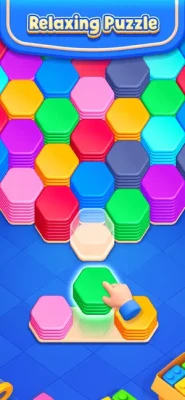
What the Hex! Color Sort is a casual puzzle game developed and published by Agave Games. It introduces a distinctive hexagonal stacking system in which players organize colorful hexagons, combine matching colors, and work toward clearing the board.
Unlike traditional water-sorting games, where liquids are transferred between bottles, What the Hex! uses hexagonal pieces and stacks as the foundation of its gameplay.
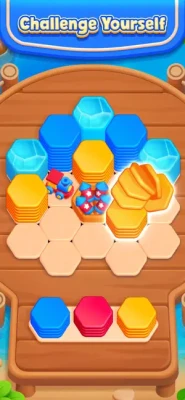
Players must examine the available colors, choose suitable positions, and create matching combinations. Successfully merging same-colored hexagons produces larger stacks and helps players work toward the target required to complete each challenge.
The game also features a progression system based on building places and unlocking new areas. This gives players additional objectives beyond completing individual puzzles.
Its combination of accessible mechanics, strategic challenges, and colorful environments makes it appealing to both casual players and puzzle enthusiasts.
Main Features of What the Hex! Color Sort
Hexagonal Color-Matching Gameplay
The central feature is its hexagon-based puzzle system. Players stack hexagons of matching colors and combine them into larger stacks to progress toward the level objective.
Satisfying Stack and Merge Mechanics
Matching colors and successfully merging stacks creates a rewarding gameplay experience. Each successful combination brings players closer to clearing the board.
Strategic Puzzle Challenges
The game requires more than simply placing matching colors together. Players must think about their available moves, board arrangement, and the best way to reach the required target.
Colorful Visual Presentation
What the Hex! features bright colors and attractive environments that make its hexagonal puzzles visually appealing.
Board-Clearing Objectives
Each puzzle challenges players to organize their stacks efficiently, clear the board, and reach the required target.
Build and Unlock New Areas
The progression system allows players to build places and unlock exciting new areas as they advance through the game.
Simple but Challenging Mechanics
The basic gameplay is easy to understand, but the strategic possibilities create more demanding challenges as players progress.
Relaxing Puzzle Experience
The game combines thoughtful decision-making with a visually comfortable presentation, making it suitable for players who enjoy casual puzzle-solving.
Gameplay Mechanics and How to Play
Understanding how the hexagonal stacking system works is the first step toward becoming a better player.
Examine the Game Board
At the beginning of each level, examine the available hexagons and their colors.
Identify which colors are already grouped together and which ones need additional matching pieces.
Pay attention to the available spaces and the overall arrangement before making your first move.
Select a Hexagonal Stack
Choose the stack you want to move or use according to the available gameplay options.
Examine its color and determine where it can contribute to a matching combination.
Match Hexagons of the Same Color
The main objective is to bring hexagons of matching colors together.
When compatible colors are stacked, they merge into larger stacks.
Creating these combinations is essential for making progress and completing the level's target.
Plan Your Next Moves
Before placing a stack, consider how the move will affect the remaining board.
A placement that looks useful immediately might create difficulties later if it blocks an important opportunity.
Think about which colors you are likely to need and how much space will remain after each move.
Clear the Board and Reach the Target
Continue matching and merging stacks until you satisfy the required objective.
Successful combinations help simplify the board and move you closer to completing the challenge.
Build and Unlock New Areas
As you progress, you can use the game's progression system to build places and unlock new areas.
These additional objectives provide a sense of advancement beyond the individual puzzle levels.
Complete Strategy Guide for What the Hex! Color Sort
Although What the Hex! has straightforward controls, its puzzles require thoughtful planning. Developing a consistent strategy can help you make better placements, avoid unnecessary mistakes, and reach your targets more efficiently.
Study the Board Before Making Your First Move
Never begin stacking without examining the available arrangement.
Look at the different colors and identify the combinations that appear easiest to create.
Pay attention to the positions of existing stacks and consider which placements could open opportunities for additional merges.
A few seconds of observation can prevent several unnecessary moves.
Prioritize Matching Colors
Matching colors are the foundation of successful gameplay.
Whenever you identify a useful opportunity to combine identical colors, consider whether taking advantage of it will improve the overall board arrangement.
Creating larger stacks helps you organize the available pieces and work toward the level objective.
However, avoid making combinations without considering their effect on the remaining board.
Think Several Moves Ahead
One of the most important skills in What the Hex! is predicting the consequences of your placements.
Do not focus exclusively on the immediate result of a move.
Consider what the board will look like afterward and whether your next available options will become better or worse.
For example, a particular combination might create a larger stack but leave another color without a convenient matching opportunity.
Good planning involves balancing immediate progress with future flexibility.
Avoid Blocking Useful Spaces
Available board space is important in stacking puzzles.
Poorly planned placements can make it harder to organize other colors and create additional combinations.
Before committing to a move, consider whether the resulting stack arrangement will interfere with other opportunities.
Try to maintain a flexible board that allows you to continue working with different colors.
Focus on Completing Useful Combinations
Not every matching opportunity has the same value.
Some combinations can help create larger stacks, while others may provide a better arrangement for future moves.
Prioritize combinations that contribute directly to the target or improve the overall board.
This approach helps you avoid wasting moves on placements that provide little strategic benefit.
Recognize Important Color Patterns
As you play more levels, you will become familiar with different color arrangements.
Look for groups of identical colors that are close to one another or can be connected through a small number of moves.
Recognizing these patterns makes it easier to identify productive combinations before placing pieces.
Keep the Level Target in Mind
Always remember the objective of the current challenge.
The goal is not simply to create the largest possible stacks. You must use your moves effectively to clear the board and reach the required target.
Avoid spending too much attention on combinations that do not contribute to completing the level.
Do Not Make Random Placements
Random stacking can quickly make a puzzle more complicated.
Every placement should have a purpose, whether it is combining matching colors, creating a larger stack, or preparing the board for a future move.
If you cannot identify a useful placement, take another moment to examine the available options.
Learn From Difficult Levels
When a level becomes challenging, review the moves that caused the most problems.
Think about whether you could have created a useful combination earlier or preserved more flexibility.
Understanding why a particular arrangement became difficult will help you make better decisions in future puzzles.
Use Available Assistance Wisely
If the game provides optional assistance or additional resources, consider saving them for particularly challenging situations.
Try to solve the puzzle independently before using extra help.
Making careful decisions and learning the mechanics is more rewarding than relying on assistance for every difficult level.
Advanced Tips for Difficult Levels
Look for the Best Starting Combination
Identify the most promising color matches before making your first move. A strong opening can make the remaining puzzle easier.
Avoid Focusing on One Color Exclusively
Although completing matching stacks is important, ignoring other colors can create problems later. Maintain awareness of the entire board.
Protect Your Future Options
A useful placement should ideally create new opportunities instead of limiting your available choices.
Think About Stack Progression
Consider how smaller matching combinations can contribute to larger stacks and eventually help you reach the required target.
Recognize Repeated Patterns
Different levels may contain similar color arrangements. Learning to recognize these patterns can improve your decision-making speed.
Keep the Board Organized
Avoid creating unnecessary groups that make the arrangement difficult to understand. Organized stacking makes it easier to recognize future matches.
Adapt Your Strategy
Not every level can be solved using the same approach. Examine the board and adjust your decisions according to the available colors and objectives.
Prioritize Progress Over Unnecessary Moves
Focus on combinations that contribute meaningfully to clearing the board.
Common Mistakes to Avoid
Stacking Without Planning
Placing hexagons randomly can create an unfavorable board arrangement. Consider the consequences of each move.
Ignoring Other Colors
Concentrating on one color while overlooking the remaining stacks can make future combinations difficult.
Blocking Useful Opportunities
Poor placement decisions may reduce your flexibility and prevent you from making important combinations.
Forgetting the Target
Creating larger stacks is useful, but every action should support the actual level objective.
Making Unnecessary Moves
Avoid placements that do not improve the board or help you progress toward the target.
Repeating an Unsuccessful Strategy
If a particular approach repeatedly creates problems, reconsider your starting moves and try a different arrangement.
How to Improve Your Color-Sorting Skills
Becoming better at What the Hex! requires practice and an understanding of how different combinations affect the board.
Start by learning to recognize matching colors quickly. This helps you identify possible merges without spending too much time examining every individual stack.
Next, practice predicting the result of each placement. Before making a move, imagine how the board will change and which opportunities will remain available.
Another useful technique is to focus on keeping the arrangement organized. A clear board makes it easier to recognize patterns and avoid mistakes.
You should also pay attention to the level objective. Understanding what you need to achieve helps you distinguish valuable combinations from unnecessary moves.
With regular practice, you can develop better visual recognition, improve your planning skills, and approach difficult puzzles with greater confidence.
Graphics and Visual Presentation
The visual design of What the Hex! is an important part of its appeal.
The game uses colorful hexagonal pieces and attractive backgrounds to create a pleasant puzzle-solving environment.
The hexagons are visually distinct, making it easier to identify different colors and follow the stacking process.
The surrounding environments also contribute to the experience. As players advance, the progression system introduces new places and areas to unlock.
The overall presentation combines bright colors with a clean puzzle layout, helping players concentrate on the main gameplay mechanics.
Controls and User Experience
What the Hex! uses an accessible interaction system designed for mobile devices.
Players select and place hexagonal stacks using touch-based controls.
The simplicity of the controls makes it easy for newcomers to understand the basic mechanics, while the strategic nature of the puzzles provides depth for experienced players.
The game is designed around a relaxing visual experience, but the increasingly demanding board arrangements ensure that players still have meaningful challenges to solve.
Progression and Unlockable Areas
What the Hex! offers more than individual color-matching puzzles.
As players complete challenges, they can build places and unlock additional areas.
This progression system provides longer-term objectives and gives players another reason to continue playing.
Instead of focusing exclusively on clearing individual boards, you also work toward expanding the available locations.
The combination of puzzle completion and area unlocking creates a satisfying sense of advancement.
Is What the Hex! Suitable for Casual Players?
Yes. What the Hex! is designed for players who enjoy casual puzzle games with simple controls and strategic gameplay.
The basic objective is easy to understand, making the game accessible to newcomers.
However, the stacking and merging mechanics require careful decisions, providing enough depth to keep experienced puzzle enthusiasts interested.
Its colorful design and straightforward gameplay make it suitable for short gaming sessions as well as longer periods of puzzle-solving.
The Apple App Store gives the game an age rating of 4+.
Is What the Hex! Free to Play?
What the Hex! Color Sort is free to download from the Apple App Store.
The game includes advertisements and optional in-app purchases.
Available purchases include coin packages, Builders Toolbox, Explorer Pack, Adventurer Pack, Ultimate Pack, Challenger Pack, and a No Ads option.
The optional purchases provide additional resources or benefits for players who want to enhance their experience.
The listed No Ads purchase is a one-time purchase, while other packages have different prices. Actual prices may vary depending on the country and App Store region.
Game Information
Game Title: What the Hex! Color Sort
Developer: Agave Games
Publisher: Agave Games
Genre: Puzzle, Casual, Color Sorting, Merge Puzzle
Main Gameplay: Stacking and merging same-colored hexagons
Game Objective: Clear the board and reach the required target
Game Style: Hexagonal color-matching puzzle
Controls: Touch-based stacking and placement
Difficulty: Gradually challenging
Progression System: Build places and unlock new areas
Game Mode: Single-player puzzle experience
Platform: iPhone and iPad
Minimum iOS Requirement: iOS 13.0 or later
Language: English
Age Rating: 4+
Price: Free to download with advertisements and optional in-app purchases
Optional Purchases: Coin packages, Builders Toolbox, Explorer Pack, Adventurer Pack, Ultimate Pack, Challenger Pack, and No Ads
Advantages of What the Hex!
Unique hexagonal stacking mechanics.
Colorful and attractive visual presentation.
Satisfying matching and merging gameplay.
Simple controls that are easy to understand.
Strategic challenges that encourage planning.
Board-clearing objectives.
Additional areas to build and unlock.
Suitable for casual puzzle enthusiasts.
Combines visual recognition with logical thinking.
Free to download.
Things to Consider Before Playing
Some levels require considerable strategic planning.
Poorly planned moves can make board arrangements difficult.
Players need to pay attention to multiple colors simultaneously.
Advertisements are included in the free experience.
Optional purchases are available for additional resources and ad removal.
Players who prefer fast-paced action may find the gameplay too relaxed.
Frequently Asked Questions
What is What the Hex! Color Sort?
What the Hex! is a casual hexagonal puzzle game where players stack and merge hexagons of matching colors to clear boards and complete level objectives.
Who developed What the Hex!?
The game was developed and published by Agave Games.
How do you play What the Hex!?
Players stack hexagons of matching colors, merge them into larger stacks, and work toward clearing the board and reaching the required target.
What makes What the Hex! different from traditional color-sorting games?
Instead of transferring liquids between bottles, the game uses hexagonal pieces and stacking mechanics to create matching combinations.
Is What the Hex! difficult?
The basic mechanics are easy to understand, but later challenges require more careful planning and strategic placement.
Does What the Hex! have unlockable areas?
Yes. Players can build places and unlock new areas as they progress.
What is the best strategy for winning?
Examine the board before making moves, prioritize useful color combinations, avoid blocking important spaces, and plan several steps ahead.
Is What the Hex! suitable for children?
The game has an Apple App Store age rating of 4+ and features straightforward color-matching mechanics.
Is What the Hex! free to download?
Yes. The game is free to download and includes advertisements and optional in-app purchases.
Can I remove advertisements?
Yes. An optional No Ads purchase is available through the App Store.
Does What the Hex! require an internet connection?
The App Store description does not clearly confirm complete offline availability, so offline access should not be assumed for every feature.
Does the game include power-ups or additional resources?
The App Store lists several optional resource and item packages, including coin packs and the Builders Toolbox.
What skills can What the Hex! help develop?
Its gameplay encourages visual recognition, color matching, logical thinking, strategic planning, and problem-solving.
Final Verdict
What the Hex! Color Sort is an enjoyable casual puzzle game that combines hexagonal stacking, color matching, and merging mechanics into a visually appealing experience.
Its greatest strength is the balance between simple gameplay and strategic depth. Understanding how to stack matching colors is easy, but completing more challenging boards requires careful planning and an ability to recognize useful combinations.
The additional progression system makes the experience more rewarding by allowing players to build places and unlock new areas as they advance.
Whether you enjoy traditional sorting puzzles, merge games, or colorful brain teasers, What the Hex! offers an interesting alternative to familiar puzzle formats.
With smart placement decisions, effective color matching, and a clear understanding of each level's target, you can improve your performance and enjoy the satisfaction of clearing increasingly challenging hexagonal puzzles.
Rate the Game
User Reviews















Popular Games



















 Android
 iOS
 Windows
 Xbox