

Latest Version
August 13, 2026
Acram Digital
Board
iOS
0
Report a Problem
More About :game
Lead Your Tribe Through the Stone Age
Welcome to a time when humanity is still learning how to build a civilization.
Your tribe begins with basic tools and limited resources. From there, every decision can influence how quickly your people develop.
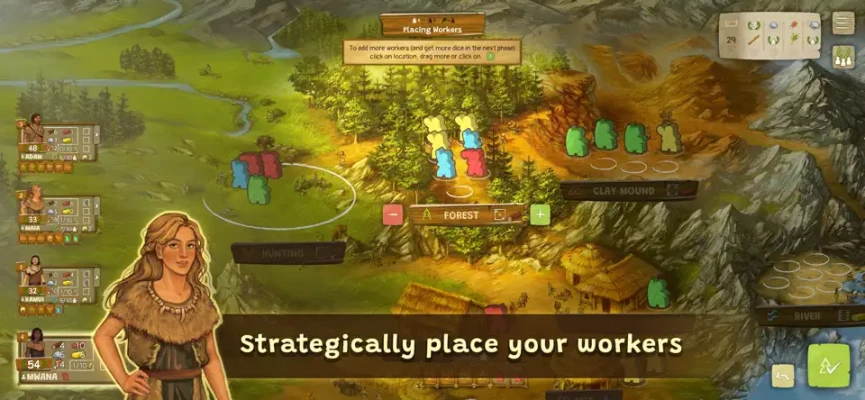
Send workers to gather materials.
Collect food to support your growing population.
Develop better tools.
Construct buildings.
Advance your culture.
Compete with rival tribes for the most valuable spaces.
Your ultimate objective is to create the most prosperous and advanced civilization.
A Classic Worker-Placement Strategy Game
At the heart of Stone Age: Digital Edition is worker placement.
You have a limited number of workers, and each one represents an opportunity.
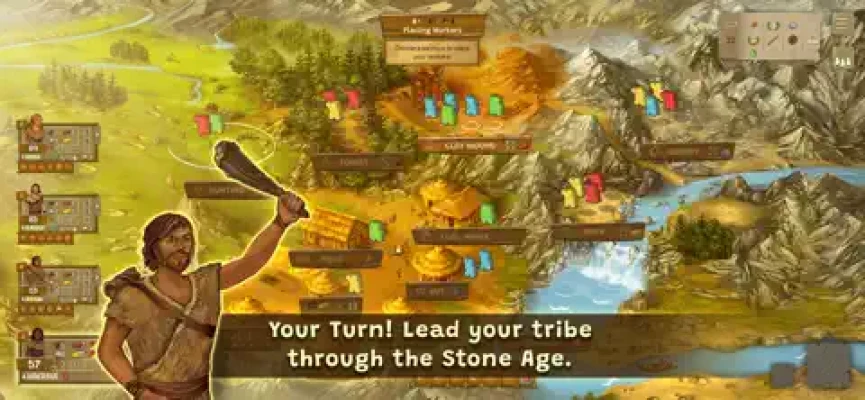
Where you place them determines what your tribe can accomplish during the round.
You may send workers toward:
- Forests for wood
- Quarries for stone
- Rivers for gold
- Hunting grounds for food
- Tool production
- Buildings
- Civilization cards
- Population growth
The challenge is that valuable spaces are limited, so you have to anticipate what your opponents might do.
Gather Essential Resources
Your civilization cannot grow without resources.
Stone Age focuses on several important materials, including:
- Wood
- Stone
- Gold
- Food
Each resource serves a different strategic purpose.
Wood can help with construction, while stone and gold become increasingly valuable as you pursue more advanced developments.
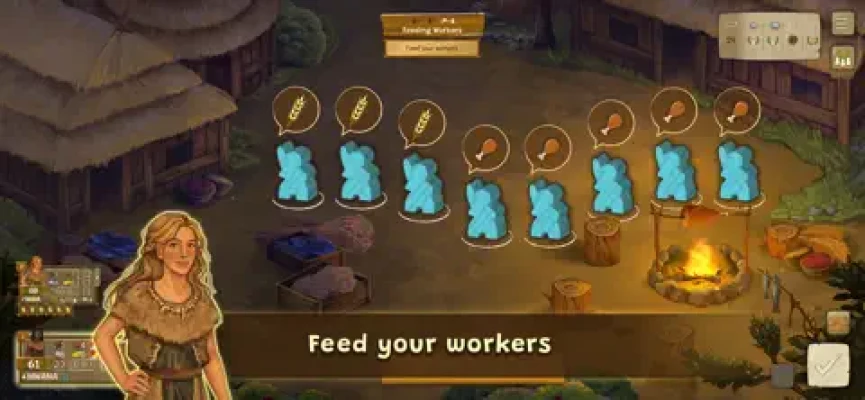
Food is particularly important because your tribe must be fed at the end of each round.
A strong economy therefore requires balance rather than simply collecting the rarest resource.
Manage Your Food Supply
Expanding your tribe creates a new responsibility.
More workers mean more opportunities, but they also mean a larger population to feed.
This creates one of the game's most important strategic choices:
Should you grow your tribe now, or strengthen your economy first?
Growing too quickly can put pressure on your food supply.
Growing too slowly can leave you without enough workers to compete for important spaces.
Finding the right balance is essential.
Develop Better Tools
Tools give your tribe an advantage when gathering resources.
Starting with primitive technology, you can develop increasingly useful tools that help reduce the impact of unfavorable dice results.
This creates an interesting relationship between luck and planning.
You cannot control every dice roll, but you can build systems that make bad rolls less damaging.
The official game description specifically highlights tools as a way to influence luck.
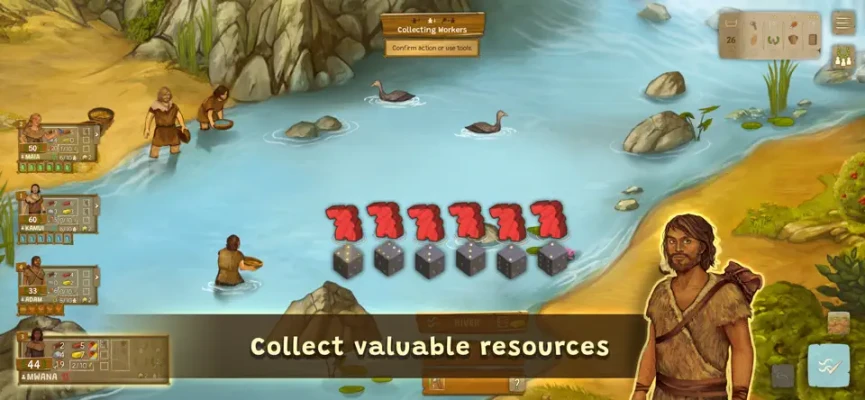
Dice Rolls Meet Strategic Planning
Stone Age isn't completely deterministic.
Dice introduce an element of uncertainty when collecting resources.
But luck isn't the whole story.
You can improve your position through:
- Better tools
- Worker placement
- Resource planning
- Food management
- Building choices
- Civilization development
The strongest players learn how to make good decisions even when the dice don't cooperate.
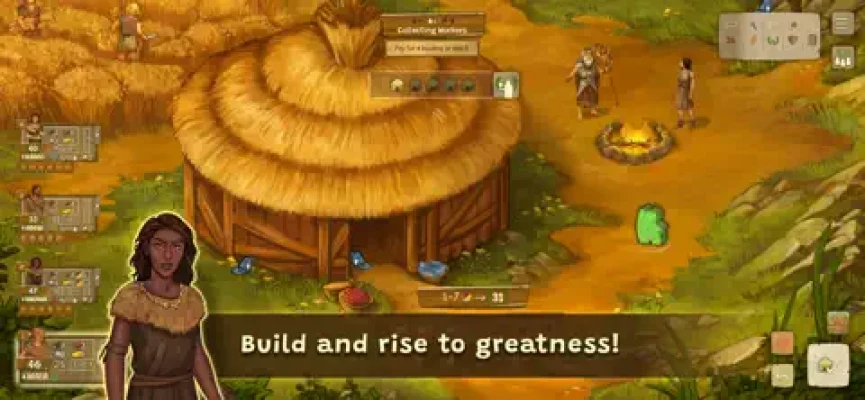
Build Your Village
Resources are ultimately used to develop your settlement.
Buildings contribute to your civilization and help transform a small prehistoric community into a more advanced society.
Construction decisions should be made with your broader strategy in mind.
A building that looks useful now may not be the best choice if it leaves you without enough resources for an important future opportunity.
Grow Your Tribe
Increasing your population gives you additional workers.
More workers mean more actions.
More actions mean greater opportunities to gather resources and develop your civilization.
But there is a cost.
Every additional member of your tribe also increases your food requirements.
This creates a satisfying economic puzzle where population growth must be matched by production.
Civilization Cards
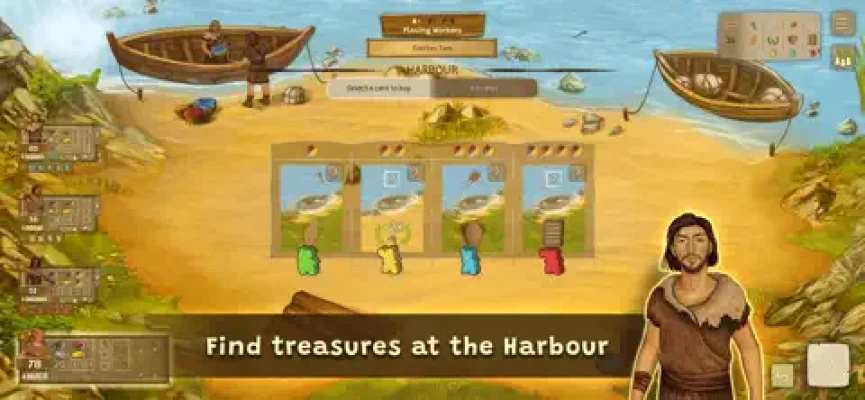
Stone Age includes cards that provide additional opportunities for development and scoring.
These cards encourage players to think beyond immediate resource collection.
A successful civilization needs both a strong economy and a long-term development strategy.
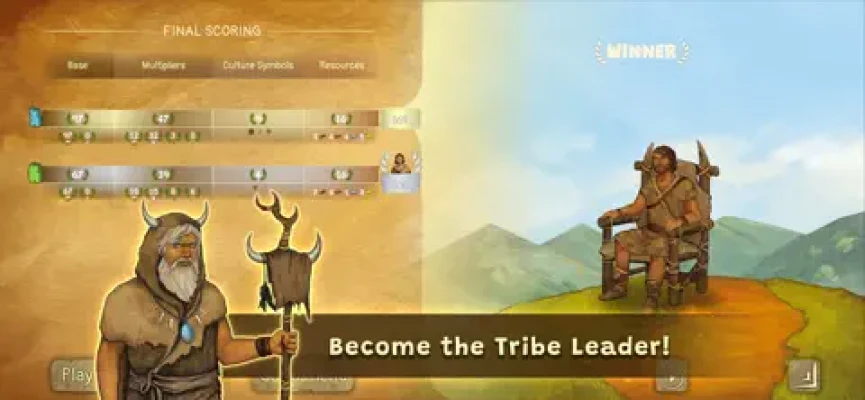
Choosing the right cards at the right time can make a significant difference during final scoring.
Limited Spaces Create Competition
One of Stone Age's most important rules is simple:
There aren't enough spaces for everyone to do everything.
If another player takes a valuable resource location, you may need to change your plans.
That means you're constantly considering:
- What do I need?
- What will my opponent take?
- Which space is most valuable?
- Should I secure resources now?
- Can I afford to wait?
This makes worker placement much more than simply selecting an action.
It's about reading the board.
Three-Part Turn Structure
The basic turn structure is easy to understand.
1. Place Your Workers
Decide what your tribe needs and send workers to the appropriate locations.
2. Collect Your Workers
Resolve the actions and use your resources to acquire tools, buildings and other developments.
3. Feed Your Workers
At the end of the round, make sure your tribe has enough food.
The rules are straightforward, but mastering the interaction between these three stages takes practice.
Solo Mode With Three AI Difficulties
If you prefer playing alone, Stone Age: Digital Edition includes three AI difficulty levels.
This makes it possible to start with a more approachable opponent before moving toward tougher challenges.
Solo play is also useful for learning the game's mechanics before competing against human opponents.
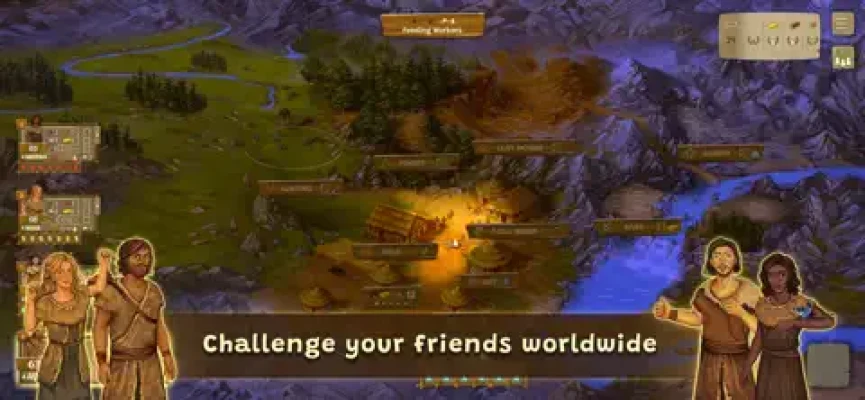
Online Multiplayer
Stone Age: Digital Edition isn't limited to playing against computer opponents.
It also offers online competition, including:
- Online matchmaking
- Ranking system
- Divisions
- Synchronous multiplayer
- Asynchronous multiplayer
This gives players different ways to compete depending on how much time they have available.
Synchronous vs Asynchronous Matches
Synchronous games allow players to compete in the same session.
They're ideal when everyone is available at the same time.
Asynchronous games allow players to take turns at different times.
This is useful when you want to play a strategy game with friends without coordinating everyone's schedule.
Online Ranking and Divisions
Competitive players can work their way through the online ranking system and divisions.
This gives experienced players an additional reason to keep improving their worker-placement strategies.
Instead of simply completing another game, you're trying to make better decisions than your opponents.
Learn the Game With the Tutorial
Stone Age is relatively easy to understand at a basic level, but its strategic depth becomes apparent as you start competing for scarce resources.
The digital version includes a tutorial designed to introduce the game's systems.
The developers have also released updates addressing tutorial dialogue and improving interface clarity.
Beginner's Guide
Start With Food
Food should never be ignored.
Before increasing your population, make sure your economy can support it.
Don't Chase Every Resource
You don't need everything.
Choose resources that support your current strategy.
Use Workers Efficiently
Avoid sending workers to locations simply because they are available.
Every placement should have a purpose.
Develop Tools Early
Tools can make resource gathering more reliable and reduce the impact of unlucky dice rolls.
Watch Your Opponents
If another player clearly needs a particular resource, consider whether you should secure that space first.
Plan for the End Game
Don't focus entirely on your current turn.
Think about what your civilization needs to score well when the game ends.
Advanced Strategy Tips
Balance Population and Food
Additional workers are valuable, but only if your food production can keep pace.
Don't Waste Valuable Worker Spaces
Some locations become much more important depending on the current state of the board.
Use Tools to Reduce Risk
Tools can help turn uncertain resource gathering into a more dependable strategy.
Think About Resource Conversion
A resource isn't valuable simply because it is rare.
Its real value depends on what you can build or acquire with it.
Watch Card Opportunities
A card that fits your current strategy can sometimes be more valuable than immediately collecting another resource.
Adapt to Your Opponents
Worker placement is inherently competitive.
If your original plan is no longer possible, change it rather than wasting workers trying to force it.
How to Win
Victory comes from developing the strongest civilization rather than simply collecting the largest amount of one resource.
A successful strategy combines:
Resource Production + Population + Tools + Buildings + Civilization Development + Food Management
The winner is the player who makes these systems work together most effectively.
Progression Through the Stone Age
Your tribe develops gradually.
The progression loop looks like this:
- Begin with basic tools.
- Gather food.
- Collect wood, stone and gold.
- Improve your tools.
- Expand your workforce.
- Construct buildings.
- Acquire civilization cards.
- Improve resource production.
- Develop your culture.
- Build the most advanced civilization.
This creates a satisfying feeling of moving from a small prehistoric settlement toward a more sophisticated society.
The Balance Between Luck and Skill
Dice are important, but Stone Age isn't simply a game of luck.
The strongest strategies account for uncertainty.
If you know that a resource location will require a favorable roll, tools and careful planning can help reduce the risk.
That's what makes the game interesting: you aren't controlling every outcome, but you are controlling how you respond to uncertainty.
Historical Atmosphere
Stone Age: Digital Edition takes place during humanity's prehistoric beginnings.
The visual presentation, resource system and village development all reinforce the setting.
Instead of managing futuristic technology or modern cities, you're working with:
- Primitive tools
- Hunting
- Gathering
- Wood
- Stone
- Gold
- Food
- Early construction
- Tribal development
The result is a colorful and approachable civilization-building experience.
Digital Board Game Experience
The digital adaptation preserves the core rules of the original tabletop game while removing much of the manual bookkeeping.
The game automatically manages things such as:
- Worker placement
- Dice calculations
- Resource totals
- Turn order
- Food requirements
- Scoring
- Online matches
This allows you to concentrate on strategy rather than administrative tasks.
The developers state that the digital version was developed with the official Stone Age rules and consultation from the board game's designers.
Replay Value
Stone Age: Digital Edition is built for repeated play.
The combination of random dice results, different opponents, limited worker-placement spaces and changing resource priorities means that no two matches need to unfold in exactly the same way.
The developer describes the game as offering near-infinite replayability.
You can replay to:
- Improve your opening strategy
- Experiment with population growth
- Optimize tool development
- Try different card strategies
- Learn AI behavior
- Compete online
- Improve your ranking
Game Difficulty
The basic rules are accessible, making Stone Age a good introduction to worker-placement games.
However, its strategic depth grows significantly when you begin playing against stronger AI or experienced human opponents.
The App Store currently includes player feedback criticizing the Medium AI for appearing to receive unusually favorable dice results, which is worth keeping in mind when evaluating the solo difficulty.
Controls and Interface
Stone Age is designed for touchscreen play on iPhone and iPad.
Its interface presents the board, worker locations, resources, cards and actions in a digital format.
Recent updates have improved interface readability, added clearer AI indicators during final scoring and introduced options to skip certain animations.
Multiplayer Features
The game provides several ways to play with others:
- Online matchmaking
- Synchronous multiplayer
- Asynchronous multiplayer
- Ranking system
- Divisions
- Local multiplayer
This makes it suitable for both competitive players and people who prefer slower turn-based matches.
Family-Friendly Strategy
The current U.S. App Store listing gives Stone Age: Digital Edition an age rating of 4+, making it considerably more family-friendly than many strategy and RPG titles.
Its core mechanics are based on resource management and strategic planning rather than violence or mature content.
Updates and Improvements
The iOS version has received updates addressing both gameplay and interface issues.
Version 1.2.1 included fixes for tutorial dialogue, graphical artifacts and application stability.
Earlier updates improved:
- Card-panel readability
- Culture-symbol visibility
- Animation skipping
- Tool display
- Tutorial navigation
- Mobile stability
- Local multiplayer behavior
- AI identification during final scoring
Technical Details
| Detail | Information |
|---|---|
| Game | Stone Age: Digital Edition |
| Developer | Acram Digital |
| Original Publisher/Designer | Hans im Glück |
| Genre | Board / Strategy |
| Gameplay | Turn-Based |
| Main Mechanics | Worker Placement, Resource Management |
| Solo Mode | Yes |
| AI Levels | 3 |
| Online Multiplayer | Yes |
| Asynchronous Multiplayer | Yes |
| Synchronous Multiplayer | Yes |
| Ranking System | Yes |
| Divisions | Yes |
| Local Multiplayer | Yes |
| Platform | iPhone, iPad |
| Price | $7.99 |
| App Size | 498.6 MB |
| Minimum iOS | iOS 13.0+ |
| Minimum iPadOS | iPadOS 13.0+ |
| Language | English |
| Age Rating | 4+ |
| Family Sharing | Yes |
Apple's current U.S. listing confirms the 498.6 MB size, $7.99 price, iOS 13/iPadOS 13 requirement, English language support and Family Sharing.
Player Ratings and Feedback
The current U.S. App Store listing shows 3.5/5 from 24 ratings. It also carries an Editor's Choice designation from Apple.
Player feedback is mixed.
Some players appreciate the underlying strategy and enjoy playing against the AI, while other reviews have raised concerns about AI dice outcomes and online-account issues. The developer has responded to reported problems, including stating that a password-reset issue had been identified and fixed.
On Steam, the game has a stronger reception, with Very Positive overall reviews at the time of the retrieved listing.
Pros and Cons
Pros
- Excellent worker-placement mechanics
- Classic board-game adaptation
- Resource-management depth
- Three AI difficulty levels
- Online multiplayer
- Synchronous and asynchronous matches
- Ranking system and divisions
- Local multiplayer
- Tool system adds strategic control over luck
- Strong replayability
- Family-friendly rating
- Official rules consulted with the board-game designers
- Premium purchase without free-to-play energy mechanics
Cons
- App Store rating is currently mixed
- Some players have criticized Medium AI dice outcomes
- Online account requirements may frustrate some users
- English is the only language listed on the U.S. App Store
- Nearly 500 MB download
- Learning optimal worker placement takes time
Stone Age vs Traditional City Builders
Stone Age isn't a conventional city-building simulator.
You aren't freely designing a huge city or managing traffic and infrastructure.
Instead, your civilization develops through:
Worker Placement → Resource Collection → Tools → Buildings → Population → Civilization Cards
The board is smaller, but each decision is more strategically concentrated.
Stone Age vs Other Digital Board Games
Stone Age stands out through its combination of:
- Worker placement
- Dice
- Resource management
- Population growth
- Building
- Civilization development
Players who enjoy titles such as Dawnmaker, Set a Watch, Concordia or other digital tabletop adaptations may find Stone Age particularly appealing because it offers a slower, decision-focused experience.
Who Should Play Stone Age: Digital Edition?
This game is a strong choice for:
- Board-game fans
- Strategy enthusiasts
- Worker-placement fans
- Civilization-building players
- Resource-management enthusiasts
- Turn-based gamers
- Solo players
- Competitive online players
- Family-friendly strategy fans
- Players new to digital board games
- Fans of prehistoric settings
It's especially good for players who enjoy thinking several turns ahead rather than relying on fast reactions.
Expert Rating
| Category | Rating |
|---|---|
| Worker Placement | 9.3/10 |
| Resource Management | 9.2/10 |
| Strategic Depth | 9.1/10 |
| Solo Mode | 8.5/10 |
| Multiplayer | 9.0/10 |
| Replay Value | 9.2/10 |
| Accessibility | 9.0/10 |
| Interface | 8.5/10 |
| Mobile Experience | 8.8/10 |
| Overall | 9.0/10 |
Frequently Asked Questions
What is Stone Age: Digital Edition?
It is a digital adaptation of the classic Stone Age worker-placement board game, featuring resource gathering, tribe development, buildings, tools and civilization progression.
Is Stone Age: Digital Edition available on iPhone?
Yes. It supports iPhone devices running iOS 13 or later.
Can I play Stone Age on iPad?
Yes. Compatible iPads running iPadOS 13 or later are supported.
Is Stone Age: Digital Edition free?
No. The U.S. App Store currently lists the game for $7.99.
Does Stone Age have single-player gameplay?
Yes. You can play against AI opponents with three difficulty levels.
Does Stone Age have online multiplayer?
Yes. The game supports online multiplayer with matchmaking, rankings and divisions.
Can I play asynchronously?
Yes. Asynchronous online games are supported, allowing players to take turns at different times.
What resources can I collect?
The game includes wood, stone, gold and food as major resources.
What is worker placement?
Worker placement means assigning your limited workers to different spaces on the board to perform specific actions or collect particular resources.
Are dice important?
Yes. Dice introduce uncertainty into resource gathering, while tools and strategic planning help you manage that uncertainty.
How do I win?
You need to develop your tribe and civilization efficiently by managing workers, resources, food, buildings, tools and civilization development.
Is Stone Age suitable for children?
The U.S. App Store currently gives the game a 4+ age rating.
How much storage does Stone Age require?
The current iOS listing shows a download size of 498.6 MB.
What iOS version is required?
The game requires iOS 13.0 or later and iPadOS 13.0 or later.
Stone Age: Digital Edition is a thoughtful adaptation of a classic worker-placement board game, and its greatest strength is the way it turns simple actions into meaningful strategic decisions.
You aren't simply collecting resources. You're deciding which workers to deploy, which resources matter most, when to grow your tribe, how much food you need and which developments will help your civilization score at the end.
The combination of worker placement, dice, tools, resource management and civilization development gives the game considerable depth without making its basic rules difficult to understand.
The inclusion of three AI levels, online matchmaking, rankings, divisions, synchronous and asynchronous multiplayer also gives the game significantly more replay potential than a purely offline board-game adaptation.
The main caveat is the mixed current iOS reception. Some App Store users have criticized AI behavior and past online-account issues, although the developer has released fixes and improvements over time.
For players searching for a worker-placement game for iPhone, civilization strategy game for iPad, digital board game, resource-management game or turn-based strategy experience, Stone Age: Digital Edition is a compelling choice.
Overall Rating: 9.0/10
Official App Store: Stone Age: Digital Edition on the App Store
Official Stone Age Website: Stone Age: Digital Edition
Rate the Game
User Reviews











Popular Games



















 Android
 iOS
iOS Windows
 Xbox
Xbox