


Latest Version
October 09, 2026
FunCraft, Inc
Board
iOS
0
Report a Problem
More About :game
Pachinko Score brings the familiar excitement of pachinko-style ball dropping into a mobile puzzle experience built around precision, physics, and careful planning. Developed by FunCraft, Inc., the game challenges players to guide balls through obstacle-filled boards and land them in every required scoring bin.
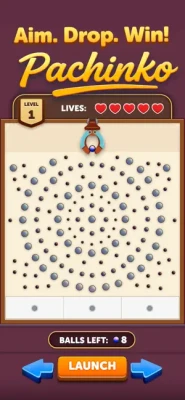
The rules are easy to understand. Each level presents a board filled with pegs, ramps, bumpers, spinners, and bins along the bottom. You have a limited number of balls, and each successful drop fills an empty bin. However, landing in a bin that has already been filled wastes the ball, making every launch important.
What makes Pachinko Score interesting is the way small decisions can change the result of a shot. A ball may bounce away from its intended path after striking a peg, follow a ramp toward a different section of the board, or be redirected by a spinner. Learning to anticipate these movements is essential for completing the more demanding levels.
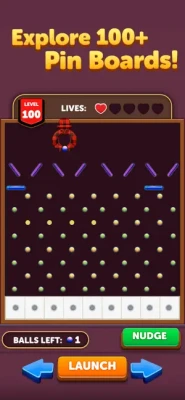
The game also includes a nudge mechanic that lets you apply sideways force while a ball is falling. Used at the right moment, this ability can help redirect a ball away from an already-filled bin and toward a more useful landing spot.
Pachinko Score features hand-designed levels across five themed worlds: Classic, Western, Medieval, Space, and Pirates. Each world introduces its own visual atmosphere and board challenges as you progress.
With no timer pressuring every move, you can focus on choosing your launch position, observing the ball's trajectory, and planning how to fill the remaining bins before your supply runs out.
Game Information
Game title: Pachinko Score
Developer: FunCraft, Inc.
Genre: Physics puzzle, pachinko, casual arcade
Core gameplay: Drop balls through obstacles to fill empty bins
Main objective: Fill every bin before running out of balls
Controls: Slide the launcher to aim and release a ball
Special ability: Nudge a falling ball sideways
Level design: Hand-designed puzzle boards
Obstacles: Pegs, ramps, bumpers, spinners, and bouncy pegs
Worlds: Classic, Western, Medieval, Space, and Pirates
Additional features: Daily chests, achievements, and rewards
Gameplay pace: No countdown timer; multiple balls can be launched while others are in flight
Platform: iPhone and iPad
Developer and publisher: FunCraft, Inc.
Price: Free to download, with in-app purchases
Language: English
Age rating: 4+ on the US App Store listing
Compatibility: Requires iOS 15.0 or later on iPhone and iPadOS 15.0 or later on iPad
Main Features of Pachinko Score
1. Physics-Based Ball-Drop Gameplay
The main challenge is to guide each ball through a board of obstacles and land it in an unfilled bin.
After launching, the ball interacts with pegs, bumpers, ramps, and other elements that influence its trajectory. A small change in the launch position can produce a different result, so learning the board is an important part of the experience.
2. Hand-Designed Puzzle Levels
Pachinko Score uses carefully designed levels rather than relying entirely on randomly generated layouts.
As you progress, boards become wider, empty bins can become harder to reach, and new obstacles introduce additional challenges. This gradual increase in complexity encourages players to refine their aiming and learn how to use each board's features.
3. Five Themed Worlds
The game features five worlds to unlock as you advance:
Classic: The starting setting for learning the basic mechanics.
Western: A themed environment that adds visual variety to the puzzle journey.
Medieval: A fantasy-inspired setting for further challenges.
Space: A futuristic theme that changes the atmosphere of the boards.
Pirates: A nautical adventure setting to explore as you progress.
Each world offers a different visual identity while keeping the core ball-drop objective intact.
4. Limited Balls and Empty Bins
You must fill every bin before running out of balls. Landing in a previously filled bin wastes a ball, so accurate targeting becomes increasingly important as fewer empty bins remain.
This mechanic gives each level a clear objective and makes unnecessary shots costly.
5. The Nudge Mechanic
The nudge ability lets you apply sideways force to a ball while it is falling.
It can help correct a trajectory that is drifting toward a bin you have already filled. Timing matters, however: using the nudge too early or too late may not produce the intended result.
6. Multiple Balls in Flight
You do not always need to wait for one ball to land before launching another. You can keep balls moving through the board or slow down to examine each shot individually.
Launching quickly can make the game feel more energetic, while a measured approach gives you more time to observe the board and plan the next move.
7. Daily Chests and Achievements
Daily chests, rewards, and achievements provide additional reasons to return to the game.
These features add progression beyond clearing individual levels and give players more goals to work toward as they explore the different worlds.
How to Play Pachinko Score
Step 1: Examine the Board
Before launching a ball, look at the arrangement of pegs, ramps, bumpers, spinners, and bins.
Identify the empty bins and consider which part of the board you need to reach. This quick inspection helps you avoid launching without a clear objective.
Step 2: Choose Your Launch Position
Slide the launcher or claw to line up your shot.
Think about the path the ball is likely to follow after striking the first few obstacles. A launch that begins directly above an empty bin may not reach it if the surrounding pegs redirect the ball.
Step 3: Release the Ball
Launch the ball and watch its trajectory as it moves through the board.
Observe where it strikes pegs and how ramps or bumpers affect its direction. These details can help you make better decisions on subsequent shots.
Step 4: Fill an Empty Bin
Your main objective is to land in a bin that has not yet been filled.
Once a bin is filled, remember its position. Repeating the same landing wastes a ball, so future shots should focus on the remaining empty targets.
Step 5: Use the Nudge When Necessary
If a ball begins drifting toward a filled bin, consider using the nudge mechanic to redirect it.
Look at the ball's current direction and the location of the empty bins before applying sideways force. The best moment depends on the ball's position and the obstacles ahead.
Step 6: Track Your Remaining Balls
Keep an eye on how many balls remain and how many bins still need to be filled.
If only a few empty bins remain, avoid careless launches. Every shot should have a clear purpose, particularly when you are close to completing the level.
Step 7: Complete the Level
Continue aiming, launching, and adjusting your approach until every bin is filled.
Successful completion unlocks further challenges and helps you progress through the themed worlds.
Complete Strategy Guide for Pachinko Score
Strategy 1: Aim With a Specific Bin in Mind
One of the most common mistakes is launching a ball simply to see where it goes.
Before each shot, choose an empty bin as your target. Then identify a plausible launch position based on the obstacles between the launcher and that bin.
The ball may not follow your intended path exactly, but starting with a clear objective makes each attempt more purposeful.
Pro tip: Focus on the next empty bin that looks reachable rather than trying to solve the entire board with one shot.
Strategy 2: Learn the First Few Bounces
The initial part of a ball's trajectory can reveal a lot about the route it may follow.
Watch how the ball interacts with the first pegs and bumpers. If it consistently moves away from your intended target, consider adjusting the launch position on your next attempt.
Avoid assuming that a straight launch produces a straight path. The obstacles are designed to change the ball's direction.
Strategy 3: Understand How Each Obstacle Works
Different board elements can affect the ball in different ways.
Pegs: Deflect the ball and create changes in direction.
Ramps: Guide the ball along a particular path.
Bumpers: Change the ball's movement after contact.
Spinners: Introduce additional trajectory changes.
Bouncy pegs: Can send the ball back into play and alter its route.
Understanding these interactions helps you anticipate where the ball might travel and choose more effective launch positions.
Strategy 4: Prioritize the Hardest Empty Bins
Not every bin is equally easy to reach. Some may be positioned beneath complicated obstacle arrangements or in areas where the ball frequently gets redirected.
Consider targeting difficult bins while you still have enough balls to adapt if a shot fails.
However, do not waste every available ball on one difficult target. If a different empty bin offers a reliable opportunity, filling it first can simplify the remaining puzzle.
Strategy 5: Save the Nudge for Meaningful Corrections
The nudge mechanic is most useful when a small directional change could make the difference between filling an empty bin and wasting a ball.
Before using it, consider the ball's position, its current direction, and the target you want to reach. A correction is more likely to help when you can identify a realistic alternative path.
Avoid using the ability automatically on every shot. Save it for situations where it can meaningfully improve the trajectory.
Strategy 6: Adjust Your Aim After Every Result
Every completed shot gives you information about the board.
If a ball lands in the wrong bin, review the route it followed. Determine whether the initial launch was poorly positioned or whether an obstacle redirected it unexpectedly.
Use what you learn to adjust the next shot. Repeating the same launch without considering the previous result can waste valuable balls.
Strategy 7: Keep Track of Filled Bins
Remembering which bins are already filled is essential.
As the board becomes more crowded with completed targets, your options narrow. A ball that lands in a filled bin is wasted, so avoid repeatedly aiming toward sections that no longer provide a useful destination.
Pay particular attention to bins near one another, where a small change in trajectory may determine which one receives the ball.
Strategy 8: Slow Down on Difficult Levels
Pachinko Score does not impose a countdown timer, so you can take time to plan your shots.
On more complicated boards, examine the obstacles and available targets before launching. A measured approach may help you recognize better launch positions and use the nudge mechanic more effectively.
You can launch multiple balls in flight, but speed should not replace accuracy when only a few balls remain.
Strategy 9: Adapt to Wider Boards
As you progress, boards become wider and bins may become harder to reach.
A launch position that worked well on an earlier level may not be suitable for a larger layout. Reassess the distance to the target and the obstacles between them rather than relying on the same position every time.
The wider the board, the more important it becomes to understand how the ball moves through the available space.
Strategy 10: Make the Final Balls Count
The final empty bins can be the most challenging part of a level because you have fewer opportunities to correct mistakes.
Before each remaining shot, identify the exact bin you need to fill and review the likely path. If a nudge could help avoid a filled bin, consider whether the timing is right.
Avoid rushing simply because most of the level is complete. The final shots deserve the same attention as the first.
Strategy 11: Learn From Failed Levels
Running out of balls does not mean you have learned nothing.
Review which bins remained empty and how your balls reached their destinations. Identify whether the problem came from poor aim, unexpected bounces, or unnecessary repeated shots.
Then try a different approach. Changing one aspect of your launch position or timing can help you understand the board more clearly.
Strategy 12: Approach Each World With Fresh Eyes
The five themed worlds introduce different board designs and challenges as you progress.
Do not assume that a strategy from Classic will work equally well in Western, Medieval, Space, or Pirates. Examine the current layout and adapt your shots to the obstacles in front of you.
Learning to respond to each board's structure is more effective than relying on one fixed launch pattern.
Beginner Tips for Clearing More Levels
Inspect the entire board before launching.
Choose an empty bin as your target for every shot.
Watch how the ball reacts to the first few obstacles.
Learn the effect of pegs, ramps, bumpers, and spinners.
Remember which bins have already been filled.
Avoid repeating a launch that consistently misses the target.
Use the nudge mechanic when it can meaningfully change the trajectory.
Keep track of your remaining balls.
Slow down when only a few empty bins remain.
Use failed attempts to learn how each board behaves.
Adjust your launch position on wider or more complicated levels.
Focus on completing the objective rather than launching as quickly as possible.
Advanced Tips for Difficult Pachinko Levels
When Only One or Two Bins Remain
Identify the exact target before launching. Look for the most plausible route through the obstacles and consider whether the nudge mechanic could help if the ball starts moving in the wrong direction.
At this stage, avoiding filled bins is just as important as reaching the target.
When the Board Has Many Moving Obstacles
Spinners and bumpers can make trajectories less predictable. Give yourself time to observe their positions and consider how they may affect the ball.
Avoid assuming that a previous shot will produce the same result if the obstacle interaction has changed.
When a Bin Is Difficult to Reach
Examine the surrounding pegs and ramps. Look for a launch position that allows the ball to approach the target from a more useful angle.
If direct access is difficult, consider whether a sequence of bounces could redirect the ball toward the empty bin.
When You Have Several Balls Remaining
Use those opportunities to complete accessible bins while keeping the difficult targets in mind. Avoid wasting multiple balls on the same low-probability shot without adjusting your approach.
When You Are Close to Completing a World
Keep focusing on the individual level objectives rather than rushing toward the next unlock. A careful final shot can be more valuable than launching quickly and losing a ball.
Common Mistakes to Avoid
Launching Without a Target
A ball should have a purpose. Choose an empty bin before releasing it so that you can evaluate the trajectory against your intended outcome.
Ignoring Previous Results
The path of an earlier ball can provide useful information about the board. If the same launch repeatedly sends balls away from the target, adjust your aim.
Wasting Balls on Filled Bins
Once a bin is filled, it should no longer be your intended destination. Keep track of completed targets and redirect your focus toward the remaining ones.
Using the Nudge Too Late
A nudge may be less useful if the ball has already passed the point where a directional change could help. Watch the trajectory and decide whether the correction is likely to make a difference.
Rushing Through Complex Boards
There is no countdown timer requiring you to launch immediately. Take advantage of the ability to plan your shot, especially when the board contains difficult obstacles.
Repeating the Same Strategy on Every Level
Different boards require different approaches. Adapt your launch position and timing to the current arrangement instead of assuming that one technique will always work.
The Five Worlds of Pachinko Score
Pachinko Score offers five themed environments to explore as you clear levels.
Classic World
Classic introduces the core ball-drop mechanics and provides an opportunity to learn how launch positions and obstacle interactions affect the outcome.
Use this stage to build a strong foundation before moving on to more complicated boards.
Western World
The Western theme adds visual variety to your journey. Continue applying the basic principles of careful aiming and target selection while adapting to the board layouts you encounter.
Medieval World
The Medieval world offers another themed setting for the game's puzzle challenges. Focus on understanding the obstacle arrangement in each level rather than relying on familiar launch positions.
Space World
Space introduces a futuristic atmosphere to your progression. Continue examining the board carefully and use the same disciplined approach to selecting empty bins and adjusting your shots.
Pirates World
The Pirates world provides another themed destination as you progress through the game. Keep your attention on the remaining bins and adapt your strategy to each board's particular layout.
The worlds provide variety in presentation and level design, while the central objective remains the same: fill every required bin before your balls run out.
Daily Chests, Rewards, and Achievements
Pachinko Score includes daily chests, rewards, and achievements that give you additional goals beyond clearing individual levels.
Daily chests: Check in regularly to see which rewards are available.
Achievements: Work toward milestones as you improve your performance and progress through the game.
World progression: Complete levels to unlock new themed environments and discover further board challenges.
These features add reasons to return to the game, but your main priority should remain learning the physics and completing levels efficiently.
Is Pachinko Score Worth Playing?
Pachinko Score is worth considering if you enjoy casual puzzle games that combine simple controls with physics-based challenges.
The main objective is easy to understand: guide balls through obstacles and fill every bin before your supply runs out. However, the interaction between pegs, ramps, bumpers, and spinners creates situations that require careful aiming and adaptation.
The nudge mechanic adds another layer of control by allowing you to redirect a falling ball when a shot starts to go wrong. Meanwhile, hand-designed levels and five themed worlds provide variety as you progress.
Another advantage is the absence of a countdown timer. You can take your time to examine the board, choose a launch position, and think through your next move.
The main challenge is managing a limited supply of balls. A few inaccurate shots can leave difficult targets unfinished, so patience and observation are important.
If you enjoy pachinko games, ball-drop puzzles, and gradual level progression, Pachinko Score offers an accessible experience with room to improve your technique.
Pros and Cons
Pros
Simple controls that are easy to learn.
Physics-based gameplay rewards careful aiming.
Hand-designed levels provide structured progression.
Five themed worlds add visual variety.
Multiple obstacle types create different trajectory challenges.
The nudge mechanic offers a way to correct difficult shots.
No countdown timer forces you to rush.
Multiple balls can be launched while others remain in flight.
Daily chests, achievements, and rewards provide extra goals.
Cons
Limited balls make inaccurate shots costly.
Random-looking bounces can make some targets difficult to predict.
Filled bins must be avoided to prevent wasting balls.
Wider boards and more complex obstacles increase the difficulty.
The game includes advertising and optional in-app purchases.
Frequently Asked Questions
What is Pachinko Score?
Pachinko Score is a physics-based ball-drop puzzle game developed by FunCraft, Inc. Players guide balls through pegs, ramps, bumpers, and spinners to fill every bin on a level.
How do you play Pachinko Score?
Slide the launcher to line up a shot, release a ball, and watch it bounce through the obstacles. Your goal is to land in every empty bin before you run out of balls.
What is the main objective?
The objective is to fill all the bins on the current board. Landing in an empty bin fills it, while landing in a bin that has already been filled wastes a ball.
How does the nudge mechanic work?
The nudge mechanic lets you apply sideways force to a falling ball. It can help redirect a ball toward an empty bin or away from a previously filled one.
How many worlds are in Pachinko Score?
The game features five themed worlds: Classic, Western, Medieval, Space, and Pirates.
Does Pachinko Score have a timer?
The game is designed without a countdown timer, allowing you to play at your own pace and focus on planning your shots.
Can I launch multiple balls at once?
Yes. You do not always need to wait for one ball to land before launching another. You can play quickly or take a more measured approach.
How can I clear difficult levels?
Examine the board, select a target bin, and adjust your launch position based on previous results. Keep track of filled bins and use the nudge mechanic when it can help correct a shot.
Is Pachinko Score free to play?
The game is free to download and offers optional in-app purchases. Check the current App Store listing for the latest purchase details.
Does Pachinko Score have achievements?
Yes. The game includes achievements, daily chests, and rewards that provide additional progression goals.
Is Pachinko Score available on iPhone and iPad?
Yes. The US App Store listing supports iPhone and iPad, subject to the device's operating-system requirements.
Final Thoughts
Pachinko Score turns a simple ball-drop concept into a puzzle of aiming, observation, and resource management. Each shot matters because you must fill every bin before your limited supply of balls runs out.
The best approach is to inspect the board, select a clear target, learn from every bounce, and use the nudge mechanic when a small correction could save a shot. As the boards become wider and the obstacles more demanding, patience and flexibility become increasingly important.
With five themed worlds, hand-designed levels, and additional rewards to pursue, Pachinko Score offers a steady progression of physics-based challenges for players who enjoy casual puzzle games.
Take your time, study the trajectory, and make every ball count.
Rate the Game
User Reviews





Popular Games



















 Android
 iOS
iOS Windows
 Xbox
Xbox