
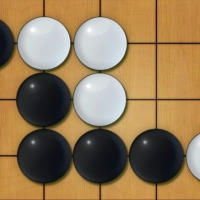
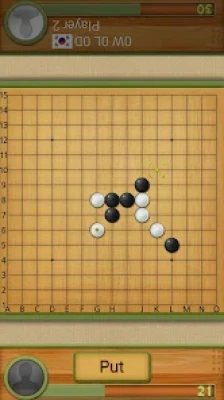
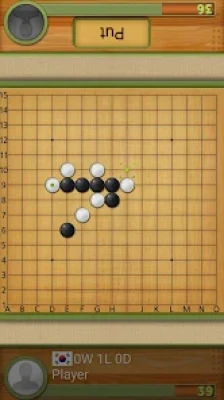
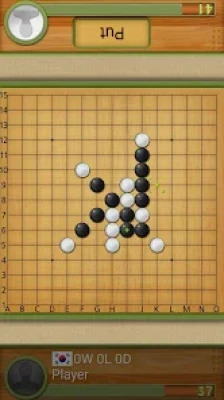
Latest Version
September 19, 2026
SUD Inc.
Board
0
com.ansangha.drgomoku
Report a Problem
More About :game
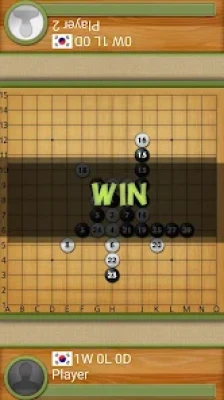
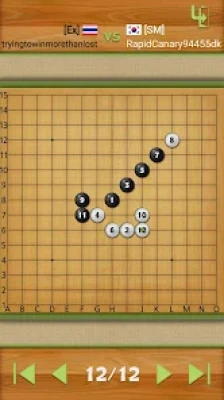
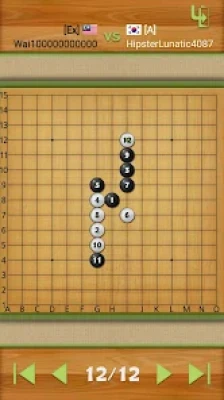
Unlike a simple casual five-in-a-row game, Dr. Gomoku follows the official Renju rule set, which introduces restrictions that make opening strategy and move selection particularly important. Players place black and white stones on empty board intersections, with the objective of creating a winning line while preventing the opponent from doing the same.
What Is Dr. Gomoku?
Dr. Gomoku is an online strategy board game where two players compete by placing stones on a board. Black moves first, followed by White, and the players continue taking turns.
The fundamental objective is straightforward: create an uninterrupted line of five stones horizontally, vertically, or diagonally.
The challenge comes from the fact that every move affects both your attack and your opponent's potential attack. A seemingly harmless move can create a powerful threat several turns later.
The game is particularly suited to players who enjoy:
- Gomoku and Gobang
- Five-in-a-row games
- Renju strategy
- Abstract board games
- Competitive multiplayer games
- Short tactical matches
- Pattern recognition puzzles
- Strategic thinking games
Google Play currently lists Dr. Gomoku as a board, abstract strategy, casual, multiplayer and competitive multiplayer game.
Dr. Gomoku Game Information
Game: Dr. Gomoku
Developer: SUD Inc.
Genre: Board / Abstract Strategy
Main Gameplay: Gomoku / Five in a Row
Rule Set: Renju
Multiplayer: Online competitive play
Platforms: Android and Windows
Google Play Downloads: 10M+
Google Play Rating: Around 4 stars
Contains: Advertisements
Content Rating: Teen
Latest Google Play update listed: August 25, 2025
How to Play Dr. Gomoku
The basic rules are easy to understand.
Black makes the first move. Players then alternate placing one stone at a time on an empty intersection.
Your goal is to create five connected stones:
- Horizontally
- Vertically
- Diagonally
At the same time, you must watch the opponent's developing formations and stop dangerous patterns before they become winning threats.
The game therefore has two simultaneous objectives:
Build your own attack while destroying the opponent's attack.
That balance is what gives Gomoku its strategic depth.
Understanding the Renju Rules
One of the most important things to understand before playing seriously is that Dr. Gomoku follows the Renju rule set rather than treating the game as unrestricted casual Gomoku.
This matters because some moves available in ordinary five-in-a-row games can be restricted under Renju-style play.
Common tactical concepts include:
- Open three
- Closed three
- Open four
- Closed four
- Double threats
- Double-three situations
- Overlines
- Forbidden moves
If you are new to Renju, do not assume that every apparently strong move is legal or useful.
Learning the rule restrictions can be just as important as learning attacking patterns.
Full Dr. Gomoku Strategy Guide
1. Control the Opening
Do not rush to create a long line immediately.
The opening is about establishing flexibility.
A good early move should ideally give you several possible directions for future development while limiting the opponent's options.
Instead of thinking:
"Where can I put my next stone?"
Think:
"Which move gives me the most useful choices two or three turns from now?"
Central and nearby intersections can provide strong opportunities because they allow potential horizontal, vertical and diagonal development.
2. Build Flexible Shapes
Avoid creating formations that can only develop in one direction.
A flexible position can attack from multiple angles.
For example, if your stones can potentially connect horizontally and diagonally, your opponent has more threats to monitor.
This forces defensive decisions and increases the chance that your next move creates a serious threat.
3. Look for Open Threes
An open three is one of the most important attacking patterns in Gomoku.
The basic idea is a sequence of three stones with useful empty spaces around it.
For example:
● ● ●
with playable space available on both sides can become dangerous because the opponent may need to react immediately.
Do not simply count stones. Examine the spaces around them.
A three with no useful extension may be harmless, while a flexible open three can become the foundation of a winning attack.
4. Create Double Threats
One of the strongest general Gomoku concepts is the double threat.
A double threat occurs when one move creates two separate winning possibilities.
For example, after your move, you might simultaneously threaten:
- A horizontal completion
- A diagonal completion
Your opponent can normally block only one location.
That means the second threat can decide the game.
When analyzing your move, ask:
"Does this move force my opponent to answer in two places?"
If the answer is yes, you may have found a powerful tactical opportunity.
5. Do Not Attack Without Watching Your Opponent
Aggressive players sometimes lose because they concentrate entirely on their own formation.
Every turn, scan the opponent's stones first.
Look for:
- Three connected stones
- Four connected stones
- Open-ended formations
- Potential diagonal attacks
- Two simultaneous threats
- Moves that could create a fork
If the opponent is one move away from creating a decisive threat, your attack may need to wait.
6. Learn to Recognize the Four
A four is an immediate warning.
If an opponent has four connected stones with a legal winning extension, the position usually requires immediate attention.
Before making an attacking move, check whether your opponent already has a winning threat.
A useful mental routine is:
Opponent's winning threat → Your immediate threat → Your best extension → Opponent's response
This simple sequence prevents many unnecessary losses.
7. Think in Patterns, Not Individual Stones
Strong Gomoku players do not evaluate every stone independently.
They recognize shapes.
Train yourself to notice:
- Open three
- Broken three
- Open four
- Broken four
- Double threat
- Diagonal formation
- Blocking formation
- Potential fork
The faster you recognize these patterns, the less time you need to calculate every possible move.
8. Use Defensive Moves That Attack
The best defensive move is often one that also improves your own position.
Suppose the opponent is developing a horizontal attack.
Instead of simply placing a stone somewhere that blocks it, look for a blocking position that simultaneously:
- Stops the opponent
- Extends your own formation
- Creates another threat
- Controls an important intersection
This turns defense into counterattack.
9. Avoid Predictable Patterns
If you repeatedly build the same shape, experienced opponents will recognize your intentions.
Mix your approach.
Sometimes develop horizontally.
Sometimes build diagonally.
Sometimes create a defensive structure before attacking.
The goal is to make your position difficult to read.
10. Protect Against Forks
A fork is particularly dangerous because one move creates multiple threats.
Before making an apparently strong attacking move, ask:
"If I play here, what can my opponent create next?"
This one question can prevent many tactical mistakes.
A move that creates your own three may look excellent, but if it allows your opponent to create a double threat, the exchange may be unfavorable.
11. Use the Board Edges Carefully
Edges reduce the number of directions available for developing patterns.
That can make attacks easier to predict.
The center usually offers more possibilities because a stone can potentially participate in several horizontal, vertical and diagonal structures.
However, edges can also be useful defensively when they restrict the opponent's options.
Do not automatically avoid the edge. Evaluate how many useful directions remain.
12. Think One Move Beyond the Obvious
New players often calculate:
My move → opponent's move
Try to extend that to:
My move → opponent's strongest reply → my response → opponent's next threat
You do not need to calculate the entire game.
Instead, calculate deeper when the position becomes tactical.
13. Slow Down During Critical Positions
Fast play can be useful when the position is obvious, but critical positions deserve more attention.
Take extra time when:
- You see multiple possible attacks
- The opponent has an open three
- A four is forming
- A potential double threat exists
- You are considering a blocking move
- A move could create a forbidden Renju pattern
The strongest move is not always the most visually impressive one.
14. Learn From Your Losses
After a defeat, identify the exact turning point.
Ask:
- Where did I first lose control?
- Did I miss an opponent threat?
- Did I create a weak three?
- Did I overlook a fork?
- Did I misunderstand a Renju restriction?
- Did I attack when I should have defended?
- Did I give the opponent too many options?
This is much more useful than simply remembering who won.
Best Opening Habits for Beginners
If you're new to Dr. Gomoku, use these habits:
First: Develop toward flexible areas of the board.
Second: Watch the opponent's first few formations carefully.
Third: Avoid unnecessary edge play.
Fourth: Look for open threes and double threats.
Fifth: Before every move, check whether your opponent has an immediate threat.
Sixth: Learn the Renju restrictions before trying advanced tactics.
The objective isn't to memorize a single opening sequence. It is to understand why a particular move creates opportunities.
Common Mistakes in Dr. Gomoku
Playing Too Aggressively
Constantly attacking can leave your own position exposed.
Ignoring Diagonals
Many players naturally look horizontally and vertically first. Strong diagonal formations can develop quickly and are easy to overlook.
Blocking Too Late
Waiting until the opponent already has an unstoppable formation can make defensive play impossible.
Creating a Single Threat
One threat is easy to answer. A double threat is much more difficult to stop.
Forgetting Renju Restrictions
Because Dr. Gomoku follows Renju rules, understanding legal and restricted patterns is important.
Looking Only at Your Own Stones
Your opponent's next move may be more important than your planned attack.
Advanced Dr. Gomoku Tips
Threat Counting
When evaluating a position, count the number of useful threats each move creates.
A move that produces several future possibilities can be stronger than a move that simply adds another stone to an existing line.
Tempo
A forcing move is valuable because it requires your opponent to respond.
If your move creates a threat that must be blocked, you gain control over the next exchange.
Try to maintain the initiative whenever the position allows it.
Shape Efficiency
Not every connected group of stones is equally valuable.
A compact group with several potential extensions can be much stronger than a longer formation that has become blocked.
Defensive Calculation
When defending, don't ask only:
"Where should I block?"
Ask:
"What is the opponent trying to create after I block?"
Sometimes the obvious blocking square is not the best defensive choice.
Dr. Gomoku Winning Checklist
Before placing every important stone, run through this checklist:
- Can I win immediately?
- Can my opponent win immediately?
- Can I create an open four?
- Can I create a double threat?
- Can the opponent create a double threat after my move?
- Does my move create a useful open three?
- Am I accidentally restricting my own attack?
- Is the move legal under the Renju rules?
- What is the opponent's strongest response?
This routine becomes faster with practice.
Dr. Gomoku Strategy for Online Matches
Online matches can feel very different from casual board play because you must make decisions under pressure.
A good online routine is:
Scan → Calculate → Threaten → Recheck → Move
First scan the entire board.
Then calculate the strongest candidate move.
Look for your opponent's response.
Recheck the position for immediate threats.
Then place your stone.
Avoid playing automatically just because a move looks attractive.
Is Dr. Gomoku Offline or Online?
Google Play categorizes Dr. Gomoku as a multiplayer and competitive multiplayer game and describes it as an online Gomoku game. The listing also includes "Offline" among its classifications.
The core attraction, however, is competitive Gomoku against other players.
Dr. Gomoku on Windows
Google Play currently lists the game as available on Android and Windows. It can also be played through Google Play Games on PC, with Google's listed PC requirements including Windows 10 version 2004 or later, 8 GB RAM, an SSD with 10 GB available storage, and compatible graphics hardware.
Tips for Improving Your Gomoku Skills
If you want to improve quickly, don't focus exclusively on winning.
Instead, practice specific skills:
Practice 1: Identify open threes.
Practice 2: Find double threats before your opponent does.
Practice 3: Predict the opponent's strongest response.
Practice 4: Review the first mistake in every lost match.
Practice 5: Study how your opening choices affect the middle game.
Practice 6: Learn the Renju restrictions thoroughly.
Over time, you'll begin recognizing winning patterns almost automatically.
Dr. Gomoku Pros and Considerations
What Works Well
- Simple rules with significant strategic depth
- Real-time online Gomoku gameplay
- Renju-based rules
- Competitive multiplayer focus
- Easy-to-understand core objective
- Available on Android and Windows
- Large established player base
- Short matches that are easy to replay
The Google Play listing shows more than 10 million downloads and tens of thousands of reviews, indicating that Dr. Gomoku has an established audience.
Things New Players Should Know
- Renju restrictions can initially be confusing
- Advanced matches require careful defensive calculation
- A simple five-in-a-row understanding is not enough for strong play
- Online competition can punish careless moves
- Learning the special rules is important for consistent improvement
Dr. Gomoku FAQ
What is Dr. Gomoku?
Dr. Gomoku is an online strategy board game based on Gomoku, also known as Gobang or Five in a Row. It uses the Renju rule set.
How do you win in Dr. Gomoku?
The basic objective is to create an uninterrupted line of five stones horizontally, vertically, or diagonally while preventing your opponent from doing the same.
Is Dr. Gomoku multiplayer?
Yes. The game is designed around online competitive Gomoku matches.
Does Dr. Gomoku use Renju rules?
Yes. The official Google Play description specifically states that Dr. Gomoku follows the official Renju rule.
Is Dr. Gomoku available on PC?
Yes. Google Play lists Dr. Gomoku for Windows, including availability through Google Play Games on PC.
What is the best strategy for Dr. Gomoku?
There is no single move sequence that guarantees success against every opponent. Strong play generally combines flexible opening development, threat recognition, defensive awareness, double-threat creation, and knowledge of Renju restrictions.
What should beginners learn first?
Start with the basic five-in-a-row objective, then learn open threes, open fours, double threats, blocking techniques and the Renju restrictions.
Final Thoughts
Dr. Gomoku takes a very simple concept—placing stones until you create five in a row—and turns it into a deeper tactical competition through Renju rules and online multiplayer.
The most important skill isn't simply attacking. It's learning to recognize threats before they become dangerous.
Build flexible positions, watch both sides of the board, search for double threats, defend before it is too late, and gradually learn to calculate several moves ahead.
With consistent practice, familiar patterns become easier to recognize and your decisions become faster and more precise.
Rate the Game
User Reviews





Popular Games

















 Android
 iOS
iOS Windows
 Xbox
Xbox