

Latest Version
September 21, 2026
SUD Inc.
Board
Android
0
com.ansangha.drxiangqi
Report a Problem
More About :game
Xiangqi shares a historical family with Western chess, Shogi, Janggi, and other traditional strategy games, but its board, pieces, movement rules, and tactical patterns are very different.
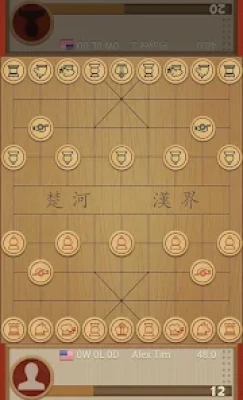
Instead of moving pieces inside squares, Xiangqi pieces are placed on the intersections of the board lines. A river separates the two sides, while each General remains inside a restricted palace. Cannons have a particularly unusual capture rule: they must jump over exactly one intervening piece to capture an enemy piece.
These mechanics make Dr. Xiangqi a game of positioning, tactical attacks, defensive formations, discovered threats, and careful calculation.
What Is Dr. Xiangqi?
Xiangqi is a two-player Chinese strategy board game often called Chinese chess.
The objective is to attack and ultimately capture the opponent's General. Unlike Western chess, the board contains a central river, the Generals occupy palaces, and several pieces have movement restrictions connected to those areas.
The game is played on a 9×10 grid of intersections, rather than on 64 individual squares.
This unusual board design creates open lines for Rooks, long-range Cannon attacks, restricted movement for certain pieces, and tactical possibilities around the palace.
Dr. Xiangqi Features
Classic Chinese Chess Gameplay
Dr. Xiangqi is based on the traditional Xiangqi rules and board structure. The Google Play description specifically highlights the river, palace, Cannon capture system, General restrictions, and intersection-based board.
Strategic Two-Player Board Game
Xiangqi is designed around two opposing armies. Every move can change the balance between attack and defense.
Distinctive Cannon Mechanics
The Cannon is one of the defining pieces of Xiangqi. It moves like a Rook but captures differently, requiring an intervening piece to jump over.
River and Palace
The river divides the board into two territories, while the palace restricts the movement of the Generals and Advisors.
Android Version
Dr. Xiangqi is available through Google Play and is listed under the Casual category. The current listing shows 100K+ downloads.
Recent Listed Update
Google Play currently lists July 30, 2025 as the update date.
How to Play Dr. Xiangqi
The first step toward understanding Dr. Xiangqi is learning what every piece does.
There are seven types of pieces:
- General
- Advisor
- Elephant
- Horse
- Chariot
- Cannon
- Soldier
Each side begins with the same basic army.
The General
The General is the most important piece on the board.
Its movement is restricted to the palace. It normally moves one point horizontally or vertically.
The Generals also have a special relationship: they cannot face each other directly along an open file without another piece between them.
This rule creates important tactical opportunities.
Strategy Tip
Never assume your General is safe simply because it is inside the palace. Rooks, Cannons, Horses, and discovered attacks can quickly create dangerous threats.
The Advisor
The Advisor protects the General and remains inside the palace.
It moves one point diagonally.
Advisors are primarily defensive pieces and are particularly important when protecting the General from direct attacks.
Strategy Tip
Do not move Advisors unnecessarily during the opening. Keeping the palace protected can become extremely important when the opponent's heavy pieces become active.
The Elephant
The Elephant moves diagonally two points.
It cannot cross the river.
This makes the Elephant primarily a defensive or territory-control piece on its own side of the board.
An intervening piece can also block an Elephant's movement.
Strategy Tip
Use Elephants to reinforce defensive structures and control important diagonal approaches toward your palace.
The Horse
The Horse is similar to the Knight in Western chess, but its movement has an important difference.
A Horse moves one point orthogonally and then one point diagonally outward.
However, an adjacent piece can block the Horse's movement.
This creates tactical opportunities where blocking an enemy Horse can be just as important as attacking it.
Strategy Tip
Before moving your Horse, examine whether an enemy piece can block it. Before attacking an opposing Horse, look for ways to restrict its available movement.
The Chariot
The Chariot is one of the strongest long-range pieces in Xiangqi.
It moves horizontally or vertically along open lines.
Its movement resembles the Rook in Western chess.
A Chariot can become extremely dangerous when files or ranks are open toward the enemy palace.
Strategy Tip
Develop your Chariot onto an active file instead of leaving it trapped behind your own pieces.
The Cannon
The Cannon is one of the most recognizable Xiangqi pieces.
It moves like a Chariot when traveling without capturing.
But to capture, the Cannon must jump over exactly one piece.
That intervening piece is called the screen.
For example:
Cannon → Screen → Enemy Piece
The Cannon can capture the enemy piece beyond the screen.
This mechanic creates powerful tactical attacks that are not possible with ordinary Rooks.
The Soldier
The Soldier initially moves one point forward.
After crossing the river, it gains additional horizontal movement.
This makes Soldiers more valuable after they advance into enemy territory.
Strategy Tip
Do not rush every Soldier forward. Advancing a Soldier can open lines for other pieces, but it can also create weaknesses in your own formation.
Understanding the Xiangqi Board
The Xiangqi board is different from a traditional chessboard.
There are:
- 9 vertical files
- 10 horizontal ranks
- 90 intersection points
- A central river
- Two palaces
The pieces are positioned on the intersections, not inside squares.
Understanding these areas is essential because several pieces have movement rules determined by the river or palace.
The River
The river divides the two sides of the board.
Elephants cannot cross it.
Soldiers gain additional horizontal movement after crossing it.
The river also creates an important strategic boundary between defensive play and aggressive invasion.
A Soldier that crosses the river can become a useful attacking piece, while heavy pieces can use open lines to penetrate the opponent's territory.
The Palace
Each General occupies a palace consisting of a restricted central area.
The General and Advisors are confined to this zone.
This makes the palace the heart of your defensive position.
A well-protected palace can resist attacks from several directions, while a poorly defended palace can collapse quickly once an enemy Chariot or Cannon enters an active file.
Dr. Xiangqi Beginner Strategy Guide
1. Protect Your General
Your General should always be your first concern.
Before making an attacking move, check whether it exposes your palace.
A single open file can sometimes turn a quiet position into an immediate tactical crisis.
2. Develop Your Chariots
Chariots become much stronger when they have open lines.
Try to create useful routes for them without exposing your own General.
An active Chariot can attack Soldiers, restrict enemy pieces, and threaten the palace.
3. Use Cannons With Purpose
Do not move Cannons randomly.
Look for useful screens.
A Cannon may become extremely powerful when one of your pieces sits between it and an enemy target.
Before every Cannon move, ask:
"What piece can serve as my screen?"
4. Watch the Horse's Blocking Point
Horse attacks are often determined by whether the adjacent movement point is occupied.
This means a seemingly minor piece can completely restrict a Horse.
When calculating tactics, look for these blocking points before deciding whether a Horse attack is possible.
5. Control Open Files
Open files are valuable because Chariots and Cannons can use them to attack from a distance.
If an enemy Chariot reaches an open file near your palace, your defensive position can become difficult very quickly.
6. Do Not Push Every Soldier
Soldiers can gain extra movement after crossing the river, but advancing them without a plan can weaken your formation.
Push Soldiers when their movement supports a concrete objective.
Dr. Xiangqi Opening Strategy
The opening is about development and control rather than immediate attacks.
Move Your Heavy Pieces Into Play
Your Chariots need open routes.
Develop Your Horses
Horses can support the center and attack vulnerable enemy pieces.
Maintain Palace Safety
Do not weaken your defensive structure simply to gain a small amount of space.
Look for Cannon Screens
Think about where your Cannons can create useful attacks.
Avoid Unnecessary Exchanges
Trading pieces can simplify the board, but not every exchange improves your position.
Cannon Strategy and Tactics
The Cannon deserves special attention because it is so different from most chess pieces.
Suppose the board contains:
Your Cannon — Friendly Piece — Enemy Piece
Your Cannon may be able to capture the enemy piece by jumping over the friendly piece.
This means your own pieces can sometimes act as offensive tools.
Cannon Screen Tips
Look for:
- Soldiers
- Horses
- Advisors
- Elephants
- Enemy pieces
A screen can change the Cannon's attack line completely.
The best Cannon tactics often appear when the opponent thinks a piece is protected by distance.
Chariot Strategy
Chariots are powerful because they can move across open ranks and files.
Try to place them where they can:
- Attack enemy Soldiers
- Control open files
- Enter the opponent's territory
- Support a Cannon
- Restrict the enemy General
- Defend your own palace
Avoid placing a Chariot where your own pieces completely block its movement.
Horse Strategy
The Horse is most effective when it has several available routes.
Before moving it, check its blocking point.
Before attacking an enemy Horse, see whether you can occupy or control its blocking square.
A restricted Horse may lose much of its tactical value without being captured.
Palace Attack Strategy
Attacking the General is not simply about moving a powerful piece toward the palace.
You need to coordinate several threats.
A strong attack may combine:
Chariot + Cannon + Horse
or
Cannon + screen + Chariot
The objective is to restrict the General's legal movement until a decisive attack becomes possible.
Dr. Xiangqi Defensive Strategy
Good defense requires more than protecting individual pieces.
Keep Your Palace Coordinated
Your General, Advisors, and Elephants should work together.
Block Enemy Lines
Sometimes the best defense is to occupy the line that an enemy Chariot or Cannon wants to use.
Watch for Double Attacks
One enemy move can sometimes threaten both your General and another important piece.
Keep Escape Points Available
Do not allow your own pieces to completely trap your General.
A defensive formation needs enough space to respond to checks and attacks.
How to Improve at Dr. Xiangqi
Learn From Every Loss
After a defeat, identify the first move where your position became difficult.
Was it:
- A missed Cannon attack?
- A blocked Horse?
- An exposed General?
- A poor Chariot exchange?
- An overlooked palace threat?
Finding the tactical mistake is more useful than simply replaying the final move.
Calculate Before Capturing
A piece that looks free may be protected by a tactical sequence.
Before capturing, ask:
What is my opponent's strongest reply?
This simple habit prevents many beginner mistakes.
Look for Checks First
When analyzing a position, check whether you have an immediate attack on the enemy General.
Then examine captures and threats.
This helps you avoid overlooking tactical opportunities.
Common Dr. Xiangqi Mistakes
Ignoring the General
An extra piece is irrelevant if your General is under a decisive attack.
Misusing the Cannon
A Cannon without a useful screen may have far less attacking power than expected.
Blocking Your Own Chariots
Heavy pieces need open lines.
Forgetting Horse Blocking Points
A Horse's movement can be restricted by one adjacent piece.
Advancing Soldiers Without a Plan
A Soldier advance should support your overall position rather than simply gain territory.
Attacking Too Early
An attack with undeveloped pieces can give your opponent time to counterattack.
Advanced Dr. Xiangqi Strategy
Coordinate Your Pieces
The strongest positions usually involve multiple pieces working together.
A Chariot can create pressure while a Cannon uses a screen to attack from another direction.
A Horse can restrict escape routes while the heavy pieces approach the palace.
Think About Lines, Not Just Pieces
Xiangqi is heavily influenced by open lines.
When a piece moves, ask what line has been opened or closed.
A single move can uncover a Chariot attack or create a Cannon screen.
Use the River as a Strategic Boundary
The river is not merely decoration.
It determines movement for Elephants and changes Soldier mobility.
Pieces that cross the river can become more aggressive, but they can also become targets.
Force the Opponent to Respond
Instead of making moves that merely improve your position, look for moves that create an immediate problem.
A forcing attack might:
- Check the General
- Attack a valuable piece
- Threaten a palace entry
- Create a Cannon screen
- Restrict the enemy's escape route
The more choices your opponent loses, the easier it becomes to control the position.
Dr. Xiangqi Tips for Beginners
Tip 1: Protect the General before chasing material.
Tip 2: Develop Chariots onto useful open lines.
Tip 3: Remember that Cannons need a screen to capture.
Tip 4: Watch the blocking point of every Horse.
Tip 5: Do not let enemy Chariots invade your palace.
Tip 6: Use Soldiers strategically after they cross the river.
Tip 7: Look for forcing moves before quiet moves.
Tip 8: Check your opponent's threats before every move.
Tip 9: Avoid unnecessary exchanges.
Tip 10: Think about the entire board, not just the area around your General.
Dr. Xiangqi Game Information
Game: Dr. Xiangqi
Developer: SUD Inc.
Package ID: com.ansangha.drxiangqi
Genre: Casual / Strategy Board Game
Platform: Android
Game Type: Xiangqi / Chinese Chess
Downloads: 100K+
Contains: Ads
Age Rating: 12+
Latest listed update: July 30, 2025
Dr. Xiangqi Pros and Cons
Pros
- Based on traditional Chinese chess
- Distinctive Xiangqi rules
- Interesting Cannon mechanics
- River and palace add strategic depth
- Simple board-game format
- Suitable for learning the fundamentals of Xiangqi
- Available on Android
- 100K+ Google Play downloads
Cons
- Xiangqi has a substantial learning curve for new players
- Understanding Cannon tactics takes practice
- Horse blocking rules can initially be confusing
- The Google Play listing currently shows a 3.3-star rating and about 1.5K reviews, so player experiences are mixed.
- The game contains advertisements.
Is Dr. Xiangqi Good for Beginners?
Dr. Xiangqi can be a useful starting point for players who want to explore Chinese chess on Android.
The biggest challenge for a newcomer is that Xiangqi does not work exactly like Western chess. The river, palace, Cannon capture system, Horse blocking rules, and General restrictions all need to be understood before the game starts to feel intuitive.
Once these rules become familiar, the board becomes much easier to read.
A good learning path is to first memorize the pieces, then practice simple attacks, and finally study Cannon combinations, Chariot attacks, and palace defense.
Dr. Xiangqi FAQ
What is Dr. Xiangqi?
Dr. Xiangqi is an Android game based on Xiangqi, the traditional Chinese strategy board game also known as Chinese chess. It is developed by SUD Inc.
What is Xiangqi?
Xiangqi is a two-player strategy game in which each player controls an army and attempts to capture the opponent's General.
Is Xiangqi the same as Western chess?
No. Both are strategy games from the broader chess family, but their boards, pieces, movement rules, and tactical systems are different.
How big is a Xiangqi board?
A standard Xiangqi board has nine files and ten ranks, producing 90 intersection points.
What makes the Cannon special?
A Cannon moves along lines like a Chariot, but it captures by jumping over exactly one intervening piece.
Can the Generals face each other?
No. The Generals cannot directly face one another along an open file.
Can the Elephant cross the river?
No. The Elephant remains on its own side of the river.
What happens when a Soldier crosses the river?
After crossing the river, a Soldier gains the ability to move horizontally in addition to moving forward.
Where can I play Dr. Xiangqi?
Dr. Xiangqi is available on Google Play for Android devices. The current listing shows 100K+ downloads.
When was Dr. Xiangqi last updated?
The current Google Play listing shows July 30, 2025 as the latest update date.
Final Thoughts
Dr. Xiangqi offers a mobile introduction to one of China's best-known traditional strategy games. Its gameplay revolves around a completely different set of tactical ideas from ordinary chess, particularly the Cannon's screen-based captures, the river, the restricted palace, and the relationship between the two Generals.
For new players, the best approach is to learn the movement of each piece first and then focus on three fundamentals: protect your General, control open lines, and calculate your opponent's strongest reply.
Once those ideas become familiar, Cannon combinations, Chariot attacks, Horse tactics, and palace threats start to make much more sense.
Rate the Game
User Reviews












Popular Games


















 Android
 iOS
iOS Windows
 Xbox
Xbox