

Latest Version
October 09, 2026
FunCraft, Inc
Board
iOS
0
Report a Problem
More About :game
Ticket to Dice: Trains & Tracks puts a fresh dice-drafting twist on the familiar idea of building railway connections between cities. Developed by FunCraft, Inc., this mobile board game combines probability, route planning, competition, and tactical decision-making.
The main objective is to connect your secret destination cities before your opponent completes their own connections. To build your railway network, you roll five colored train dice, keep the results that match your plans, and reroll the remaining dice in search of the colors you need.
Every turn presents a choice. You might secure an important route, improve your chances of claiming a future connection, or save wildcard locomotives for a difficult situation. Because both players compete on the same map, a route that looks useful to you may also be an important part of your rival's strategy.
Wildcard locomotives add another layer of competition. They can substitute for colors when claiming routes, and stockpiling enough can give you the opportunity to take over a route already claimed by your opponent. This makes timing, route selection, and awareness of the shared map particularly important.
Beyond individual matches, Ticket to Dice offers a Duel Journey with increasingly challenging opponents and bosses, leagues and rankings, daily goals, achievements, and collectible destination ticket designs.
For players who enjoy board games, train-themed strategy, dice games, and competitive multiplayer, Ticket to Dice: Trains & Tracks offers a mix of accessible rules and tactical choices.
Game Information
Full title: Ticket to Dice – Trains Tracks
Developer: FunCraft, Inc.
Genre: Board game, dice strategy, railway route building
Main gameplay: Roll dice, select colors, claim railway routes, and connect destinations
Dice system: Five colored train dice
Main objective: Connect your secret destination cities before your opponent
Special mechanic: Wildcard locomotives that can substitute for colors
Competitive modes: Turn-based PvP duels
Progression: Duel Journey, opponents, and boss battles
Competitive features: Leagues and rankings
Additional activities: Daily goals and achievements
Customization: Collectible destination ticket designs
Platform: iPhone and iPad
Developer and publisher: FunCraft, Inc.
Price: Free to download, with in-app purchases
Language: English
Age rating: 4+ on the US App Store listing
Compatibility: Requires iOS 15.0 or later on iPhone and iPadOS 15.0 or later on iPad
Main Features of Ticket to Dice: Trains & Tracks
1. Strategic Dice Drafting
The five-dice system is at the heart of the game. Each roll gives you a collection of colors that may help you claim a route.
You can hold the useful dice and reroll the others, allowing you to pursue the colors needed for your railway plans. Deciding which results to keep is just as important as getting a favorable roll.
2. Railway Route Building Across the USA
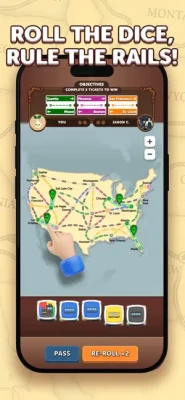
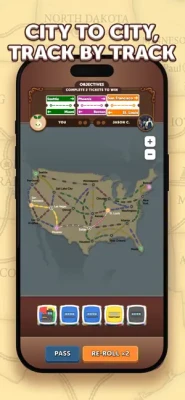
The shared US map creates a network of possible connections between destination cities. Each route you claim can help complete your own journey or influence which paths remain available to your opponent.
A good railway network is not simply a collection of routes. It is a connected plan that supports your destination objectives.
3. Turn-Based PvP Duels
Ticket to Dice lets you compete against other players in turn-based matches. You must build your connections while watching the routes your rival claims.
The shared board creates tension because both players may want the same connection. Acting at the right time can be more valuable than collecting routes without a clear objective.
4. Wildcard Locomotives
Wildcard locomotives can substitute for other colors when claiming routes. They are particularly useful when ordinary dice do not produce the combination you need.
Stockpiling enough locomotives also opens up the possibility of taking a route already claimed by your opponent. These special dice therefore have both practical and competitive value.
5. Duel Journey and Boss Battles
Duel Journey offers a progression-based challenge with increasingly difficult opponents and bosses. It provides an opportunity to improve your tactics outside the pressure of individual competitive duels.
As the challenges become harder, planning routes efficiently and making good use of wildcard locomotives become increasingly important.
6. Leagues and Rankings
Leagues and rankings give players a reason to keep improving after learning the basic rules. Winning matches and developing a stronger understanding of the map can help you pursue competitive goals.
7. Daily Goals and Achievements
Daily goals offer recurring objectives and bonus rewards, while achievements recognize different milestones in your progress.
These features add variety to the game and encourage you to explore more than one approach to route building.
8. Collectible Ticket Designs
The game includes collectible destination ticket cosmetics, with themes such as travel, animals, sports, flowers, and premium collections.
These designs add a customization element to your matches without changing the central challenge of connecting cities.
How to Play Ticket to Dice: Trains & Tracks
Step 1: Understand Your Destination Cities
At the beginning of a match, identify the destination cities you need to connect. These objectives should guide your route choices throughout the game.
Before spending turns on individual routes, consider the broader path between your destinations. Understanding your goal helps you avoid building an attractive but unhelpful railway network.
Step 2: Examine the Shared Map
Study the available routes and look for connections that support your destination objectives.
Pay particular attention to routes that create useful links between several parts of your planned network. Also consider whether your opponent appears to be moving toward a route that you need.
Step 3: Roll Five Colored Train Dice
Roll the five train dice and inspect the colors you receive.
Compare those results with the route you want to claim. If some dice already show useful colors, keep them and reroll the remaining dice according to the game's available actions.
Step 4: Select the Dice You Want to Keep
Keeping the right dice is a central part of the strategy. Retain results that directly contribute to your intended route, and use rerolls to improve the remaining combination.
Avoid making selections without a specific goal. Knowing which route you are trying to claim makes each dice decision more purposeful.
Step 5: Claim a Useful Route
Once you have the required colors for a route, claim it according to the game's rules.
Choose routes that help connect your destinations, extend your existing network, or secure a strategically important link before your opponent can take it.
Step 6: Use Wildcard Locomotives
When you have wildcard locomotives, consider using them to complete a route that would otherwise be difficult to claim.
You can also evaluate whether saving them could create a stronger opportunity later, including the possibility of taking over an opponent's claimed route when you have enough locomotives.
Step 7: Monitor Your Opponent
Your rival's route choices provide important information about their plans. Watch for connections that may help them reach their destinations.
If a shared route becomes strategically important, consider whether claiming it now would protect your own plan or slow your opponent's progress.
Step 8: Complete Your Connections
Continue building your network until you connect your secret destination cities before your opponent does.
Stay focused on the objective rather than collecting routes simply because they are available. Every turn should contribute to your overall plan whenever possible.
Complete Strategy Guide for Ticket to Dice: Trains & Tracks
Strategy 1: Plan Your Railway Before Rolling
One of the most common mistakes in route-building games is making decisions one turn at a time without considering the final objective.
Start by identifying the connections needed between your destination cities. Then look for a practical sequence of routes that links them.
Your plan does not need to remain fixed. Opponents may claim important connections, and your dice may not cooperate. However, beginning with a clear direction makes it easier to recognize useful opportunities.
Pro tip: Before each turn, identify the next route that would make the greatest contribution to your destination network.
Strategy 2: Prioritize Routes That Connect Your Network
A route can be valuable because it joins two parts of your planned railway, not just because it is easy to claim.
For example, a connection between two cities may allow you to extend your network toward a destination you have not reached yet. A different route may look appealing but leave your railway disconnected from your main objective.
Think about the role each route plays in the complete journey.
Strategy 3: Understand Dice Probability
Each colored die introduces uncertainty. You cannot guarantee that a reroll will produce the color you want, so it is important to make decisions that account for chance.
If you need several specific colors, consider how many dice you already have that contribute to the route. Keeping useful results can improve your position without requiring every die to cooperate.
Do not assume a desired color is guaranteed simply because you have several rerolls available. Make plans that can adapt when the results are unfavorable.
Strategy 4: Keep Useful Colors Instead of Rerolling Everything
The ability to hold dice is one of the most important strategic features.
Suppose you are trying to claim a route that requires several dice of the same color. If your current roll already contains some of that color, keeping those dice preserves your progress.
Rerolling them would introduce unnecessary uncertainty. The same principle applies when a route requires a combination of different colors: retain dice that satisfy part of the requirement and focus your remaining rolls on the missing colors.
Strategy 5: Balance Immediate Progress With Long-Term Planning
Claiming an easy route may provide immediate progress, but it is not always the best decision.
Compare the available route with the connections you will need later. A slightly less convenient route may help complete a destination connection, while a quick claim elsewhere may contribute very little to your overall objective.
The best choice depends on how each route fits into your planned network and how much time your opponent has to respond.
Strategy 6: Protect Important Connections
Some routes are more important than others because they form a key link in your planned journey.
If your opponent claims a route you were counting on, you may need to find another path or use the special locomotive mechanic when available.
Watch the shared map closely and avoid leaving a critical connection until the last possible moment if your opponent has a clear incentive to claim it too.
Strategy 7: Use Wildcard Locomotives Carefully
Wildcard locomotives are especially valuable because they can substitute for colors when claiming routes.
Their value increases when your ordinary dice are not producing the colors you need. They can also create an opportunity to take over a route already held by your rival when you stockpile enough.
Do not automatically spend every wildcard as soon as you receive one. Compare the value of completing your current route with the potential benefit of retaining locomotives for a more important connection or competitive move.
Strategy 8: Know When to Disrupt Your Opponent
Because both players share the map, your rival's progress can influence your best move.
If an opponent appears close to completing their destinations, consider whether claiming a contested route or using the locomotive takeover mechanic could disrupt their plan.
However, do not sacrifice your own objective just to interfere with another player. A disruptive move is most useful when it also protects your network or improves your position.
Strategy 9: Build Flexible Alternative Routes
A good plan should include alternatives. If your preferred route becomes unavailable, you need another way to reach your destination.
Look for connections that can serve more than one purpose. Flexible route planning reduces the risk of becoming dependent on a single contested path.
This approach is particularly useful against opponents who aggressively claim strategically important routes.
Strategy 10: Adapt to Every Roll
Your initial plan should guide your decisions, not restrict them.
If your dice make a different route much easier to claim, compare that opportunity with your original target. Sometimes adapting to a favorable roll can save a turn or open a useful connection.
The key is to adapt without losing sight of your destination cities.
Strategy 11: Learn From Duel Journey Challenges
Duel Journey and its increasingly difficult opponents provide opportunities to practice route planning.
Use these matches to test how well you prioritize connections, manage wildcard locomotives, and adapt when your preferred route is no longer available.
After a difficult match, consider whether you could have connected your destinations with fewer unnecessary routes or made better use of the dice you received.
Strategy 12: Review the Entire Board Before Committing
Before making a major route decision, check three things:
Does this route help connect my destination cities?
Could my opponent benefit from claiming this route first?
Do I have another practical route if this connection becomes unavailable?
These quick checks can help prevent decisions that look useful in isolation but weaken your overall strategy.
Beginner Tips for Winning More Matches
Identify your destination cities before planning your routes.
Study the shared map at the beginning of each match.
Keep dice that directly contribute to the route you want.
Reroll strategically instead of relying on repeated luck.
Prioritize routes that connect important parts of your network.
Pay attention to routes your opponent may need.
Save wildcard locomotives when a more valuable opportunity may appear.
Consider alternative connections before committing to a narrow plan.
Use Duel Journey to practice against increasingly difficult opponents.
Complete daily goals when they fit your normal play.
Learn from unsuccessful matches instead of repeating the same approach.
Keep your final destination objective in mind throughout the game.
Advanced Tactics for Competitive Players
When You Have a Strong Lead
If your railway network is progressing well, focus on finishing the connections that matter most. Avoid spending turns on unnecessary routes that do not help complete your objectives.
Continue monitoring the opponent, especially if they appear to be close to connecting their own destinations.
When Your Opponent Is Ahead
Reassess your route plan rather than continuing automatically. Look for alternative connections, contested routes, and opportunities to use wildcard locomotives.
If a takeover can disrupt your opponent's key connection, consider whether it is worth the investment compared with completing your own network.
When Both Players Need the Same Route
A contested route creates a timing decision. If it is essential to your plan and the opponent is likely to claim it, acting sooner may be worthwhile.
However, do not pursue every contested connection automatically. Confirm that the route is genuinely important to your objective before spending valuable dice or locomotives.
When Your Dice Results Are Poor
Avoid forcing an unrealistic route simply because it was your original plan. Examine whether another connection offers a more practical use of the current colors.
Flexibility is particularly important in a dice-driven game because the best-laid plan may need to change after an unfavorable roll.
When You Have Several Wildcard Locomotives
Consider both the immediate and future value of your special dice. Using them to complete a critical route may accelerate your progress, while holding them may provide a takeover opportunity against an opponent's established network.
Choose based on the state of the board rather than following one rule in every match.
Common Mistakes to Avoid
Building Routes Without a Destination Plan
Claiming routes simply because they are easy can leave your network poorly positioned. Always consider how a route contributes to your destination connections.
Rerolling Useful Dice
Discarding useful colors introduces additional uncertainty. Keep the dice that already contribute to your target and focus rerolls on what is missing.
Ignoring the Shared Map
A route that is available now may become unavailable after your opponent's next move. Keep an eye on contested connections and adjust your plan accordingly.
Spending Wildcard Locomotives Too Quickly
Wildcard locomotives can solve difficult route requirements and create takeover opportunities. Consider whether the current move is worth using them.
Focusing Only on Your Own Network
Your own route plan matters, but so does the opponent's progress. Competitive play requires balancing personal progress with awareness of the shared board.
Refusing to Change Your Plan
If a key connection becomes unavailable or your dice favor another route, reconsider your next move. A flexible plan is generally more resilient than a rigid one.
Duel Journey, Leagues, and Daily Rewards
Ticket to Dice: Trains & Tracks offers several ways to continue playing beyond individual PvP duels.
Duel Journey: Face increasingly challenging opponents and bosses. Use these matches to practice route planning and improve your use of special dice.
Leagues and rankings: Compete in turn-based matches and work toward better competitive standing.
Daily goals: Return for fresh objectives and bonus rewards that support ongoing progression.
Achievements: Unlock milestones connected with claiming routes, completing tickets, and mastering the locomotive mechanic.
Ticket collections: Collect and equip destination ticket designs with different themes, adding a personal touch to your matches.
For the best results, focus on learning the route-building mechanics before worrying about collecting every cosmetic item. Stronger decision-making will help you get more from both competitive matches and progression challenges.
Is Ticket to Dice: Trains & Tracks Worth Playing?
Ticket to Dice: Trains & Tracks is worth considering if you enjoy board games that combine planning with unpredictable dice rolls.
The game has a clear objective: connect your secret destination cities before your opponent. The five-dice system adds uncertainty, while holding and rerolling lets you influence your chances of claiming specific routes.
Its shared map introduces competition over important connections, and wildcard locomotives add a distinctive tactical element. The possibility of taking over an opponent's route makes these special dice more than simple substitutes for missing colors.
Duel Journey, leagues, rankings, achievements, daily goals, and collectible ticket designs provide additional activities for players who want more than individual matches.
The main challenge is balancing luck with planning. A favorable roll can accelerate your progress, but a strong player must also know which routes to prioritize, when to adapt, and how to respond to an opponent's decisions.
Pros and Cons
Pros
Combines dice rolling with railway route-building strategy.
Five colored dice create meaningful keep-or-reroll decisions.
A shared US map makes route selection competitive.
Wildcard locomotives provide flexible scoring opportunities and takeover tactics.
Turn-based PvP supports competitive play.
Duel Journey offers progression and boss challenges.
Leagues and rankings provide longer-term objectives.
Daily goals and achievements encourage continued play.
Collectible ticket designs offer customization.
Cons
Dice randomness can make route planning unpredictable.
Unfavorable rolls may delay important connections.
Players must monitor both their own network and their opponent's routes.
Contested connections can force changes to an otherwise effective plan.
The free-to-play experience includes advertising and optional in-app purchases.
Frequently Asked Questions
What is Ticket to Dice: Trains & Tracks?
Ticket to Dice: Trains & Tracks is a railway-building dice strategy game developed by FunCraft, Inc. Players roll colored train dice, claim routes across a shared US map, and race to connect their secret destination cities.
How do you play Ticket to Dice?
Roll five colored train dice, keep useful results, and reroll the remaining dice to find the colors required for a route. Claim routes that help connect your destination cities while monitoring your opponent's progress.
What is the main objective?
The main objective is to connect your secret destination cities before your opponent completes their own connections.
How many dice does the game use?
The main route-building mechanic uses five colored train dice. You can hold useful results and reroll the others to pursue the colors you need.
What are wildcard locomotives?
Wildcard locomotives can substitute for other colors when claiming routes. Stockpiling enough can also allow you to take over a route already claimed by your opponent.
Does Ticket to Dice have multiplayer?
Yes. The game features turn-based player-versus-player duels on a shared map.
What is Duel Journey?
Duel Journey is a progression mode featuring increasingly challenging opponents and bosses, giving players additional challenges beyond individual PvP matches.
How can I win more matches?
Plan your destination connections, keep useful dice, prioritize routes that advance your network, and monitor your opponent's progress. Use wildcard locomotives thoughtfully and maintain alternative routes in case your original plan becomes unavailable.
Is Ticket to Dice free to play?
The game is free to download and includes optional in-app purchases. The current App Store listing provides the latest purchase options.
Can I customize my tickets?
Yes. The game features collectible destination ticket designs, including travel, animals, sports, flowers, and premium-themed collections.
Does Ticket to Dice have daily challenges?
The game includes daily goals that offer recurring objectives and bonus rewards.
Is Ticket to Dice available on iPhone and iPad?
Yes. The App Store lists support for iPhone and iPad, with iOS 15.0 or later and iPadOS 15.0 or later required, respectively.
Final Thoughts
Ticket to Dice: Trains & Tracks combines dice strategy, railway construction, and competitive decision-making in a game where every route can influence the outcome.
The strongest approach is to plan around your destination cities, use rerolls efficiently, protect important connections, and remain aware of your opponent's strategy. Wildcard locomotives can provide valuable flexibility, but their best use depends on the current board and the routes still available.
Whether you are starting your first duel or working toward higher leagues, focus on building a connected network rather than claiming routes without a clear purpose. With thoughtful planning and flexible decisions, you can make better use of your dice and give yourself more opportunities to build the winning railway.
Rate the Game
User Reviews










Popular Games

















 Android
 iOS
iOS Windows
 Xbox
Xbox