

Latest Version
September 19, 2026
SUD Inc.
Board
0
com.ansangha.drjanggi
Report a Problem
More About :game
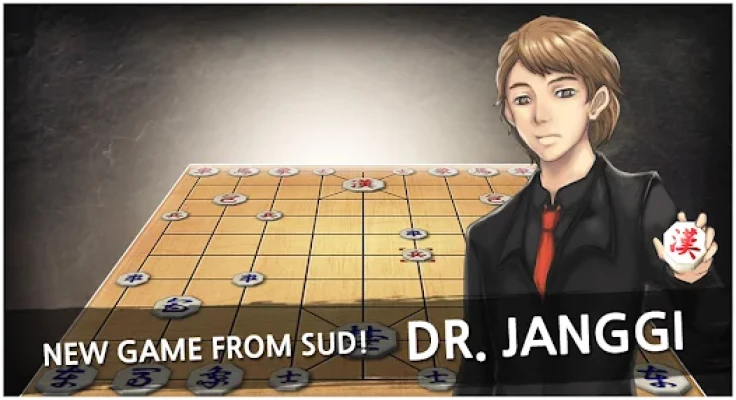
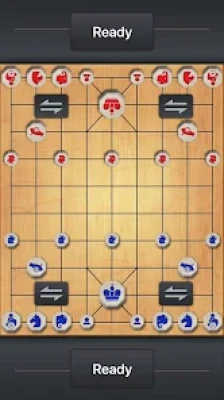
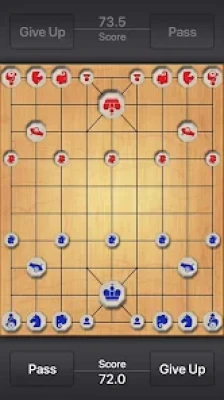
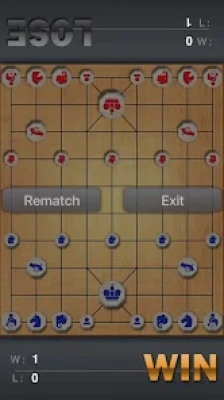
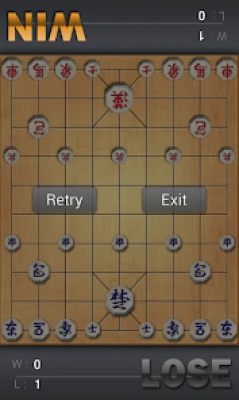
Janggi shares some similarities with Chinese chess, or Xiangqi, but it has important differences. The board contains nine vertical lines and ten horizontal lines, and unlike Xiangqi, it does not have a river dividing the board across the middle.
The game combines tactical attacks with longer strategic plans. Cannons can make powerful jumping attacks, elephants have long-range movement, and professional-level games can extend beyond 150 moves.
Dr. Janggi Game Information
| Feature | Details |
|---|---|
| Game | Dr. Janggi |
| Developer | SUD Inc. |
| Package ID | com.ansangha.drjanggi |
| Genre | Board / Abstract Strategy |
| Game Type | Korean Chess / Janggi |
| Board | 9 × 10 |
| Multiplayer | Online multiplayer |
| Offline | Available |
| Platforms | Android, Windows |
| Content Rating | Teen |
| Monetization | Contains ads |
| Google Play Downloads | 1M+ |
| Google Play Rating | About 4.2 stars |
| Google Play Reviews | 56K+ |
| Latest Google Play update | August 21, 2025 |
| Current tracked version | 1.95 |
The current Google Play listing identifies Dr. Janggi as a board, abstract strategy, chess, multiplayer and competitive multiplayer game.
What Is Janggi?
Janggi is a traditional Korean board game derived from the broader family of East Asian chess-like strategy games.
Although it resembles Xiangqi, the rules and board structure are not identical.
The game uses:
- A 9×10 board
- Two opposing armies
- Generals
- Guards
- Horses
- Elephants
- Chariots
- Cannons
- Soldiers
The objective is to use these pieces together to place pressure on the opposing general and eventually win the game.
Understanding the Dr. Janggi Board
The board is made from nine vertical lines and ten horizontal lines, creating the characteristic 9×10 Janggi layout. Unlike Xiangqi, there is no horizontal river separating the two sides.
This structure affects how pieces interact.
Long-range pieces can exert pressure across large portions of the board, while the palace areas create important tactical zones around the generals.
Learning the geometry of the board is one of the first steps toward becoming comfortable with Janggi.
The Main Janggi Pieces
Understanding each piece is essential before trying advanced tactics.
General
The general is the most important piece on your side.
Protecting your general should always remain a priority.
At the same time, the general can become an important tactical piece in the palace area during certain positions.
Guard
Guards protect the general and operate within the palace structure.
Their restricted movement means they are particularly important for defensive formations.
A common beginner mistake is moving defensive pieces without considering what happens to the general afterward.
Chariot
The chariot is one of the strongest long-range pieces.
It can move along open lines and can become extremely powerful when files or ranks are clear.
Use chariots to:
- Attack exposed pieces
- Control open lines
- Pressure the opponent's palace
- Support other attacking pieces
- Defend important areas
Keeping a chariot trapped behind your own pieces can waste much of its potential.
Horse
The horse is a tactical piece capable of attacking from unexpected angles.
However, its movement can be affected by blocking pieces.
This means you should always check whether the horse's path is open before planning an attack.
A useful habit is to ask:
What piece is blocking my horse?
Removing that obstruction can suddenly create a tactical threat.
Elephant
The elephant has unusually long movement compared with many chess pieces.
The Google Play description specifically highlights Janggi's long-range elephants as one reason the game can produce fast tactical sequences.
Elephants can support attacks from a distance and influence areas that beginners may not expect.
Do not overlook an elephant simply because it appears less aggressive than a chariot.
Cannon
The cannon is one of the defining pieces of Janggi.
Cannons can make powerful jumping attacks, making them particularly dangerous when another piece provides the necessary screen. The official game description specifically mentions jumping cannons as an important feature of Janggi.
Cannon tactics are therefore about more than simply finding an empty line.
You need to consider:
Where is the screen?
and
What piece can the cannon attack beyond it?
Soldier
Soldiers are more limited than major pieces, but they can become extremely important during the middle and endgame.
Use soldiers to:
- Control important squares
- Restrict enemy movement
- Support major pieces
- Create threats near the opponent's position
- Protect valuable pieces
Do not automatically sacrifice soldiers simply because they have less mobility.
Janggi Opening Strategy
The opening is about developing useful pieces and creating a position that gives you multiple future options.
Avoid making unnecessary moves with the same piece repeatedly.
Instead, try to:
- Activate your major pieces.
- Keep the general secure.
- Create useful cannon positions.
- Open lines for chariots.
- Avoid blocking your horses and elephants.
- Watch the opponent's threats.
- Maintain flexibility.
Opening Tip: Activate the Chariots
Chariots become much more effective when their lines are open.
If your own pieces completely block them, you may spend several moves simply trying to activate them.
Look for opportunities to create open files without weakening your position.
Opening Tip: Don't Waste Cannon Screens
Because cannons depend on a screen for their characteristic attack, the position of nearby pieces matters enormously.
A piece that looks passive may actually be enabling a powerful cannon attack.
Before moving a screen piece, check:
Am I accidentally removing my own cannon's tactical opportunity?
Opening Tip: Protect Your General
Janggi can develop tactical attacks quickly.
Do not focus entirely on attacking pieces while ignoring threats against your own general.
If the opponent's major pieces are becoming active near your palace, defensive preparation may be more important than gaining a small amount of material.
Full Dr. Janggi Strategy Guide
1. Study the Entire Board
Don't concentrate only on the piece you want to move.
Before every important move, scan:
- Your general
- Opponent's general
- Chariots
- Cannons
- Horses
- Elephants
- Open files
- Potential screens
- Weak defensive pieces
This prevents many tactical surprises.
2. Look for Long-Range Attacks
Chariots and elephants can influence distant parts of the board.
Before making a move, look across the board for newly opened lines.
A single piece moving away can suddenly expose another piece to attack.
3. Check Cannon Screens
Cannon tactics deserve special attention.
Whenever a cannon is near an opposing piece, identify possible screen pieces.
Ask:
What can the cannon jump over?
Then ask:
What can it attack after the jump?
4. Avoid Unnecessary Exchanges
Trading pieces is not automatically good.
Before exchanging, consider:
- What happens after the exchange?
- Which piece becomes active?
- Does the opponent gain an open line?
- Does your cannon lose a screen?
- Does your chariot become trapped?
- Does your general become exposed?
A material exchange should have a purpose.
5. Create Two Threats
A strong tactical move often creates more than one problem.
For example, a move may:
- Attack a piece
- Open a chariot line
or:
- Threaten the palace
- Prepare a cannon attack
Multiple threats make defensive responses more difficult.
Cannon Strategy
Cannons deserve special attention because their movement creates tactical patterns that differ from standard chess.
Cannon Screen
A cannon needs a piece between itself and its target for its characteristic jumping capture.
Therefore, the location of surrounding pieces becomes strategically important.
Moving the Screen
Before moving a potential screen, check whether:
- Your cannon loses an attack.
- The opponent's cannon gains an attack.
- Your king becomes exposed.
- A chariot line opens.
Double Cannon Pressure
When multiple cannons coordinate around important lines, they can place substantial pressure on defensive structures.
Try to coordinate them rather than attacking independently.
Chariot Strategy
Chariots thrive on open lines.
Use them to:
- Attack from the side
- Control open files
- Pressure the palace
- Support soldiers
- Attack poorly defended pieces
Do not move a chariot simply because a square is available.
Ask whether the new position gives it a useful line.
Horse Strategy
Horses are excellent tactical pieces but require careful planning.
Before moving a horse, examine its possible destinations.
Then determine whether the piece blocking its movement will remain in place.
A horse that cannot access useful squares can become ineffective.
Elephant Strategy
Elephants can influence distant positions and help support attacks.
Because their movement is less familiar to players coming from Western chess, it is easy to underestimate their reach.
When defending, always check whether an enemy elephant can participate in a tactical sequence.
Palace Strategy
The palace area around the general is one of the most important defensive zones.
When under attack:
- Keep defensive pieces coordinated.
- Watch long-range attacks.
- Check cannon screens.
- Avoid unnecessary weakening moves.
- Consider the opponent's chariot routes.
A strong palace defense can prevent an otherwise dangerous attack.
How to Attack the General
Do not attack the opponent's general simply because you have an available move.
A successful attack usually requires preparation.
A useful attacking sequence can involve:
Piece activation → line opening → defensive restriction → tactical threat → attack
Use multiple pieces together.
A single attacking piece can often be driven away, while coordinated pieces can create much greater pressure.
Defensive Strategy
Strong defense begins before the attack becomes dangerous.
When you notice the opponent activating a chariot or cannon toward your palace:
- Identify the attacker's target.
- Find the attacking line.
- Determine whether a screen is involved.
- Move or protect the threatened piece.
- Create a counter-threat when possible.
Do not wait until your general is already under severe pressure.
How to Read the Opponent's Threats
After every significant opponent move, ask:
What changed?
Did a line open?
What became attacked?
Did your piece lose protection?
What became possible?
Can the opponent now use a cannon screen or chariot line?
What happens if I make my intended move?
This final question prevents many blunders.
Midgame Strategy
The middle game is where Janggi becomes particularly tactical.
Your priorities should include:
- Activating major pieces
- Controlling open lines
- Creating threats
- Protecting valuable pieces
- Managing cannon screens
- Restricting enemy mobility
- Keeping the general secure
Avoid making moves simply because they look active.
Every move should improve your position or create a concrete threat.
Endgame Strategy
The endgame often becomes more technical.
When fewer pieces remain:
- Long-range pieces become increasingly important.
- Soldiers can become valuable attackers.
- Open lines matter more.
- General positioning becomes critical.
- Small material advantages can become significant.
Do not automatically rush toward the opponent's general.
Calculate whether your remaining pieces can actually support the attack.
Material Management
Material matters, but the value of a piece depends heavily on its position.
A powerful chariot trapped behind your own pieces may be less useful than a well-positioned horse.
Likewise, a cannon with no useful screen may temporarily have less tactical influence than one positioned near several potential screens.
Think about:
Activity + safety + coordination, not just piece count.
Common Dr. Janggi Mistakes
Moving Without Checking Cannons
A seemingly harmless move can create a cannon tactic.
Solution: Always inspect cannon lines.
Blocking Your Own Pieces
A horse, elephant or chariot can become ineffective when surrounded by friendly pieces.
Solution: Maintain useful movement options.
Attacking Too Early
Launching an attack before your pieces are coordinated can leave them vulnerable.
Solution: Prepare the attack first.
Ignoring Long-Range Pieces
Elephants and chariots can influence distant squares.
Solution: Scan the entire board before important moves.
Moving the Palace Defenders Carelessly
Defensive pieces can be essential to general safety.
Solution: Consider the consequences before weakening the palace.
Trading Automatically
Not every exchange improves your position.
Solution: Calculate the resulting position before committing.
Online Multiplayer Strategy
Dr. Janggi supports online matches through an internet connection, allowing players to compete against other Janggi players.
Online play requires a different mindset from studying the rules.
You need to make good decisions while managing the pressure of an active opponent.
Multiplayer tips
- Play at a consistent pace.
- Don't move instantly just because you see an obvious move.
- Check cannon tactics before committing.
- Keep track of the opponent's major pieces.
- Avoid speculative sacrifices.
- Use the clock wisely.
- Stay focused after a mistake.
How to Improve at Dr. Janggi
Learn the Pieces First
Before studying advanced openings, become comfortable with every piece.
Study Cannon Tactics
Cannons are one of the most distinctive tactical elements of Janggi.
Practice Board Awareness
Train yourself to scan the entire board after every move.
Review Your Losses
Instead of asking only why you lost, identify the first important mistake.
Learn From Repeated Patterns
If you repeatedly lose because of cannon attacks, focus your practice on cannon screens and defensive positioning.
Beginner Dr. Janggi Tips
- Learn every piece's movement.
- Protect your general.
- Activate your chariots.
- Watch cannon screens.
- Don't block your own major pieces.
- Look for long-range attacks.
- Avoid unnecessary exchanges.
- Don't rush attacks.
- Check the entire board before moving.
- Review your mistakes after every match.
Advanced Dr. Janggi Tips
Calculate the Opponent's Reply
Before making a tactical move, identify the opponent's strongest response.
Maintain Piece Coordination
Two pieces working together are often more useful than two individually active pieces.
Use Temporary Screens
A piece can sometimes serve as a tactical screen for a cannon.
Think about both its defensive and offensive roles.
Open Lines Carefully
Opening a line for your chariot can also open a line for your opponent.
Create Counterplay
When defending, don't simply wait.
A counter-threat can force your opponent to abandon an attack.
Janggi vs Western Chess
Janggi and Western chess share the broad idea of two opposing armies fighting around a royal piece, but their boards and movement systems are substantially different.
| Feature | Janggi | Western Chess |
|---|---|---|
| Board | 9×10 | 8×8 |
| General/King | General | King |
| Cannon | Yes | No |
| Elephant | Janggi elephant | Bishop |
| Chariot | Chariot | Rook |
| Horse | Horse | Knight |
| River | No dividing river | Not applicable |
| Major long-range tactics | Yes | Yes |
| Online play | Supported in Dr. Janggi | Depends on platform |
The comparison is useful for understanding the game's structure, but players should not assume Western chess strategies transfer directly to Janggi.
Is Dr. Janggi Difficult to Learn?
The basic movement rules can be learned relatively quickly, but strong play requires considerably more practice.
The challenge comes from the interaction between:
- Cannons
- Chariots
- Horses
- Elephants
- Palace defenses
- Long-range attacks
- Tactical screens
- Positioning
The official description notes that professional Janggi games can often last more than 150 moves, showing how much strategic depth the game can contain.
Does Dr. Janggi Have Offline Play?
Yes. Google Play currently lists Dr. Janggi with offline functionality as well as multiplayer features.
Online matches require an internet connection.
Does Dr. Janggi Have Online Multiplayer?
Yes. The game's Google Play description specifically states that players can sign in and enjoy online matches over the internet.
What Is the Janggi Board Size?
A Janggi board uses 9 vertical lines and 10 horizontal lines. This produces the distinctive 9×10 board used by the game.
What Makes Janggi Different From Xiangqi?
Both games are closely related and share several piece concepts, but Janggi does not have the horizontal river that divides a Xiangqi board. Janggi also has its own movement and strategic conventions.
Dr. Janggi FAQ
What is Dr. Janggi?
Dr. Janggi is a digital Korean chess game developed by SUD Inc., featuring traditional Janggi gameplay on a 9×10 board.
Is Dr. Janggi the same as Korean chess?
Yes. Janggi is commonly known as Korean chess, and Dr. Janggi is a digital version of the game.
What size is a Janggi board?
Janggi uses a 9×10 board made from nine vertical lines and ten horizontal lines.
Does Janggi have cannons?
Yes. Cannons are one of the game's distinctive pieces and use jumping attacks involving intervening pieces.
Are elephants used in Janggi?
Yes. Janggi elephants have long-range movement and are an important part of the game's tactical system.
Can I play Dr. Janggi online?
Yes. Dr. Janggi supports online matches through an internet connection.
Can I play Dr. Janggi offline?
Google Play currently lists offline functionality for the game.
Is Dr. Janggi available on Windows?
Yes. The current Google Play listing identifies Android and Windows availability.
Who developed Dr. Janggi?
Dr. Janggi was developed by SUD Inc.
What is the most important Janggi strategy?
There is no single tactic that wins every position. Strong play generally depends on board awareness, piece coordination, cannon tactics, long-range control, general safety and careful calculation.
Final Dr. Janggi Overview
Dr. Janggi brings traditional Korean chess to mobile and Windows devices, combining a distinctive 9×10 board with cannons, chariots, horses, elephants, soldiers and palace-based strategy. The game supports online matches while also being listed with offline functionality.
The biggest step for beginners is learning that Janggi is not simply Korean chess played like Western chess. The cannon's jumping attacks, long-range elephants, open chariot lines and different board structure create their own tactical language.
Start by learning the pieces, then concentrate on cannon screens and long-range threats. Once those ideas become familiar, move toward deeper opening planning, coordinated attacks and endgame calculation. That progression makes Dr. Janggi much easier to understand and considerably more rewarding to play.
Rate the Game
User Reviews







Popular Games

















 Android
 iOS
iOS Windows
 Xbox
Xbox