
Latest Version
September 30, 2026
Edujoy Games Sociedad Limitada
Puzzle
iOS
0
Report a Problem
More About :game
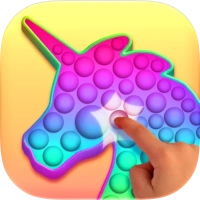
The game brings together three simple ideas: animal puzzles, vocabulary learning, and relaxing bubble popping. Its straightforward controls make it accessible to younger players while still offering a casual fidget-style experience for anyone who enjoys pop-it games.
The available animal themes include creatures from the sea, jungle, farm, and snowy environments, giving players different categories to explore.
What Is Pop It Animals: Baby Games?
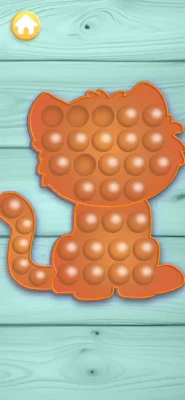
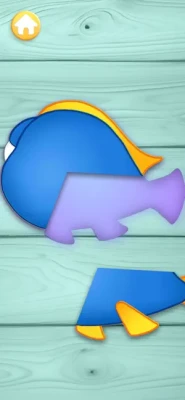
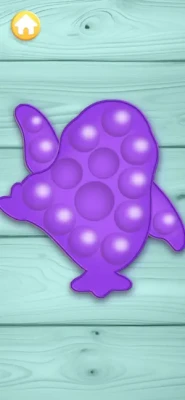
The game is designed around completing animal pictures from individual pop-it pieces. After assembling an animal puzzle, players can pop the bubbles associated with the finished design.
Animal names are presented through narration, helping players connect the spoken word with the animal picture. The game also introduces animals according to the environments where they live.
Examples mentioned in the App Store description include:
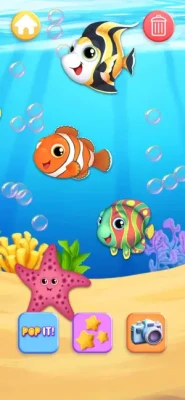
- Starfish and colorful fish
- Monkeys
- Elephants
- Leopards
- Pigs
- Chickens
- Sheep
- Polar bears
- Walruses
The combination of pictures, spoken animal names, and interactive puzzles makes the game different from a simple pop-it simulator.
How to Play Pop It Animals
The basic gameplay loop is easy to understand:
- Choose an animal category or world.
- Select an available animal puzzle.
- Join the pieces together to complete the picture.
- Identify the completed animal.
- Listen to the narrated animal name.
- Pop the bubbles on the completed pop-it design.
- Move on to another animal or category.
There is no complicated combat system, timer, inventory, or difficult control scheme. The experience is focused on recognition, puzzle completion, interaction, and sensory feedback.
Animal Worlds and Categories
Sea Animals
The sea category introduces animals that live in aquatic environments. Starfish and different colored fish are among the examples listed by the developer.
For younger players, this category can be used to practice associating an animal's appearance with its spoken name.
Helpful approach: Say the animal's name before completing the puzzle, then repeat it after the narration. This turns the puzzle into a simple recognition activity.
Jungle Animals
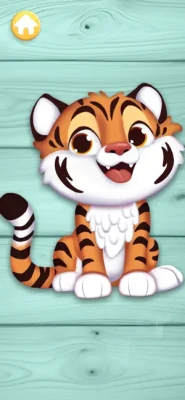
The jungle category includes animals such as monkeys, elephants, and leopards.
These puzzles are useful for practicing visual recognition because the animals have noticeably different shapes and appearances.
Tip: Ask the child to identify the animal before revealing or completing the entire picture.
Farm Animals
Farm animals include examples such as pigs, chickens, and sheep.
This is a particularly familiar category for young children, making it a natural place to begin if they already recognize common farm animals.
Tip: Connect the picture with the animal's name and, when appropriate, ask where that animal lives.
Snow Animals
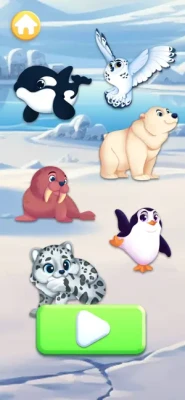
The snowy environment includes animals such as polar bears and walruses.
This category can introduce less familiar animals while reinforcing the connection between animals and their habitats.
Tip: Use the completed picture as a starting point for a short conversation about cold environments and where these animals live.
Complete Strategy Guide
Although Pop It Animals is not a traditional competitive game, using a consistent approach can make each session more engaging and useful.
1. Start With Familiar Animals
Begin with animals the child already recognizes.
A familiar animal makes it easier to concentrate on the puzzle mechanics and narration rather than trying to remember an unfamiliar word.
Once the basic interaction is comfortable, move into less familiar animals.
2. Let the Player Complete the Picture
Avoid immediately solving the puzzle for a child.
Give them time to identify where the pieces belong and experiment with the interaction. The game is built around assembling the animal picture, so the puzzle itself should remain part of the experience.
3. Listen to the Animal Narration
The narration is an important part of the game.
When an animal is completed, pay attention to its spoken name. Repeating the name afterward can reinforce the connection between the image and the word.
For example:
Picture → animal name → repeat the name → move to the pop-it activity.
4. Use the Environment as a Memory Cue
The game groups animals by environments such as sea, jungle, farm, and snow.
Use these categories as memory clues.
Instead of asking only:
“What animal is this?”
you can also ask:
“Where does this animal live?”
This adds another layer to the activity without changing the game's simple controls.
5. Use Repetition
Young players do not need to rush through every animal.
Repeating a familiar puzzle can be useful because it allows the player to practice recognizing the same animal and saying its name again.
A short repeated session is often more manageable than trying to complete everything at once.
6. Turn Bubble Popping Into a Reward
The pop-it portion provides satisfying tactile-style interaction after the puzzle is completed.
A useful routine is:
Complete → identify → listen → repeat → pop.
This gives the session a clear beginning and ending for each animal.
7. Encourage Independent Discovery
Once the basic controls are understood, allow the child to choose categories and animals independently.
This keeps the activity from feeling like a test and lets the player explore the different animal worlds at their own pace.
Pop It Animals Tips for Parents
Keep Sessions Short
The game is designed as a casual educational and sensory experience. There is no need to turn every session into a long lesson.
A few completed puzzles can be enough for one sitting.
Ask Simple Questions
After completing an animal, ask questions such as:
- What animal is this?
- Can you say its name?
- Where does it live?
- Is it a farm, jungle, sea, or snow animal?
- Have you seen this animal before?
These questions can extend the activity beyond simply tapping the screen.
Don't Correct Every Mistake Immediately
If a child chooses the wrong puzzle piece or cannot remember an animal's name, give them an opportunity to try again.
The simple interaction makes experimentation part of the experience.
Explore Different Categories
Don't stay exclusively with the most familiar animals. Move between farm, jungle, sea, and snowy animals to expose the player to different vocabulary.
Pop It Animals Puzzle Tips
The puzzles are simple, but a few habits make them easier.
Look at the overall silhouette:
Before placing pieces, consider what the completed animal should look like.
Work with obvious pieces first:
Distinctive features can help identify where a piece belongs.
Use the picture as your guide:
Don't rely solely on individual bubble shapes. Think about how each part contributes to the complete animal.
Complete the animal before focusing on popping:
The puzzle and pop-it portions work best when treated as two stages rather than trying to rush through both simultaneously.
Learning Animal Vocabulary
One of the game's main educational elements is its narrated animal vocabulary.
The App Store listing says the game uses word narration to help players associate animal names with pictures and learn about animals from different environments.
For vocabulary practice, use this simple method:
Step 1: Look at the animal.
Step 2: Say what you think it is.
Step 3: Listen to the game's narration.
Step 4: Repeat the animal's name.
Step 5: Connect the animal to its environment.
This makes the game more interactive than simply popping bubbles.
Pop It Animals for Relaxing Play
The game also emphasizes the satisfying sensory aspect of pop-it toys.
The bubble-popping interaction is designed to imitate the feeling of popping air bubbles, while the game describes itself as a relaxing and anti-stress experience.
For a relaxing session, there is no need to focus on completing puzzles quickly. Players can simply enjoy the repetitive bubble-popping interaction after finishing an animal.
Main Features
According to the current App Store listing, the game includes:
- Animal-themed pop-it puzzles
- Jigsaw-style picture completion
- Bubble-popping interaction
- Animal vocabulary
- Narrated animal names
- Sea animal category
- Jungle animal category
- Farm animal category
- Snow animal category
- Simple controls
- Sensory/fidget-style gameplay
- ASMR-style popping experience
- Multiple language support
Languages
The current App Store listing states that the game supports English, French, German, Italian, Portuguese, Russian, and Spanish.
This makes the narrated animal-name feature potentially useful for families exploring basic animal vocabulary in more than one supported language.
Controls and Difficulty
Pop It Animals uses simple touch interaction rather than complex controls.
There are no traditional combat controls, complicated menus, or advanced movement systems. The main challenge comes from completing the animal puzzles and recognizing the animals.
That makes the game particularly straightforward for players looking for a casual puzzle or baby-friendly pop-it experience.
Age Rating and Platform Information
The App Store currently lists the game with a 4+ age rating and says it contains advertising and in-app purchases. It is available for iPhone and iPad and requires iOS 15.0 or later / iPadOS 15.0 or later.
The current listing shows the game at 151.6 MB and identifies Edujoy Games S.L. as the developer.
Latest Version
The current App Store listing displays version 5.9, with the latest version-history entry dated September 17 and described as bug fixes and user-experience improvements.
Because app versions can change, check the App Store listing for the latest release information before publishing a permanent version number on your page.
Ratings and Reviews
The current US App Store listing shows a 4.5 out of 5 rating from 11 ratings. Because the number of ratings is relatively small, this figure should be treated as an indication from the current App Store listing rather than a broad measure of overall player opinion.
In-App Purchases and Advertising
The game is listed as free with in-app purchases and advertising.
The current App Store listing displays premium purchase options including Become Premium for $5.99 and Get Premium & Save 50% for $2.99.
Parents should therefore check the available in-app controls and purchase settings before allowing children to play independently.
Privacy Information
Apple's current listing says the developer has indicated that device identifiers may be collected for advertising or marketing and are not linked to the user's identity. Apple also notes that the developer's stated privacy practices have not been verified by Apple.
Parents should review the current privacy information and device purchase controls before use, particularly when the game is being played by young children.
Pros and Cons
Pros
- Simple touch controls
- Animal-themed puzzles
- Bubble-popping interaction
- Narrated animal vocabulary
- Several animal environments
- Relaxing fidget-style gameplay
- Multiple supported languages
- Suitable for casual play sessions
Cons
- Advertising is present
- In-app purchases are available
- The current App Store rating is based on a small number of ratings
- The gameplay is intentionally simple rather than challenging
- Players looking for deep puzzle mechanics may find the experience lightweight
Best Way to Play Pop It Animals
For the most engaging experience, treat each animal as a small activity rather than rushing through the entire game.
A good routine is:
Choose an environment → select an animal → complete the puzzle → identify the animal → listen to the narration → repeat the name → pop the bubbles → choose another animal.
This approach uses nearly every major part of the game's design while keeping the experience simple.
Frequently Asked Questions
Is Pop It Animals: Baby Games free?
The App Store lists the game as free with optional in-app purchases. Advertising is also listed.
What is Pop It Animals: Baby Games about?
It combines animal jigsaw puzzles, bubble popping, narrated animal vocabulary, and relaxing pop-it-style interaction.
What animals are included?
The App Store description mentions sea, jungle, farm, and snowy animals, including fish, starfish, monkeys, elephants, leopards, pigs, chickens, sheep, polar bears, and walruses.
Does the game teach animal names?
Yes. The developer describes narrated animal names as part of the game's vocabulary-learning experience.
Does Pop It Animals have puzzles?
Yes. Players assemble animal pictures from pop-it pieces before moving into the bubble-popping portion.
Is Pop It Animals available on iPhone?
Yes. The current App Store listing supports iPhone and requires iOS 15.0 or later.
Is Pop It Animals available on iPad?
Yes. The game is designed for iPad and requires iPadOS 15.0 or later.
Does Pop It Animals have different languages?
Yes. The App Store lists English, French, German, Italian, Portuguese, Russian, and Spanish.
Is there a premium option?
Yes. The current App Store listing includes premium in-app purchase options.
Final Thoughts
Pop It Animals: Baby Games combines simple animal puzzles with the satisfying interaction of a pop-it toy. Its main appeal comes from the combination of picture recognition, narrated animal vocabulary, different animal environments, and relaxing bubble popping.
Rather than treating it as a traditional puzzle game with difficult objectives, it works best as a short, interactive animal-learning and sensory activity. The sea, jungle, farm, and snow categories provide enough variety to move between familiar and less familiar animals while keeping the controls easy to understand.
For parents and young players, the most useful approach is to slow down, name each animal, listen to the narration, talk about its environment, and then enjoy the pop-it activity.
Rate the Game
User Reviews






Popular Games


















 Android
 iOS
iOS Windows
 Xbox
Xbox