
Latest Version
September 27, 2026
Solid Games
Puzzle
iOS
0
Report a Problem
More About :game
The game combines color matching, traffic management, timing, route planning, and puzzle-solving into a simple tap-based experience.
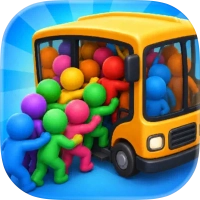
What Is People Jam: Seat Puzzle?
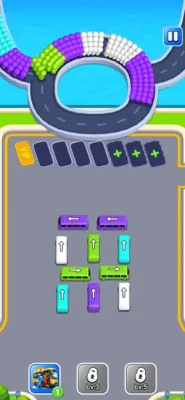
People Jam: Seat Puzzle puts you in control of a busy bus parking area.
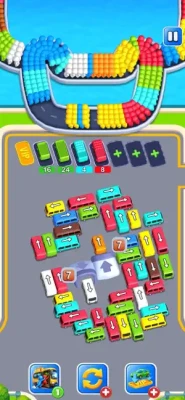
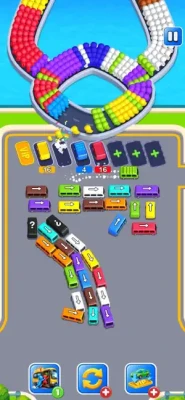
Passengers appear on a moving conveyor belt, and each passenger has a color such as red, blue, yellow, or green. You need to identify the passenger's color and select the corresponding bus. The bus then follows its directional arrow to pick up the passenger and leave the parking area.
The difficulty comes from the buses themselves. They do not simply drive wherever you want. Each bus follows a fixed route, and two buses can collide if their paths cross at the wrong time.
That means the correct answer is not always the bus you can match immediately. Sometimes you need to wait and let another bus move first.
People Jam: Seat Puzzle Gameplay Features
Color-Matching Passengers
Passengers arrive in different colors, and each must be matched with the appropriate bus.
The basic rule is easy to understand, but later situations can become more complicated when several passengers arrive close together.
Moving Passenger Conveyor
The passenger conveyor keeps moving, continuously bringing new passengers into the puzzle.
Because new passengers can arrive in groups, you need to think beyond the person currently at the front of the queue.
Directional Bus Routes
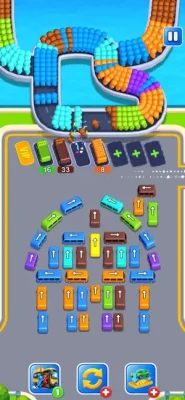
Every bus has a direction arrow that determines its route through the parking area.
You therefore have to consider not only the bus color but also the path that bus will take.
Collision-Based Puzzle Solving
Buses can crash when their routes intersect at an unfortunate moment.
This turns what initially looks like a simple color-matching game into a timing and traffic-management puzzle.
Increasingly Busy Parking Areas
The parking area can contain buses pointing in different directions, creating increasingly complicated traffic situations.
Your objective is to gradually untangle the parking lot without causing collisions.
Full People Jam: Seat Puzzle Strategy Guide
1. Don't Automatically Tap the Matching Bus
Finding a red passenger and seeing a red bus does not necessarily mean you should tap it immediately.
First check the route of the bus.
If that bus needs to cross another bus's path, moving it immediately could create a collision. Sometimes the correct move is to wait.
2. Study the Arrows Before Making a Move
The directional arrows are one of the most important pieces of information on the screen.
Before selecting a bus, trace its expected route mentally.
Ask yourself:
- Where will this bus travel?
- Does its path cross another bus?
- Is another bus about to move through the same area?
- Will sending this bus out block another route?
A few seconds of observation can prevent an unnecessary mistake.
3. Think About Traffic Order
People Jam is partly an ordering puzzle.
You may have several correct color matches available, but the order in which you activate them can determine whether the level succeeds.
If Bus A blocks Bus B, consider moving Bus B first if its route is safe.
4. Clear the Most Dangerous Route First
When several buses are available, look for the route that creates the greatest potential for a collision.
Removing a bus from a crowded section can make the remaining puzzle much easier.
5. Watch the Conveyor Belt
Don't focus exclusively on the buses.
New passengers continuously arrive on the conveyor belt, so keep track of what is coming next.
If you know that several passengers of the same color are approaching, you can sometimes plan your bus movements around that upcoming group.
6. Avoid Creating a Traffic Chain Reaction
One careless bus movement can interfere with several other routes.
Before tapping, consider what happens after the selected bus starts moving.
The best move is often the one that opens space and reduces the number of possible conflicts.
7. Match Color and Timing Together
A successful move has two conditions:
Correct color + Safe timing
Matching the passenger correctly is only half of the puzzle. The bus also needs a clear route.
8. Don't Rush Because the Conveyor Is Moving
The conveyor creates pressure because passengers continue arriving, but rushing can make the parking lot harder to manage.
Take a moment to understand the current traffic pattern before committing to a move.
9. Use Newly Opened Space
Whenever a bus successfully leaves the parking area, look again at the remaining routes.
A previously blocked bus may now have a completely safe path.
Re-evaluate the board after every successful departure.
10. Think Several Moves Ahead
For harder puzzles, don't plan only your next bus.
Try to anticipate the next two or three moves.
For example:
Passenger → Matching Bus → Route → Potential Collision → Next Bus
This simple mental sequence can help you avoid getting trapped by a bad order.
Beginner Tips for People Jam
- Check the bus color before tapping.
- Follow the directional arrows carefully.
- Look for crossing routes.
- Don't assume the first available match is the best move.
- Watch incoming passengers on the conveyor.
- Move buses that are blocking important routes.
- Recheck the parking lot after every bus leaves.
- Think about timing as well as color.
- Avoid unnecessary collisions.
- Plan multiple moves ahead on crowded levels.
How to Solve Difficult Bus Jams
When the parking area becomes crowded, stop thinking of the buses individually.
Instead, divide the puzzle into routes and intersections.
Look for places where multiple buses share or cross the same area. These locations are usually the most important parts of the puzzle.
Then determine which bus can safely move first.
A useful approach is:
Identify passenger → Find matching bus → Trace route → Check intersections → Choose order → Move bus → Reassess
This method keeps the puzzle manageable even when many buses and passengers are visible.
Color Matching Strategy
The color system is simple, but it should always be combined with route awareness.
Suppose a blue passenger is waiting and there are multiple buses nearby. The correct blue bus may still be temporarily unavailable if sending it out would cause a collision.
Instead of thinking:
“I need the blue bus.”
Think:
“I need the blue bus at the right moment.”
That small change is central to solving more complicated levels.
Bus Route Strategy
Every bus has a fixed directional route, which means you cannot simply move it around an obstacle.
This makes route prediction extremely important.
Before activating a bus, identify:
- Its starting position.
- Its arrow direction.
- The area it will travel through.
- Any other bus occupying or crossing that route.
- Whether another bus should move first.
The more crowded the parking area becomes, the more valuable this process becomes.
People Jam: Seat Puzzle Progression
The game starts with an easy-to-understand color-matching concept, but the challenge comes from combining more passengers, buses, directions, and potential collisions.
Passengers can arrive randomly and sometimes in groups, while buses can be positioned in different directions around the parking area.
This creates a natural progression:
Simple color matching → Route awareness → Timing → Traffic management → Multi-step planning
Common Mistakes
Tapping Too Quickly
Seeing a matching color and immediately tapping the bus is one of the easiest ways to make a mistake.
Ignoring Bus Arrows
The arrows tell you where the bus will travel. Ignoring them means ignoring one of the most important puzzle clues.
Focusing Only on One Passenger
The conveyor continues moving, so upcoming passengers can affect your decisions.
Forgetting About Other Buses
A route that looks clear may intersect with another bus's route.
Repeating the Same Failed Move
If a collision occurs, change the order rather than simply repeating the same action.
Is People Jam: Seat Puzzle Difficult?
The basic controls are very easy to understand, but the puzzle becomes more demanding when multiple buses and passengers interact.
The difficulty comes primarily from planning, timing, route intersections, and avoiding collisions, rather than complicated controls. The absence of complicated input makes it accessible while still giving the player something to think about.
People Jam: Seat Puzzle Game Information
| Feature | Details |
|---|---|
| Game | People Jam: Seat Puzzle |
| Developer | Solid Games |
| Category | Casual |
| Platforms | iPhone, iPad |
| Age Rating | 4+ |
| Price | Free |
| Contains | Advertising |
| In-App Purchases | Yes |
| iOS Requirement | iOS 15.0 or later |
| iPad Requirement | iPadOS 15.0 or later |
| App Size | 187.5 MB |
| Languages | English + 13 more |
| Game Center | Supported |
The current U.S. App Store listing identifies Solid Games as the developer and lists People Jam: Seat Puzzle as a free Casual game with advertising and in-app purchases. It requires iOS 15.0 or later.
The listing currently shows a 4.6/5 rating from 2.3K ratings in the U.S. App Store. Ratings can change as new reviews are submitted.
People Jam: Seat Puzzle Updates
The current App Store version history lists version 0.2.5, dated September 9, with changes including level adjustments, an SDK update, and changes to the main interface scene. An earlier update added cloud archiving, modified models, and optimized performance.
People Jam: Seat Puzzle Pros and Cons
Pros
- Simple tap-based controls
- Easy-to-understand color matching
- Bus routes add strategic depth
- Collision mechanics make timing important
- Moving conveyor keeps the puzzle active
- Suitable for short casual sessions
- Increasingly complex traffic situations
Cons
- Mistakes can be frustrating on crowded layouts
- Players need to pay close attention to route intersections
- Advertising is included
- Optional in-app purchases are available
The App Store listing confirms advertising and multiple in-app purchase options, including starter, coin, and ad-removal packages.
Frequently Asked Questions
What is People Jam: Seat Puzzle?
People Jam: Seat Puzzle is a casual bus-matching puzzle game where players match passengers with buses of the correct color while managing fixed bus routes and avoiding collisions.
How do you play People Jam?
Watch the passenger conveyor, identify a passenger's color, select the matching bus, and make sure its route is safe before sending it out.
What makes People Jam challenging?
The main challenge comes from bus routes crossing each other. Choosing the wrong bus at the wrong time can cause a collision, so players need to plan the order of their moves.
Do buses have fixed routes?
Yes. The official description states that buses move along fixed arrows, making route planning an important part of the puzzle.
Do passengers arrive continuously?
Yes. Passengers continue arriving as the conveyor belt cycles, with passengers sometimes appearing in groups.
Is People Jam: Seat Puzzle free?
Yes. The App Store lists the game as free with advertising and optional in-app purchases.
What devices support People Jam?
The current listing supports iPhone and iPad and requires iOS 15.0 or later on iPhone and iPadOS 15.0 or later on iPad.
Does People Jam support Game Center?
Yes. The current App Store listing shows Game Center support.
Final Thoughts
People Jam: Seat Puzzle turns a simple match-the-color mechanic into a traffic-management puzzle. The important part isn't just finding the matching bus; you also need to decide when that bus should move.
The strongest general strategy is to observe the entire parking area, follow the directional arrows, identify potential intersections, and plan the order of your buses before tapping.
For players who enjoy bus jam games, traffic puzzles, color matching games, parking puzzles, sorting games, and casual brain teasers, People Jam: Seat Puzzle offers a straightforward puzzle loop with increasingly complicated traffic situations.
Rate the Game
User Reviews















Popular Games



















 Android
 iOS
iOS Windows
 Xbox
Xbox