




Latest Version
September 26, 2026
Ivy
Puzzle
0
com.blockpuzzle.jewel.blockjpuzzle
Report a Problem
More About :game
The challenge becomes more interesting when you start planning several moves ahead. Instead of simply looking for an immediate line clear, you need to preserve open spaces, prepare the board for larger pieces, and create opportunities for consecutive clears.
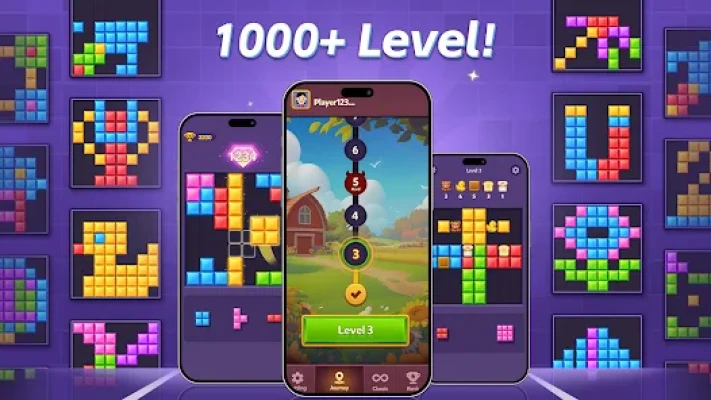
According to its Google Play listing, Ivy Jewel Block includes a Combo Crush System, Journey Mode, offline gameplay, and progressively challenging layouts. The game is rated for Everyone and is available on Android and Windows.
What Is Ivy Jewel Block?
Ivy Jewel Block combines classic block-placement gameplay with bright jewel visuals and score-focused mechanics. There is no need to match jewels by color; the important objective is to position each block so that complete rows or columns can be removed.
The basic gameplay loop is straightforward:
- Select an available jewel block.
- Drag it onto an open area of the board.
- Complete a horizontal or vertical line.
- Clear the completed line.
- Use the newly opened space to plan your next move.
- Continue until no available block can be placed.
The game also rewards players who connect several successful clears together through its combo system.
Main Features of Ivy Jewel Block
Jewel Block Puzzle Gameplay
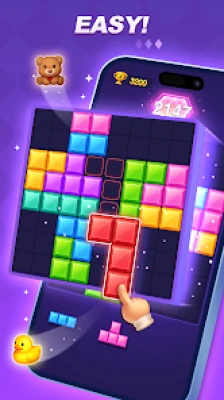
The core mechanics are easy to understand. Drag and place blocks onto the board, complete lines, and clear them before the board becomes too crowded.
Combo Crush System
Consecutive line clears can create combo chains and increase your score. Building combos is one of the most important skills for players who want to move beyond basic survival and chase higher scores.
Journey Mode
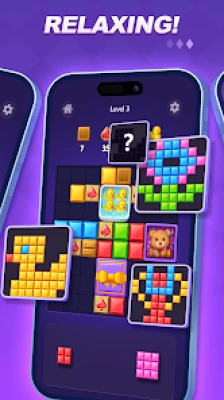
Journey Mode introduces progressively challenging layouts. Instead of playing only for an endless high score, you can work through different stages and adapt your strategy to changing board situations.
Offline Gameplay
Ivy Jewel Block supports offline play, making it suitable for short puzzle sessions when you do not have an internet connection.
Simple Controls
The drag-and-place system makes the game easy to pick up. Most of the difficulty comes from decision-making rather than complicated controls.
Jewel-Themed Visuals
Bright jewel blocks, clear board feedback, animations, and polished effects give the classic block puzzle formula a more colorful presentation.
How to Play Ivy Jewel Block
The most important rule is simple: fill an entire row or column to clear it.
However, the real strategy comes from deciding where each piece should go.
A move that clears one line immediately may sometimes be worse than a move that leaves the board open and prepares two or three future clears.
Before placing a block, ask yourself:
- Which spaces will this piece occupy?
- Can I complete a line with it?
- Will the placement block a useful area?
- Can I create another clear with the next pieces?
- Am I leaving enough room for large blocks?
- Can this move contribute to a combo?
Thinking one or two moves ahead can dramatically improve your survival time.
Ivy Jewel Block Strategy Guide
1. Keep the Board Open
One of the biggest mistakes in block puzzle games is filling empty spaces simply because they are available.
Your goal should be to maintain flexibility.
Avoid creating isolated holes that are difficult to fill. A clean, organized board gives you more placement options when awkward blocks appear.
2. Don't Clear Lines Too Quickly
A line clear is useful, but clearing a line immediately is not always the best move.
Sometimes it is better to delay a clear if doing so creates a better setup for a larger combination.
For example, if one move clears a single row but another move can prepare two lines at once, the second option may produce a better scoring opportunity.
3. Protect the Center of the Board
Try not to completely block the central area.
The center often provides useful placement possibilities for different block shapes. Keeping it available gives you more flexibility when larger or unusual pieces appear.
4. Leave Space for Large Blocks
This is one of the most important long-term strategies.
Small blocks are usually easier to place than large ones. If your board contains only small gaps, a large piece can become impossible to use.
Before filling another open area, consider whether a larger block could still fit there later.
Think about the next difficult piece, not only the current one.
5. Build Combos Intentionally
The Combo Crush System rewards consecutive clears, so try to create situations where one successful placement naturally leads to another.
Instead of treating every line independently, look for intersections.
A single block can sometimes complete multiple lines at once. These situations are especially valuable because they can produce larger score gains while also opening several spaces.
6. Clear Multiple Lines When Possible
If you have a choice between clearing one line and clearing several lines, look carefully at the consequences.
A multi-line clear can:
- Remove more blocks
- Open more board space
- Improve your combo potential
- Create better placement options
- Increase your score
But don't sacrifice board flexibility just to force a large clear.
7. Avoid Creating Unfillable Holes
Small gaps can become dangerous when they are surrounded by blocks.
Before placing a piece, check the spaces immediately around it. If the move creates a one-square or awkward-shaped hole, make sure you have a realistic way to fill it later.
A clean board is generally easier to manage than a messy one.
Advanced Ivy Jewel Block Techniques
Plan Two Moves Ahead
Beginners often think only about the block currently in their hand.
Experienced players consider:
Current piece → resulting board → next placement opportunity.
You don't need to predict the entire game. Even planning two moves ahead can prevent many unnecessary mistakes.
Use the Edges Carefully
The edges can be useful for parking blocks that do not immediately contribute to a line.
However, avoid filling an entire side without considering the shapes you may need later.
Edges should support your board structure rather than become storage areas for random pieces.
Create Flexible Empty Areas
Large connected empty areas are generally more useful than several tiny disconnected gaps.
When you clear lines, pay attention to the shape of the remaining empty space. Try to create areas that can accommodate different block configurations.
Set Up Intersections
A particularly useful technique is preparing positions where a future block can complete both a row and a column.
These intersection opportunities can produce efficient clears and help maintain the board.
Don't Chase Every Combo
Combos are valuable, but forcing one can damage your board.
If a combo requires you to fill several useful spaces and leaves no room for the next piece, it may not be worth taking.
Board control comes first; scoring opportunities come second.
How to Get a Higher Score in Ivy Jewel Block
If your objective is to beat your personal best, focus on consistency rather than risky moves.
High-score priorities
- Keep the board open.
- Avoid unnecessary holes.
- Create multi-line opportunities.
- Protect space for large pieces.
- Build combos naturally.
- Clear dangerous areas before they become blocked.
- Avoid sacrificing the entire board for one large score opportunity.
The best high scores usually come from a combination of efficient placement and long-term board management.
Journey Mode Tips
Journey Mode introduces progressively challenging layouts, so a strategy that works early may need adjustment later.
When approaching a difficult Journey stage:
Study the Layout First
Don't rush into your first placement. Look at the available space and identify areas where future blocks are likely to become difficult.
Prioritize Board Stability
A good early move should leave multiple options for your next pieces.
Don't Panic After a Bad Piece
An awkward block doesn't automatically mean the run is over. Look for a placement that minimizes damage and preserves your largest open area.
Treat Difficult Stages as Puzzles
Instead of trying to play quickly, examine each placement as part of the larger board solution.
Beginner Tips for Ivy Jewel Block
If you're just starting, these tips can make your first games much easier:
- Keep the board as open as possible.
- Don't automatically place blocks in the first available space.
- Look for opportunities to clear multiple lines.
- Avoid creating tiny isolated gaps.
- Leave room for large blocks.
- Use combos when they fit naturally into your strategy.
- Think about your next move before confirming the current one.
- Don't sacrifice board space simply for a small immediate score.
- Keep your most flexible spaces available for unexpected pieces.
- Learn from failed placements instead of repeating the same pattern.
Common Mistakes to Avoid
Filling the Board From One Side
Building a large wall on one side can leave you with very limited placement options.
Ignoring Large Pieces
A board full of small gaps can make larger pieces impossible to place.
Chasing Immediate Points
A high-value clear isn't necessarily useful if it ruins your future board.
Creating Dead Spaces
Small enclosed holes can become permanent obstacles.
Forgetting About Combos
If you always clear lines individually, you may miss opportunities to connect several clears.
Playing Too Quickly
The controls are simple, but strategic placement requires patience. Take a moment before every important move.
Is Ivy Jewel Block Easy to Play?
Yes. The basic controls are simple: drag jewel blocks onto the board and complete rows or columns.
The difficulty comes from planning. As the board becomes crowded and the available pieces become harder to accommodate, every placement matters more.
That makes Ivy Jewel Block easy to learn while still offering room for players to improve their score and strategy.
Can You Play Ivy Jewel Block Offline?
Yes. The Google Play listing identifies Ivy Jewel Block as an offline game, so it is suitable for playing without Wi-Fi.
This makes it convenient for travel, waiting rooms, commutes, or short puzzle sessions away from a reliable connection.
Ivy Jewel Block Pros and Things to Consider
Pros
- Simple drag-and-drop controls
- Colorful jewel-themed presentation
- Combo-based scoring
- Journey Mode
- Offline gameplay
- Easy to learn
- Strategic board management
- Suitable for short or longer sessions
Things to Consider
- Later stages require considerably more planning.
- Keeping enough space for different block shapes becomes increasingly important.
- The game contains ads and in-app purchases according to its Google Play listing.
Ivy Jewel Block Gameplay Experience
Ivy Jewel Block combines the familiar rules of classic block puzzles with jewel-themed visuals and a combo-focused scoring system.
The relaxing presentation makes it approachable, while the limited board space creates the strategic tension. The further you progress, the more important it becomes to think beyond the current block.
For casual players, it works well as a quick puzzle game. For score-focused players, the combo system and board-management mechanics provide a reason to keep improving.
Ivy Jewel Block FAQ
What is Ivy Jewel Block?
Ivy Jewel Block is a jewel-themed block puzzle game where players place blocks on a board and clear complete horizontal or vertical lines.
How do you clear blocks in Ivy Jewel Block?
Place jewel blocks so that an entire row or column becomes filled. The completed line is then cleared from the board.
Does Ivy Jewel Block have combos?
Yes. The game includes a Combo Crush System that rewards consecutive clears and can increase scoring opportunities.
Does Ivy Jewel Block have Journey Mode?
Yes. Journey Mode contains progressively challenging layouts and stages.
Can Ivy Jewel Block be played offline?
Yes. The Google Play listing identifies the game as supporting offline play.
Is Ivy Jewel Block suitable for beginners?
Yes. The controls are straightforward, but mastering the board requires planning and strategic placement.
How can I get a higher score?
Focus on keeping the board open, creating multi-line clears, maintaining combo opportunities, and leaving enough space for large blocks.
What is the most important Ivy Jewel Block strategy?
The most important principle is to protect your available space. A move that looks good immediately can become a problem if it prevents you from placing future blocks.
Final Ivy Jewel Block Tips
The key to mastering Ivy Jewel Block is space management.
Don't focus only on the block in front of you. Look at the entire board and consider how each placement changes your future options.
Keep large areas open, avoid creating awkward holes, look for multi-line clears, and build combos whenever they naturally fit your board.
Most importantly, don't rush. A few seconds of planning can turn a difficult position into a successful clear.
With practice, you'll begin to recognize useful patterns, anticipate difficult placements, and consistently build better scores in both regular gameplay and Journey Mode.
Rate the Game
User Reviews







Popular Games


















 Android
 iOS
iOS Windows
 Xbox
Xbox