




Latest Version
September 27, 2026
Yso Corp
Puzzle
iOS
0
Report a Problem
More About :game
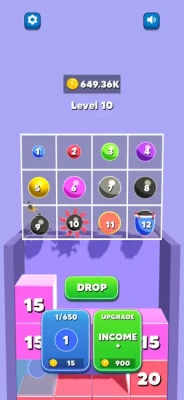
The game is easy to understand, but the limited space for balls makes efficient merging important. A few poor decisions can leave the board crowded with balls that are difficult to combine.
What Is Marble Cascade: Break & Merge?
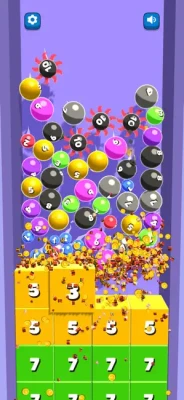
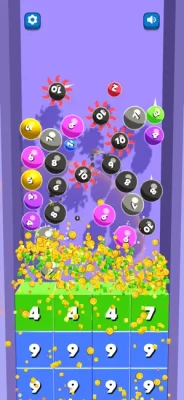
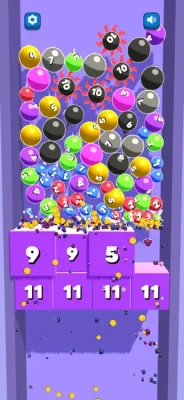
In Marble Cascade, your goal is to build increasingly useful balls while clearing blocks from the path.
The basic gameplay loop is:
- Buy balls.
- Combine matching balls.
- Create stronger numbered balls.
- Send them into the blocks.
- Break obstacles and earn money.
- Use your earnings to purchase more balls.
- Keep improving your setup as the levels become more demanding.
The App Store describes the core objective simply: buy and merge balls, break cubes, earn money and purchase more balls.
Marble Cascade Gameplay
The appeal comes from combining merge-puzzle mechanics with physics-style destruction.
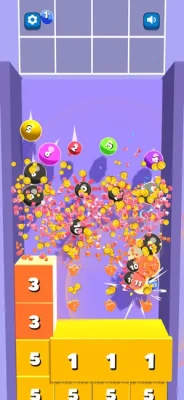
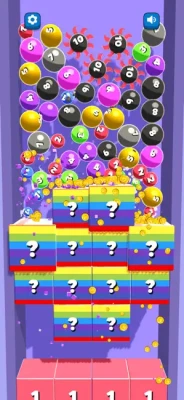
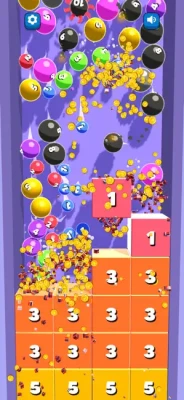
Instead of simply matching tiles on a traditional puzzle board, your ball collection interacts with blocks. This gives each level a satisfying progression: build your ball setup, send the right power into the obstacles, collect the resulting rewards and improve your collection.
The game also received updates adding new effects for hitting and breaking blocks, along with additional rewards.
How to Play Marble Cascade
1. Start With the Available Balls
At the beginning of a level, focus on understanding the current ball arrangement rather than immediately filling every available space.
Your first objective is to establish useful combinations.
2. Merge Matching Balls
When two compatible balls can be combined, merging them creates a stronger ball.
Avoid creating a crowded collection of unrelated numbers. A clean board gives you more opportunities to make future combinations.
3. Break the Cubes
Your upgraded balls are used to attack the blocks.
Watch how the balls interact with the obstacles and try to keep your strongest combinations available for areas that require more effort.
4. Collect Money
Breaking blocks produces money that can be invested back into the ball system.
This creates the game's main progression cycle:
Merge → Break → Earn → Buy → Merge Again
5. Manage Your Space
Board space is one of the most important resources.
A high-level ball may be powerful, but several poorly positioned or incompatible balls can occupy valuable space and prevent you from buying additional balls.
Marble Cascade Strategy Guide
Keep the Board Organized
Don't think only about making the biggest ball immediately.
Think about what your board will look like after the next few purchases.
Before creating another ball, consider:
- Which balls can still be merged?
- How much free space remains?
- Are you creating a useful combination or simply occupying another slot?
- Can the new ball contribute to breaking the next group of blocks?
Good organization becomes increasingly important as the number of balls on the board grows.
Prioritize Useful Merges
Not every merge has the same practical value.
When you have several possible combinations, favor the merge that:
- Creates a stronger attack option
- Frees valuable board space
- Moves you closer to another merge
- Helps clear the current obstacles
- Prevents the board from becoming cluttered
Don't Fill Every Space Too Early
One of the easiest mistakes is buying balls whenever you have enough money.
More balls do not automatically mean faster progress.
If the board becomes packed with incompatible balls, your ability to merge decreases. Keeping some room available can give you more flexibility.
Build Around Your Strongest Balls
Once you have a stronger ball, don't immediately treat it as disposable.
Look at the obstacles ahead and decide whether it is better to use that power now or preserve it for a more useful section.
Use Money Carefully
Money should support your progression rather than simply increase the number of balls on the screen.
If buying another ball leaves you with no practical way to merge it, the purchase may create more problems than it solves.
Best Tips for Marble Cascade: Break & Merge
Tip 1: Protect your free space.
Open spaces are valuable because they allow new balls to enter your setup.
Tip 2: Look for chain merges.
A merge that immediately creates another possible merge can be much more useful than an isolated upgrade.
Tip 3: Don't chase numbers blindly.
A higher-numbered ball isn't helpful if it leaves the rest of your board impossible to manage.
Tip 4: Watch the blocks.
Your objective isn't just to build balls. You need those balls to break the obstacles.
Tip 5: Reassess after every major merge.
A successful merge can completely change the best next move.
Tip 6: Avoid unnecessary purchases.
If your board is already crowded, spending money on another ball can reduce your flexibility.
Tip 7: Keep your strongest options available.
Save useful combinations when you know a tougher obstacle is approaching.
Tip 8: Use the tutorial and updated reward information.
The developer added a tutorial and clearer rewards in version 1.1.6.
How to Deal With Difficult Levels
Some players have reported getting stuck on particular levels or encountering problems involving ball merging and blocks. The App Store review section includes reports of players having difficulty with Level 12 balls and certain obstacle sequences. These are individual user reports rather than a guarantee that every player will experience the same problem.
If you encounter a difficult section:
- Check whether your game is fully updated.
- Keep your board organized before buying additional balls.
- Avoid filling every available space.
- Look for merges that free space.
- Focus on the obstacle that is currently preventing progress.
- If a level appears to behave incorrectly, restarting the level may help determine whether it was a temporary issue.
The version history shows multiple bug-fix releases, including an update specifically addressing a problem that prevented Level 12 ball merging.
Level 12 Ball Problem
Level 12 balls have been a recurring topic in App Store reviews.
The developer's version history states that version 1.1.4 fixed a bug preventing players from merging a Level 12 Ball and also optimized the iPad interface.
If you encounter a similar issue, first make sure you are running the latest available version before assuming the level itself is impossible.
Marble Cascade Progression
Progression revolves around improving your ball collection and generating more money through successful block destruction.
The strongest progression approach is therefore not simply:
Buy more balls.
Instead, aim for:
Better merges → stronger balls → faster block breaking → more money → better purchases.
This keeps your resources working toward the next meaningful upgrade.
Features
- Ball merging mechanics
- Numbered ball progression
- Cube and block destruction
- Money-based progression
- Additional ball purchases
- Reward system
- Updated block-breaking effects
- Tutorial
- iPhone and iPad support
- Multiple language support
- Casual arcade-puzzle gameplay
The App Store currently lists the game as free, developed by Yso Corp, with a 4+ age rating and support for iPhone and iPad.
Updates and Improvements
Marble Cascade has received several updates since launch.
The update history includes:
- 1.2.2: New effects for hitting and breaking blocks plus more rewards
- 1.1.6: Tutorial and clearer rewards
- 1.1.4: Fix for a Level 12 ball merging issue and iPad UI optimization
- Later versions include additional bug fixes.
This history is useful because it shows that some issues reported by earlier players were subsequently addressed through updates.
Marble Cascade: Break & Merge Review
Marble Cascade works best as a short, accessible puzzle experience for players who enjoy merging, incremental progression and satisfying block destruction.
Its biggest strength is the straightforward gameplay loop. You don't need a complicated tutorial to understand the basic objective: combine balls, build power, break blocks and use the resulting money to continue improving.
The main concern is long-term variety. Some App Store reviewers have asked for additional levels and customization, while other reviews report bugs or progression problems. Apple's current U.S. listing shows 3.9 out of 5 from 66 ratings, so player experiences are mixed.
Pros and Cons
Pros
- Simple controls and easy-to-understand mechanics
- Satisfying merge progression
- Block-breaking gameplay adds variety to the merge system
- Money creates a clear upgrade loop
- Suitable for short play sessions
- Tutorial and clearer rewards were added through updates
Cons
- Board management can become frustrating when space is limited
- Some players have reported progression or bug issues
- Long-term variety may feel limited
- Higher-level ball combinations can become difficult to manage
Game Information
| Information | Details |
|---|---|
| Game | Marble Cascade: Break & Merge |
| Developer | Yso Corp |
| Genre | Games / Casual Puzzle |
| Price | Free |
| Age Rating | 4+ |
| Size | 197.9 MB |
| Platforms | iPhone, iPad |
| Minimum iOS | iOS 15.0 or later |
| Minimum iPadOS | iPadOS 15.0 or later |
| Languages | English + 13 more |
These details are based on the current U.S. App Store listing.
FAQ
What is Marble Cascade: Break & Merge?
Marble Cascade: Break & Merge is a casual puzzle game where you merge balls, use them to break cubes and earn money to purchase additional balls.
How do you get stronger balls?
Combine compatible balls to create stronger numbered balls. Managing your available space is important because additional balls can quickly fill the board.
What should I spend money on?
Use money primarily to support useful ball combinations and continued progression rather than filling every available space.
Why is board space important?
A crowded board can prevent you from purchasing new balls or creating useful combinations. Keeping some space open gives you more flexibility.
Can Level 12 balls be merged?
The developer previously released a fix for a bug that prevented Level 12 balls from merging. If you experience this issue, check that the game is updated.
Is Marble Cascade available on iPhone?
Yes. The App Store lists Marble Cascade for iPhone and iPad and requires iOS 15.0 or later.
Is Marble Cascade free?
Yes. The App Store lists the game as free.
Final Thoughts
Marble Cascade: Break & Merge keeps its formula simple: merge balls, break blocks, earn money and build stronger combinations.
The key to progressing efficiently is not simply creating the biggest ball possible. Good space management, deliberate purchases and well-timed merges make a much bigger difference when the board starts getting crowded.
For players who enjoy casual merge puzzles with an added block-breaking mechanic, Marble Cascade offers a straightforward gameplay loop that can be picked up quickly while still giving you room to improve your strategy.
Rate the Game
User Reviews









Popular Games

















 Android
 iOS
iOS Windows
 Xbox
Xbox